Relics of Francis, Clare and Anthony
Franciscan relicsPilgrims come to pray before relics attributed to the three great early Franciscans.
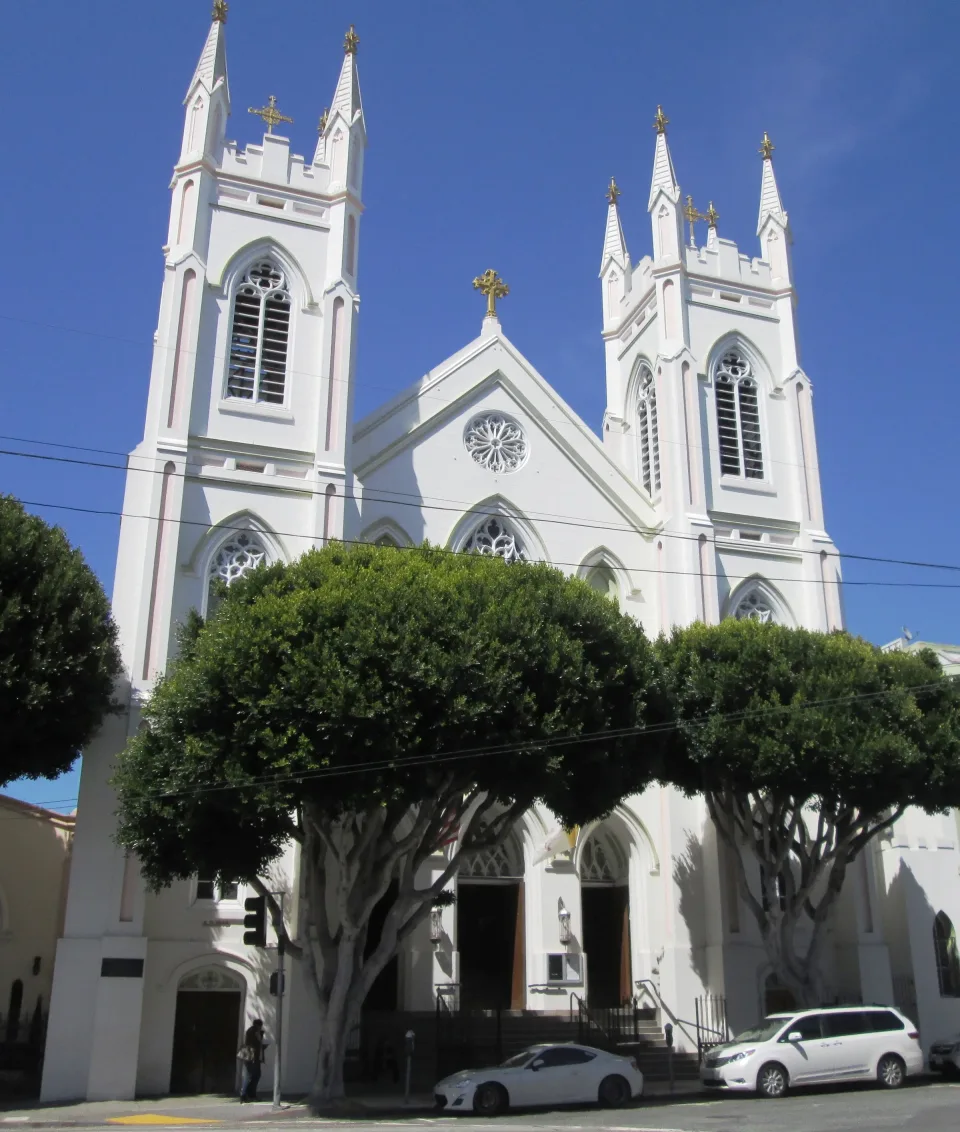
National Shrine of St. Francis of AssisiA Gold Rush parish that became the Franciscan heart of the city named for Francis, holding relics of Francis, Clare and Anthony and a reproduction of the Porziuncola.
This is the place on the Camino de San Francisco where the route's saint is actually present.
Everything else on the walk carries his name; here there are relics the shrine identifies as his, and those of Clare and Anthony with them, and a small stone chapel built to the proportions of the Porziuncola at Assisi.
It is also the one stop where a pilgrim should slow down. The church is a few minutes from Saints Peter and Paul and easy to treat as a stamp, but the Porziuncola keeps short hours of its own and the shrine is the reason a Franciscan route ends in this city at all.
Saint Francis parish was established on June 12, 1849, in the first months of the Gold Rush, and the first parochial Mass in California was celebrated five days later. The Norman Gothic church that stands here had its cornerstone laid on October 2, 1859 and was dedicated on March 17, 1860.
At 5:13 on the morning of April 18, 1906 the earthquake struck, and the fires that followed consumed the interior. The shrine's own history is precise about what was left: the brick walls and the badly scorched towers remained intact. A new church was raised inside those walls on steel girders and rededicated on March 2, 1919.
The National Conference of Catholic Bishops granted the church national shrine status in September 1999. The Capuchin Franciscan friars of the Province of Our Lady of Angels of the Porziuncola have served it since 2005, and the Porziuncola Nuova was consecrated on September 27, 2008 by Cardinal William J. Levada.
A brick Norman Gothic front with twin towers, painted white, rising straight off a North Beach street with no forecourt. Read the walls before the interior: they are the 1860 building, and the church inside them is the 1919 one. The Porziuncola Nuova is a separate small structure within the complex, with rough stone walls, a painted altarpiece and a patterned marble floor.
The shrine rewards a pilgrim who can tell 1860 from 1919 from 2008.
The 1860 church, and the only fabric here that predates the earthquake.
Rebuilt within those walls on steel girders after 1906 and rededicated in 1919.
Consecrated in 2008, a scaled reproduction of the chapel at Assisi. The original is still in Umbria.
Francis, Clare and Anthony, identified as such by the shrine. The Franciscan reason the route comes here.
Parish established June 12, 1849
Church dedicated March 17, 1860
Interior destroyed in the fire of April 18, 1906; the brick walls stood
Rededicated March 2, 1919; declared a national shrine in September 1999
A Capuchin shrine in a dense city neighborhood, which is close to the conditions Franciscans have usually worked in. The Porziuncola is the quietest room on the whole Camino.
Open far fewer hours than the church. Plan the day around it rather than hoping.
Relics attributed by the shrine to Francis, Clare and Anthony, the devotional center of the whole route.
Stand outside long enough to see that the oldest thing here is the brick, not the interior.
The church, the relics and the Porziuncola, in the order that lets the small chapel come last.
Check the Porziuncola's hours before the church's; they are shorter and they are the reason to come. Pray before the Franciscan relics, then give the small chapel the time it asks for. The Camino stamp is taken here.
The church and the small chapel are open at different times, and the chapel is the reason most pilgrims come.
The Porziuncola Nuova
The Year of Saint Francis
Pope Leo XIV established a Year of Saint Francis for the eighth centenary of the saint's death. The Apostolic Penitentiary's decree of January 10, 2026 grants a plenary indulgence, under the usual conditions, to the faithful who make a pilgrimage to a Franciscan conventual church or a place of worship dedicated to or connected with Saint Francis.
Pilgrims come to pray before relics attributed to the three great early Franciscans.
National Shrine of St. Francis of AssisiReceive it as a reproduction that lets a pilgrim pray in the shape of Francis's chapel, not as the chapel itself.
National Shrine of St. Francis of AssisiRead them as the one part of the building that has stood since before the earthquake.
National Shrine of St. Francis of AssisiSource note Traditional attributions are presented as tradition, with documentation named where it exists.
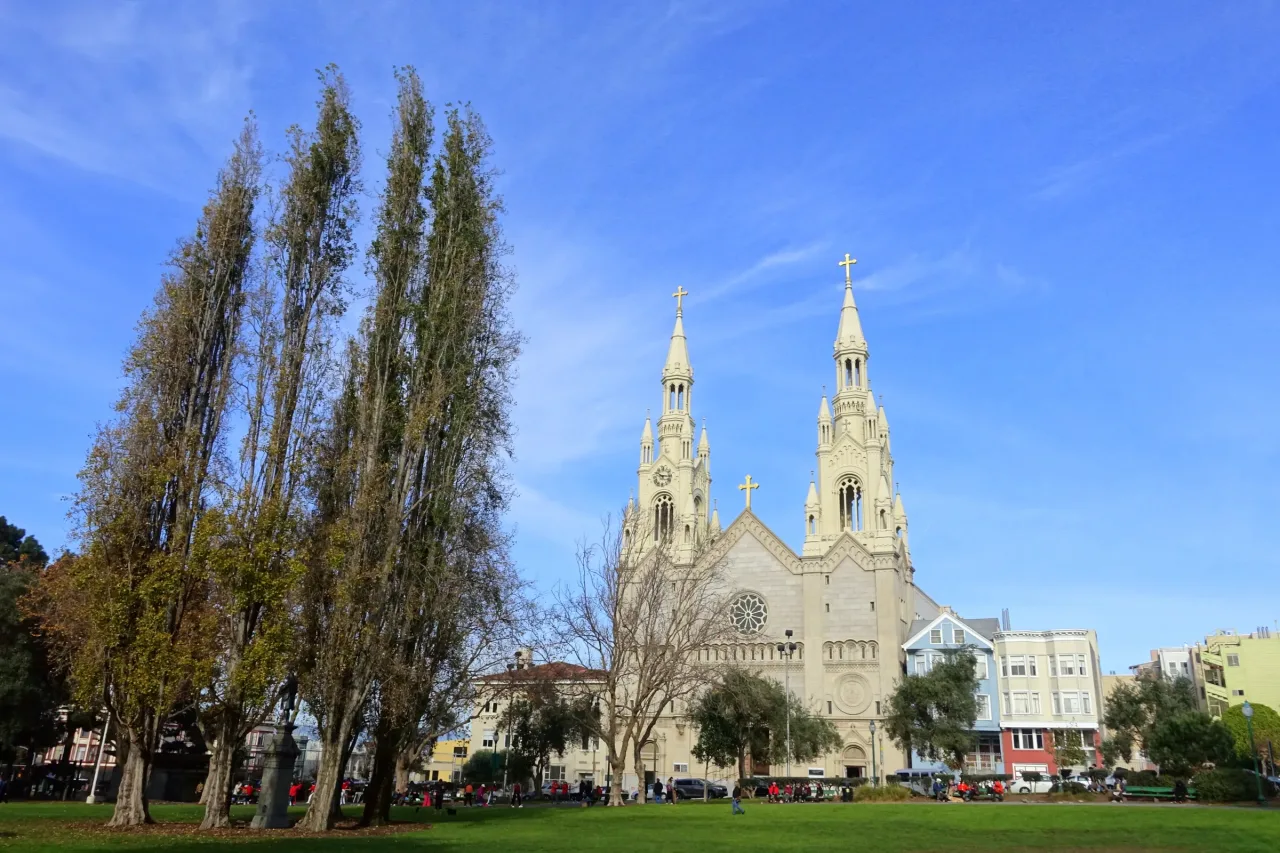
The Salesian church on Washington Square, a few streets north and the previous Camino stamp.
The mother church of the archdiocese, the next stamp west along the route.
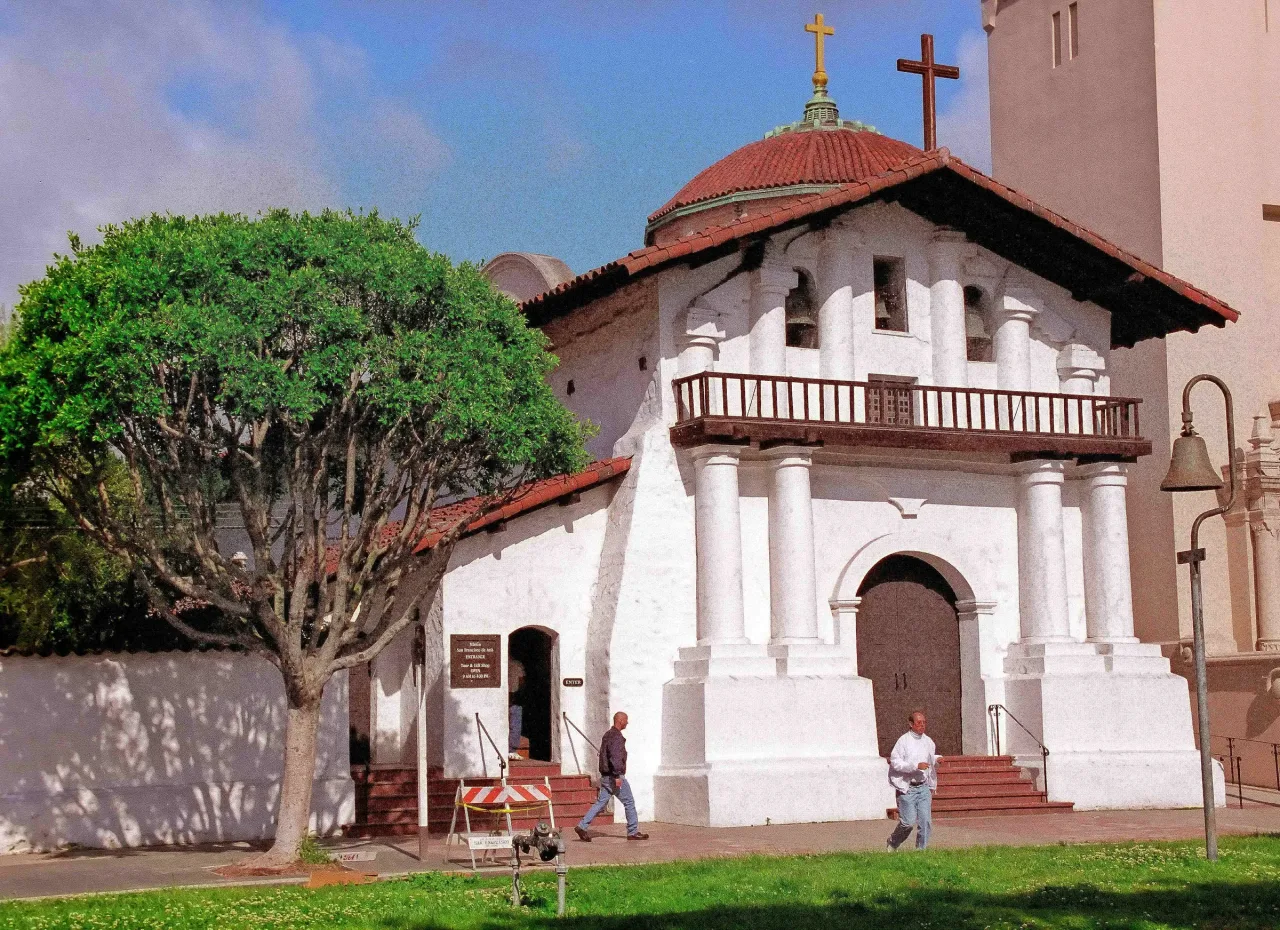
The end of the Camino, and the oldest building in the city.
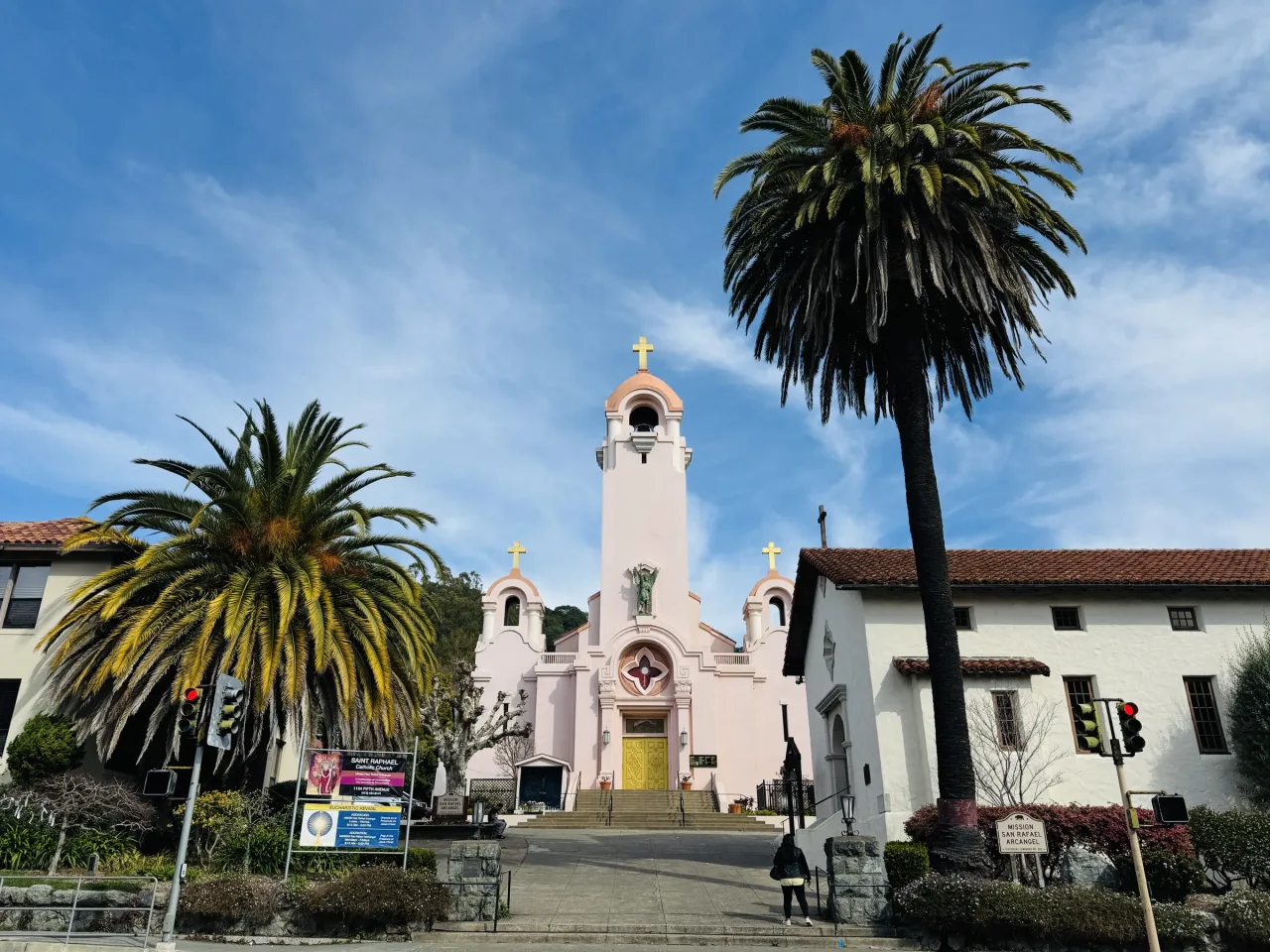
Where the Camino de San Francisco begins, a day's walk north across the Golden Gate.
The shrine is the Franciscan center of the route, and one of its seven stamp churches.
Use this for corrections, broken links, missing places, and planning ideas.