The cupola
Architecture as theologyStand under the centre of it before sitting down. The building is making an argument.
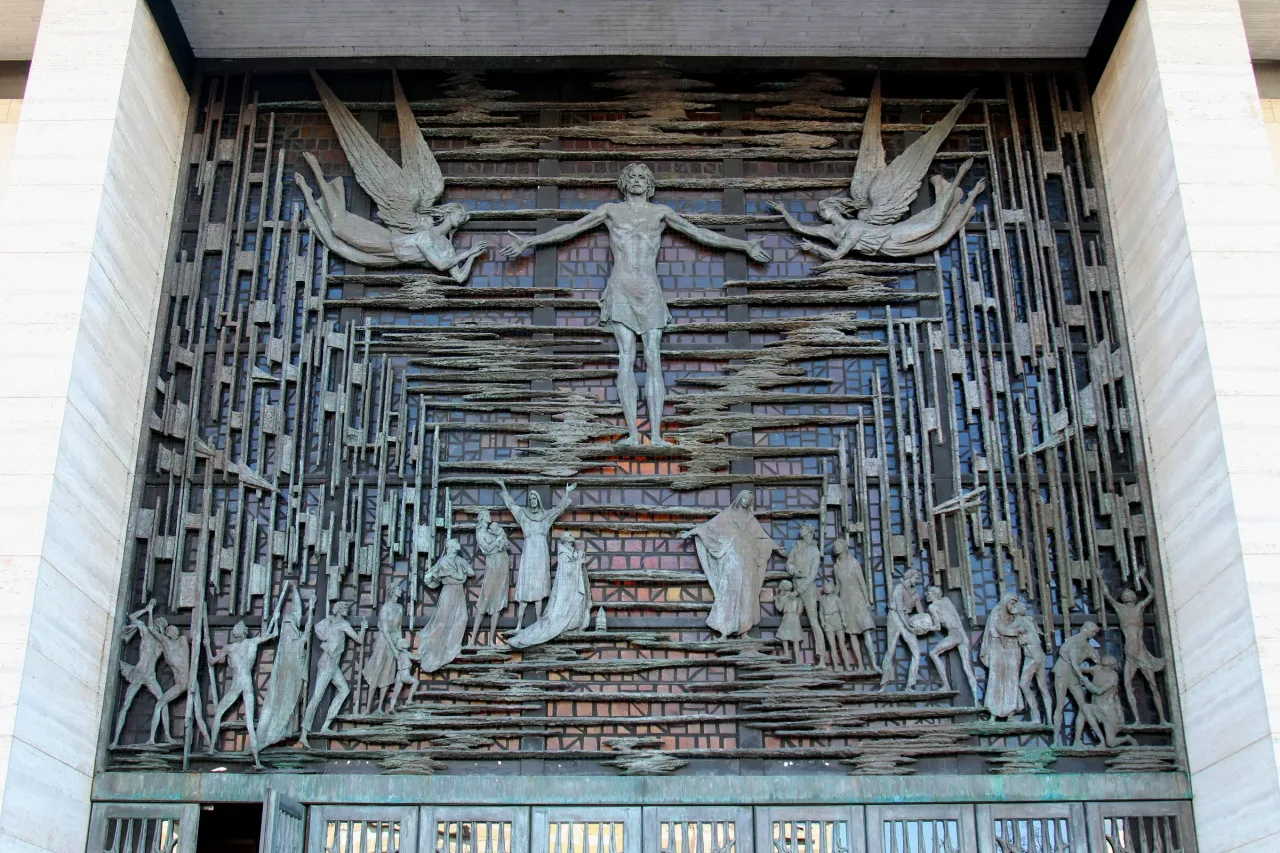
Cathedral of St. Mary of the AssumptionThe third cathedral of San Francisco, raised after a 1962 fire, designed by Belluschi and Nervi and blessed in 1971: the modern stop on a route that begins in 1817.
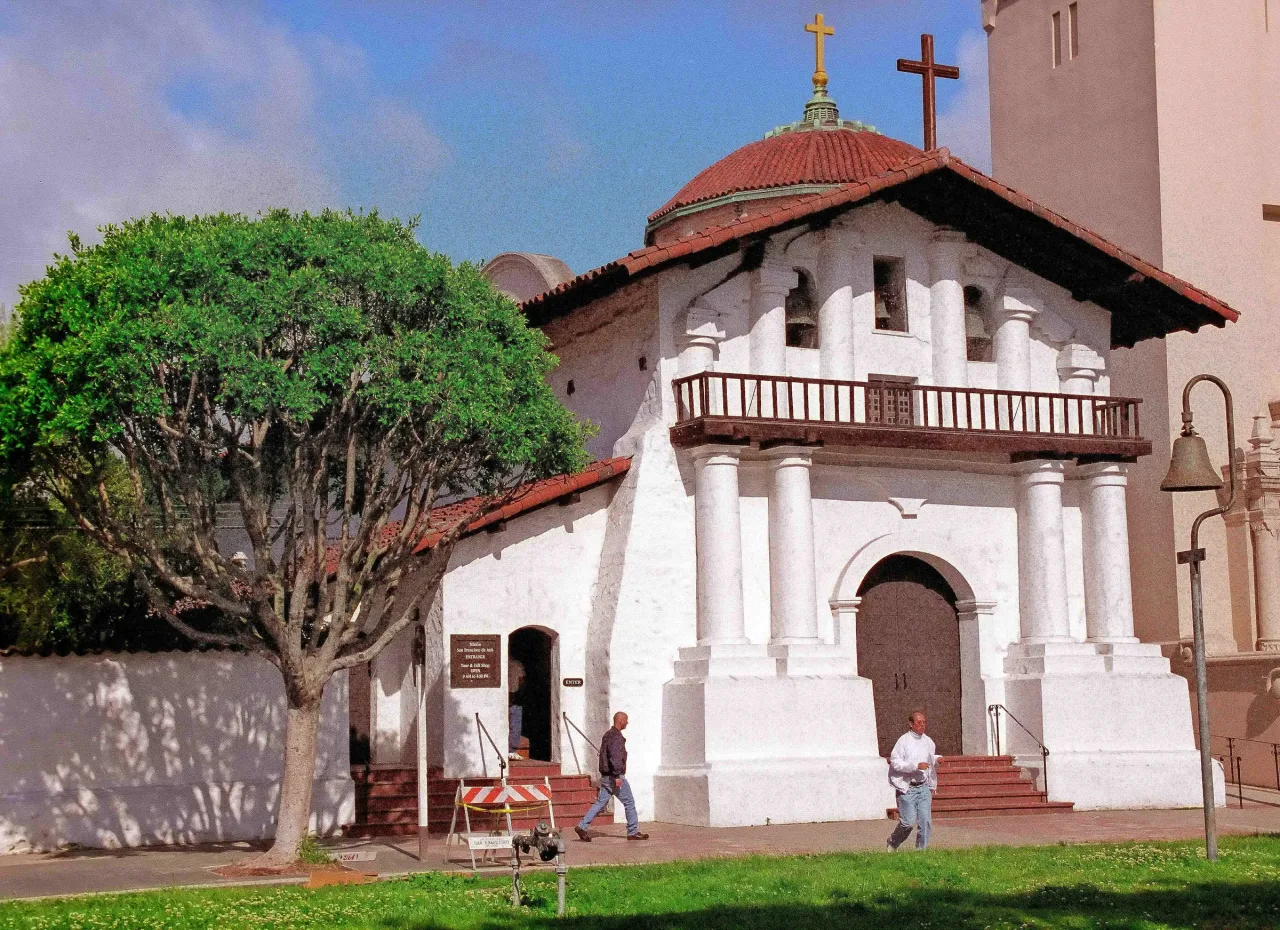
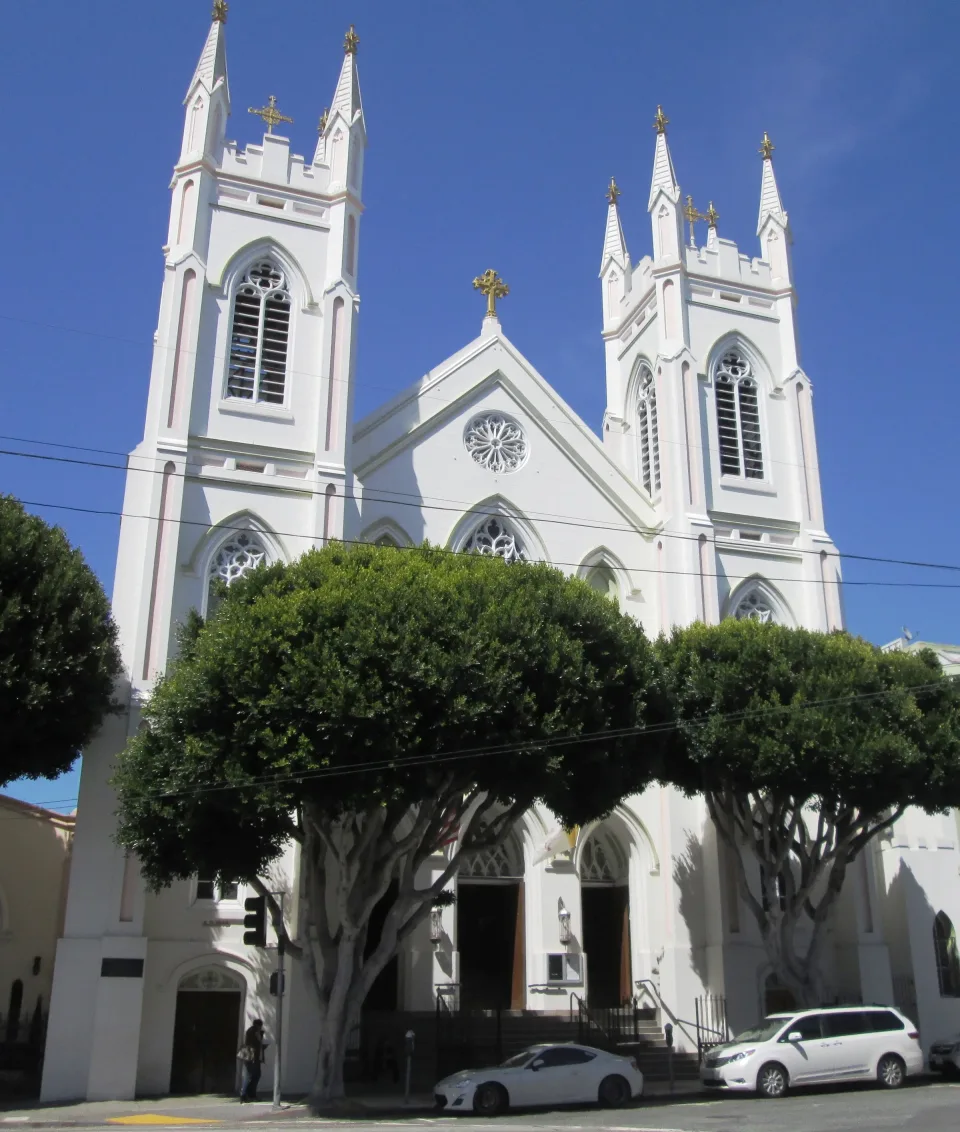
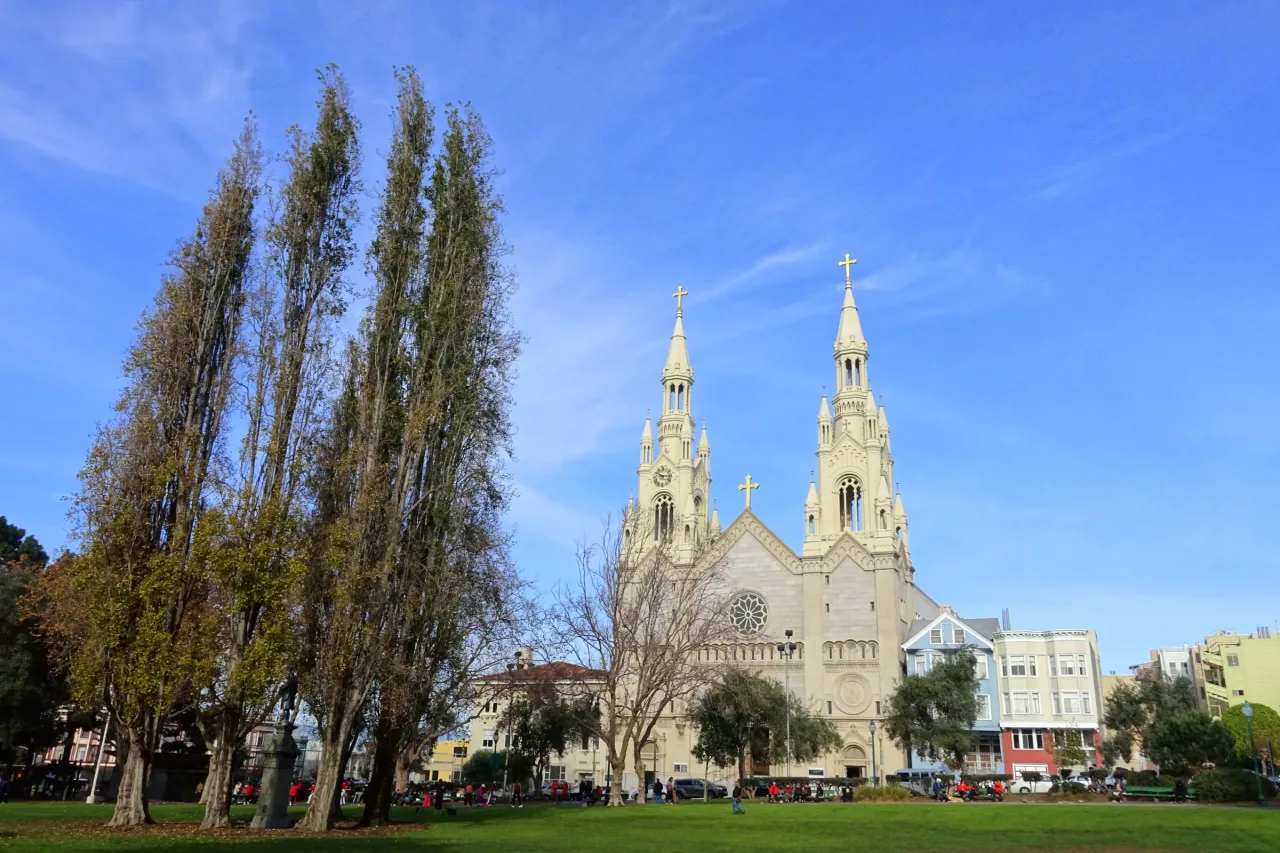
By the time a pilgrim reaches Cathedral Hill, the Camino has already passed through an eighteenth-century adobe mission, a nineteenth-century Gothic shrine and an immigrant parish of the 1920s. This is the fourth kind of Catholic building on one walk, and the contrast is the reason to stop.
It is also the mother church of the archdiocese that organizes the route. The Camino passes through the cathedral because the pilgrim is walking through a local Church, not only through a landscape.
St. Mary's is the third cathedral to serve San Francisco. Old St. Mary's was built on California Street in 1854; a second cathedral was raised on Van Ness Avenue in 1891 and destroyed by fire in 1962.
Archbishop Joseph McGucken began planning immediately, commissioning three local architects, Angus McSweeney, Paul A. Ryan and John Michael Lee. Their early sketches ranged from Romanesque to California mission style. After public argument about what the city deserved, McGucken added two more figures to the team: Pietro Belluschi, then Dean of Architecture at MIT, who took charge of design, and the Roman engineer Pier Luigi Nervi, who took charge of structure.
The archbishop was at the Second Vatican Council while the design developed, and the cathedral's own history records Nervi's claim for the result: the first cathedral truly of its time and in harmony with the Council's liturgical reforms. Ground was broken in August 1965, the cornerstone was blessed by the Apostolic Delegate Luigi Raimondi on 13 December 1967, and the building was completed in 1970. It was formally blessed on 5 May 1971, and the ceremonies completing its dedication took place on 5 October 1996.
Pope John Paul II came here on 18 September 1987, meeting religious sisters and brothers and then lay leaders in the cathedral space.
Four curved concrete surfaces rise from a square plan and meet in a cross of light at the top. The corners between them are glazed from floor to summit, so the building is simultaneously closed and open: the eye is pulled up into the cupola, and then out through the windows to the streets outside. The cathedral itself reads this as the shape of the Cross, moving vertically and horizontally at once.
This building says one thing with its roof and another with its walls, and both belong to the same argument.
Four curved concrete surfaces rising to a cross of light. The vertical movement of the building.
Full-height windows between the surfaces, keeping the city in view from inside the church.
The archbishop's chair, and the thing that makes this church a cathedral rather than a large parish.
The quiet corner, with the city visible through the glass beside the tabernacle.
The second cathedral, on Van Ness Avenue, was destroyed by fire in 1962
Ground broken August 1965; cornerstone blessed 13 December 1967
Completed 1970 and formally blessed 5 May 1971
Visited by Pope John Paul II on 18 September 1987
A working cathedral rather than a monument: the Chrism Mass, ordinations and the great archdiocesan liturgies happen here. The Blessed Sacrament chapel is the quiet room, and the one where the city stays visible.
Stand under the middle of the cupola before sitting anywhere.
The quietest place in the building, and the one where the city stays visible.
The cathedral gift shop is one of three places selling the pilgrim passport, and a stamp location.
The cupola, the assembly space and the Blessed Sacrament chapel, then the stamp.
Come in, walk to the centre of the floor, and look up before you look at anything else. Then go to the Blessed Sacrament chapel and notice that the city has not been shut out. Take the Camino stamp at the gift shop, where the pilgrim passport is also sold.
The cathedral is open to visitors most of the day; tours are not permitted during posted service times.
Visiting
Pilgrim passport
The organizers list the cathedral gift shop, alongside Mission San Rafael and Mission Dolores, as a place to buy the pilgrim passport.
Stand under the centre of it before sitting down. The building is making an argument.
Cathedral of St. Mary of the AssumptionA sign of the local Church gathered around its bishop.
Cathedral of St. Mary of the AssumptionSource note Traditional attributions are presented as tradition, with documentation named where it exists.
The end of the Camino, downhill and south from here.
The Franciscan shrine in North Beach, the stamp before this one.
The Salesian church on Washington Square, the stamp before this one on the route.
The last stamp church before the descent to Mission Dolores, and one of three places selling the pilgrim passport.
Use this for corrections, broken links, missing places, and planning ideas.