Assisi

The hill town of Francis and Clare, with the Porziuncola in the plain below and the hermitage of the Carceri above.

One story told across three levels: the medieval town that holds both tombs, the valley chapel where the Franciscan movement began, and the mountain where Francis withdrew to pray.

Region
Europe · Umbria
Suggested time
1 to 2 days
Places
9
Saints
5

Stifone / Wikimedia Commons (CC BY-SA 4.0)

Orientation

How the city gathers

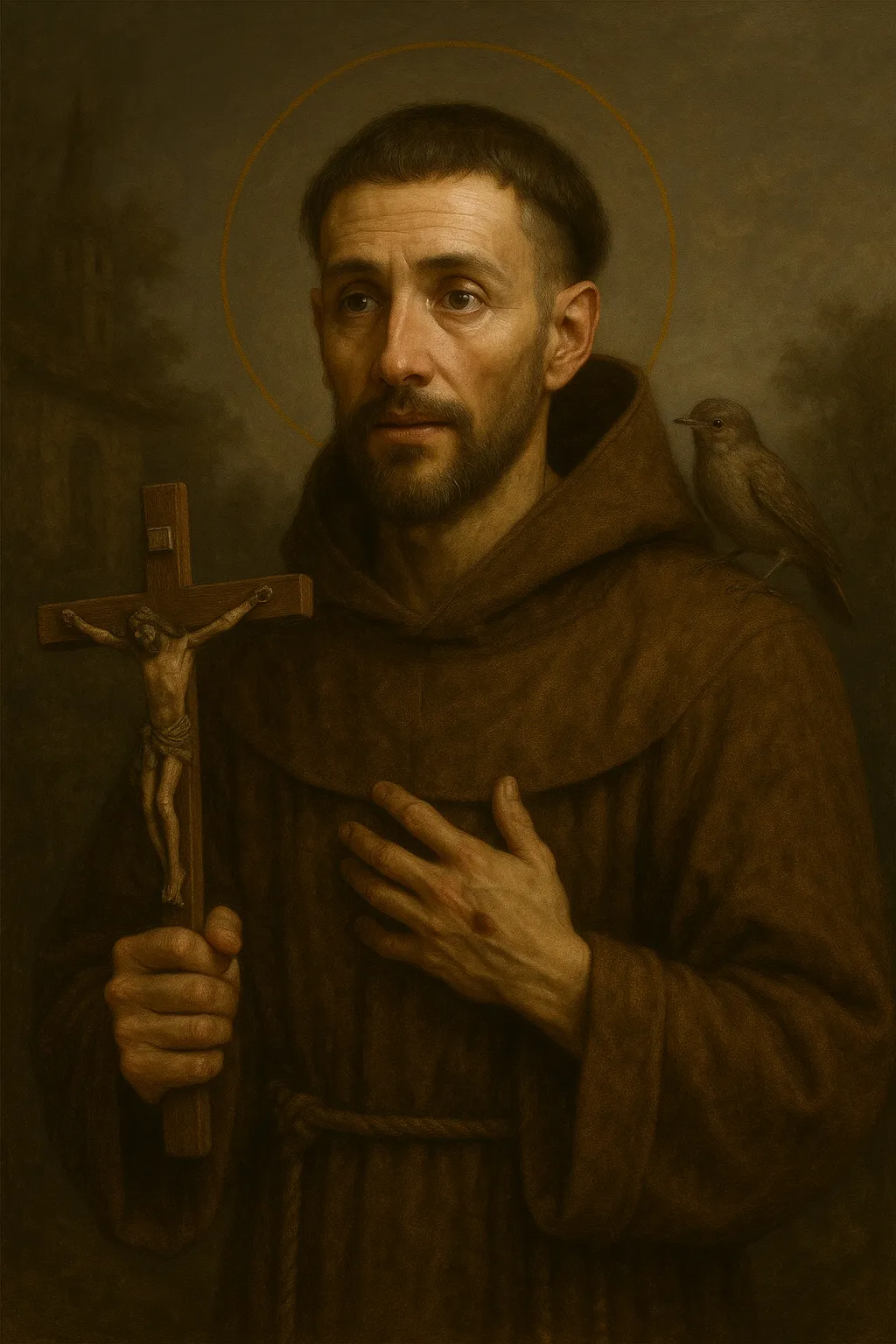
Assisi is where Francis was born, walked away from his inheritance in the bishop's square, and gathered his first brothers at the Porziuncola in the plain. Clare followed him into religious life and stayed in enclosure at San Damiano below the southern walls until her death forty-one years later. Their bodies now rest at opposite ends of the old town, with the cathedral of their baptism between them. The Eremo delle Carceri above the town keeps the silence Francis withdrew into; the Santuario della Spogliazione marks the renunciation that began everything, and now also holds the body of Saint Carlo Acutis.

Francis and Clare

One story, told across the town

Assisi does not ask you to collect churches. It asks you to follow two lives that unfolded within sight of each other: a merchant's son who gave everything back, and a young noblewoman who followed him into poverty. Each place below holds one chapter, in the order the story gives them.

  1. Begin on the highest piazza of the old town

    Baptized in the same font

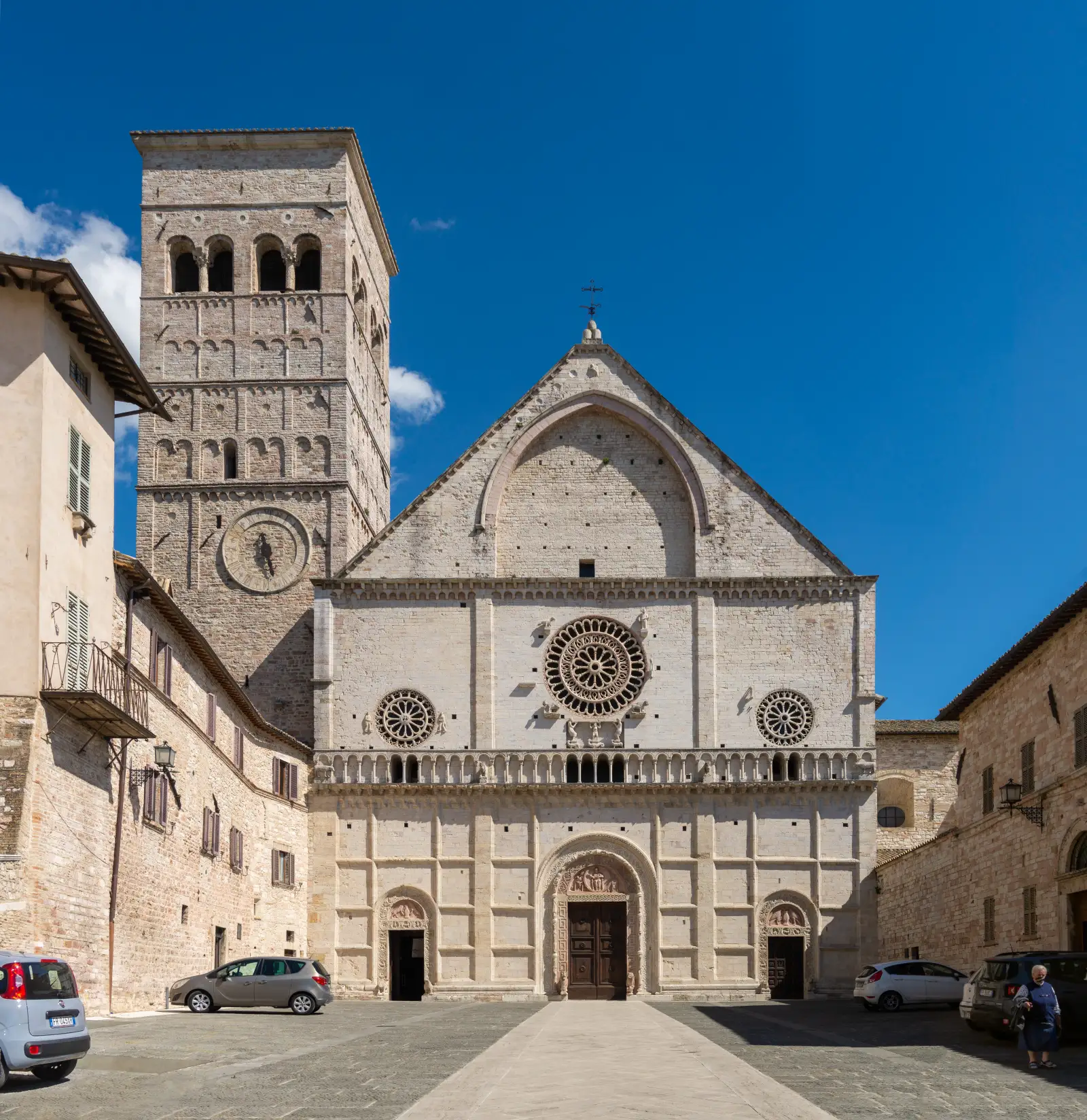
    According to long-standing local tradition, Francis was baptized in the font of the cathedral in 1182, and Clare in 1194. The story begins not at the great basilicas but in ordinary parish life, at the church of the city's first patron, the martyr bishop Rufinus.

    Cathedral of San Rufino

  2. The stone church and portico of San Damiano below the southern walls of Assisi.
    Laurajsi / Wikimedia Commons (CC BY-SA 3.0)

    Downhill from Porta Nuova, fifteen minutes on foot

    The crucifix that spoke

    Around 1205, praying before the painted crucifix in the half-ruined chapel of San Damiano, Francis heard Christ tell him to rebuild his church. He took the words literally and began hauling stones. Clare returned to this same church in 1212 and lived here in enclosure with her sisters for forty years, the first community of the Poor Clares. Near the end of his life, ill and nearly blind, Francis was nursed in a hut beside her enclosure, where tradition places the Canticle of the Creatures.

    San Damiano

  3. Back inside the walls, at Piazza del Vescovado

    He gave everything back

    Summoned before Bishop Guido to answer his father, Francis returned not only his money but the clothes he was wearing, and the bishop covered him with his own cloak. The Santuario della Spogliazione marks the tradition of that renunciation. The same church now holds the tomb of Saint Carlo Acutis, who asked to be buried in Assisi out of devotion to Francis.

    Santuario della Spogliazione

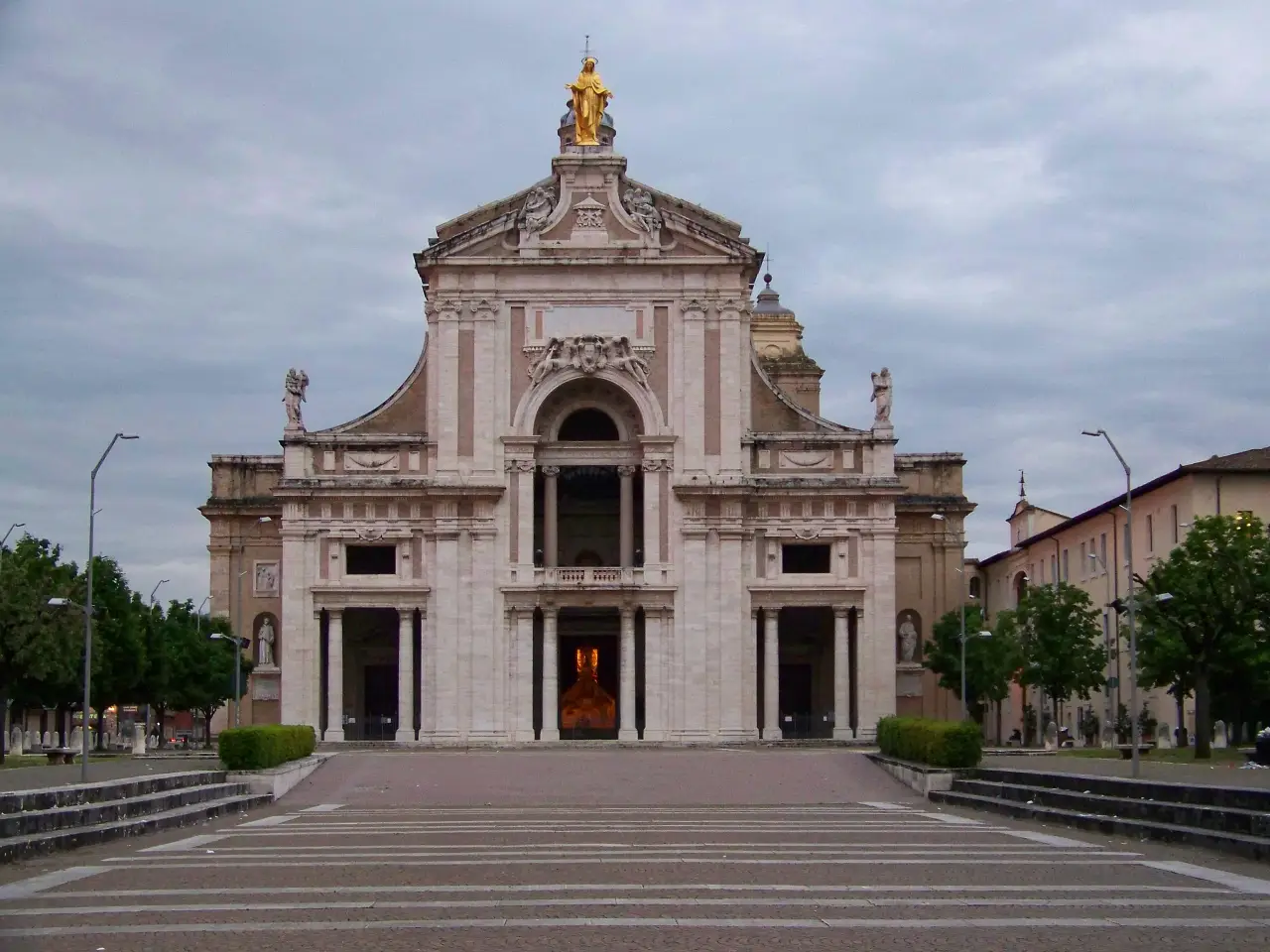
  4. The Baroque facade of the Basilica of Santa Maria degli Angeli, built to enclose the Porziuncola chapel.
    Einaz80 / Wikimedia Commons (CC BY-SA 4.0)

    Four kilometres down in the valley; bus, taxi, or an hour on foot

    A chapel small enough to begin in

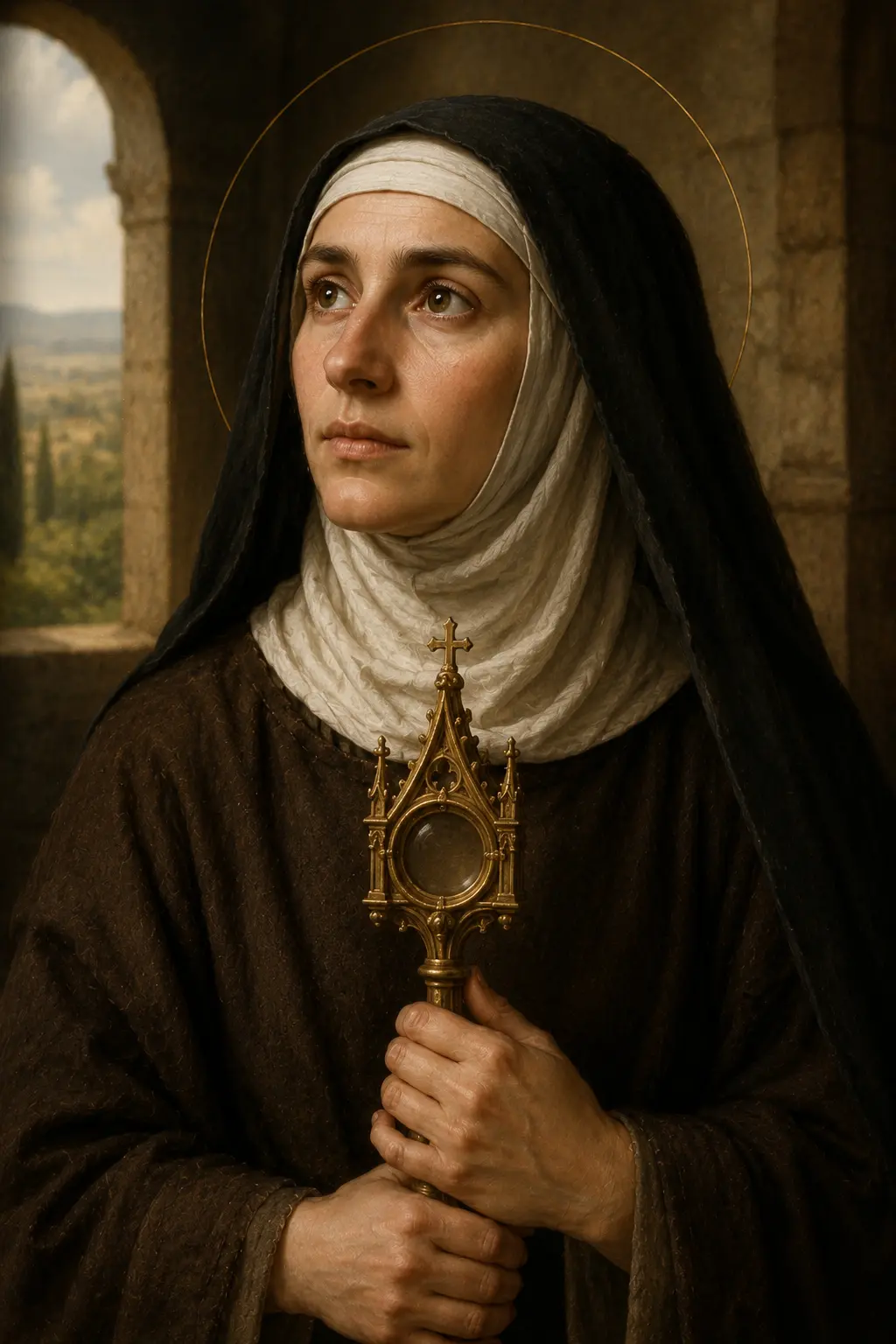
    In the plain below the town, the Benedictines gave Francis the Porziuncola, a ninth-century chapel he repaired with his own hands. His first brothers gathered around it, and in 1212 Clare received the habit there by candlelight after leaving her family's house. Francis asked to be carried back to this chapel at the end, and he died beside it on the evening of October 3, 1226, laid on the bare ground as he had asked. The movement was born, and its founder died, in a building you can cross in five steps.

    Porziuncola at Santa Maria degli Angeli

  5. Back up in the old town; the two basilicas stand fifteen minutes apart

    The two tombs hold the town

    Francis's body was carried up from the plain past San Damiano so that Clare and her sisters could see him a final time, and two years later the great basilica began to rise over his tomb at the western edge of Assisi. Clare died at San Damiano in 1253; her body now rests in the crypt of the basilica that bears her name, where the original San Damiano crucifix, the cross that spoke to Francis, hangs in a side chapel. The two tombs hold the old town between them, west and south.

    Basilica of Saint Francis The tomb of Clare is at the Basilica of Saint Clare

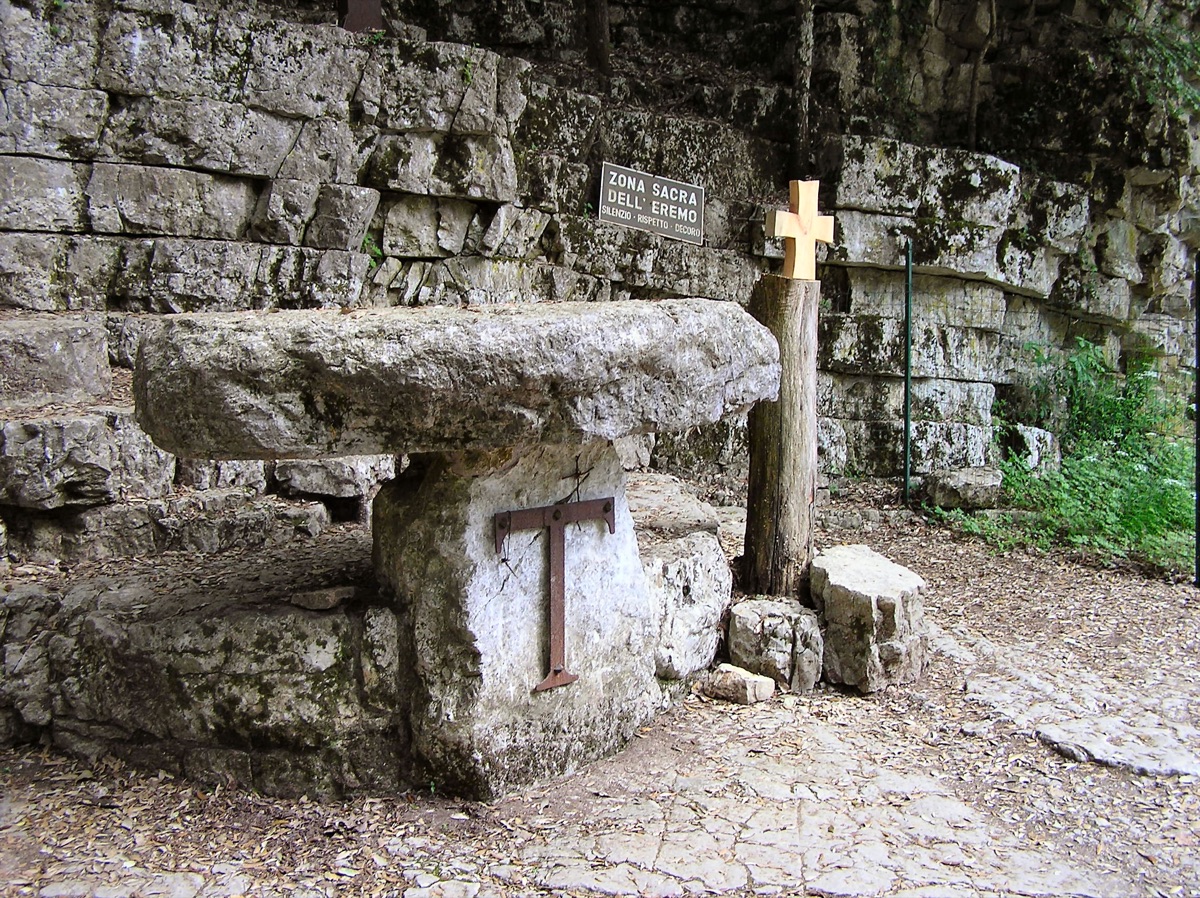
  6. Small chapel buildings at Eremo delle Carceri in the wooded hermitage above Assisi.
    Gunnar Bach Pedersen / Wikimedia Commons (Public domain)

    An hour's climb above Porta Cappuccini, or a short taxi ride

    The mountain keeps the silence

    Above everything, in the woods of Mount Subasio, the Eremo delle Carceri preserves the caves where Francis and his earliest companions withdrew to pray. Go last, after the tombs and the basilicas. The hermitage restores the quiet that the whole story came from.

    Eremo delle Carceri

Walked in this order, the city explains itself: the font, the crucifix, the renunciation, the little chapel, the two tombs, and the mountain above them all.

Three levels

How Assisi is put together

Assisi is compact, but it is not one walkable loop. The pilgrimage happens on three levels: the medieval town on the slope, the plain below it, and the mountain above it. Knowing which level a place sits on decides how your day actually goes.

800 m

Mount Subasio

The Eremo delle Carceri keeps the caves where Francis and his first brothers withdrew to pray, in oak woods high above the town. The silence there is strict, and it is the counterweight to everything below.

On the ground About an hour of steady uphill walking from Porta Cappuccini, or a short taxi ride; there is no regular bus. Treat it as its own excursion with time to be quiet, not as an add-on between churches.
424 m

The hill town

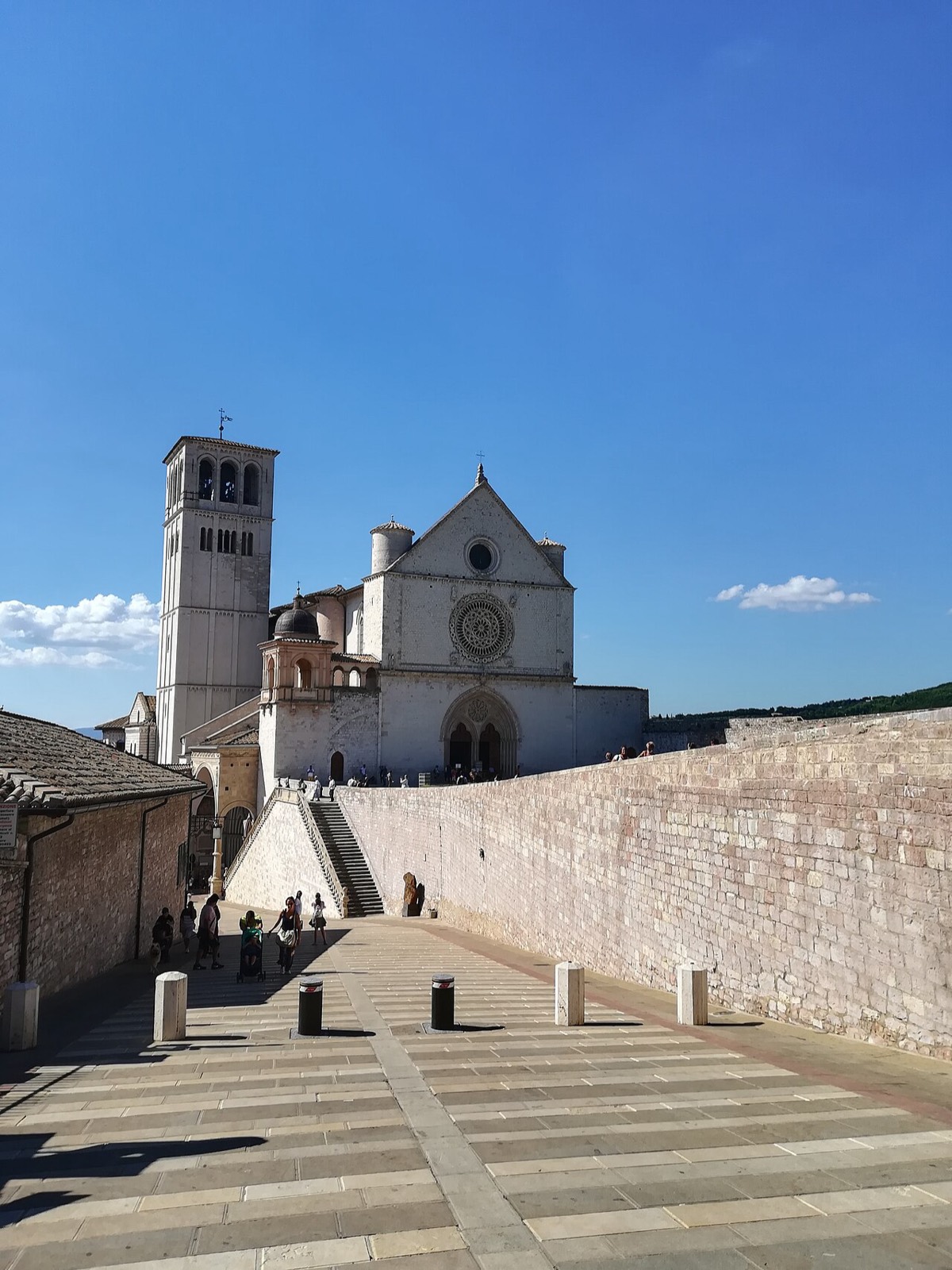
Medieval Assisi climbs the lower slope of Mount Subasio. The Basilica of Saint Francis anchors the western end, the Basilica of Saint Clare the southern edge, and the Cathedral of San Rufino stands on the highest piazza between them.

On the ground End to end is about fifteen minutes on foot, but the streets are steep and stepped, and the climb from the southern edge up to the cathedral piazza is real. Wear shoes for slope, not distance.

218 m

Below the walls and the valley floor

San Damiano sits in olive terraces just below the southern gate. Four kilometres further down, the Porziuncola stands inside the great basilica of Santa Maria degli Angeli, beside the railway station where most pilgrims first arrive.

On the ground San Damiano is a fifteen-minute downhill walk from Porta Nuova; the walk back climbs the same slope. The Porziuncola is a separate trip: the local bus or a taxi down to Santa Maria degli Angeli, or about an hour on foot.

If you must choose: the town rewards walking, San Damiano rewards the descent, and the Porziuncola and the Carceri each need their own half day.

Essential places

Where to begin in Assisi

In the hill town

Papal Basilica

Basilica of Saint Francis

PIAZZA SAN FRANCESCO

The Upper and Lower Basilicas at the western edge of the town, with the tomb of Saint Francis in the crypt and the fresco cycles by Giotto, Cimabue, and the Lorenzetti that shaped how the world pictures him.

Begin here if you want the tomb of Francis first, and the frescoes that carried his story into the world.

Basilica

Basilica of Saint Clare

PIAZZA SANTA CHIARA

The pink-and-white basilica on the southern edge of the old town. Clare's body rests in the crypt, and the original San Damiano crucifix, the cross before which Francis prayed, hangs in the side chapel.

Begin here if you want Clare's tomb and the actual crucifix of Francis's conversion in one visit.

Cathedral

Cathedral of San Rufino

PIAZZA SAN RUFINO

The Romanesque cathedral on the highest piazza, with the font traditionally venerated as the place of Francis and Clare's baptism and the relics of Saint Rufinus, the city's first patron, in the crypt.

Begin here if you want to begin where the story begins, at the font, away from the biggest crowds.

Below the town and on the mountain

Church and Cloister

San Damiano

BELOW THE SOUTHERN WALLS

The small church where tradition holds that the crucifix spoke to Francis, and where Clare lived in enclosure with her sisters for forty years. It keeps a thirteenth-century quietness the basilicas cannot.

Begin here if you are willing to walk fifteen minutes downhill for the most prayerful place in Assisi.

Basilica and Chapel

Porziuncola at Santa Maria degli Angeli

SANTA MARIA DEGLI ANGELI, IN THE VALLEY

The tiny ninth-century chapel where the Franciscan movement was born, where Clare was received, and where Francis died, standing intact under the dome of the sixteenth-century basilica built around it.

Begin here if you arrive by train, or you want the place where the whole movement actually began.

Hermitage

Eremo delle Carceri

MOUNT SUBASIO, EAST OF ASSISI

The hermitage in the oak woods above the town, where Francis and his earliest brothers withdrew to pray in caves. The buildings are small, the silence is kept strictly, and the town's noise does not climb this high.

Begin here if you have a half day and want the contemplative Assisi that the basilicas alone do not show.

Each entry named and sourced

Tombs, relics & sacred objects

Within an hour's walking the pilgrim can stand at the tomb of Francis, the tomb of Clare, and the cross that tradition holds spoke to Francis at his conversion. The cathedral keeps the relics of Saint Rufinus; the Santuario della Spogliazione holds the body of Saint Carlo Acutis.

Venerated at

BASILICA OF SAINT FRANCIS, CRYPT OF THE LOWER BASILICA

Tomb of Saint Francis

Tomb of

The body of Saint Francis, hidden for centuries and rediscovered in 1818, rests in a stone reliquary at the center of the crypt. The crypt remains a working place of prayer, and pilgrims keep silence there.

Visit Basilica of Saint Francis
Venerated at

BASILICA OF SAINT CLARE, CRYPT

Body of Saint Clare

Body of

The body of Clare lies in the crypt of her basilica, with relics of her hair, habit, and personal effects preserved nearby.

Visit Basilica of Saint Clare
Venerated at

BASILICA OF SAINT CLARE, CHAPEL OF THE CRUCIFIX

San Damiano Crucifix

Traditionally venerated as

The original painted crucifix from San Damiano, the cross before which Francis prayed at his conversion, hangs in the chapel beside the nave. A copy remains in the church of San Damiano itself.

Visit Basilica of Saint Clare
  • Founding chapel of Porziuncola Chapel Basilica of Santa Maria degli Angeli
  • Body of Body of Saint Carlo Acutis Santuario della Spogliazione
  • Relics of Relics of Saint Rufinus Cathedral of San Rufino

Visit plans

Plan your time in Assisi

Plan 1

A Few Hours

Stay on the spine of the old town: the tomb of Francis in the Lower Basilica, the cathedral font, and the tomb of Clare with the San Damiano crucifix. The three sit along one walkable line, west to south.

  1. Basilica of Saint Francis (tomb of Francis)
  2. Cathedral of San Rufino
  3. Basilica of Saint Clare (tomb of Clare, San Damiano crucifix)

Plan 2

One Full Day

The basilicas in the morning, before the day-trip crowds arrive. After midday, walk down to San Damiano, then take the bus or taxi to the Porziuncola in the valley. Return to the old town for evening prayer.

  1. Basilica of Saint Francis
  2. Cathedral of San Rufino
  3. Basilica of Saint Clare
  4. San Damiano
  5. Porziuncola at Santa Maria degli Angeli

Plan 3

Two Days

Two full days let Assisi keep its shape: the town and its two tombs on the first day, the valley and the mountain on the second. The full guide decides the order, the transitions, and what to cut when energy runs out.

  1. Day 1: the town, the tombs of Francis and Clare, San Damiano
  2. Day 2: the Porziuncola in the valley, the hermitage on Monte Subasio
Read the full two day guide

Journey Studio

Make this pilgrimage your own.

Start from a few hours, one full day, or a deeper Franciscan stay. Save the places that hold your attention and let Journey Studio draft a realistic Assisi itinerary around your pace, your days, and the hours the churches actually keep.

Build an Assisi journey

Works without an account. Nothing is scheduled until you ask.

Practical, not booking

Before you go

The midday closure

Most churches in Assisi close for a long midday break. Keep the early morning and late afternoon for the basilicas, and use the middle of the day to walk between sites, eat, or rest.

At the Basilica of Saint Francis

Silence is enforced, shoulders and knees must be covered, and photography is not permitted inside the Upper or Lower Basilica. Bag checks can be slow in high season; travel light.

Liturgy

Daily Mass is celebrated in all of the major churches. Vespers with the Franciscan community at the Basilica of Saint Francis is one of the best hours of prayer in the city.

Dress code

Shoulders and knees covered in all churches. Carry a scarf or light layer in summer.

Walkability

The old town is compact but steeply graded; every north-south street climbs. San Damiano, the Porziuncola, Rivotorto, and the Eremo delle Carceri all lie outside the walls. Only San Damiano is a comfortable walk from the center; the Porziuncola, Rivotorto, and the Carceri need a deliberate transfer or a dedicated walking plan.

Transit

Trains arrive at Santa Maria degli Angeli in the valley, a short walk from the Porziuncola; local buses and taxis run up to the old town. The Eremo delle Carceri is reached on foot or by taxi.

Connected saints

Saints woven into Assisi

View the fuller Assisi list

Assisi's saints are one story with a before and an after: Rufinus the martyr bishop came first, Francis and Clare define the city, Agnes followed her sister, and Carlo Acutis chose to be buried here out of devotion to Francis.