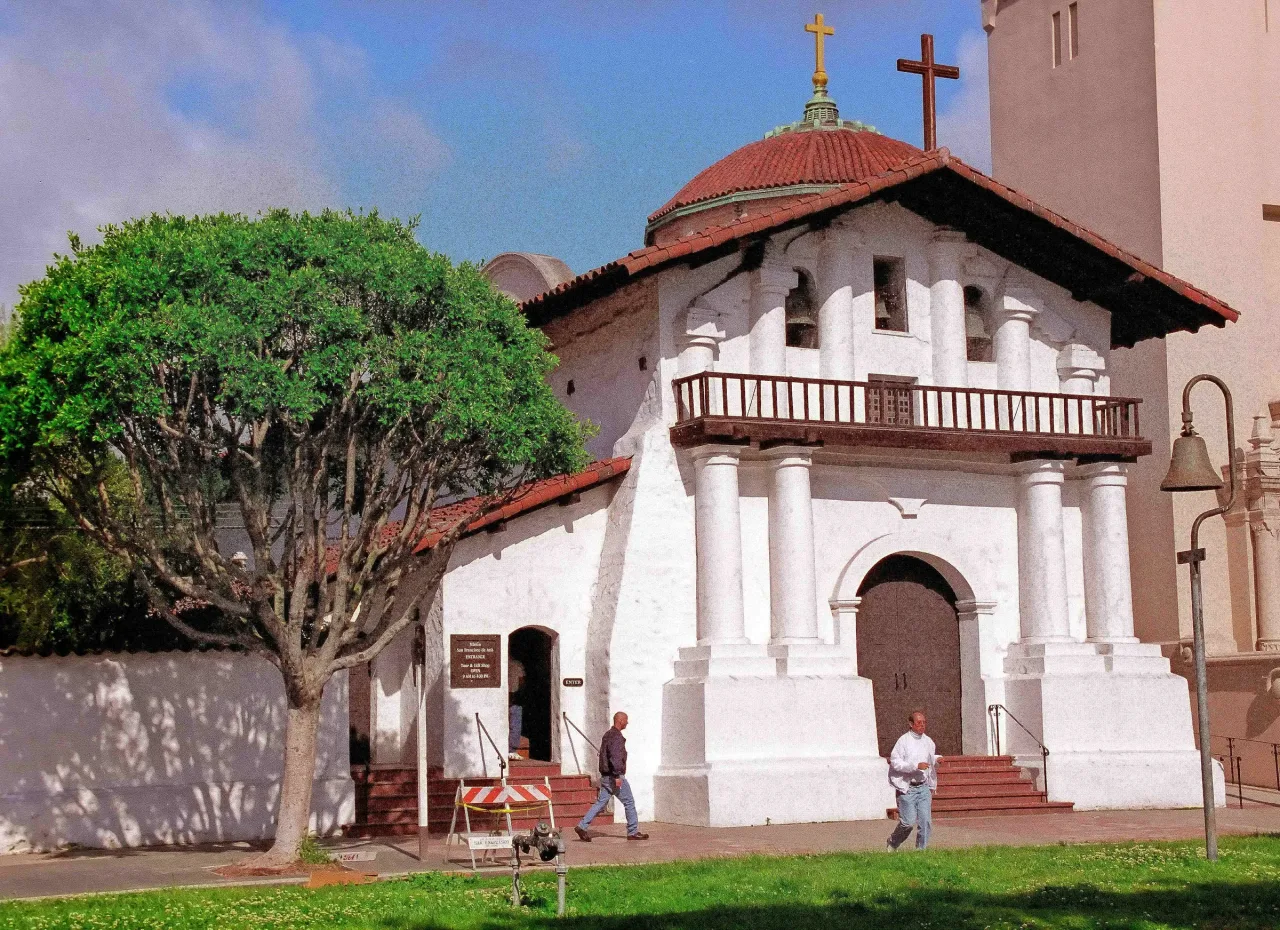
The Old Mission chapel
Surviving eighteenth-century fabricPray in the room itself; it is the thing that has not been replaced.
Mission DoloresThe mission that named the city, whose 1791 adobe chapel is the oldest intact building in San Francisco and the end of the Camino de San Francisco.
San Francisco is named after this mission, and this mission is named after Saint Francis. That is the whole reason a Franciscan pilgrimage in California ends at this door rather than anywhere else.
What a pilgrim actually finds is a small, dim adobe room with a painted ceiling and a gilded reredos, standing beside a much larger and much later basilica. The small room is the point. It was finished in 1791, it stood through 1906 when most of the city burned, and it is the oldest intact building in San Francisco.
The mission was founded on October 9, 1776 and dedicated to Saint Francis of Assisi. It took its common name from a nearby creek the Spanish called the Arroyo de los Dolores, the Creek of Sorrows, and San Franciscans have called it Mission Dolores ever since. The adobe chapel that stands today was completed in 1791.
It was built by Ramaytush Ohlone people and their neighbours, on Ramaytush land. The National Park Service records what followed with no softening: roughly two thousand Ramaytush lived on the peninsula before 1769; by 1801 all of them had joined Mission Dolores, and about eighty percent of the population had died. Average life expectancy after baptism at this mission was four years. By 1850 five Ramaytush families remained. The NPS attributes the collapse to disease and to poor living and working conditions at the mission, and describes the wider American period in terms of genocide, kidnapping and legalized servitude.
That is not the whole story either. Coast Miwok and Ohlone descendants live throughout the Bay Area today, and the mission's own curator is an Ohlone descendant. The cemetery outside is, in the mission's own words, the final resting place of some five thousand Ohlone, Miwok and other First Californians who built Mission Dolores and were its earliest members and founders. A pilgrim who arrives here after twenty-four miles is standing on their work and beside their graves.
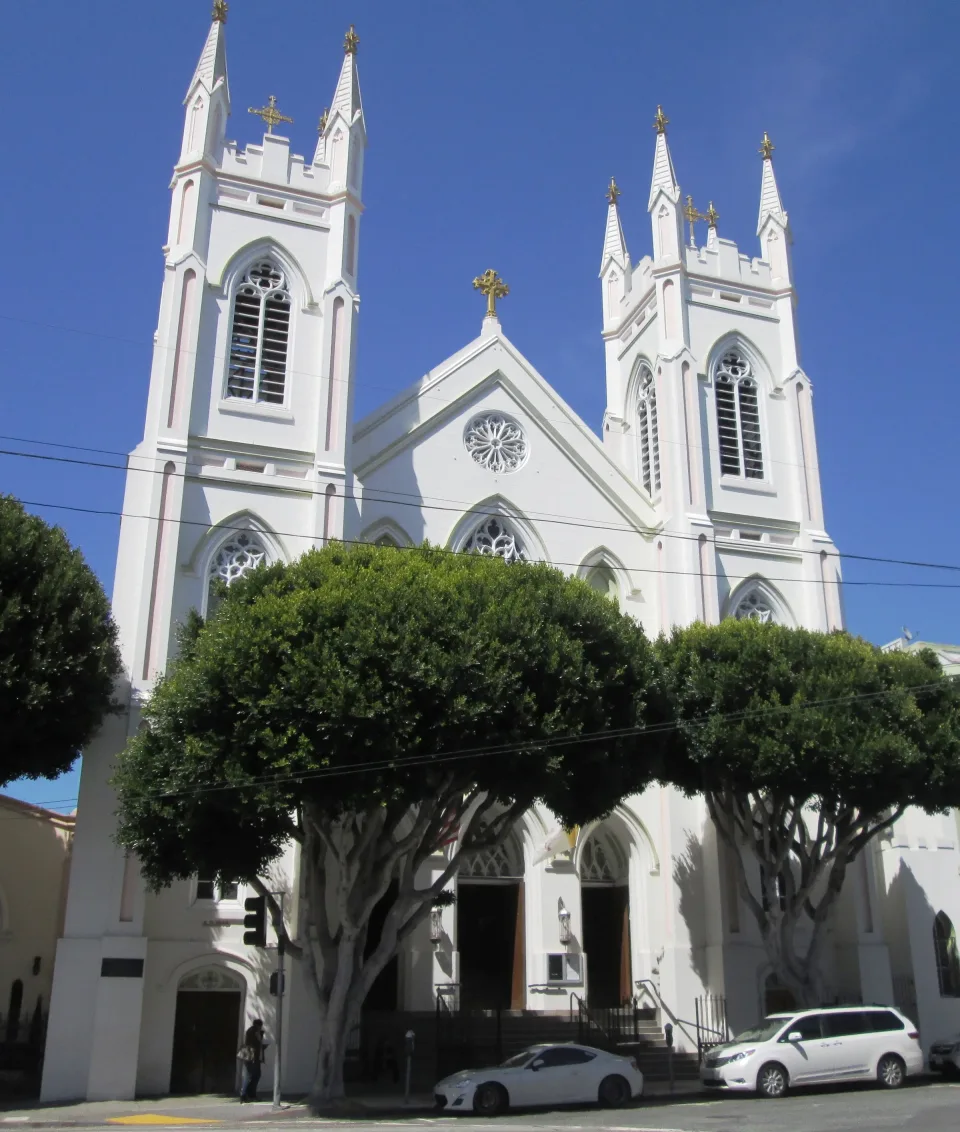
Two churches share the corner. The Old Mission is adobe, with walls about four feet thick, a columned porch, a balcony and three bells in the gable. Inside, the redwood ceiling carries a chevron pattern in red, ochre and white, painted in vegetable dyes in Ohlone designs, above a gilded Mexican baroque reredos. The much larger church beside it is the basilica: its cornerstone was laid in 1913, it was dedicated at Christmas 1918, and its facade was given its elaborate Churrigueresque ornament in a 1926 remodelling. Sunday Mass is in the basilica; the Old Mission is where the weekday Mass is said.
Almost every visitor walks toward the larger church first. The pilgrimage ends in the smaller one.
Completed 1791, four-foot walls, and the only building in San Francisco to have stood continuously since before the city existed.
Ohlone chevron designs in vegetable dyes on redwood, made by the people who built the walls beneath them.
Gilded Mexican baroque, brought by sea, and out of all proportion to the plain room that holds it.
The only one left inside the city, and the resting place of some five thousand First Californians.
A different, later church: cornerstone 1913, dedicated 1918, its ornamented front added in 1926.
Founded October 9, 1776 and named for Saint Francis of Assisi
Adobe chapel completed in 1791
Survived the earthquake and fire of 1906
The only cemetery remaining inside the city limits
A living parish and a burial ground at once. The chapel is small enough that it cannot be toured quickly, and the cemetery beside it changes what the chapel means.
The 1791 room itself. Sit in it rather than passing through it.
Ohlone design work in vegetable dyes, still overhead after more than two centuries.
Some five thousand Ohlone, Miwok and other First Californians are buried here. Pray for them.
The Compostela and the Certificate of Distance are issued at the mission gift shop, which keeps its own hours.
The chapel, the ceiling, the graves and the certificate, in the order that keeps the arrival from becoming an errand.
The chapel and the cemetery, for a visitor who has half an hour rather than an afternoon.
Enter the Old Mission first, before the basilica and before the gift shop. Sit down. Look up at the ceiling before looking at the altar. Then go out into the cemetery and the Ohlone ethnobotanical garden, and only then collect the certificate that ends the Camino.
Pilgrims finishing the route need the gift shop, which does not keep the same hours as the church.
Visiting
Ending the Camino
Pray in the room itself; it is the thing that has not been replaced.
Mission DoloresLook up. The people who built this church are named on the ceiling of it.
Mission DoloresPray for the dead here by name where names survive, and by number where they do not.
Mission DoloresSource note Traditional attributions are presented as tradition, with documentation named where it exists.
The mother church of the archdiocese, the last stamp before this arrival.
The Franciscan shrine in North Beach, where relics of Francis, Clare and Anthony are kept.
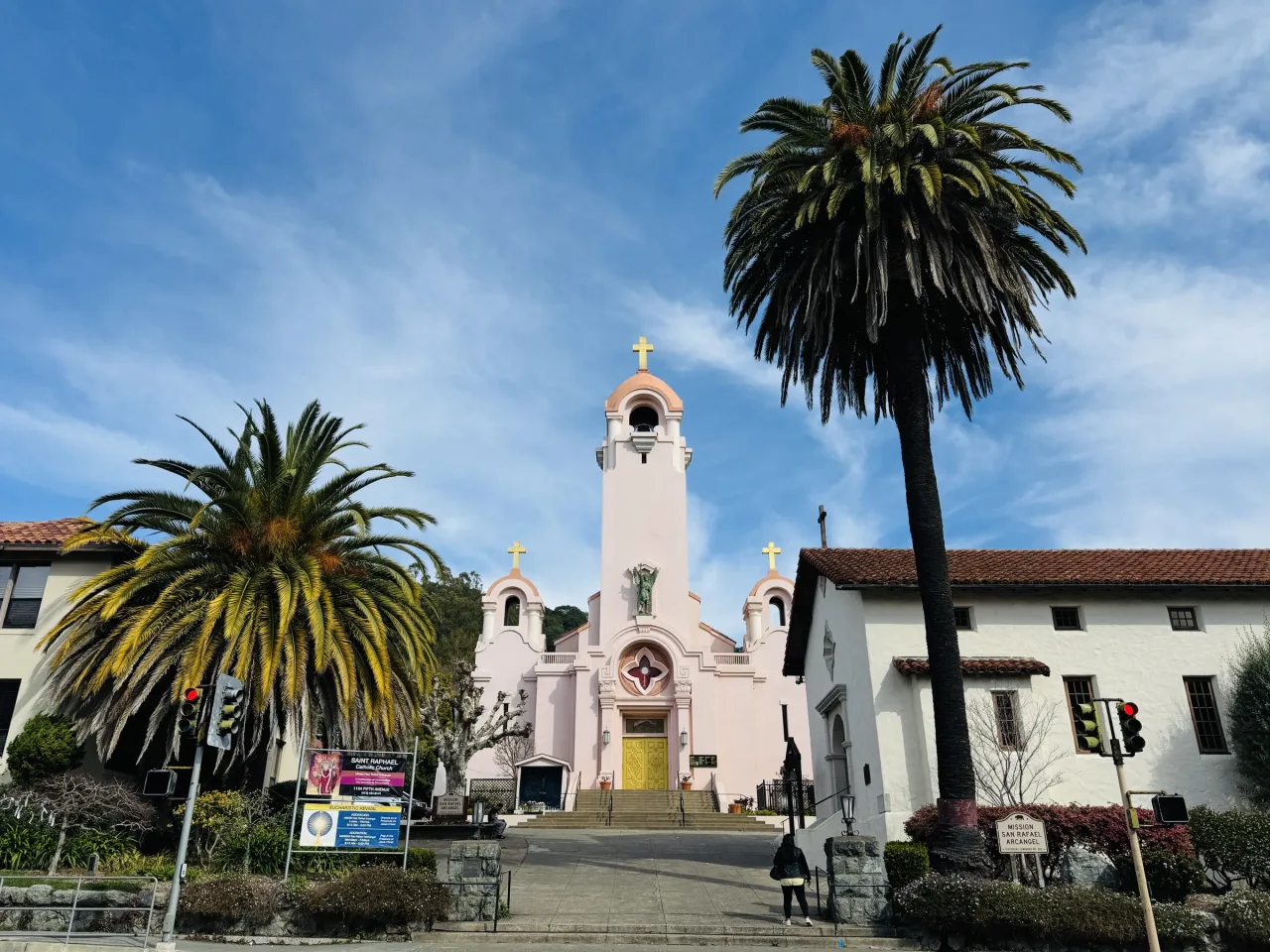
The asistencia founded in 1817 to care for the sick of this mission, and the start of the Camino.
The route ends here, and the certificates are issued at the gift shop on presentation of a stamped passport.
Official basilica sources.
September 20, 2026
Use this for corrections, broken links, missing places, and planning ideas.