The argument
The Shape of the Day
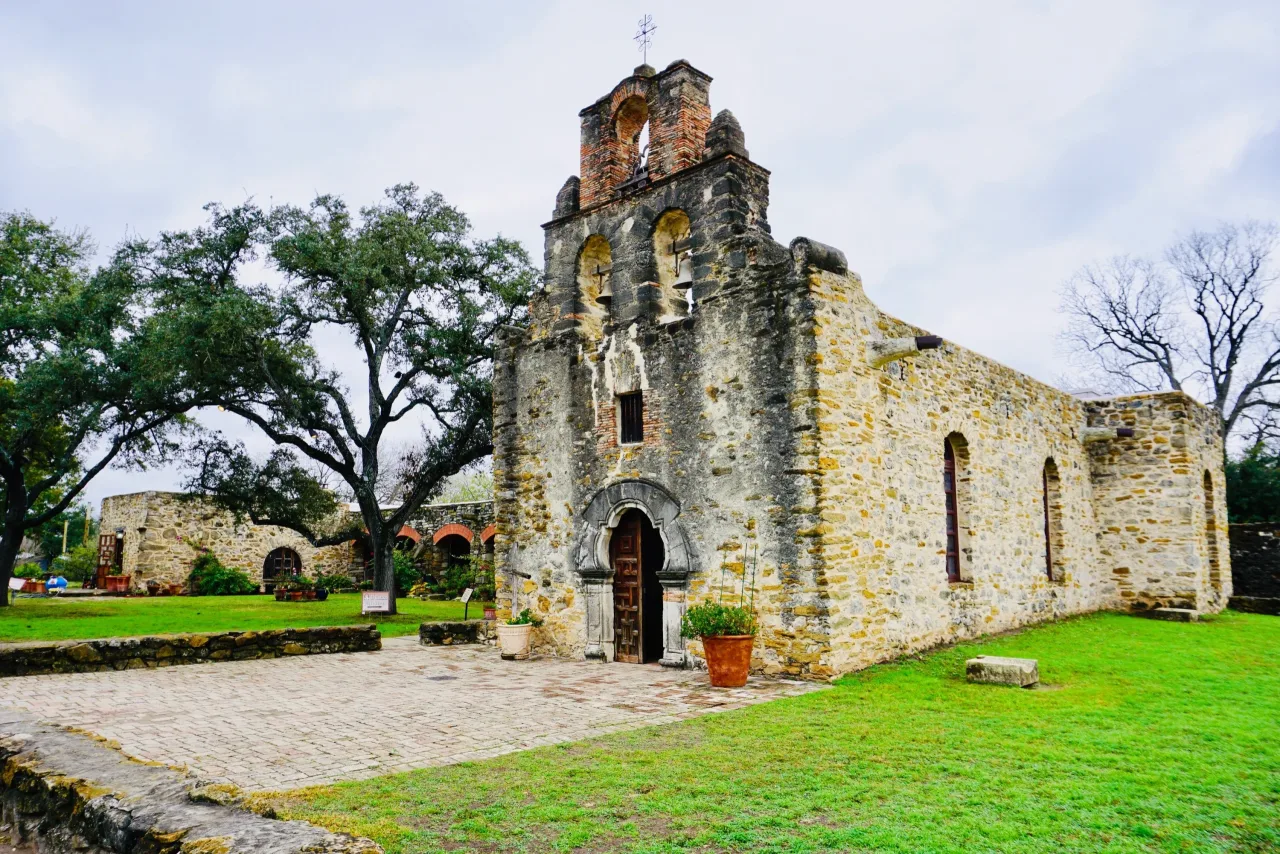
El Camino de San Antonio is not a generic missions tour. Its official south-to-north order begins at Mission Espada and ends at San Fernando Cathedral, joining four living mission parishes to the mother church of San Antonio. The road is long enough to demand preparation and coherent enough to make one serious pilgrimage day.
The route carries a difficult inheritance. Franciscan evangelization, sacraments, sacred art, agricultural skill, Indigenous agency, family life, disease, displacement, colonial control, coercion, resistance, and survival all belong to the mission story. A Catholic pilgrimage does not protect faith by hiding suffering or erase grace by reducing every church to an instrument of empire. Walk humbly, pray for the peoples who built and endured these communities, and listen to the living parishes and descendant communities whose story did not end at secularization.
One day is the canonical guide because it preserves the actual linear Camino and the official stamp order. It is intentionally demanding. Pilgrims who need more prayer time, heat margin, or accessible transport should use the staged or vehicle-supported adaptations rather than pretend a rushed five-stop drive is the same embodied pilgrimage.
What this guide leaves out, on purpose
-
The Alamo.
The Alamo is part of the UNESCO San Antonio Missions inscription, but it is not one of the five active churches on the current official El Camino route. This guide preserves the ecclesial Camino rather than expanding into a general heritage circuit.
-
A River Walk sightseeing day.
The Camino follows a sacred and historical line along the mission landscape; downtown attractions do not earn stops merely because the route reaches the city center.
-
Additional churches and museums.
Five churches already fill a demanding day. Added stops would take time from prayer, truthful interpretation, water, and safe walking.