
San Antonio

Five living Catholic churches joined by the river, the mission landscape, and a real pilgrim road

Begin with Saint Francis at Mission Espada, follow the mission churches north, and finish at San Fernando Cathedral with the road's intentions before the altar.

Region
Texas
Suggested time
One full day for the Camino; two days if you want Mass, deeper mission interpretation, and a safer staged walk
Places
5
Saints
4
Follow the five churches
2

How long you have

One hard walking day or two prayerful stages

San Antonio preserves a rare Catholic landscape in which four eighteenth-century mission churches still serve worship and a cathedral still receives the city. The stones carry evangelization and sacramental life, Indigenous labor and agency, epidemic loss, colonial coercion, family endurance, sacred art, water systems, and living descendant communities. The Camino makes those places one pilgrimage without pretending their history was simple.

The Terrain

A south-to-north mission landscape, then the cathedral

The four missions follow the San Antonio River and Mission Reach before the Camino continues toward Main Plaza. The route is linear, exposed in places, and long enough that safe daylight and return transport must be planned.

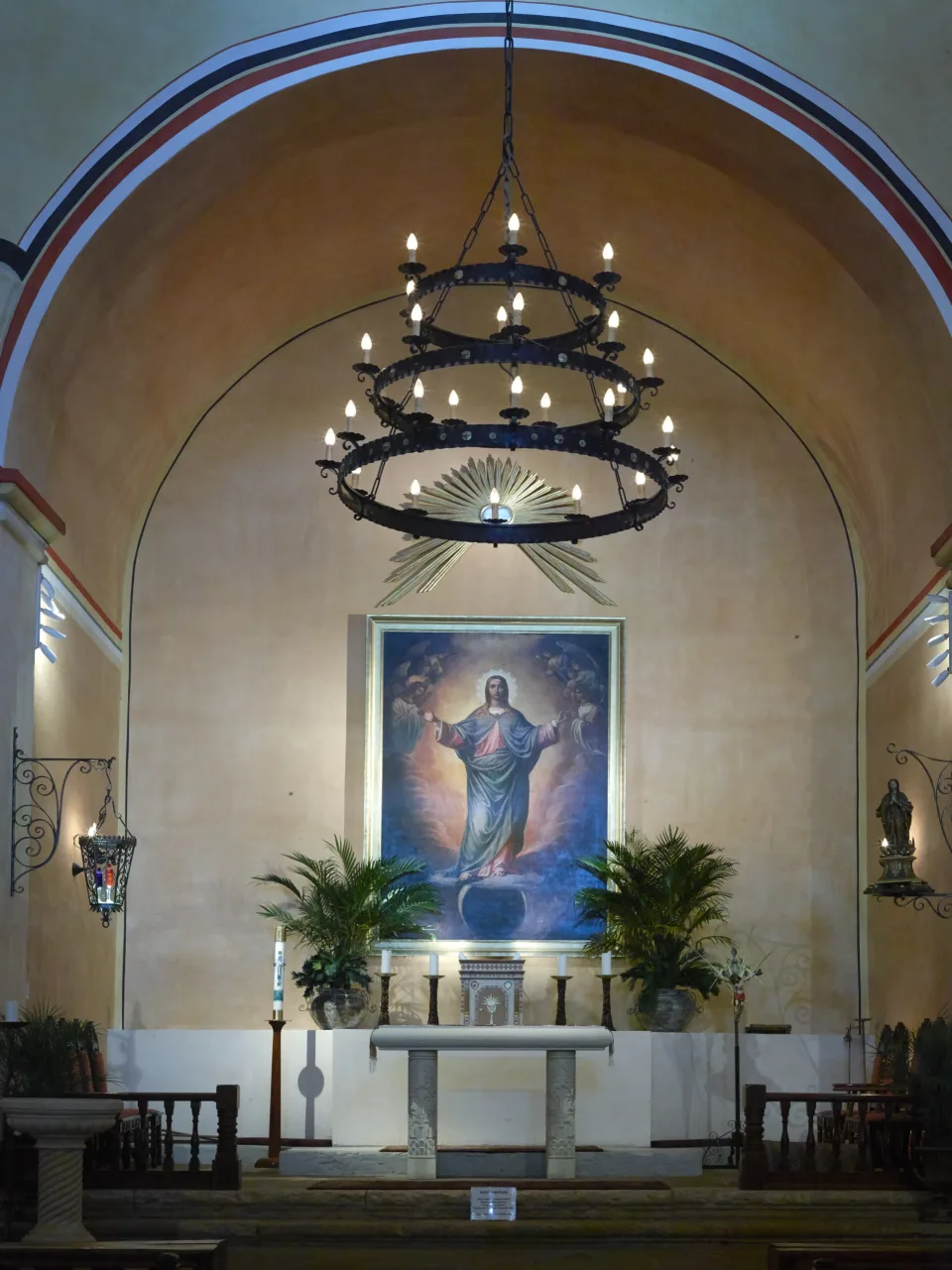
The simple sanctuary and altar inside Mission Concepcion in San Antonio.
The terrain matters because every mile joins one living altar to the next.

Southern missions

Espada and San Juan introduce the Camino through small churches, acequias, fields, and the ordinary labor of mission community.

On the ground Begin at Espada and move north to San Juan on the current marked route; verify heat, trail, and river conditions.
Central mission anchor

San Jose provides the largest compound, principal visitor center, and the longest interpretive and rest stop.

On the ground Protect time for the church, compound, water, food, and rest before continuing north.

Concepcion to Main Plaza

Concepcion offers the final mission church and surviving frescoes before the Camino leaves the mission chain for San Fernando Cathedral.

On the ground Leave Concepcion with enough daylight and confirmed cathedral access to complete the final urban leg safely.

Sacred geography

Choose a way into the city

The four mission parishes

Cathedral and Camino completion

The five churches

One living Catholic landscape

The official Camino order runs from Espada to San Fernando Cathedral.

active mission parish

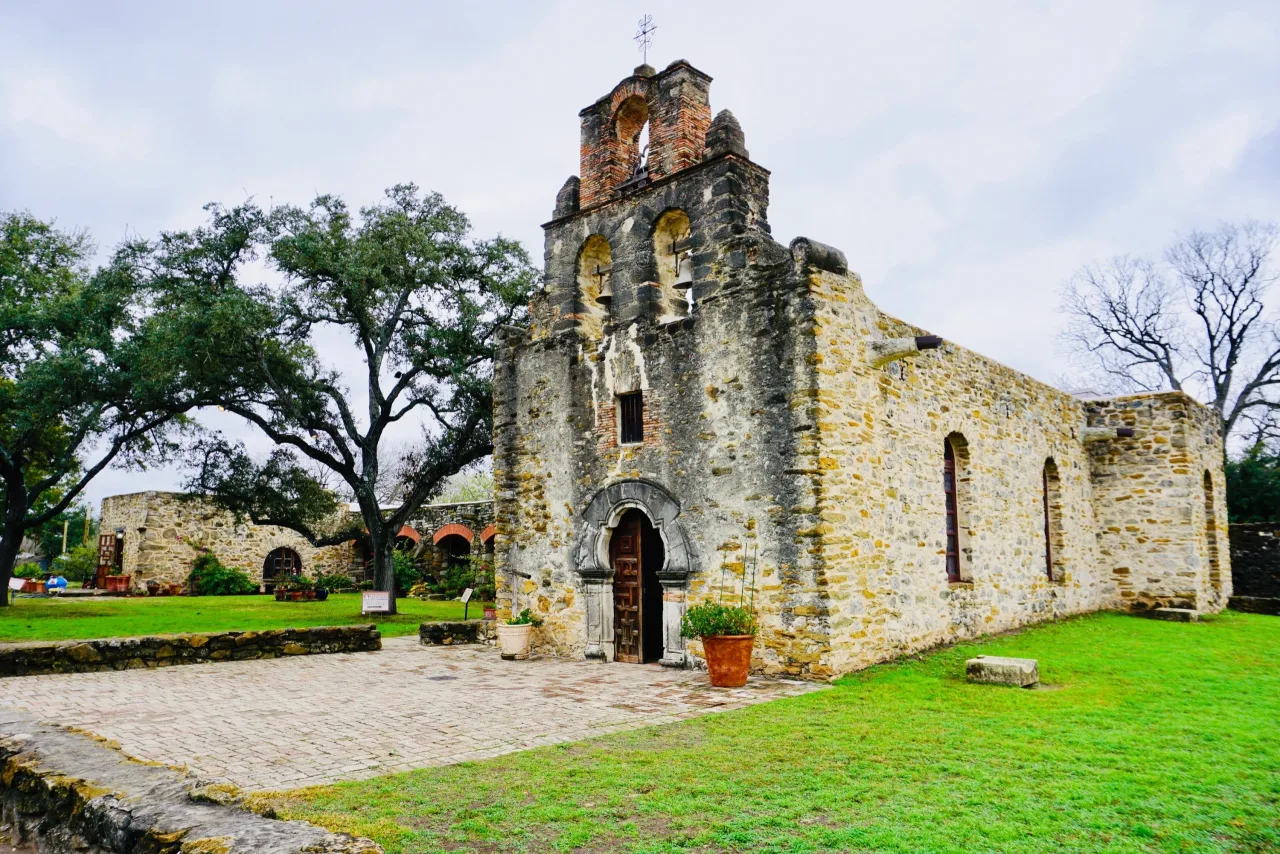
Mission Espada

SOUTHERN MISSION LANDSCAPE

The Camino's humble southern beginning: a living Franciscan mission church joined to enduring waterworks and a history that holds evangelization, Indigenous agency, coercion, loss, and continuity together.

active mission parish

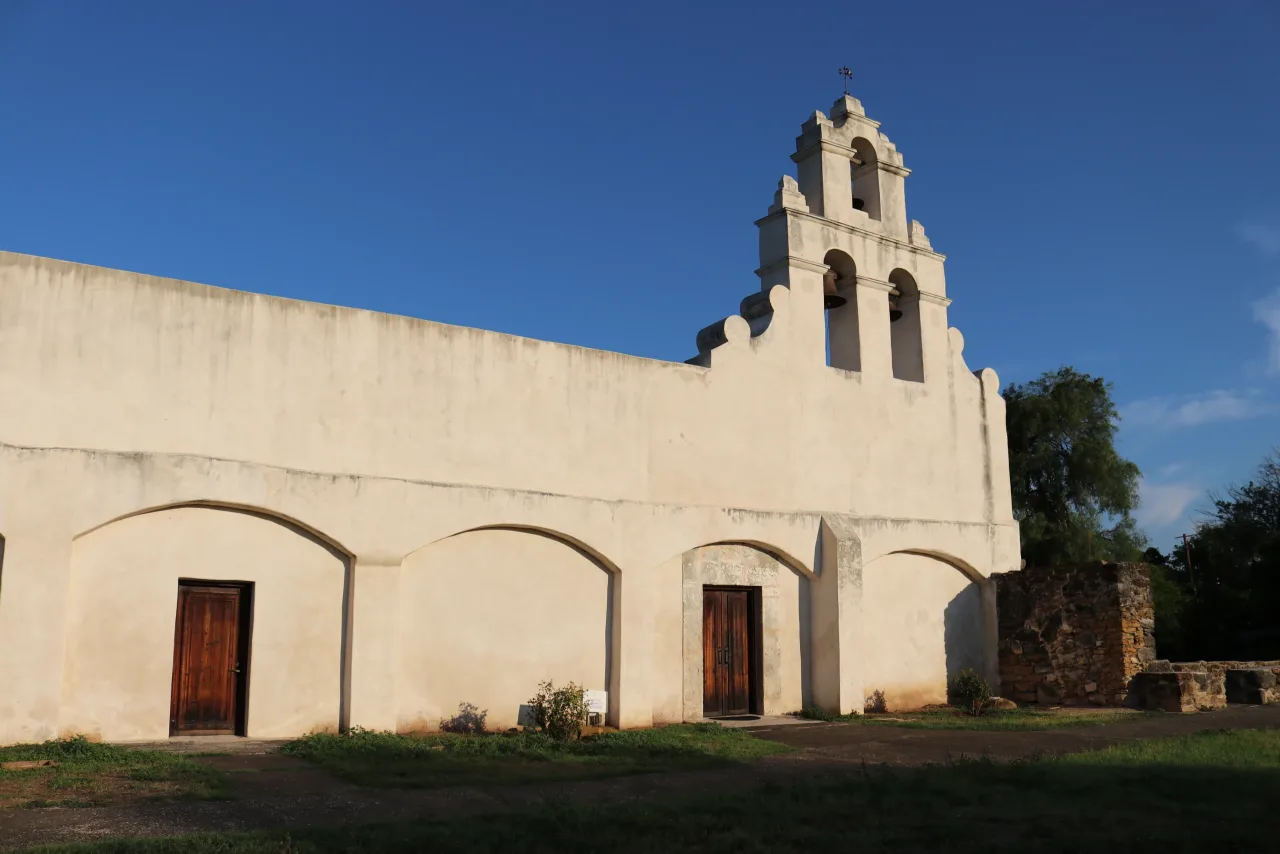
Mission San Juan Capistrano

MISSION REACH / GRAF ROAD

A modest active church within a landscape of acequia, farm, granary, and unfinished stonework, revealing mission life beyond monumental architecture.

active mission parish

Mission San Jose

SAN JOSE / MISSION REACH

The Queen of the Missions: an active parish and Franciscan presence surrounded by carved church, Rose Window, granary, convento, walls, and the route's fullest historical interpretation.

active mission chapel

Mission Concepcion

MISSION ROAD / NORTHERN MISSION LANDSCAPE

An unusually intact 1755 mission church where stone vaults, faded frescoes, Marian dedication, and current parish worship remain together.

cathedral and active parish

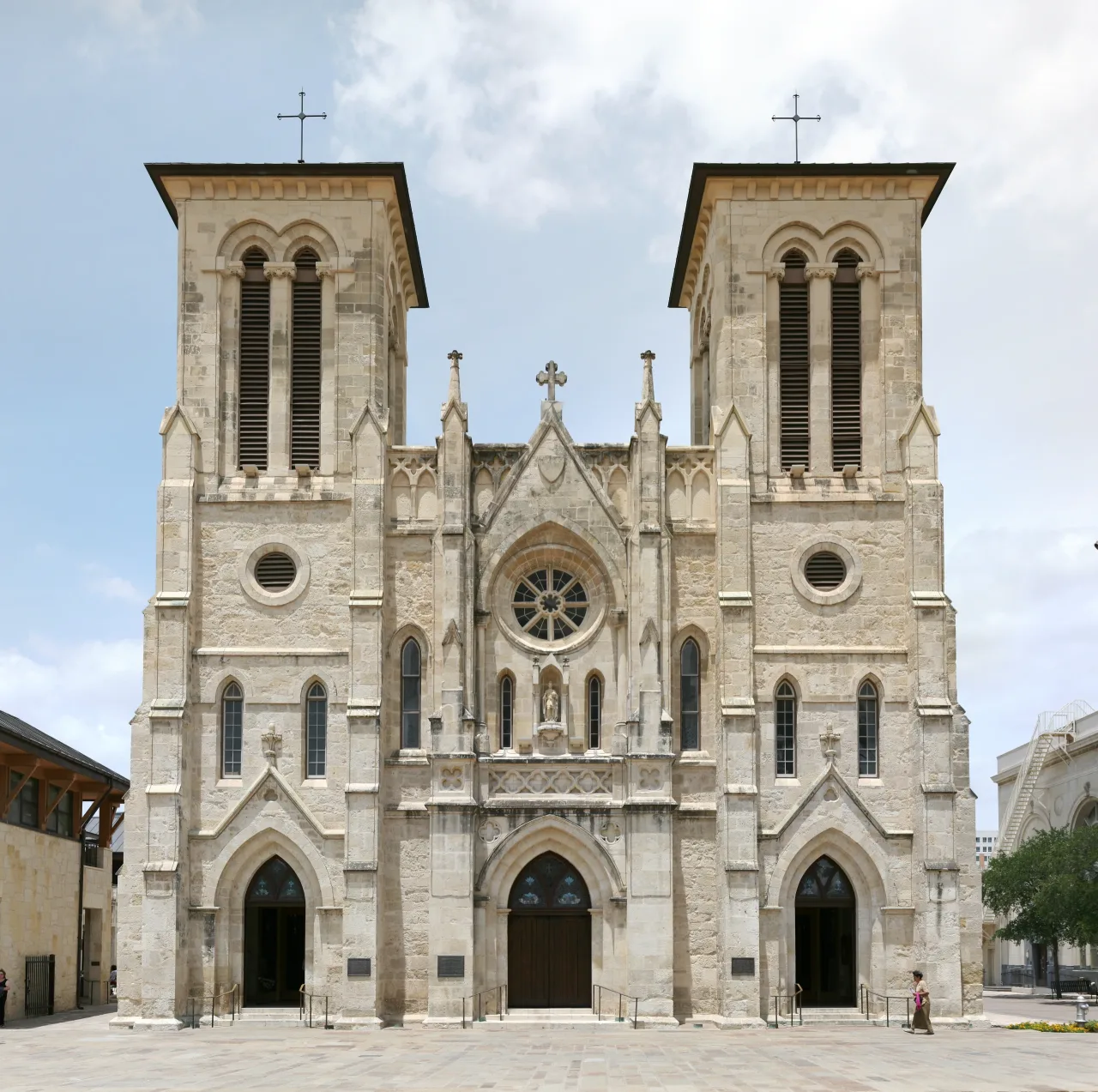
San Fernando Cathedral

MAIN PLAZA / DOWNTOWN

The living cathedral receives the Camino from the four mission churches and turns the final stamp into thanksgiving before the altar.

Sacred map

San Antonio Sacred Places Map

5 Essential Places shown.

Select a marker to visit or save that place. The list above stays complete on its own.

Suggested pilgrimages

Paths we've walked, ready to make yours.

1 in San Antonio

Suggested order. Verify opening hours, transit, and walking conditions before you go.

How My Journey works →

Each entry named and sourced

Tombs, relics & sacred objects

San Antonio's mission road is centered on altars, tabernacles, living parish worship, and sacred architecture. The route does not need unsupported relic claims to become holy ground.

Mission altars and tabernacles

Historic fresco fragments

Rose Window

  • Mission altars and tabernacles
  • Historic fresco fragments
  • Rose Window

Plan the pilgrimage

Let church access, weather, and safe daylight govern the day

Plan 1

Choose one mission

With only a few hours, choose San Jose for the fullest mission compound or Concepcion for a quieter, unusually intact church. Do not claim to have completed the Camino.

  1. Mission San Jose
  2. Mission Concepcion

Practical, not booking

Before you go

Register before walking

Obtain the current passport and confirm stamps and certificate procedures. The Pilgrimage Center keeps limited hours and should never be assumed open.

Treat heat as a safety condition

Carry water, food, sun protection, a charged phone, and an exit plan. Postpone, split, or support the route when weather makes the full walk unsafe.

Churches are active parishes

Weddings, funerals, Masses, and parish events can change access even when park grounds remain open. Worship is not an interruption to the visit.

The route is not a loop

Arrange the Espada start and downtown finish before setting out. Do not assume a comfortable return after a long walking day.

Saints

Saint Francis and Saint Joseph on the mission road

Photo credits
  1. San Antonio; San Fernando Cathedral; San Antonio city hero. Daniel Schwen, CC BY-SA 4.0, via Wikimedia Commons. Source. CC BY-SA 4.0.
  2. Mission Espada. Faisalmujib, CC BY-SA 4.0, via Wikimedia Commons. Source. CC BY-SA 4.0.
  3. Mission San Juan Capistrano. National Park Service, public domain, via Wikimedia Commons. Source. Public domain.
  4. Mission San Jose. Mission San Jose San Antonio. Travis Witt (Liveon001), CC BY-SA 3.0, via Wikimedia Commons. Source. CC BY-SA 3.0.
  5. Mission Concepcion. Carol M. Highsmith, public domain, via Library of Congress and Wikimedia Commons. Source. Public domain.
  6. The terrain matters because every mile joins one living altar to the next.; A south-to-north mission landscape, then the cathedral. Carol M. Highsmith, public domain, via Library of Congress and Wikimedia Commons. Source. Public domain.