Padua

Saint Anthony's tomb, his place of death, an ancient martyr basilica, and a living cathedral gathered into one Catholic city

Begin with Anthony's tomb and the sacraments, cross Prato della Valle to Santa Giustina, move into the cathedral quarter, and finish at Arcella where the dying friar was brought on June 13, 1231.

Region
Veneto
Suggested time
One full day for the four-stop pilgrimage; add a second morning for Saint Leopold or an unhurried return to the basilica
Places
5
Saints
4
Follow the four-stop pilgrimage
2

How long you have

Receive Padua in one full day or two slower visits

Padua is one of Catholic Europe's great cities of bodily Christian memory. Pilgrims touch the stone beside Anthony's tomb, venerate relics, pray where a martyr's ancient veneration shaped an abbey, and stand beneath a Baptistery cycle ordered around Christ and the communion of saints. This is not a museum itinerary. It is a day for intercession, repentance, the Eucharist when possible, and thanksgiving for the holiness God has raised up in the Church.

The Terrain

A compact southern and central spine, then a northern place of death

The Basilica of Saint Anthony and Santa Giustina sit close together beside Prato della Valle. Piazza Duomo is a longer but manageable walk northwest. Arcella lies beyond the historic center, so the final transfer needs a tram, bus, taxi, or a deliberate walk with enough time before closing.

Padua's low cityscape beside a waterway, with the Euganean Hills on the horizon.
Padua is flat and walkable at its center, but Arcella changes the scale of the final transfer.

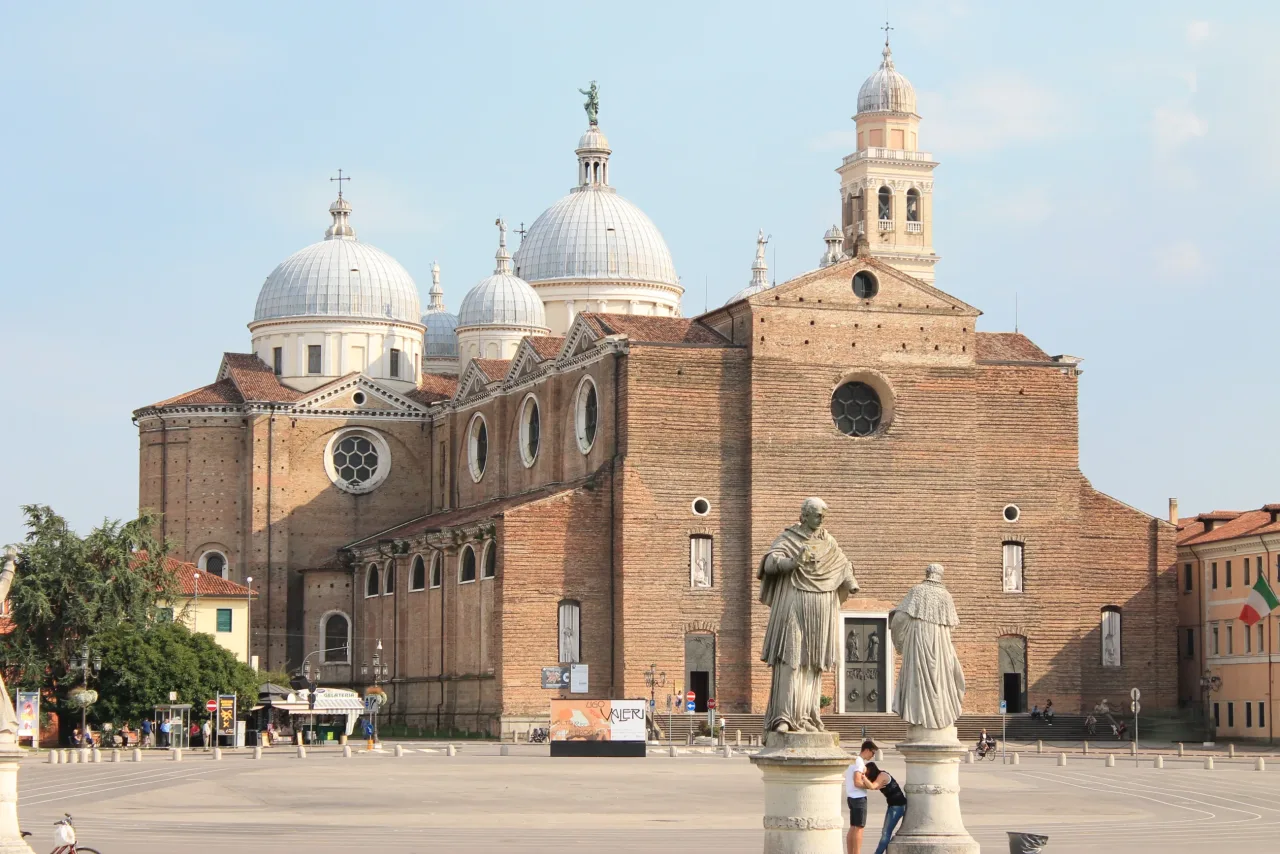
The Santo and Prato della Valle

Anthony's tomb basilica and Santa Giustina form the strongest walkable pair, joining Franciscan pilgrimage to ancient martyr memory and Benedictine prayer.

On the ground Walk south from Piazza del Santo toward Prato della Valle. The transfer is short enough to protect time for prayer at both churches.

Piazza Duomo and the western center

The cathedral quarter restores the living diocesan center to the pilgrimage and places Giusto de' Menabuoi's Baptistery cycle within the Church's sacramental life.

On the ground Walk to Piazza Duomo from Santa Giustina. Treat Saint Leopold, southwest of the core line, as a deliberate substitute or second-morning extension rather than an automatic detour.

Arcella north of the center

Arcella preserves Anthony's place of death on the historic road toward Camposampiero. It gives the city pilgrimage an ending different from the tomb where it began.

On the ground Use local transit from the center unless a longer urban walk is part of the day's intention. Verify current church access before making this the final stop.

Sacred geography

Choose a way into the city

Saint Anthony's final Padua

Martyr, evangelist, and Benedictine prayer

Cathedral and sacred art

Mercy and reconciliation

The four-stop spine

Tomb, abbey, cathedral, and place of death

Saint Leopold is a worthy extension, but not a fifth stop to force into an already full day.

pontifical basilica and Franciscan shrine

Basilica of Saint Anthony of Padua

PIAZZA DEL SANTO

The city pilgrimage begins where Anthony is buried: at his tomb, the Chapel of the Relics, and a living Franciscan basilica ordered around prayer and the sacraments.

Benedictine abbey and minor basilica

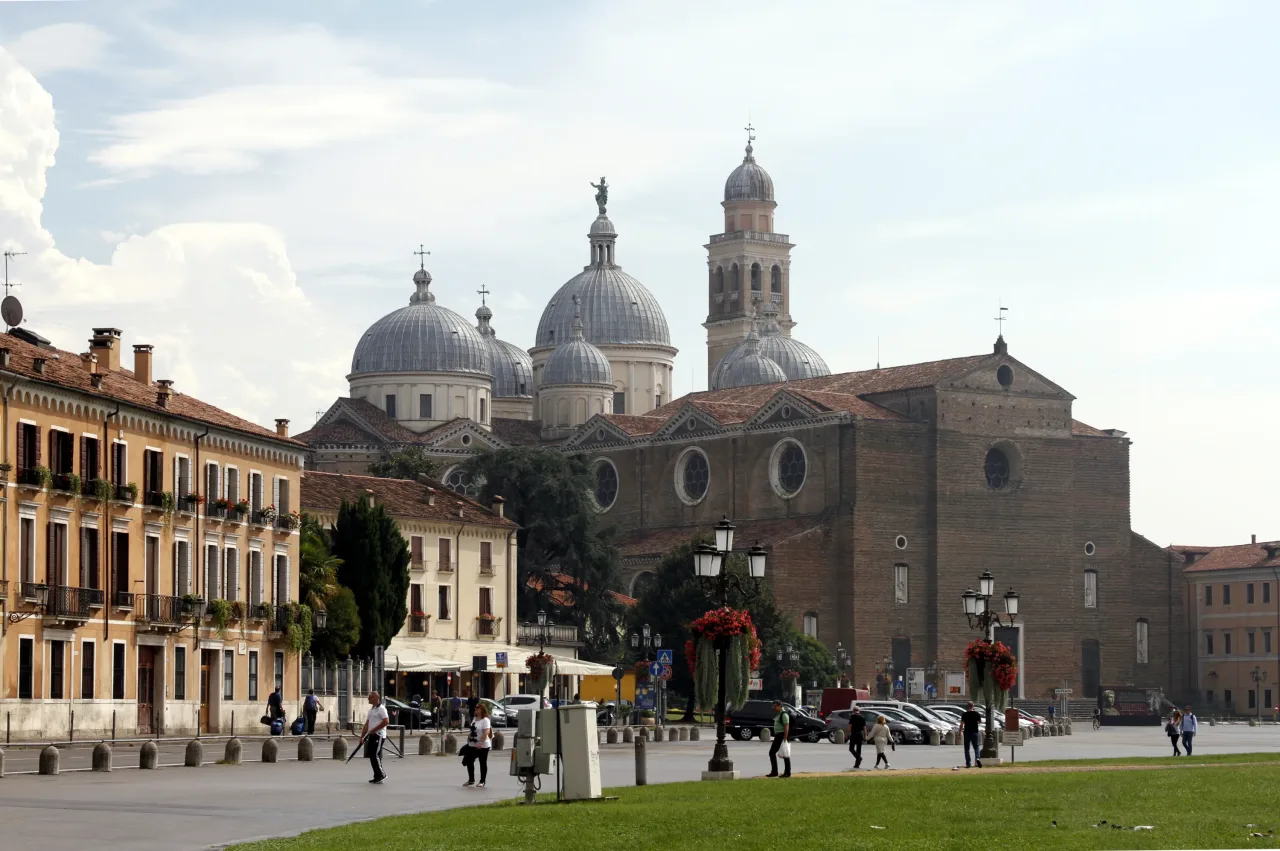
Basilica and Abbey of Santa Giustina

PRATO DELLA VALLE

An ancient martyr shrine received into Benedictine life, with the tomb of Saint Justina and relics traditionally venerated as those of Saint Luke the Evangelist.

cathedral basilica and medieval baptistery

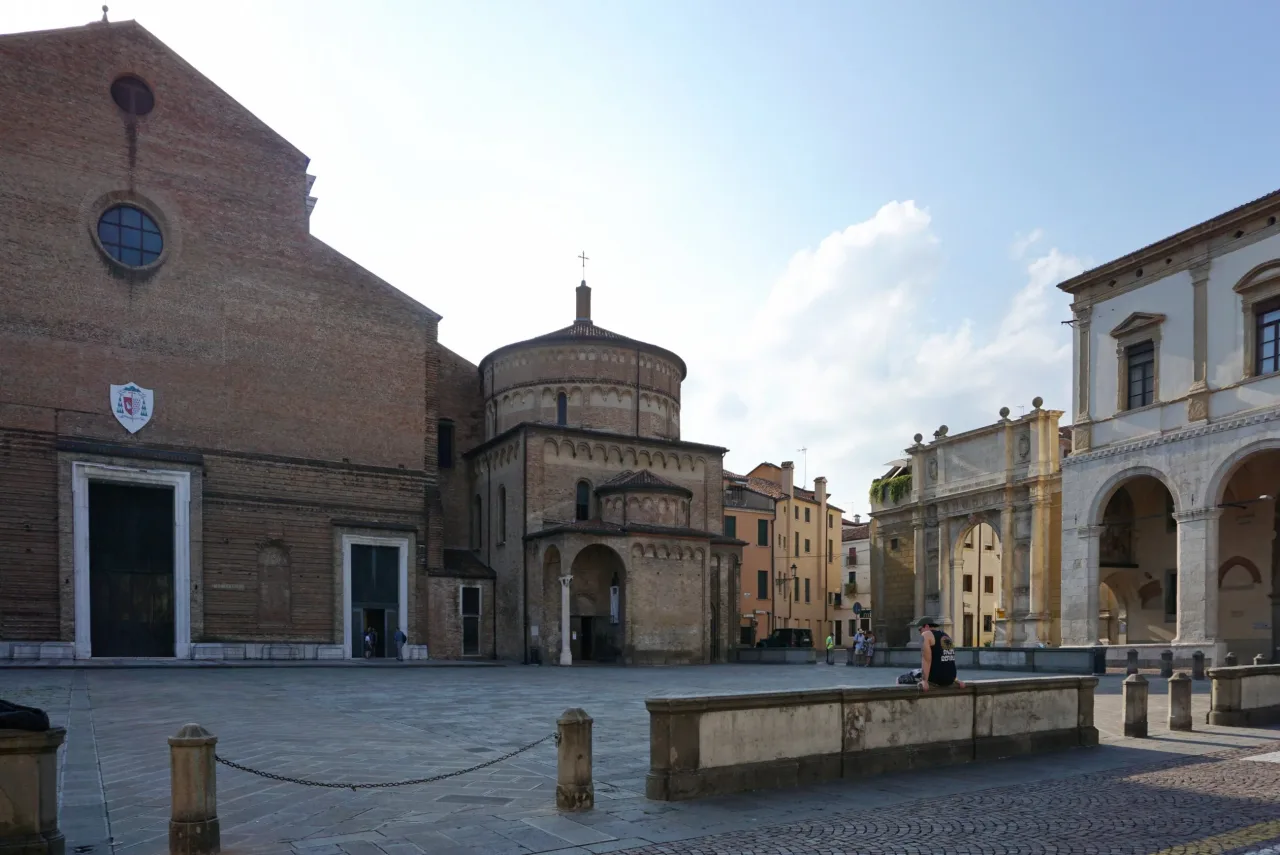
Padua Cathedral and Baptistery

PIAZZA DUOMO

Padua's mother church and the Baptistery beside it belong together: one remains the bishop's living cathedral, while the other surrounds the baptized with salvation history and the communion of saints.

Saint Anthony shrine and place of death

Arcella Sanctuary

ARCELLA

The sanctuary preserves the place where the dying Anthony was received and died on June 13, 1231, completing the human geography behind the great tomb basilica.

Capuchin saint and relic shrine, optional extension

Sanctuary of Saint Leopold Mandić

PIAZZALE SANTA CROCE

A living shrine of mercy centered on Saint Leopold's tomb and the small cell where he received penitents for decades. Worth a substitution or a second morning, not a hurried fifth stop.

Sacred map

Padua Sacred Places Map

5 Essential Places shown.

Select a marker to visit or save that place. The list above stays complete on its own.

Suggested pilgrimages

Paths we've walked, ready to make yours.

1 in Padua

Suggested order. Verify opening hours, transit, and walking conditions before you go.

How My Journey works →

Each entry named and sourced

Tombs, relics & sacred objects

Padua's relics are received within living churches and the Church's communion of saints.

Tomb and relics of Saint Anthony

Tomb of Saint Justina and Saint Luke relic tradition

Baptistery salvation cycle

  • Tomb and relics of Saint Anthony
  • Tomb of Saint Justina and Saint Luke relic tradition
  • Baptistery salvation cycle
  • Anthony's place of death
  • Saint Leopold's tomb and confessional cell

Plan the pilgrimage

Let prayer and church access govern the day

Plan 1

Anthony's tomb and Arcella

Begin at the Basilica of Saint Anthony for the tomb, relic chapel, confession, or Mass. Continue to Arcella only if you can make the northern transfer without rushing either place.

  1. Basilica of Saint Anthony of Padua
  2. Arcella Sanctuary

Practical, not booking

Before you go

Build around worship

Use each church's official site to confirm Mass, confession, prayer, and visitor access. A liturgy is the heart of a living church, not an inconvenience in the timetable.

Reserve the Baptistery

The Cathedral remains a living church, while access to the Baptistery and its frescoes is managed separately and may require a timed ticket. Confirm the current arrangement before travel.

Keep Arcella realistic

Arcella is north of the historic center. Protect enough time for local transit or a deliberate walk and verify access so Anthony's place of death is not reduced to a rushed arrival at a closed door.

Do not improvise the Last Walk

The historic devotional route begins at Camposampiero and reaches Padua through Arcella. It belongs in a future route release after trail, transit, church-access, and safety verification, not as an unsupported city walk.

Saints of Padua

Anthony at the center, with Padua's wider communion of saints

Photo credits
  1. Padua; Padua city hero. José Luiz Bernardes Ribeiro, CC BY-SA 4.0, via Wikimedia Commons. Source. CC BY-SA 4.0.
  2. Basilica of Saint Anthony of Padua. Basilica Santo Antonio in Padova. Petar Milosevic, CC BY-SA 3.0, via Wikimedia Commons. Source. CC BY-SA 3.0.
  3. Basilica and Abbey of Santa Giustina. John Samuel, CC BY-SA 4.0, via Wikimedia Commons. Source. CC BY-SA 4.0.
  4. Padua Cathedral and Baptistery. Armin Kleiner, CC BY-SA 4.0, via Wikimedia Commons. Source. CC BY-SA 4.0.
  5. Arcella Sanctuary. luciobocchi, CC BY-SA 4.0, via Wikimedia Commons. Source. CC BY-SA 4.0.
  6. Sanctuary of Saint Leopold Mandić. Marcok, CC BY-SA 4.0, via Wikimedia Commons. Source. CC BY-SA 4.0.
  7. Padua is flat and walkable at its center, but Arcella changes the scale of the final transfer.; A compact southern and central spine, then a northern place of death. Ricalvo10, CC0, via Wikimedia Commons. Source. CC0.