
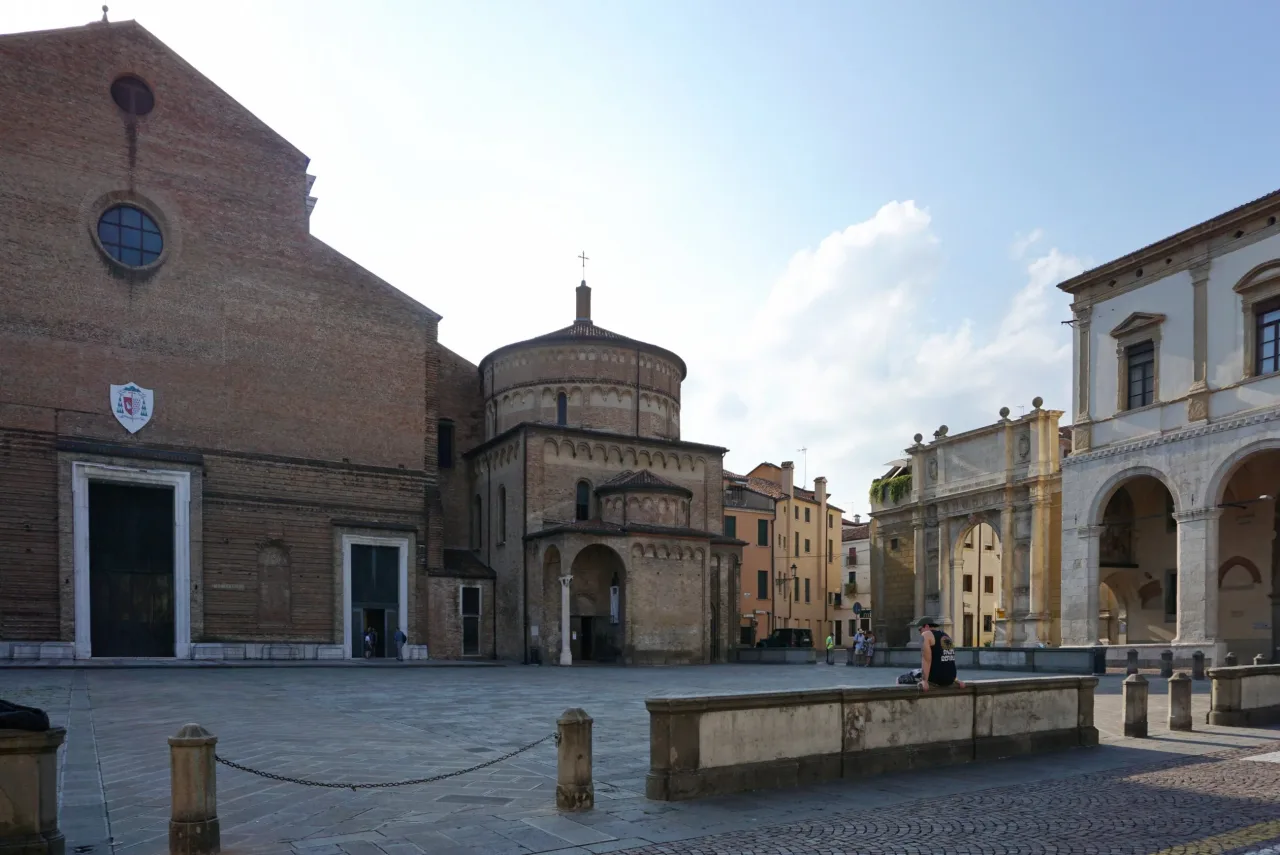
Padua Cathedral and Baptistery
The cathedral and Baptistery belong together as one Catholic complex: Padua's living mother church beside a room that makes the grace of baptism visible across the whole history of salvation.
- Location
- Padua, Italy 45.4068° N · 11.8718° E
- Type
- Roman Catholic cathedral basilica and consecrated medieval baptistery A sixteenth to eighteenth-century cathedral beside a medieval baptistery consecrated in 1281 and frescoed in the later fourteenth century
- Dedication
- Saint Mary of the Assumption; the Baptistery is dedicated to Saint John the Baptist
- Time Needed
- 1 to 2 hours
Why Go
The mother church and the room of baptism
Come first because this is Padua's cathedral, the bishop's church and a place of worship for the local Church.
Then enter the Baptistery and allow Giusto de' Menabuoi's frescoes to disclose what baptism means: creation and covenant, Christ's saving work, the witness of Saint John the Baptist, the final things, and the communion of saints gathered around the Lord.
Two buildings, one sacramental life
Padua's cathedral stands on a site used by the city's Christians since late antiquity. The present building took shape from the sixteenth to eighteenth centuries. Beside it, the medieval Baptistery had already been consecrated in 1281. Between 1375 and 1378, under the patronage of Fina Buzzaccarini, Giusto de' Menabuoi covered its interior with a cycle running from Genesis through Christ and the Apocalypse. The room was made for baptism before it became a destination for art history, and that order still governs a Catholic visit.
The cathedral's restrained facade and broad interior differ sharply from the Baptistery's concentrated medieval space. That contrast is useful. The cathedral carries the public liturgy of the local Church; the smaller Baptistery gathers the baptized beneath Christ Pantocrator and ranks of saints.
Read the Place
Begin at the altar, then look up from the font.
The two buildings make sense when worship and baptism remain the interpretive center.
The Cathedral is not an antechamber
Give the mother church its own prayerful visit before crossing into the better-known fresco cycle.
Read from baptism outward
The Baptistery's images surround a sacramental place. Their subject is the saving work into which the Christian is baptized.
Stand beneath the communion of saints
The saints gathered around Christ are not a decorative crowd. They show the Church in glory welcoming the newly baptized.
A cathedral has stood at the center of Padua's diocesan life since late antiquity.
The present cathedral was built from the sixteenth through eighteenth centuries from plans repeatedly modified after an initial design associated with Michelangelo.
The Baptistery was consecrated in 1281 and painted by Giusto de' Menabuoi between 1375 and 1378.
The Baptistery is part of Padua's UNESCO-listed fourteenth-century fresco cycles.
Spiritual Significance
Spiritual Significance
Sacred art here is not merely illustrative. The frescoes teach the baptized where their new life belongs, within Scripture, the death and resurrection of Christ, and the communion of saints. The Cathedral remains a living church even when the Baptistery is entered by a separate visitor route.
Do Not Miss
-
Prayer in the Cathedral
Begin with the altar and the living local Church before entering the ticketed Baptistery.
-
Christ Pantocrator in the Baptistery dome
Let the entire cycle be read in relation to Christ in glory.
-
The communion of saints
Notice how the ordered ranks gather the baptized into the life of the Church.
What to notice
- The strong contrast between the Cathedral's open liturgical space and the Baptistery's densely painted interior
- The movement from Genesis through Christ to the Apocalypse
- The Baptistery's continuing identity as consecrated sacred space
Visit Plans
-
Altar, baptism, and salvation history
4 ordered stopsPray in the Cathedral, then enter the reserved Baptistery visit and read the frescoes from Christ and baptism outward.
- The Cathedral altar and nave
- The baptismal space
- Christ Pantocrator and the communion of saints
- The salvation-history cycle
How to Visit
How to Visit
Enter the Cathedral for prayer and, when possible, Mass or confession. Keep the Baptistery reservation separate in the practical plan, but not in the spiritual meaning of the visit. Inside the Baptistery, begin beneath Christ in the dome and follow the cycle as a proclamation of salvation rather than a list of masterpieces.
- Cathedral Mass and the liturgical life of the Diocese of Padua
- The sacrament of reconciliation according to the current cathedral schedule
- The Baptistery remains a consecrated place bound to the Church's sacramental life
- Current worship and visitor access should be confirmed before travel
Treat the Cathedral and Baptistery as one sacred complex with two access systems.
The Cathedral remains open according to its liturgical life. Baptistery access is managed through the diocesan museum and may require a timed ticket.
- Location
- Piazza Duomo, Padua
- Time needed
- About 75 to 90 minutes for prayer in the Cathedral and a reserved Baptistery visit
- Admission
- Cathedral worship and Baptistery cultural access are managed separately; verify current terms
Plan both parts
Cathedral worship
Check the current liturgical schedule and preserve silence during worship.
- A funeral, Mass, confession, or diocesan liturgy takes priority over sightseeing.
Baptistery admission
Use the Diocesan Museum's current ticket and reservation information.
- Do not rely on the Cathedral being open as proof that the Baptistery is available.
Relics, Tombs, Sacred Objects
Sacred Objects
- The cathedral altar and episcopal chair
- The baptismal space of the adjoining Baptistery
- Giusto de' Menabuoi's fresco cycle of Scripture and the communion of saints
Connected Saints
Continue Your Pilgrimage
-
City hub
Padua
Where this church sits within the wider Catholic geography of Padua.
-
Pontifical basilica and tomb shrine
Basilica of Saint Anthony of Padua
Padua's principal saint shrine, about a twenty-minute walk through the historic center.
-
Benedictine abbey and minor basilica
Basilica and Abbey of Santa Giustina
The ancient martyr and monastic basilica beside Prato della Valle, south of Piazza Duomo.
-
Saint Anthony shrine and place of death
Arcella Sanctuary
Continue north by local transit or a deliberate walk to the place where Anthony died.

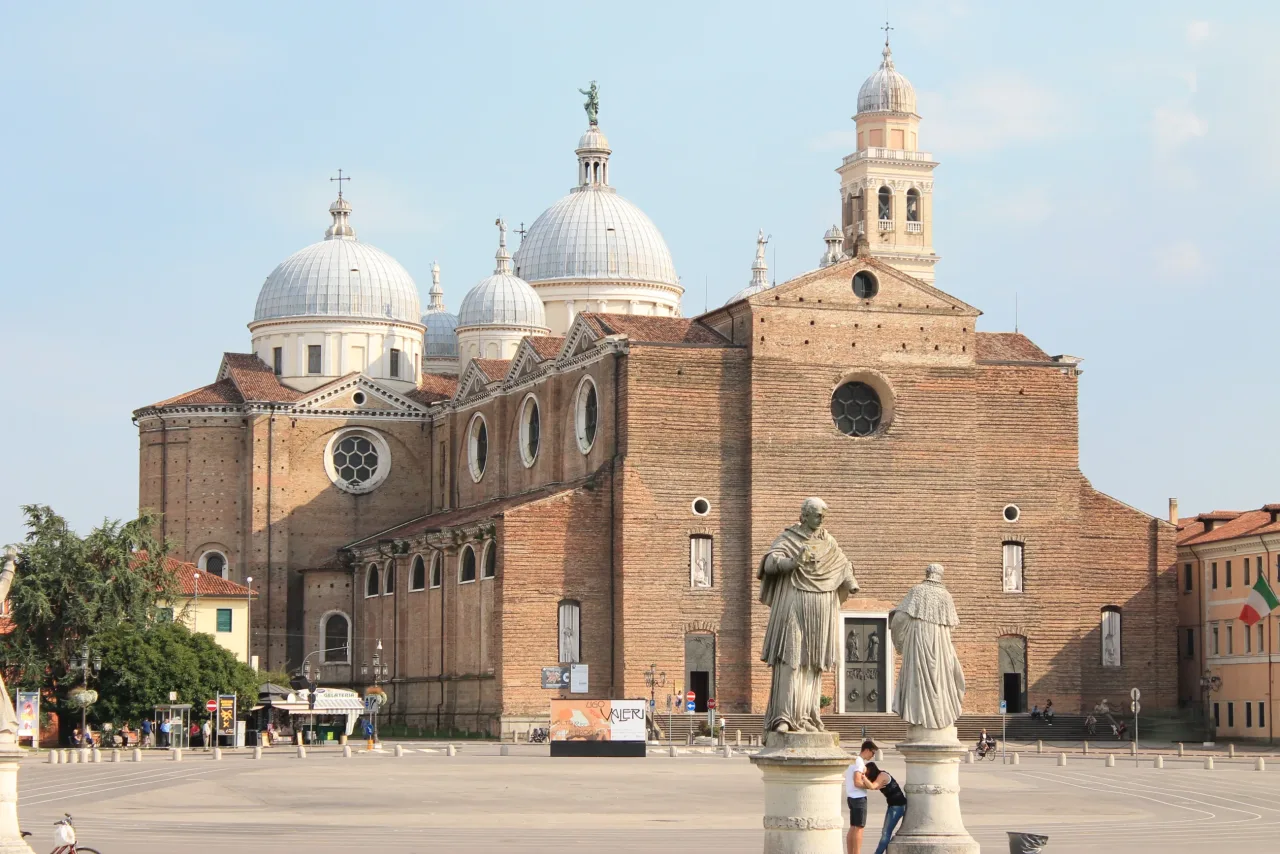

Map
Editorial sources
Official church sources.
Official
Last reviewed
September 8, 2026
Photo credits
- Hero. Armin Kleiner, CC BY-SA 4.0, via Wikimedia Commons. Source. CC BY-SA 4.0.
- Salvation history in the Baptistery. Syrio, edited by MenkinAlRire, CC BY-SA 4.0, via Wikimedia Commons. Source. CC BY-SA 4.0.