
St. Luke the Evangelist
Luke’s two books carry the reader from the mercy of Jesus to the Church’s first journeys beyond Jerusalem.
The Life and Witness of Luke the Evangelist.
At Santa Giustina in Padua, pilgrims pray before relics long venerated as those of Saint Luke. The ancient relic tradition leads back to what the Church received from him most surely: the Gospel and the Acts of the Apostles.
The New Testament names Luke among Paul’s coworkers and calls him a beloved physician. The Church’s early tradition identifies him as the author of the third Gospel and Acts. The texts themselves do not supply a complete biography, and precise dates for his birth and death cannot be responsibly fixed.
Luke’s Gospel makes room for the poor, the lost, women who followed Jesus, and the mercy of God. Acts continues from Jerusalem into the missions of Peter, Paul, and the first communities. Read together, they form a witness to the risen Christ carried outward by the Holy Spirit.
Padua’s abbey has long guarded bodily remains attributed to Luke. John Paul II described their historical journey and the investigation of their attribution in a 2000 message. The tradition is substantial, but it does not prove every step of the relics’ passage from antiquity.
Luke helps pilgrims read the places of Christian history through Scripture. The Padua shrine invites prayer, while his Gospel and Acts remain the clearest way to meet his witness.
A life, in years and approximate ages.
-
1st centuryRemembered among Paul’s coworkersNew Testament letters name Luke in Paul’s circle; exact travel chronology remains debated.
-
1st centuryThe Gospel is received in the ChurchEarly Christian tradition identifies Luke with the third Gospel; its precise composition date remains debated.
-
1st centuryActs carries the story onwardThe second volume follows the Church’s witness from Jerusalem toward Rome.
-
1313After deathSarcophagus made at Santa GiustinaThe abbey commissions the marble sarcophagus that still marks the shrine of Luke.
-
1998After deathRelics examined at PaduaThe abbey opens the sarcophagus for scientific study; the findings do not contradict the traditional attribution but cannot prove each stage of provenance.
-
2000After deathJohn Paul II addresses PaduaThe pope discusses the relic tradition and calls attention to Luke’s Gospel and Acts.
Dates are approximate where the surviving record is traditional or incomplete.
One place where this witness remains visible.
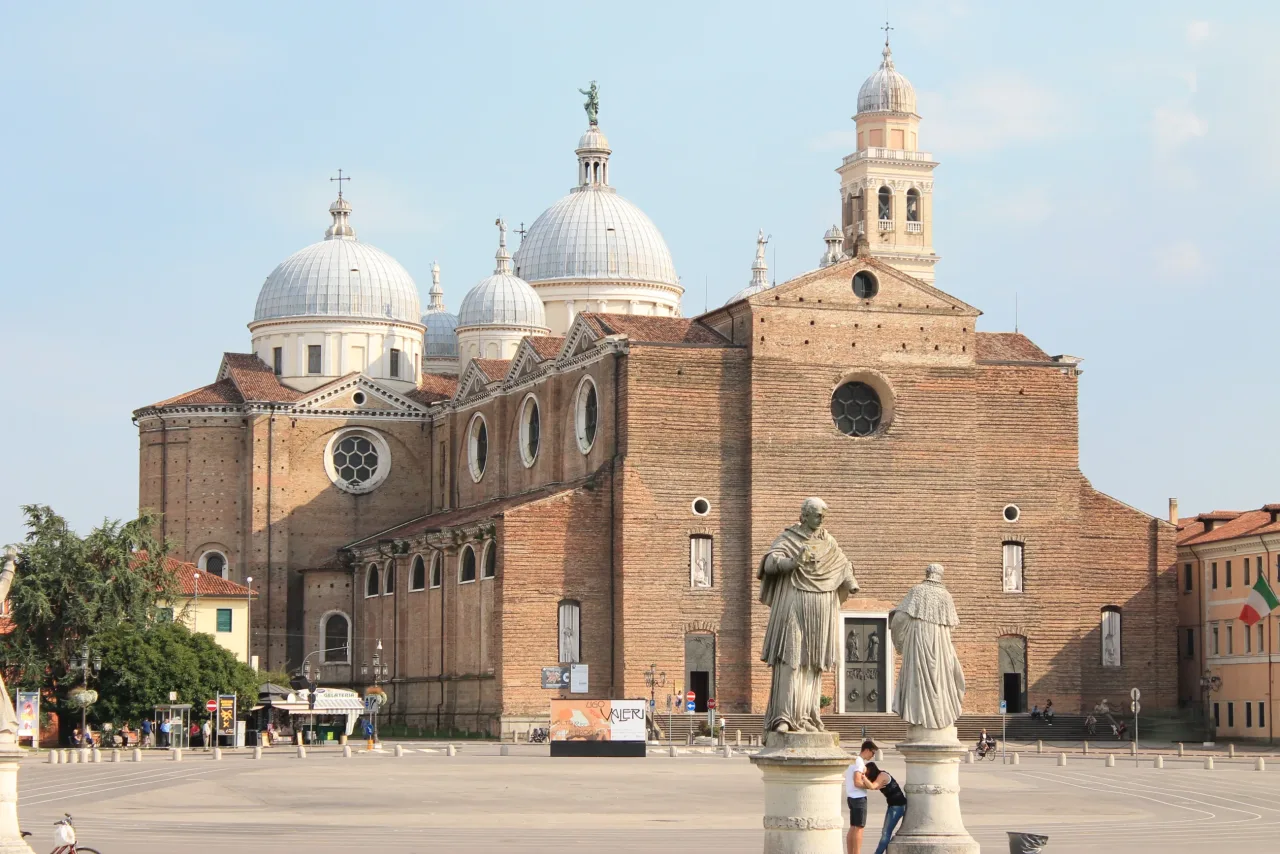
Visit Basilica and Abbey of Santa Giustina
Pray at the Luke shrine, then read a passage from his Gospel or Acts in the church that keeps this ancient memory.
Pray at the Luke shrine, then read a passage from his Gospel or Acts in the church that keeps this ancient memory.
The abbey preserves and venerates remains traditionally identified with the Evangelist.
Relics attributed to Saint Luke
Santa Giustina preserves bodily remains long venerated as Saint Luke’s. John Paul II described the tradition and the historical investigations in 2000; neither the ancient chain of custody nor every proposed stage of translation is fully demonstrable.
A principal relic site is named, with other fragments or reliquaries noted separately.
Basilica and Abbey of Santa Giustina
Saints Connected to Luke the Evangelist


Kept on October 18.
The Church commemorates Saint Luke the Evangelist on October 18.
Pray at the Luke shrine, then read a passage from his Gospel or Acts in the church that keeps this ancient memory.
Photo credits
- Saint page. Eternal Roam devotional portrait. Source. Eternal Roam original.
- Basilica and Abbey of Santa Giustina. John Samuel, CC BY-SA 4.0, via Wikimedia Commons. Source. CC BY-SA 4.0.