
St. Justina of Padua
Long before Padua became the city of Saint Anthony, its Christians gathered around the memory of Justina.
The Life and Witness of Justina of Padua.
The great abbey at Prato della Valle stands over the place long associated with Saint Justina’s burial. Her life is not available as a detailed modern biography; her ancient veneration and the church built around it are the strongest surviving witnesses.
Padua’s tradition remembers Justina as a virgin martyr killed during the persecution of the early fourth century. A later Passion names the year 304 and describes her burial outside the city. Those details belong to a devotional account composed later than the events it narrates.
What can be followed with greater confidence is the early and enduring cult of the martyr. A basilica rose at the site, and later generations rebuilt and enlarged the sanctuary. The present abbey holds the tomb and keeps her feast as a living part of Padua’s prayer.
Justina is not the Justina of Antioch remembered with Cyprian. Their names and martyr traditions should never be collapsed into one life. Here the pilgrim meets Padua’s own patron martyr and the memory of a local Church older than its most familiar medieval saints.
Justina gives Padua’s sacred geography a deeper beginning. Her witness is carried chiefly by a place, a feast, and generations of Christians who prayed where she was venerated.
A life, in years and approximate ages.
-
304Martyrdom in Padua’s traditionThe later Passion places Justina’s death during the persecution of 304; the precise biography is not independently recoverable.
-
500After deathEarly shrine takes shapeAn early basilica and the growth of her cult anchor the Christian memory of Padua.
-
1177After deathRelics identified in the medieval shrineMedieval records describe the finding of relics associated with Justina.
-
Late 12th centuryAfter deathThe Passion takes literary formA later hagiographic account preserves the traditional story of her witness after the relic discovery.
-
1597After deathCentral dome constructedThe central dome of the present basilica is built between 1597 and 1600.
-
1608After deathMarble floor begunWork begins on the marble floor of the great abbey church.
Dates are approximate where the surviving record is traditional or incomplete.
One place where this witness remains visible.
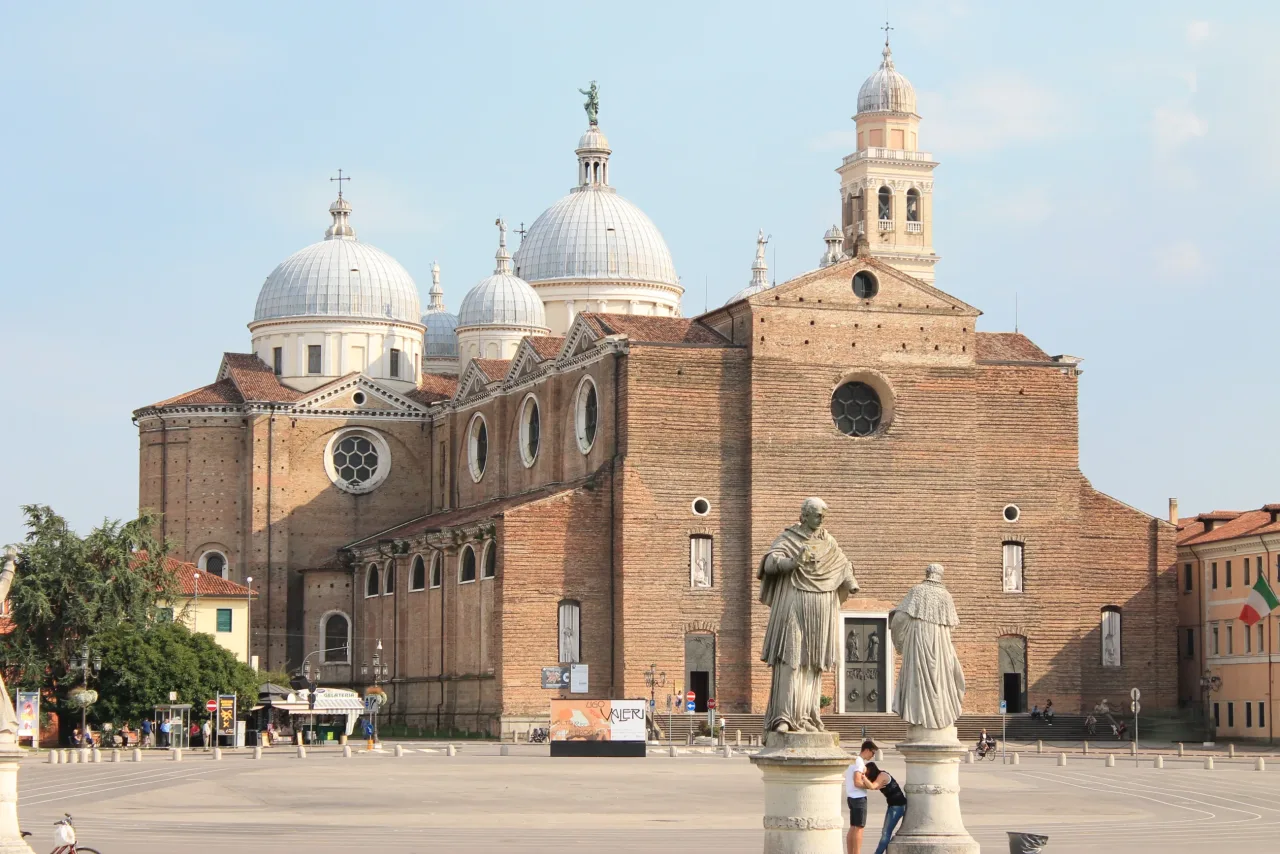
Visit Basilica and Abbey of Santa Giustina
Enter the basilica for prayer at her tomb, then notice how the vast church grew around an older local devotion.
Enter the basilica for prayer at her tomb, then notice how the vast church grew around an older local devotion.
Pilgrims venerate the relics long identified with Padua’s patron martyr at the abbey church.
Ancient tomb and relic tradition
The abbey preserves the tomb and relics traditionally venerated as Saint Justina’s. Her ancient cult is well established, while the surviving Passion does not permit a fully reconstructed personal biography.
A principal relic site is named, with other fragments or reliquaries noted separately.
Basilica and Abbey of Santa Giustina
Saints Connected to Justina of Padua
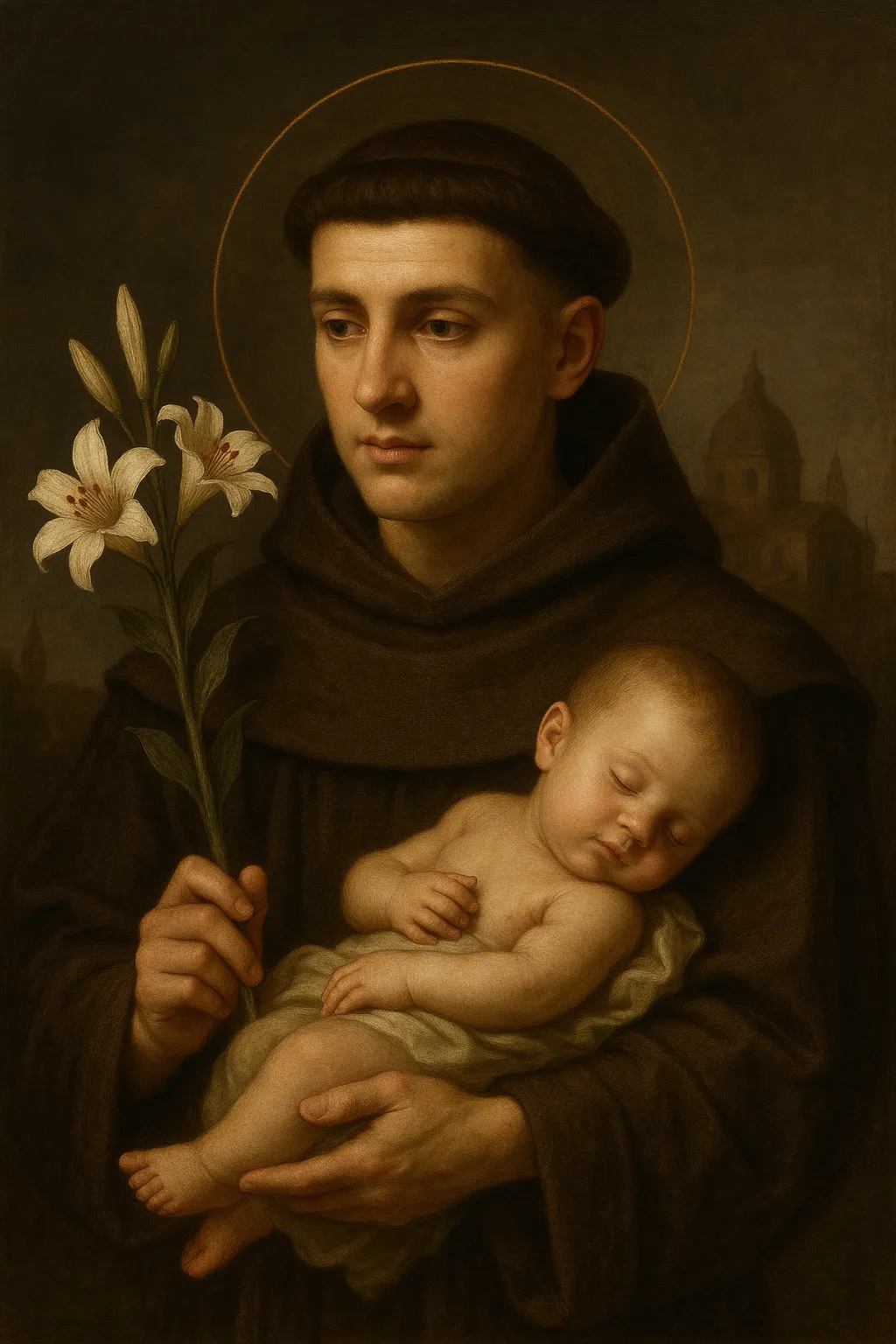

Kept on October 7.
The Church commemorates Saint Justina of Padua on October 7.
Enter the basilica for prayer at her tomb, then notice how the vast church grew around an older local devotion.
Photo credits
- Saint page. Venetian School, public domain, Art Institute of Chicago, via Wikimedia Commons. Source. Public Domain.
- Basilica and Abbey of Santa Giustina. John Samuel, CC BY-SA 4.0, via Wikimedia Commons. Source. CC BY-SA 4.0.