
St. Teresa
of Ávila
A Spanish nun who reformed her order and mapped the interior life of prayer with rare clarity.
Let nothing disturb you, let nothing frighten you. All things pass; God never changes. Whoever has God lacks nothing: God alone suffices.
Saint Teresa's Bookmark, found written in her breviary Well-attested
Carmelite reformer, mystic, and the first woman named a Doctor of the Church
Teresa of Ávila was a Carmelite nun who, after a long ordinary religious life, underwent a deep conversion of prayer in middle age and went on to reform her order and write some of the greatest works of Christian mysticism. In 1970 she became the first woman declared a Doctor of the Church.
Born in Ávila in 1515, Teresa entered the Carmelite convent of the Incarnation as a young woman. For many years her life of prayer was, by her own account, divided and lukewarm. In her late thirties a renewed sense of God's nearness changed everything, and she began the disciplined life of prayer she later described in her writings.
Convinced that her order had drifted from its original austerity, Teresa founded in 1562 the convent of San José in Ávila, the first house of the reformed, or Discalced, Carmelites, who returned to poverty, enclosure, and contemplative prayer. Against considerable opposition she went on to found many more convents across Spain, and with John of the Cross extended the reform to the friars.
She wrote under obedience: her Life, The Way of Perfection, and above all The Interior Castle, which describes the soul's journey to God through seven "mansions" of prayer. Worn out by travel and founding, she died at Alba de Tormes in 1582 and was canonized in 1622.
Teresa renewed Carmelite life and gave the Church a lasting map of contemplative prayer. Her writings are read across the Christian world, and as one of the first women Doctors of the Church she stands among its foremost teachers of the spiritual life.
A life, in years and approximate ages.
-
c. 1515BirthBirth in ÁvilaTeresa de Cepeda y Ahumada is born in Ávila into a large family of partly Jewish converso descent.
-
c. 1535About 20Enters the CarmelitesTeresa enters the Carmelite Convent of the Incarnation in Ávila, where she will live for many years before her deeper conversion of prayer.
-
c. 1554About 39A Deeper ConversionIn midlife, after years she called divided and lukewarm, Teresa experiences a renewed sense of God's presence and begins the disciplined life of prayer she will later describe in her books.
-
c. 1562About 47Founds San José, the First Reformed ConventTeresa founds the convent of San José in Ávila, the first house of the reformed Discalced Carmelites, restoring strict poverty, enclosure, and contemplative prayer.
-
c. 1577About 62Writes The Interior CastleTeresa writes The Interior Castle, describing the soul's journey to union with God through seven mansions of prayer, even as the reform meets resistance.
-
c. 1582About 67Death at Alba de TormesWorn out by years of travel and founding, Teresa dies at Alba de Tormes, where her body and relics are venerated to this day.
-
1970After deathDeclared Doctor of the ChurchPope Paul VI names Teresa a Doctor of the Church, the first woman given the title, recognizing her teaching on prayer.
Dates are approximate where the surviving record is traditional or incomplete.
3 places where this witness remains visible.
Carmelite Convent, Alba de Tormes
The convent where Teresa died preserves her body and relics of her heart and hand. Pilgrims come to pray before her tomb above the high altar of the convent church.
Convent of San José and the Incarnation, Ávila
Ávila holds the convent of San José, the first house of the reform Teresa founded, and the Convent of the Incarnation, where she lived for decades and underwent her deeper conversion of prayer.
Convent of San José, Ávila
The first convent of the Discalced Carmelite reform, founded by Teresa in 1562, in her walled home city of Ávila.
Where the body and relics are venerated.
Teresa's body rests at the Carmelite convent at Alba de Tormes, where she died. Relics of her incorrupt heart and of her hand are venerated there. Ávila preserves the convent of San José she founded and the Convent of the Incarnation where she lived for many years.
A principal relic site is named, with other fragments or reliquaries noted separately.
Carmelite Convent, Alba de Tormes
The convent where Teresa died preserves her body and relics of her heart and hand. Pilgrims come to pray before her tomb above the high altar of the convent church.
- Body of Saint Teresa of Ávila
- Relic of her heart
- Relic of her hand
Alba de Tormes lies a short distance from Salamanca and is the natural close of a Teresian pilgrimage that begins in Ávila.
Convent of San José and the Incarnation, Ávila
Ávila holds the convent of San José, the first house of the reform Teresa founded, and the Convent of the Incarnation, where she lived for decades and underwent her deeper conversion of prayer.
Begin a Teresian pilgrimage here, in the walled city of her birth, before traveling to Alba de Tormes.
Kindred witnesses
-
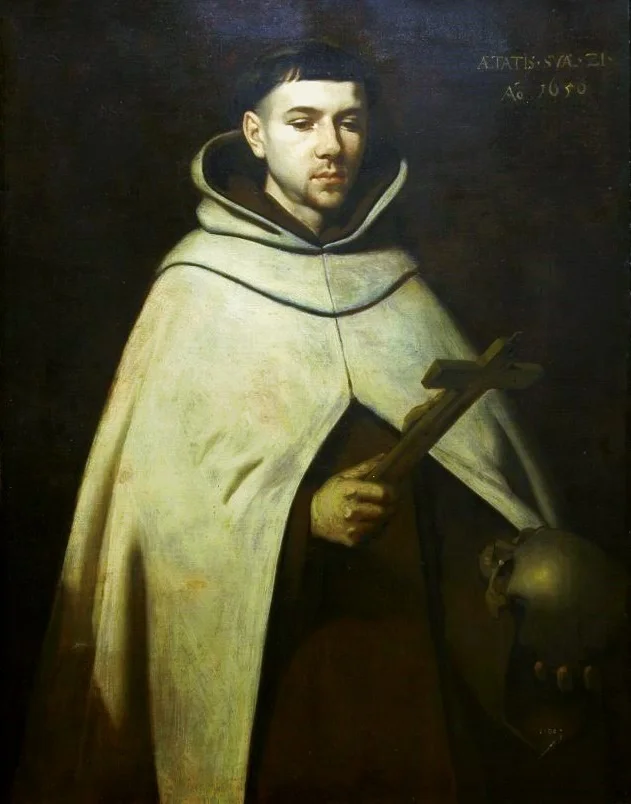
Saint John of the Cross
Her collaborator in the Carmelite reform and a fellow Doctor of the Church, who extended it to the friars. -
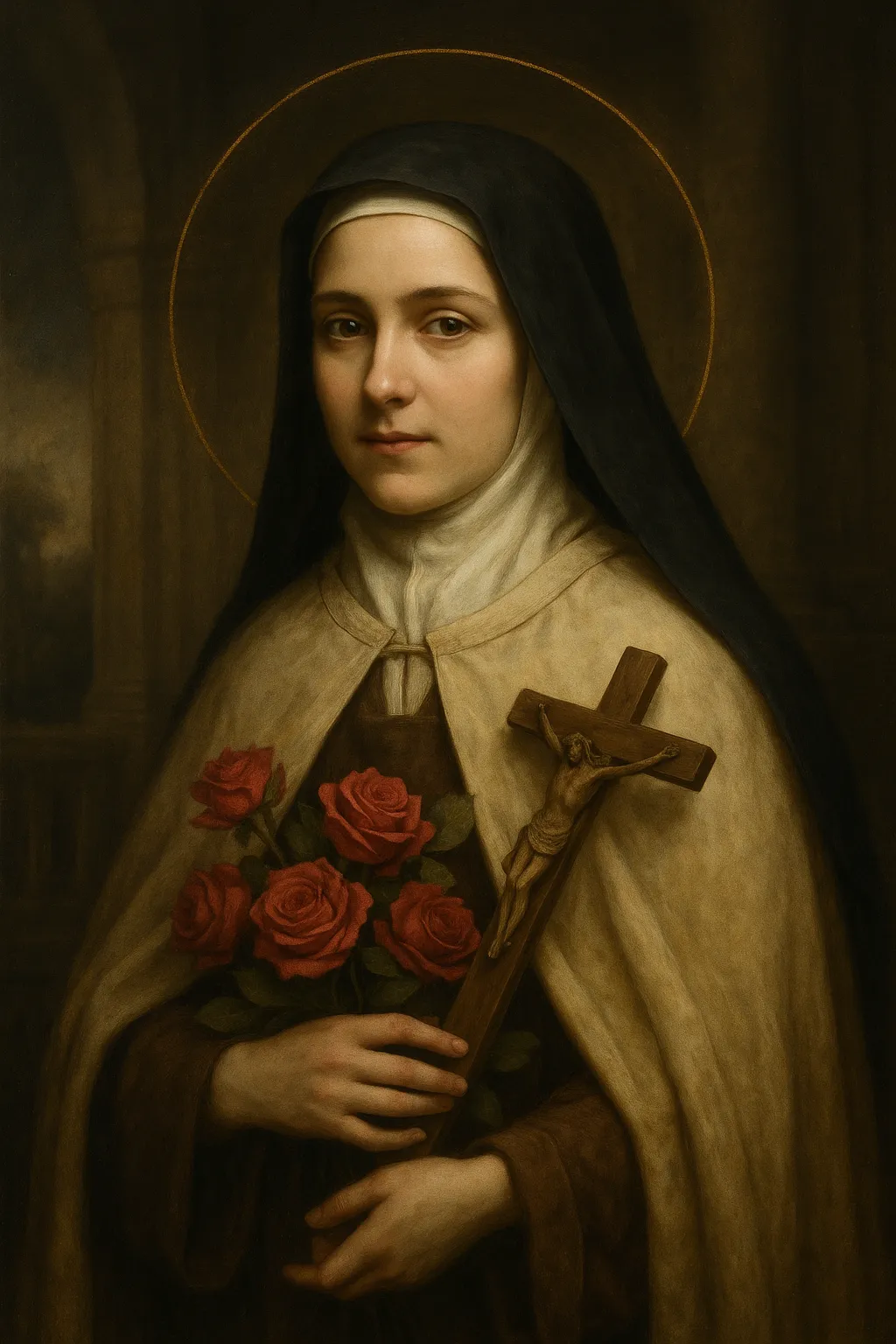
Saint Thérèse of Lisieux
The young French Carmelite who entered Teresa's reform and took her name three centuries later. -
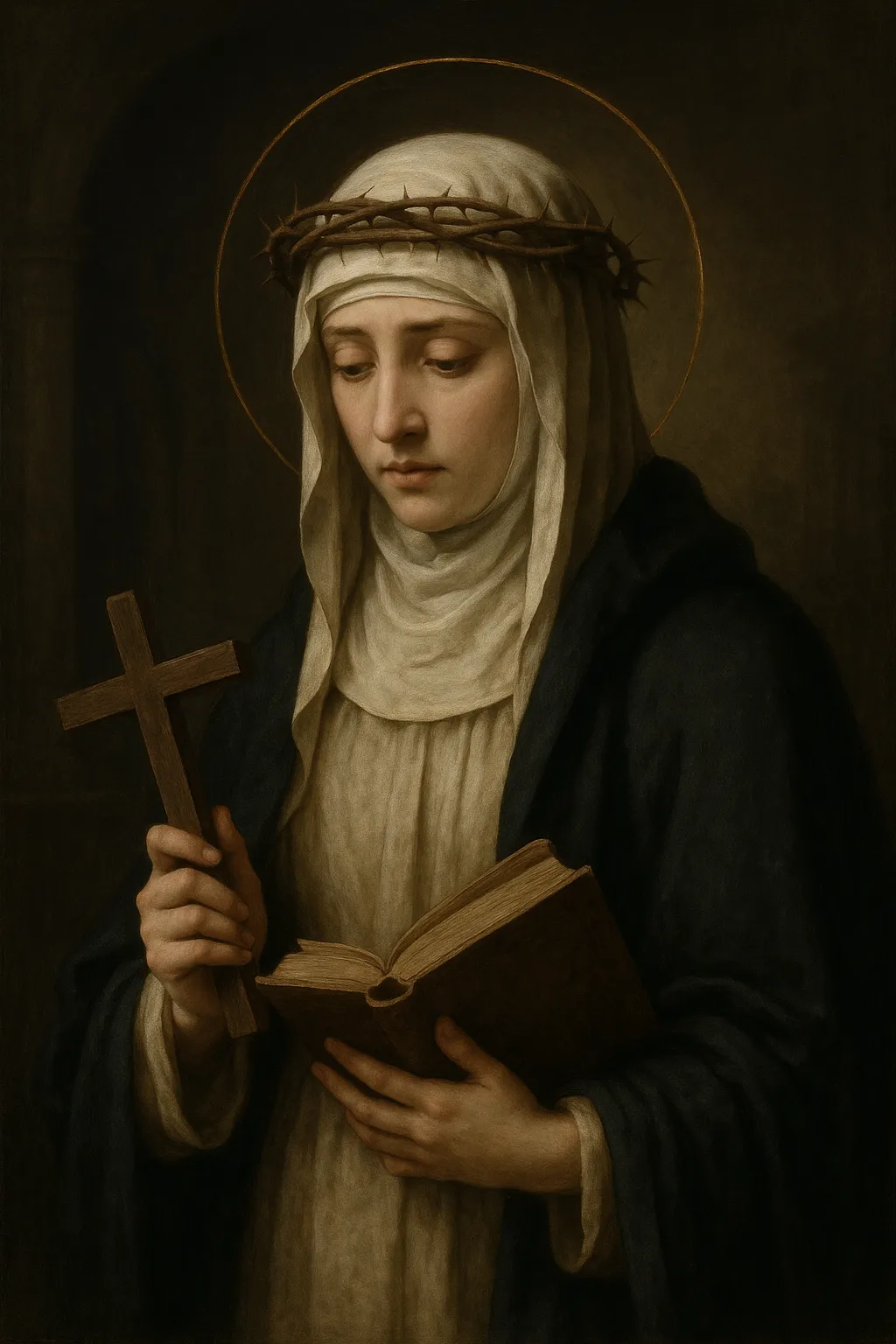
Saint Catherine of Siena
The Dominican mystic declared a Doctor of the Church on the same day as Teresa, in 1970.
Kept on October 15.
October 15 is Teresa's feast, kept across the Carmelite world and in Spain, where she is deeply loved. Her writings are often read during the days around her feast.
Ávila is the heart of Teresian pilgrimage, with the convent of San José she founded and the Convent of the Incarnation where she lived for decades. Her tomb is at Alba de Tormes, where her body and relics of her heart and hand are venerated.