
Monasterio de la Anunciación, Alba de Tormes
The convent Teresa founded in 1571 and died in on October 4, 1582. Her body is venerated in the upper chamber above the high altar, reached through the museum, and the relics of her heart and her left arm are kept here with it. This is the close of a Teresian pilgrimage.
- Location
- Alba de Tormes, Spain
- 40.8267° N · 5.5144° W
- Type
- Monastery
- A sixteenth-century convent church with a relic altarpiece and an upper chamber built over the high altar to hold the tomb
- Monastic Tradition
- Discalced Carmelite
- A convent of Discalced Carmelite nuns in the Diocese of Salamanca, founded by Saint Teresa in 1571 and in continuous residence
- Time Needed
- 30 minutes to half a day
Where the Road Ended
Ávila holds her beginning and her argument; Alba holds her death. She did not plan to die here. She was traveling, ill, on the way back from a foundation, and was brought to this house because she could go no further, and she died in it a fortnight later. Four centuries on, the community she founded is still in the building, still keeping the office, and still keeping her. Pilgrims come to pray at the tomb rather than to look at it, and the difference is easy to feel in the room.
October 4, 1582
Teresa founded this convent in 1571, one of many across Spain in the twenty years after San José. In the autumn of 1582 she was traveling and already very ill, and she reached Alba de Tormes exhausted; she lived here about a fortnight and died on the night of October 4, 1582. She was buried the next day, which by the calendar was October 15, because the Gregorian reform took effect overnight and ten days were dropped. That is why her feast falls on the fifteenth. Her body did not decay, and the veneration of it began almost at once. The relics were divided, as relics of great saints commonly were: the community keeps her body, her heart and her left arm, while her left hand went elsewhere and has long been venerated by the Carmelites at Ronda. Since 2014 pilgrims have reached the upper chamber above the high altar through the museum, to venerate the tomb directly.
A plain convent church with an extraordinary altarpiece, built not only to frame an altar but to hold relics in compartments of its own. The tomb sits in a chamber above the high altar, and the relics of the arm and the heart are kept below it. The building is modest; the arrangement is not, and it was designed around what it contains.
Monastic Identity
An enclosed community of Discalced Carmelite nuns lives here and has done so continuously since Teresa founded the house. The church, the tomb chamber and the Carmelite museum are what a visitor sees. This is a place of prayer before it is anything else, and October 15, with the novena before it, is when it is fullest.
- She was not brought here to be buried. She was brought here because she could not go on, and Salamanca and Ávila argued afterwards about who should have her.
- The relics are divided across Spain, which is ordinary for a saint of her stature and is not evidence of doubt about them.
- The community that keeps the tomb is the community she founded. There is no interval between the woman and the house.
Do Not Miss
-
01
The tomb, in the chamber above the altar
Reached through the museum since 2014. It is a small space and people are usually praying in it. Go up slowly and stay longer than feels necessary.
-
02
The relic altarpiece
Built to hold relics in compartments of its own, with the body above and the arm and the heart below. It is a sixteenth-century way of thinking about a saint made in wood and gilding.
-
03
The cell where she died
She arrived here too ill to travel further and lived about a fortnight. Knowing that the death was unplanned changes what the room is.
-
04
The date on her feast
She died on October 4, 1582 and was buried on October 15. Ten days vanished overnight when the Gregorian calendar came in, which is why the Church keeps her on the fifteenth.
See all 4 · 1 more
- The date on her feast She died on October 4, 1582 and was buried on October 15. Ten days vanished overnight when the Gregorian calendar came in, which is why the Church keeps her on the fifteenth.
Visit Plans
-
30 Minutes
The church and the tomb chamber.
-
1 Hour
Add the Carmelite museum properly.
-
Half Day
Alba de Tormes itself, with the church, the tomb, the museum and the river.
How to Visit
-
The Carmelite office, sung by the community
-
Daily Mass in the convent church
-
Continuous veneration of the tomb and relics of Saint Teresa
-
The novena and feast kept around October 15
See all 4 · 1 more
- The novena and feast kept around October 15
Check museum access for the upper tomb chamber; the convent is enclosed.
- Church
- Free
- Tomb chamber
- Reached through the Carmelite museum
- Museum
- Charged admission
- Museum closure
- Mondays; verify seasonal and feast exceptions
- Enclosure
- Closed. The community lives here.
- Feast
- October 15, with a novena before it
What is here
Venerated as incorrupt, in a silver urn in the chamber above the high altar. Since June 16, 2014 pilgrims have reached that upper chamber through the museum to venerate the tomb directly.
- The community's own account describes the body as preserved incorrupt and kept in the sepulchral urn of the main altarpiece.
The community names these as the two most distinguished relics kept with the body, and describes them as placed in the lower part of the relic altarpiece while the body rests above.
The 2024 and 2025 recognition
The community records that the sepulchre was opened on August 28, 2024 and the canonical recognition of the body and the major relics took place, the first stage of a project begun in 2022.
- A scientific study followed, with further stages after the recognition itself.
The remains were displayed publicly at Alba de Tormes in May 2025, and the silver urn was returned to the chamber above the altar on May 26, 2025.
- The Carmelite Order reported that about ninety thousand people came during the fifteen days of the exposition.
- It was the third such public exposition, after those of 1760 and 1914.
- The tomb is back in its chamber. A pilgrim arriving today venerates it where it has ordinarily been.
Additional schedule notes
The left hand, at Ronda
Her left hand is a separate relic and has long been venerated by the Discalced Carmelites at Ronda in Andalusia rather than at Alba.
The Ronda community is now very small and its canonical future is unsettled, so the relic's long-term home may change. Pilgrims traveling specifically to venerate it should confirm before setting out.
The convent
Discalced Carmelite nuns have lived here without interruption since the foundation of 1571. The enclosure is not visited.
Access
Getting here
Alba de Tormes lies about twenty kilometers southeast of Salamanca and about a hundred west of Ávila. Buses run from Salamanca; a car is easier.
- It is the end of the waymarked Ruta Teresiana from Ávila, which is the other way of arriving.
Tombs, Relics, and Devotional Focus
Tomb and Burial
- Teresa of Ávila died in this convent on October 4, 1582, having arrived worn out from the road a fortnight earlier, and her body has remained here.
Relics and Sacred Tradition
- The body of Saint Teresa, venerated as incorrupt, in a silver urn in the upper chamber of the high altarpiece.
- The relic of her heart, venerated in the church.
- The relic of her left arm.
- Her left hand is a separate relic and has long been venerated by the Discalced Carmelites at Ronda in Andalusia, not here.
Sacred Objects
- The relic altarpiece of the church, built to carry the relics in its own compartments.
- The cell in which she died, within the convent.
Saints and Founders
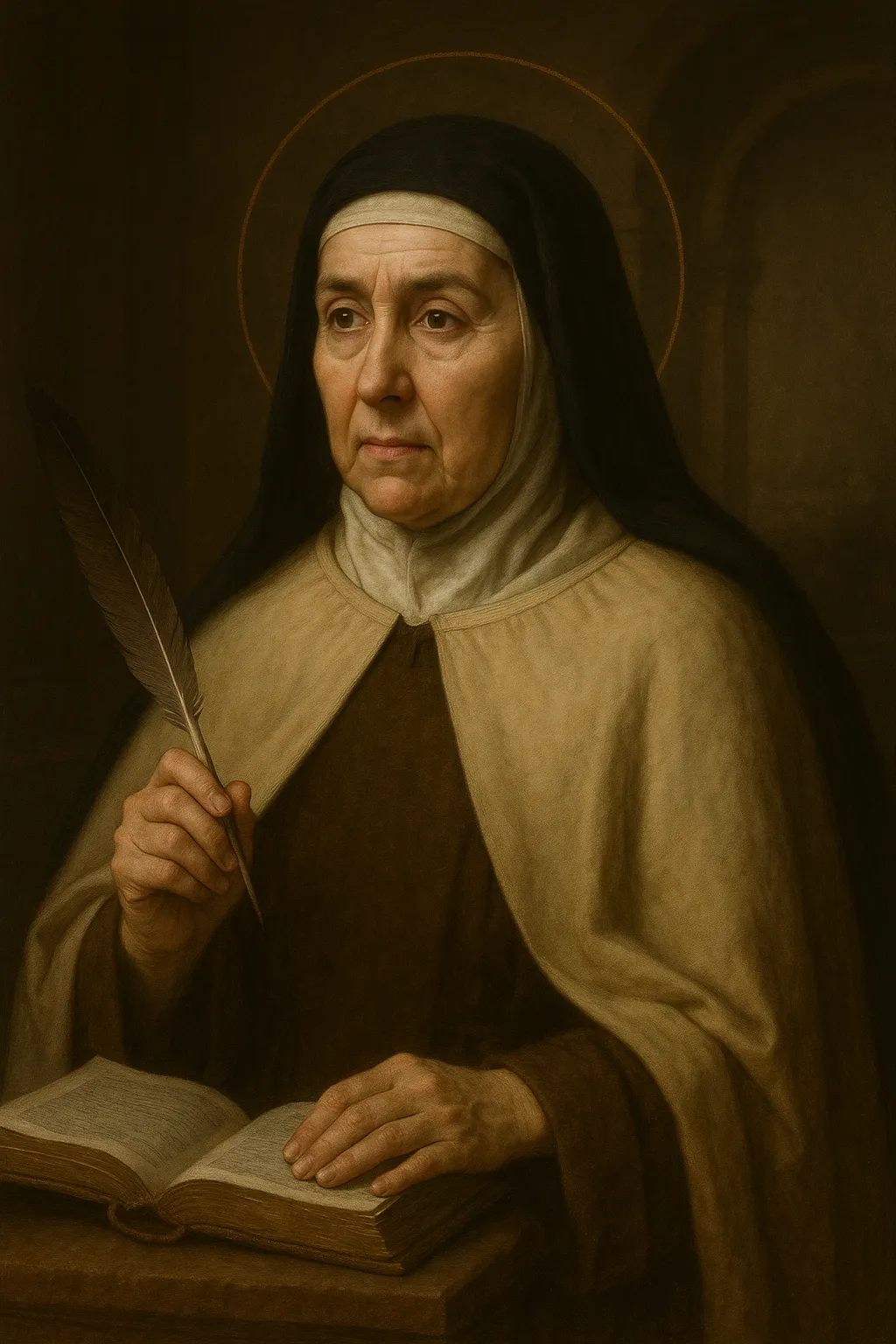
Where the road came from
-
Carmelite church
Basílica de Santa Teresa de Jesús
Raised over the site of the house where she was born in 1515.
-
Carmelite monastery
Monasterio de la Encarnación
The house she lived in for close to forty years.
-
First house of the friars
Convento de Duruelo
On the walking route between Ávila and Alba, where the friars' reform began in 1568.
Map
Written from the Discalced Carmelite community's own site at Alba de Tormes, which states that the convent preserves the incorrupt body and two major relics, the left arm and the heart. The left hand is a separate relic and is not at Alba. The 2024 and 2025 recognition and exposition are dated explicitly rather than described as recent.
September 6, 2026
Photo credits
- Hero. WLM14ES - Iglesia de la Anunciación, Santa Teresa de Jesús, Alba de Tormes - MARIA ROSA FERRE. Photo: MARIA ROSA FERRE, CC BY-SA 2.0, via Wikimedia Commons. Source. CC BY-SA 2.0.