
Convento de Duruelo
A hamlet in open country southwest of Ávila where, on November 28, 1568, John of the Cross and two companions opened the first house of the Discalced Carmelite friars in a farm building barely fit to live in. A commemorative convent stands on the site today, and its church is one of five designated for the Sanjuanist jubilee.
- Location
- Blascomillán, Spain
- 40.8014° N · 5.0886° W
- Type
- Monastery
- A later convent and church on the site of a sixteenth-century farm building
- Monastic Tradition
- Discalced Carmelite
- A commemorative convent of Discalced Carmelite nuns in the Diocese of Ávila, on the site of the first house of the reformed friars
- Time Needed
- 30 minutes to half a day
A Farmhouse, and the Beginning of the Friars
Teresa had reformed the nuns at San José in 1562 and needed friars if the reform was to be anything more than a handful of convents. Duruelo is where she got them. The building was a wreck, the winter was hard, and there were three of them. Teresa, who saw it, wrote about the conditions with something close to delight, which tells you what she thought the reform was for. Nothing here is impressive and that is the entire point; you are standing where an order that would spread across the world consisted of three men in a farmhouse.
November 28, 1568
Teresa had been given a property at Duruelo by a benefactor and had the permissions she needed for a house of reformed friars. John came out in the autumn of 1568 and spent about two months making the farm building usable, with help from his mother, his brother and his sister-in-law. On November 28, 1568 he and two companions began the life there: the first community of Discalced Carmelite friars anywhere. From this the reform of the friars spread, and within a few years John was confessor at the Incarnation in Ávila and the Discalced houses were multiplying, along with the opposition that would put him in a cell in Toledo in 1577. The original farmhouse is gone. A convent of Discalced Carmelite nuns now stands on the site, in the municipality of Blascomillán, and its church was named a jubilee church for the Sanjuanist year running to December 2026.
A later convent and church on the site of the sixteenth-century building, in flat farming country with almost nothing around it. There is no architecture here to speak of and no attempt at any. The isolation is the significant feature and it is unchanged.
Monastic Identity
A small enclosed community lives here in a genuinely remote place. This is not a staffed shrine; there is no visitor infrastructure, and arriving unannounced may mean finding nothing open. During the jubilee arrangements are likely to be firmer. Come prepared to find a quiet place with a locked door, and treat that as part of the visit rather than a failure of it.
- Teresa reformed the nuns first and the friars six years later. Without Duruelo the reform stays a network of convents.
- There were three of them. Every Discalced friary in the world descends from a farm building in this field.
- The place has no infrastructure and makes no case for itself. That is a quality here rather than a shortcoming.
Do Not Miss
-
01
The isolation
It is the one thing here that has not changed since 1568, and it is what Teresa was writing about when she described the conditions the friars were living in.
-
02
The convent church
A jubilee church of the Sanjuanist Year, named for what happened on this ground rather than for anything standing on it.
-
03
What is not here
The farmhouse is gone. Nothing you can touch was touched by him. Duruelo asks a pilgrim to stand somewhere rather than to look at something.
Visit Plans
-
30 Minutes
The site and the church, where open.
-
1 Hour
The same, with time to walk out into the fields.
-
Half Day
Pair with Fontiveros, about 25 km north.
How to Visit
-
The Carmelite office, kept by the resident community
-
Mass in the convent church
-
An enclosed contemplative life in an intentionally remote place
Remote, small, and not always open. Confirm before driving out.
- Entry
- Free where open
- Hours
- No fixed public hours; arrange in advance
- Jubilee
- A designated jubilee church through December 26, 2026
- From Ávila
- About 50 km southwest, minor roads
- Community
- Discalced Carmelite nuns, enclosed
What is here
The farm building of 1568 does not survive. What is here is the place, marked by a later convent of Discalced Carmelite nuns and its church.
Named by the Diocese of Ávila as a jubilee church of the Sanjuanist Year, as the site of the first foundation of the male Discalced Carmel made by John himself.
There are no fixed public opening hours and no visitor facilities. A small enclosed community lives here.
The 2025 to 2026 jubilee
Of the five designated jubilee churches, Duruelo is the one that marks what John did rather than where he was born, died or is buried: the beginning of the reformed friars.
- The jubilee opened at Segovia on December 13, 2025 and closes at Ubeda on December 26, 2026.
- Jubilee traffic may mean more reliable opening here through 2026 than at other times.
Additional schedule notes
Getting here
By road
In the municipality of Blascomillán, about fifty kilometers southwest of Ávila on minor roads. A car is necessary.
- Duruelo is named on the Ruta Teresiana's own list of places along the trunk route through the province of Ávila, which is how walkers reach it.
Tombs, Relics, and Devotional Focus
Sacred Objects
- The site of the farmhouse in which the friars' reform began.
- The convent church, a designated church of the 2025 to 2026 Sanjuanist jubilee.
Saints and Founders
- Saint John of the Cross Opened the first house of the reformed friars here in 1568 John came to Duruelo in the autumn of 1568, made a derelict farm building habitable, and on November 28 began the first community of Discalced Carmelite friars with two companions.
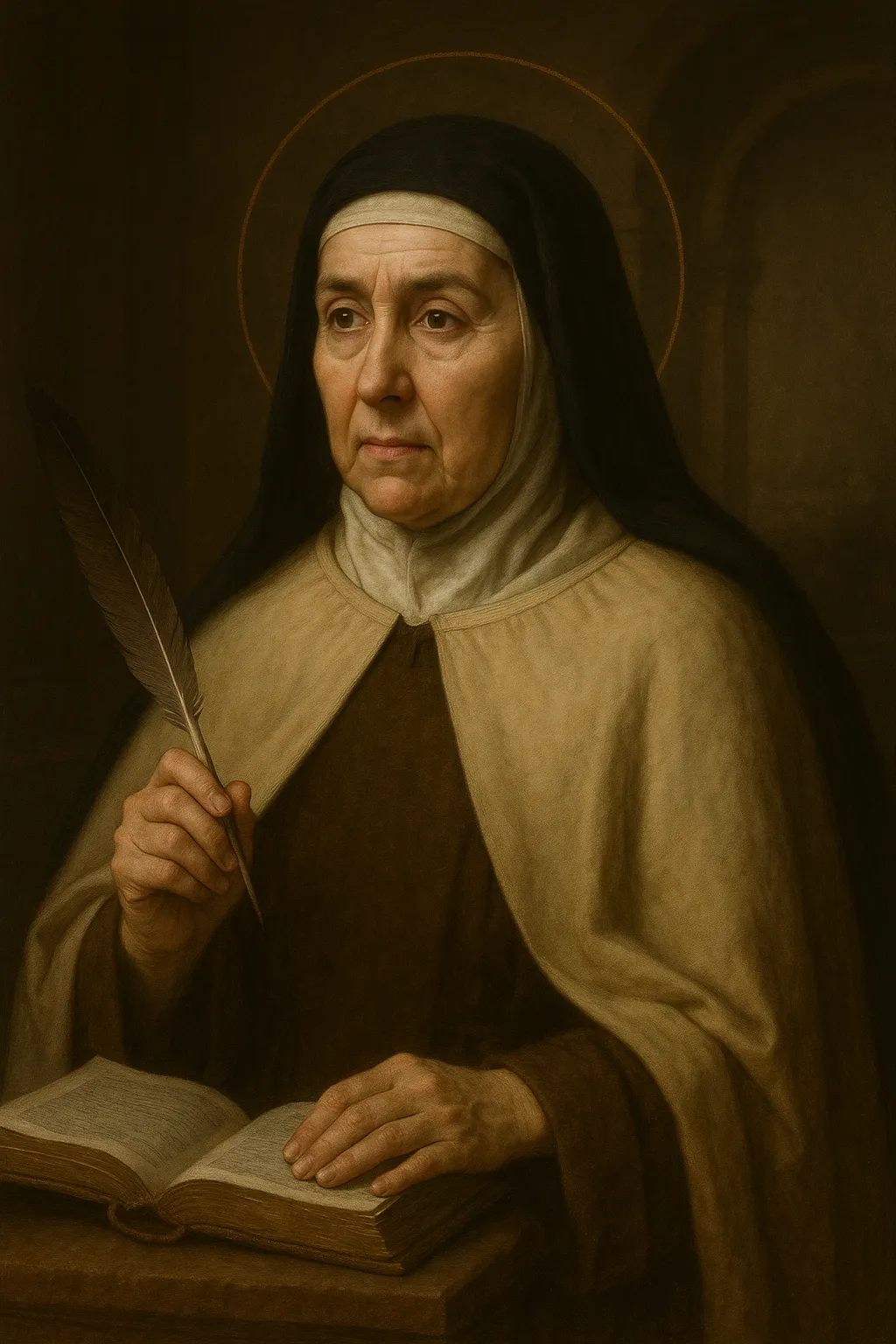
- Saint Teresa of Ávila Obtained the house, and described what she found Teresa secured the property and the permissions that made the friars' foundation possible, and wrote about the conditions at Duruelo in her Book of the Foundations. The friars' reform is hers as much as his.

The rest of Carmelite Castile
-
His birthplace village
Iglesia de San Cipriano, Fontiveros
Where he was born in 1542.
-
Discalced Carmelite convent
Convento de San José
The nuns' reform of 1562, which this foundation extended to the friars.
-
Tomb of Saint Teresa
Monasterio de la Anunciación, Alba de Tormes
Further along the same walking route, where Teresa died in 1582.
Map
Written from the Diocese of Ávila's jubilee announcement, which names the convent church at Duruelo in Blascomillán as a jubilee church and as the first foundation of the male Discalced Carmel. The original farmhouse of 1568 does not survive; the present convent is described as commemorative, and access is flagged as needing arrangement rather than assumed.
September 6, 2026
Photo credits
- Hero. Photo: 19Tarrestnom65, CC BY-SA 4.0, via Wikimedia Commons. Source. CC BY-SA 4.0.