
Ávila

One walled city, one life, and the reform that came out of it

Catholic Ávila is a life in order rather than a shrine with a town around it. The Basilica of Santa Teresa stands over the site of her birth, the Monastery of the Incarnation outside the walls holds the forty years in which her prayer changed, and the Convent of San José holds the reform that came out of them. John of the Cross belongs here too: Teresa brought him to the Incarnation as confessor, and the two of them shaped the Discalced reform in this city before it went out to the rest of Spain.

Region
Europe
Suggested time
One full day inside the walls, or two with Alba de Tormes
Places
3
Saints
2
Visit plans
3

A life, in order

How the Teresian places fit together

Most Catholic cities hold a saint's death or a saint's relics. Ávila holds a saint's development. Within a couple of miles you can stand where Teresa was born, where she spent the twenty ordinary years she was later so hard on herself about, where her prayer changed in middle age, and where she acted on it by founding a house on poverty and enclosure that the whole Discalced Carmel descends from. The reform is not an abstraction here; it has an address, and the address is ten minutes from the house she grew up in. John of the Cross enters the same geography as her confessor, which is why Ávila is the one city that belongs equally to both Carmelite Doctors.

Inside and outside the walls

The city, and the monastery beyond it

Birth and family

Religious life and the change in her prayer

The reform, and the first house

Teresa and John together

Inside and outside the walls

A granite ring, and one monastery beyond it

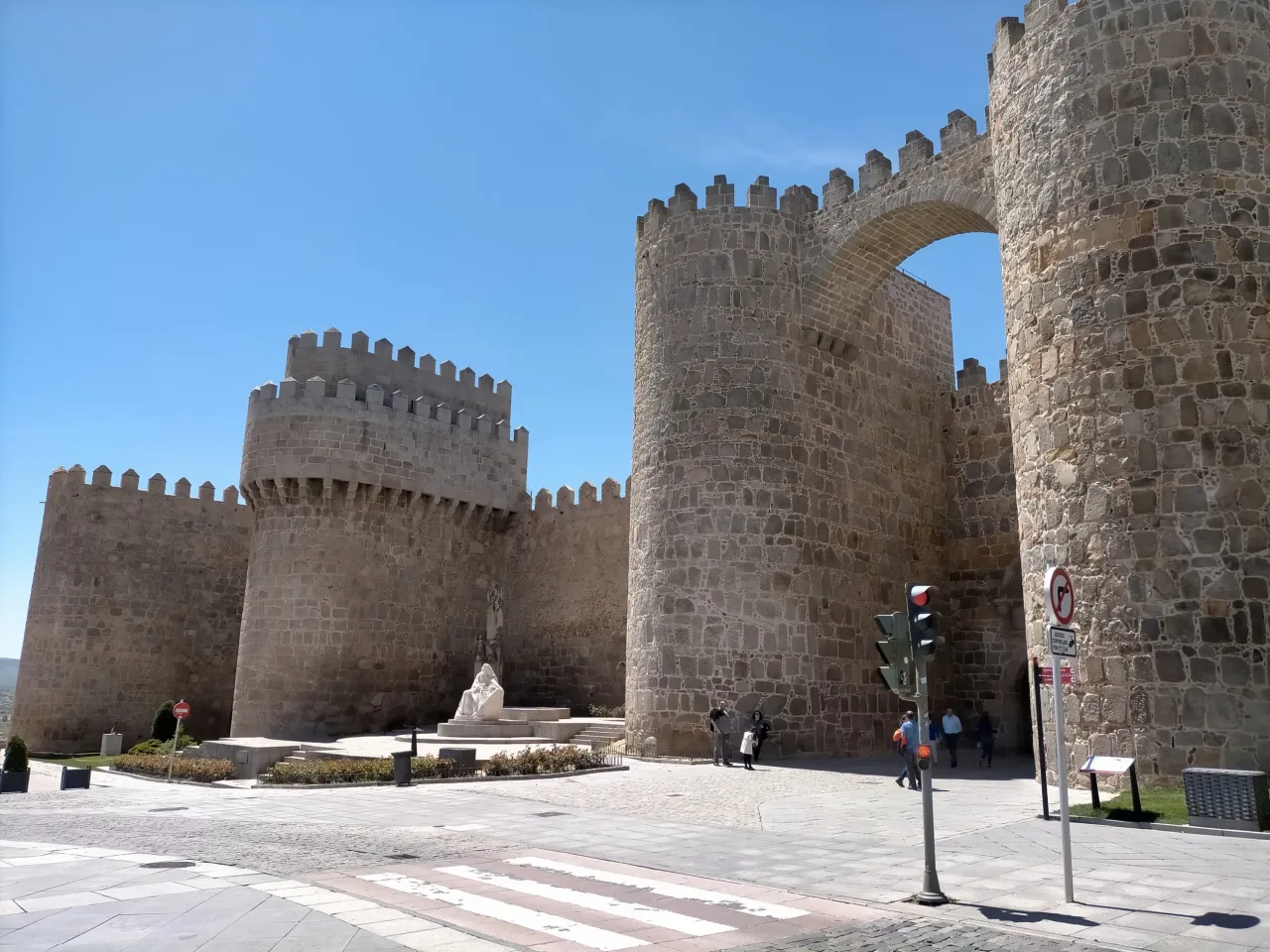
Ávila sits high on the Castilian plateau inside a complete eleventh-century wall, and the Teresian geography divides neatly on that line. Inside the walls are her birthplace, now under the Basilica of Santa Teresa at the southwest, and the Convent of San José about ten minutes east of it. Outside, on the north side and a little downhill, stands the Monastery of the Incarnation, where she actually lived. That division is not incidental: the enclosed life she entered was literally outside the city she came from, and the reform she founded brought it back inside. The whole circuit is about three miles on foot.

The Puerta del Alcazar in the walls of Avila, two round towers flanking the arch, with the seated monument to Saint Teresa on the pavement in front of them.
The Puerta del Alcazar, with the monument to Teresa at the foot of the wall. She was born inside this ring and entered religious life outside it.

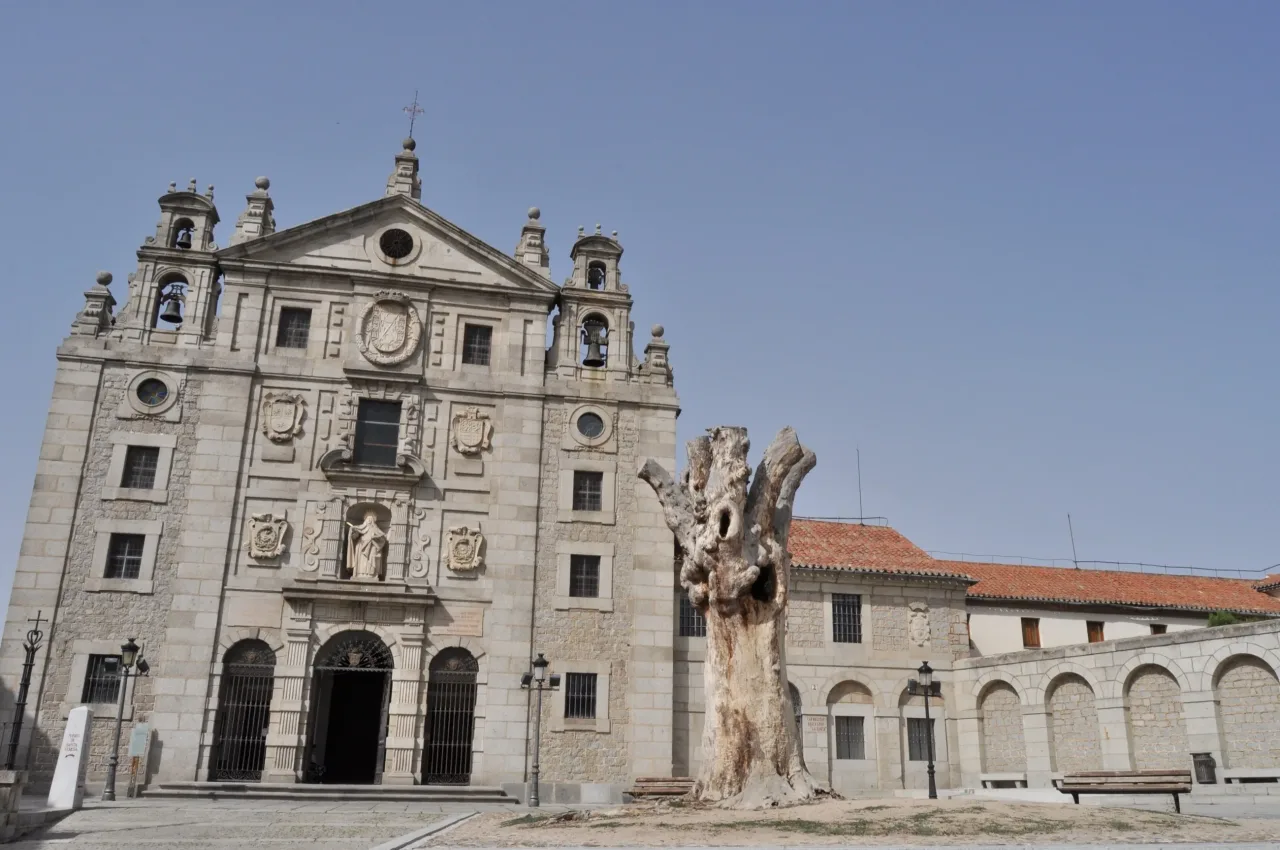
The southwest quarter, and her birthplace

The corner of the walled town where the Cepeda y Ahumada family lived. The Plaza de la Santa and the Carmelite church raised over the site sit against the wall here, about ten minutes from the cathedral.

On the ground Level cobbled streets inside the walls. The Puerta del Alcazar and the walk along the ramparts are a few minutes away.
Calle Las Madres and the first foundation

The southeast quarter inside the walls, quieter and more residential, where Teresa put the first house of the reform in 1562 within easy reach of the family she was disconcerting.

On the ground About ten minutes on foot from the Plaza de la Santa, across the old town.

Outside the walls, to the north

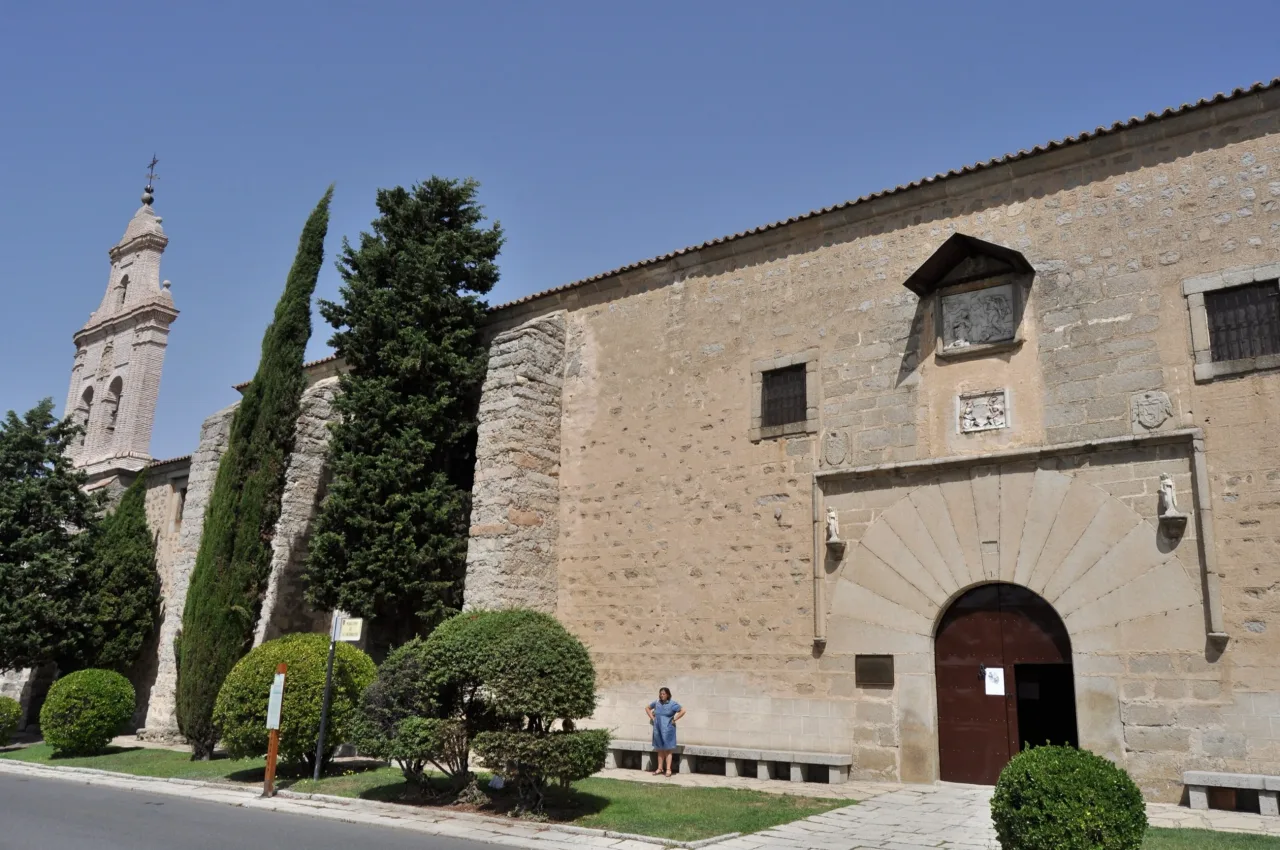
The ground below and beyond the northern wall, where the Carmelite community of the Incarnation settled in the early sixteenth century and where Teresa spent close to forty years.

On the ground About twenty minutes on foot from the Plaza de la Santa, out through the walls and downhill before rising again. A taxi is short if that is difficult.

The walls themselves

A complete circuit of granite with eighty-eight towers, walkable in sections, and the reason the city still reads at a glance as the place she knew.

  • The wall walk and the Puerta del Alcazar

On the ground Sections of the rampart open on a ticket; the outside circuit can be walked free at any hour.

The three anchors

Birth, formation, and reform

Taken in that order, the city stops being a list of convents and becomes a biography.

basilica

Basílica de Santa Teresa de Jesús

PLAZA DE LA SANTA, INSIDE THE WALLS AT THE SOUTHWEST

The Carmelites raised this church between 1629 and 1636 over the site of the Cepeda y Ahumada house, turning the whole building off its liturgical orientation so the high altar would stand above the room of her birth.

monastery

Monasterio de la Encarnación

OUTSIDE THE WALLS TO THE NORTH

Teresa entered here in 1535 and stayed almost without a break until 1574, three of those years as prioress. John of the Cross served as confessor from 1572 to 1577. Three rooms are separated from the enclosure as a museum; the community lives in the rest.

convent

Convento de San José

CALLE LAS MADRES, INSIDE THE WALLS TO THE SOUTHEAST

Founded on August 24, 1562, the first house of the Discalced Carmelites. Its church of 1607 by Francisco de Mora gave the order the facade it copied for a century, and the museum route keeps the kitchen, the refectory, the cloister and the founding bell.

Sacred map

Ávila Sacred Places Map

3 Essential Places shown.

Select a marker to visit or save that place. The list above stays complete on its own.

Suggested pilgrimages

Paths we've walked, ready to make yours.

3 in Ávila

Suggested order. Verify opening hours, transit, and walking conditions before you go.

Suggested pilgrimage Ready to save

Half a day inside the walls

2 to 3 hours · 2 STOPS

Where she was born, and what she founded.

  1. 1 Basílica de Santa Teresa de Jesús
  2. 2 Convento de San José

Saves the whole sequence to your journey. Shape it into a plan later.

Suggested order. Verify opening hours, transit, and walking conditions before you go.

How My Journey works →

Each entry named and sourced

Tombs, relics & sacred objects

Ávila is not where Teresa's relics are. The city holds her beginning, her formation and her reform; her body, her heart and her left arm are venerated at Alba de Tormes, about an hour and a half west. What Ávila keeps is smaller and more domestic: remembrances in two convent museums, and one drawing by another saint's hand.

Venerated at

THE MUSEUM ROOMS OF THE MONASTERY OF THE INCARNATION

The drawing of the crucified Christ by Saint John of the Cross

Preserved and shown by the community as the work of Saint John of the Cross.

A small sketch of Christ on the cross, seen from above, made by John of the Cross during the years he was confessor to this community. It is among the very few things surviving from his own hand, and it is kept in the house where he drew it.

Venerated at

THE TERESIAN MUSEUM IN THE CONVENT OF SAN JOSé

The founding bell of San José

Kept by the community as the bell of the 1562 foundation.

Rung for the first community of the reform in 1562. The convent also keeps the old conventual rooms, the kitchen, the refectory, the cloister and the cell shown as Teresa's.

Venerated at

OFF THE PLAZA DE LA SANTA, BESIDE THE CHURCH

The relic room at the Basilica of Santa Teresa

Relics and remembrances in the custody of the Discalced Carmelite community.

A room holding relics and remembrances of Teresa, alongside the chapel built on the site the family tradition names as the room of her birth. Her body and major relics are not here; they are at Alba de Tormes.

  • Preserved and shown by the community as the work of Saint John of the Cross. The drawing of the crucified Christ by Saint John of the Cross The museum rooms of the Monastery of the Incarnation
  • Kept by the community as the bell of the 1562 foundation. The founding bell of San José The Teresian museum in the Convent of San José
  • Relics and remembrances in the custody of the Discalced Carmelite community. The relic room at the Basilica of Santa Teresa Off the Plaza de la Santa, beside the church

Visit rhythm

Plan a day around Teresa

Plan 1

The birthplace and the first foundation

If you have half a morning, stay inside the walls. The Basilica of Santa Teresa stands on the site of her family house and the Convent of San José is ten minutes away. Two hours does both, and it gives you the beginning and the consequence without the middle.

  1. Basílica de Santa Teresa de Jesús
  2. Convento de San José

Practical, not booking

Before you go

The Basilica of Santa Teresa is free to enter; its crypt museum, the Incarnation and San José each charge separately.

All three keep the long Spanish midday closure, roughly two to four in the afternoon. A day that ignores this will lose two of the three.

The Incarnation and San José are enclosed communities. What is open in each case is a museum route and a church; the cloisters and cells are not shown and will not be.

There is no visiting at San José during services, which is stated plainly by the official record.

October 15 is Teresa's feast and the city is at its fullest around it. The days before carry a novena; accommodation should be booked well ahead.

The Basilica of Santa Teresa is one of five designated churches of the Sanjuanist Jubilee Year, which runs to December 26, 2026 and will bring additional pilgrims through the city.

Ávila is about an hour and a half from Madrid by train or road, which makes a day trip feasible but tight; an overnight is better if you want the Incarnation unhurried.

The old town is granite and cobbled, and the walk out to the Incarnation drops and climbs. Taxis inside the city are short and inexpensive.

Alba de Tormes, where Teresa is buried, is about an hour and a half west and is the natural second day rather than an afternoon add-on.

Photo credits
  1. Ávila; Ávila city hero. Photo: Fernando, CC BY-SA 4.0, via Wikimedia Commons. Source. CC BY-SA 4.0.
  2. Basílica de Santa Teresa de Jesús. Avila Capital - 262 (30399318770). Photo: Luis Rogelio HM, CC BY-SA 2.0, via Wikimedia Commons. Source. CC BY-SA 2.0.
  3. Monasterio de la Encarnación. Avila Capital - 207 (30662505376). Photo: Luis Rogelio HM, CC BY-SA 2.0, via Wikimedia Commons. Source. CC BY-SA 2.0.
  4. Convento de San José. Photo: Zarateman, CC0, via Wikimedia Commons. Source. CC0.
  5. The Puerta del Alcazar, with the monument to Teresa at the foot of the wall. She was born inside this ring and entered religious life outside it.; A granite ring, and one monastery beyond it. Photo: Emilio J. Rodríguez Posada, CC BY-SA 4.0, via Wikimedia Commons. Source. CC BY-SA 4.0.