
St. Helena
The mother of the first Christian emperor, who went to Palestine in old age to pray where Christ had lived, and whom tradition has long remembered at the finding of the Cross.
She dedicated two churches to the God whom she adored, one at the grotto which had been the scene of the Saviour's birth; the other on the mount of his ascension.
Eusebius of Caesarea, Life of Constantine, III.43 (c. 339) Well-attested
Mother of Constantine, empress, and pilgrim to the places of the Gospel
Helena was born to humble people in the eastern Empire, perhaps at Drepanum in Bithynia, about the middle of the third century. She became the companion of the officer Constantius and the mother of Constantine, and lived to see her son become emperor and the Church become free. In her last years she traveled to Palestine to pray at the places of the Gospel, and Christians have remembered her ever since as the empress who went on pilgrimage.
Ambrose calls her a stabularia, a keeper of an inn or a posting station, and nothing in the sources makes her noble. Whether she was the lawful wife of Constantius or his concubine is still debated. Their son Constantine was born at Naissus about 272. Around 289, when Constantius rose toward the imperial college, he put her aside to marry Theodora, the stepdaughter of the emperor Maximian, and for years Helena disappears from the record.
Constantine brought her back to his court. Eusebius, the bishop of Caesarea who knew him, writes that she became a devout servant of God under her son's influence, which places her conversion after his victory at the Milvian Bridge in 312. In Rome she lived at the Sessorian palace near the Lateran, and coins struck from 324 give her the title Augusta.
About 326, though advanced in years, she traveled to the eastern provinces. Eusebius describes her giving money to soldiers and the poor, freeing prisoners and recalling exiles, and praying in the churches as an ordinary member of the congregation. She dedicated two churches, one at the cave of the Nativity in Bethlehem and one on the Mount of Olives, at the place of the Ascension. These are the things her contemporaries recorded.
Later tradition remembers more. Ambrose, preaching at Milan in 395, is the first to say that Helena found the Cross. Rufinus, a few years later, tells how three crosses were uncovered at Calvary and the true one made known by the healing of a dying woman, and later writers add the nails and the title. The Church has long kept this memory in her liturgy and art, and the basilica of Santa Croce in Rome grew from a hall of her palace where, tradition holds, she kept what she brought back from Jerusalem.
She died about 329, nearly eighty years old, with Constantine at her side; Eusebius does not say where. Her body was carried to Rome and laid in a mausoleum on the Via Labicana. Her great porphyry sarcophagus, moved to the Lateran in the Middle Ages, now stands in the Vatican Museums. Her relics were carried to the abbey of Hautvillers in Champagne in the ninth century, and Rome keeps relics of her in the church of Santa Maria in Aracoeli.
Helena gave Christian pilgrimage its first imperial form: an old woman who crossed the Empire to pray where Christ was born, died and rose. The Roman Martyrology keeps her memory on August 18; the Eastern Churches honor her with Constantine on May 21.
A life, in years and approximate ages.
-
c. 248BirthBorn in the eastern EmpireHelena is born to humble parents, probably at Drepanum in Bithynia, which Constantine later renamed Helenopolis in her honor.
-
c. 272About 24Mother of ConstantineHer son Constantine is born at Naissus to Helena and the officer Constantius. Around 289 Constantius puts her aside to marry the emperor Maximian's stepdaughter.
-
After 312In her sixtiesA Christian at her son's courtEusebius writes that she became a devout servant of God under Constantine's influence. In Rome she lives at the Sessorian palace, and from 324 she bears the title Augusta.
-
c. 326About 78Pilgrimage to PalestineAdvanced in years, she visits the eastern provinces, gives to soldiers and the poor, frees prisoners, and prays in the churches among the people. She dedicates churches at the cave of the Nativity and on the Mount of Olives.
-
Tradition, first recorded 395About 78The finding of the CrossLater tradition holds that Helena found the wood of the Cross at Calvary, and Rufinus tells that a healing showed which of three crosses was Christ's. The Church has kept this memory in her liturgy ever since.
-
c. 329About 80Death with her son beside herHelena dies at nearly eighty with Constantine present, Eusebius records. Her body is carried to Rome and laid in a mausoleum on the Via Labicana.
-
9th centuryAfter deathRelics to HautvillersMonks carry relics venerated as hers from Rome to the abbey of Hautvillers in Champagne; after the Revolution they pass to Paris.
Dates are approximate where the surviving record is traditional or incomplete.
5 places where this witness remains visible.
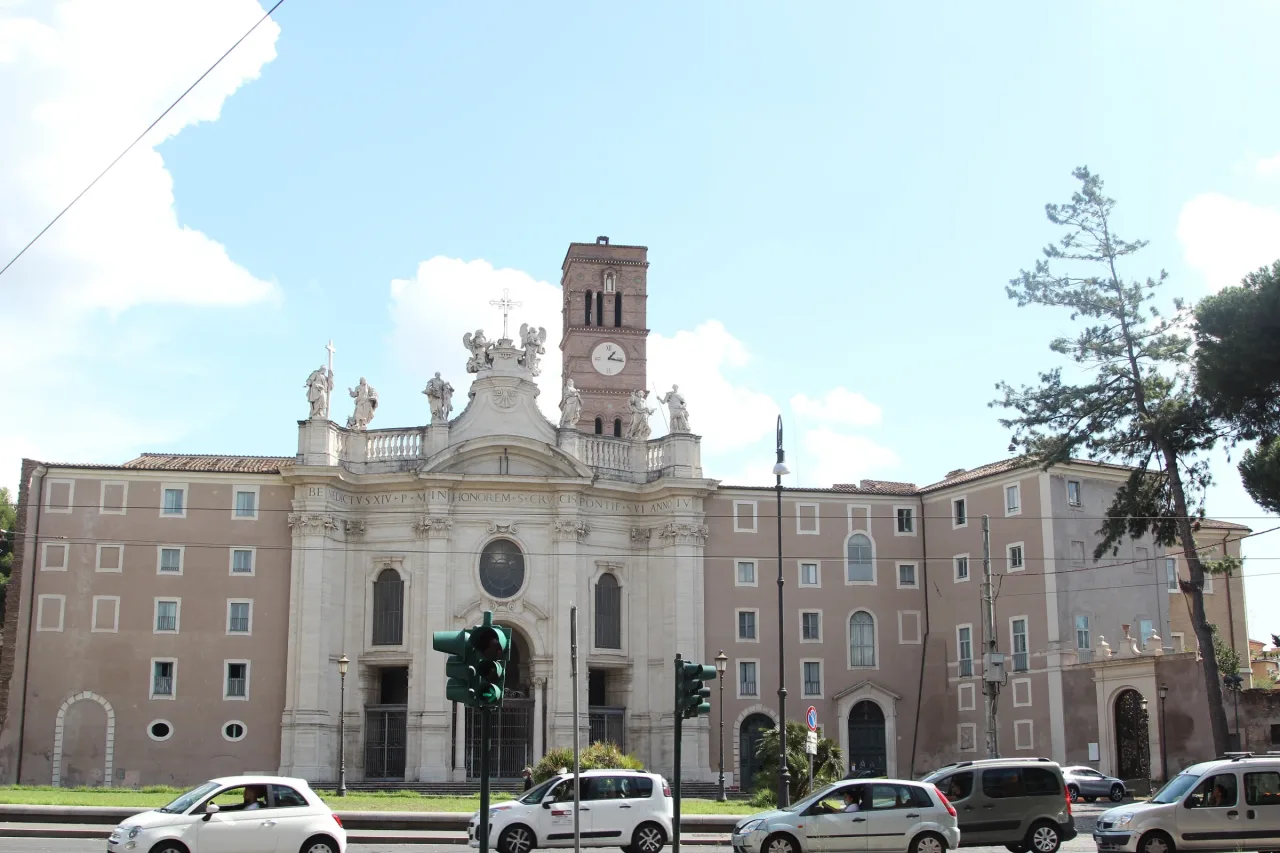
Santa Croce in Gerusalemme
Helena lived in the Sessorian palace in her last years. The basilica grew from a hall of that palace, and tradition holds she kept here what she brought back from Jerusalem; the chapel of Saint Helena lies below the nave.
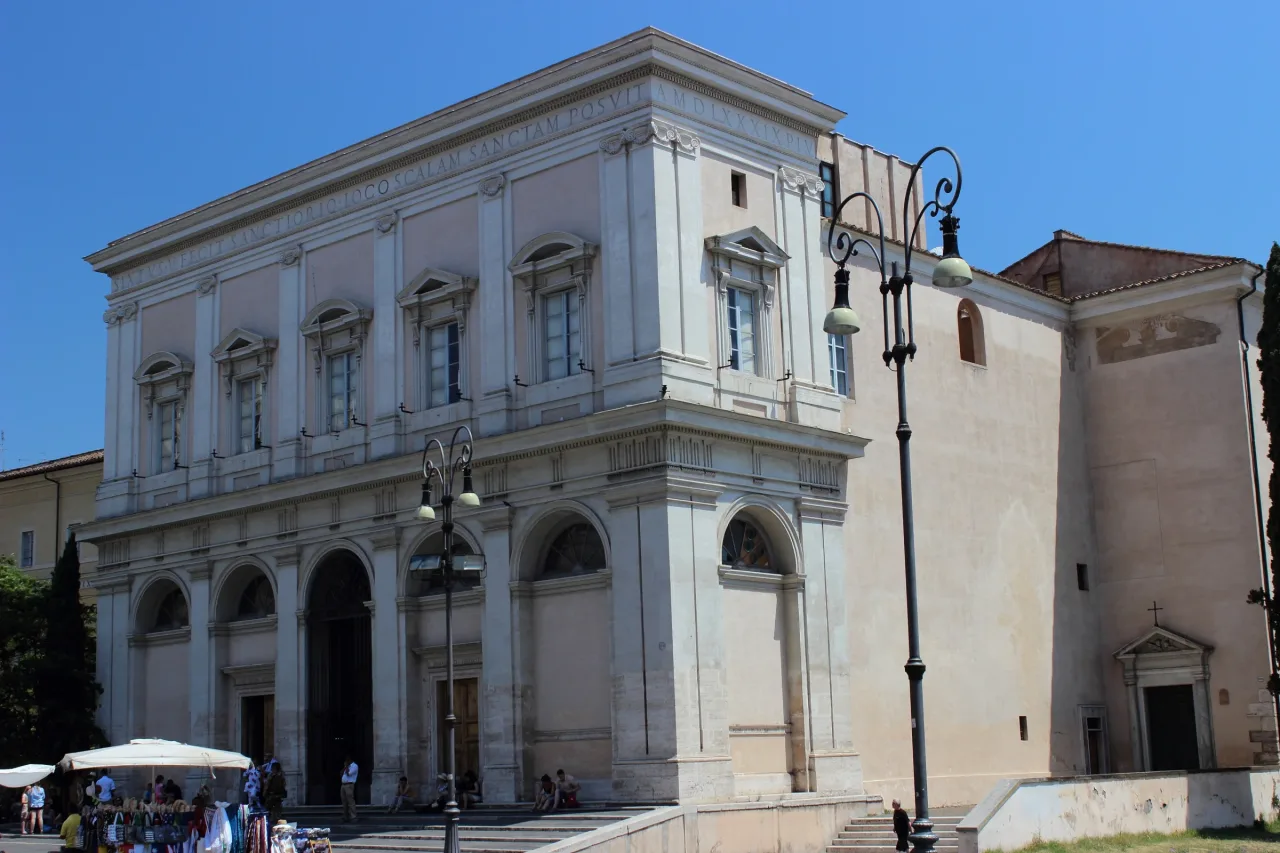
The Scala Sancta
Tradition holds that Helena had these stairs, venerated as those of Pilate's praetorium, carried from Jerusalem to Rome. The Church has never pronounced on their provenance; pilgrims still climb them on their knees.

Church of the Holy Sepulchre
Constantine built the first church over Calvary and the tomb. Catholic and Eastern tradition remembers Helena here at the finding of the Cross, and a chapel in the lower church bears her name.

Church of the Nativity
Eusebius records that Helena dedicated a church at the cave of the Nativity. The basilica pilgrims enter today was rebuilt under Justinian on the Constantinian foundations.
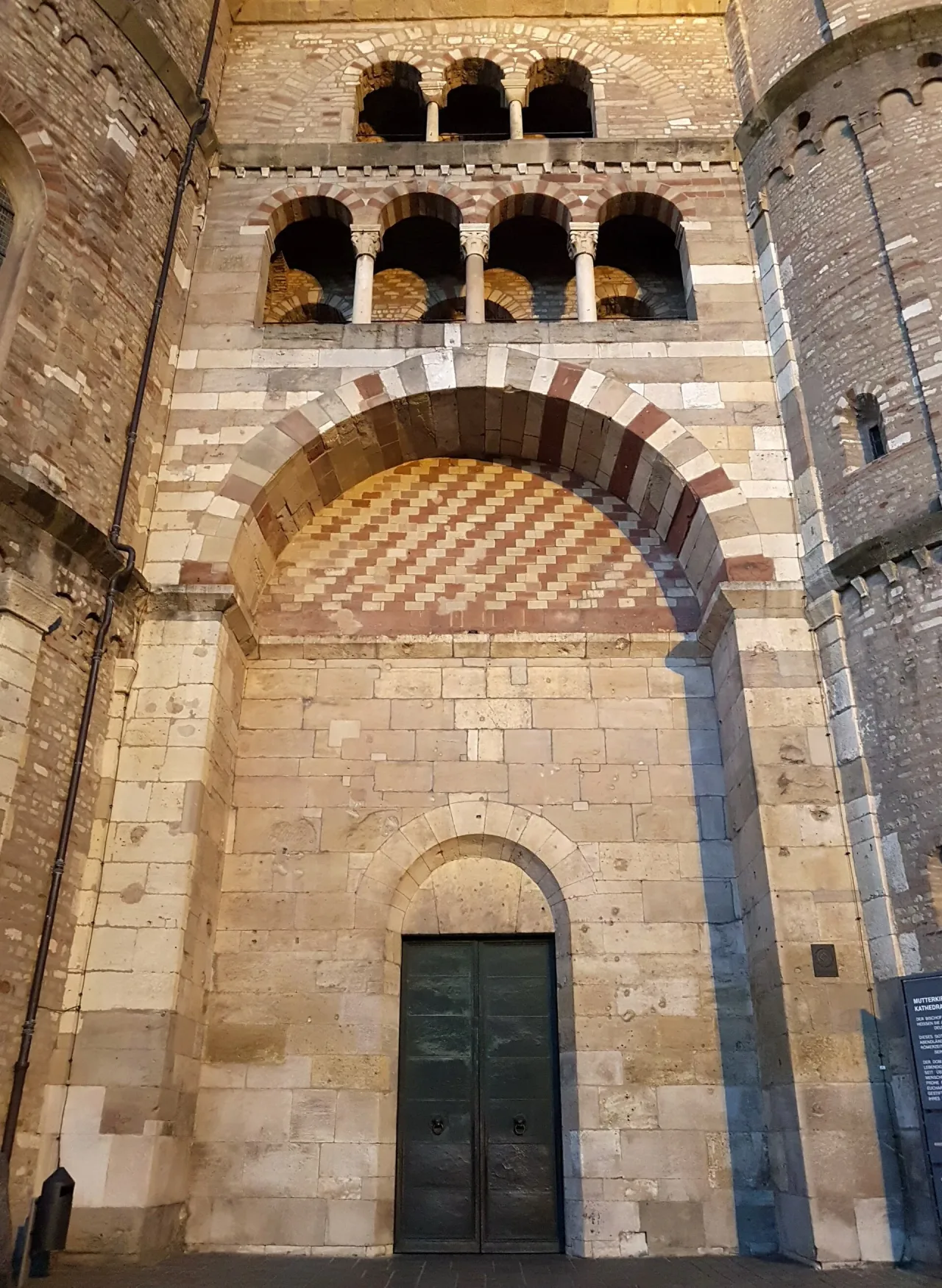
Trier Cathedral
Medieval tradition holds that Helena sent the Holy Robe of Christ to Trier, the imperial city of her son's early reign. The diocese keeps the robe and says plainly that its earlier history cannot be proved.
A Roman tomb, and relics in several churches.
Helena was buried in Rome, in the mausoleum Constantine raised on the Via Labicana, now in ruins at Tor Pignattara. Her porphyry sarcophagus is in the Vatican Museums. In the ninth century monks carried relics they venerated as hers to the abbey of Hautvillers near Reims; after the Revolution those relics passed to Paris, to the church of Saint-Leu-Saint-Gilles. Rome keeps relics of her in a chapel of Santa Maria in Aracoeli, and other churches claim portions too, so no single place holds her body undisputed.
More than one site preserves a claim, without a settled consensus.
Kindred witnesses
-
First to tell of her finding the Cross
Saint Ambrose of Milan
Preaching at Milan in 395, Ambrose gave the earliest surviving account of Helena finding the Cross and its nails. -
Gave Santa Croce its place on the Seven Churches
Saint Philip Neri
His Seven Churches pilgrimage brings pilgrims to Santa Croce in Gerusalemme, the basilica of her palace, as its fifth station. -
Built a chapel for relics of the Passion
Saint Louis IX
The king who brought the Crown of Thorns to Paris and built the Sainte-Chapelle for it, where her story is told in glass.


Where this leads next.
Kept on August 18.
The Roman Martyrology keeps Saint Helena on August 18. The Eastern Churches celebrate her together with her son Constantine on May 21, as equals to the apostles. The feasts of the Cross on September 14 also recall the tradition of its finding.
In Rome, pray at Santa Croce in Gerusalemme, built within her palace, and go down to the chapel of Saint Helena. On a fuller day, cross the piazza at the Lateran to the Scala Sancta, which tradition also ties to her journey.
Photo credits
- Santa Croce in Gerusalemme. Fallaner, CC BY-SA 4.0, via Wikimedia Commons. Source. CC BY-SA 4.0.
- The Scala Sancta. Miguel Hermoso Cuesta, CC BY-SA 4.0, via Wikimedia Commons. Source. CC BY-SA 4.0.
- Church of the Holy Sepulchre. Holy Sepulchre facade from parvis. Wknight94 / Wikimedia Commons (CC BY-SA 3.0). Source. CC BY-SA 3.0.
- Church of the Nativity. Bahnfrend / Wikimedia Commons (CC BY-SA 4.0). Source. CC BY-SA 4.0.
- Trier Cathedral. Photo: Kleon3, CC BY-SA 4.0, via Wikimedia Commons. Source. CC BY-SA 4.0.