
St. Louis IX
A canonized king of France whose justice, charity, crusades, and anti-Jewish policies must be read together in the light of Sainte-Chapelle.
The Life and Witness of Louis IX.
Louis IX cannot be understood apart from the Passion relics he brought to Paris or the chapel he built to receive them. Sainte-Chapelle is at once a work of Christian devotion, a monumental reliquary, and a declaration of Capetian power. It gives pilgrims a beautiful and demanding place from which to read the king who made it.
Born in 1214, Louis inherited the French crown at twelve under the regency of his mother, Blanche of Castile. He married Margaret of Provence in 1234, and they raised a large royal family. His kingship developed around a serious personal piety, the hearing of petitions, works of charity, legal reform, and a conviction that royal government answered before God.
In 1239 he acquired the Crown of Thorns from the Latin emperor in Constantinople, followed by further relics of the Passion. Their price exceeded the cost of the chapel raised to house them. Consecrated in 1248 within the royal palace, Sainte-Chapelle made Paris a center of relic devotion while presenting the French monarchy as guardian of sacred history.
Louis also led two crusades. The Egyptian campaign ended in defeat and his capture in 1250; after his release he remained in the eastern Mediterranean for several years. He embarked again in 1270 and died near Tunis. These wars belonged to his understanding of Christian kingship, cost many lives, and cannot be separated from the violence and political ambition of crusading.
His treatment of Jews is among the gravest parts of his reign. Under his authority the Paris disputation against the Talmud led to the confiscation and burning of Jewish books, and later measures imposed discriminatory restrictions, including the badge decree of 1269. Medieval context explains the structures in which he acted; it does not make the harm disappear.
The Church canonized Louis in 1297, receiving his penitence, charity, public justice, and desire to govern before God. His sanctity does not require the harm done under his authority to be hidden. Sainte-Chapelle holds the whole reign before a pilgrim: prayer and royal ambition, radiant beauty and coercive power, a king seeking Christ and a sinner answerable to him.
Louis remains the only canonized king of France. A pilgrimage begins at Sainte-Chapelle, continues to the Crown of Thorns now venerated at Notre-Dame, and places royal memory within the wider Catholic geography of Paris.
A life, in years and approximate ages.
-
1214BirthBorn at PoissyLouis is born on April 25 to the future Louis VIII and Blanche of Castile.
-
122612Crowned king of FranceLouis succeeds his father at twelve; Blanche of Castile governs as regent during his minority.
-
123925Receives the Crown of ThornsAfter negotiation with the Latin emperor, Louis brings the relic venerated as the Crown of Thorns to Paris.
-
1240–124426–30Disputation and burning of Jewish booksThe Paris proceedings against the Talmud, supported by royal authority, lead to confiscation and public burning of Jewish books.
-
124834Sainte-Chapelle is consecratedThe palace chapel built as a monumental reliquary for the Passion relics is consecrated.
-
1248–125434–40Leads the Seventh CrusadeLouis campaigns in Egypt, is captured in 1250, and remains in the eastern Mediterranean after his release.
-
126955Orders a discriminatory badgeA royal ordinance requires Jews in the kingdom to wear a distinguishing badge, one of the coercive anti-Jewish measures of the reign.
-
127056Dies near TunisLouis dies on August 25 during his second crusading expedition.
-
1297After deathCanonizedPope Boniface VIII canonizes Louis IX.
Dates are approximate where the surviving record is traditional or incomplete.
3 places where this witness remains visible.
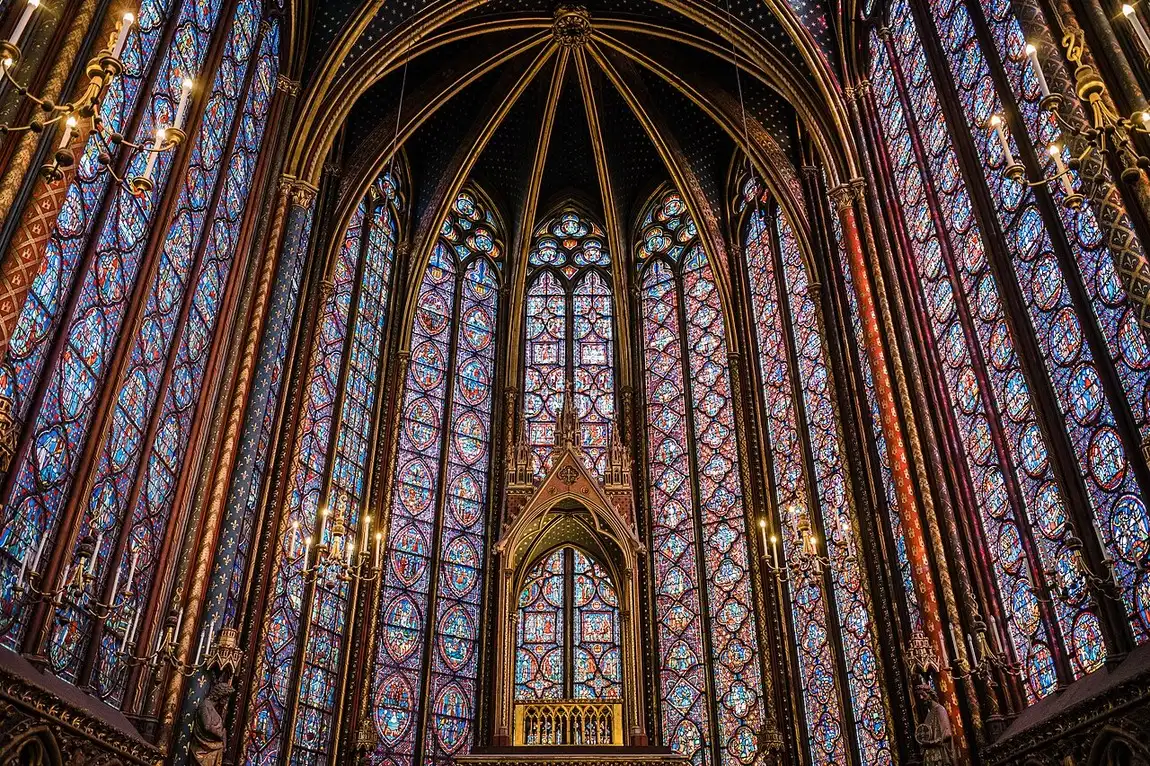
Sainte-Chapelle
Read the upper chapel as a vessel for the Passion relics and a proclamation of Capetian sacred power.
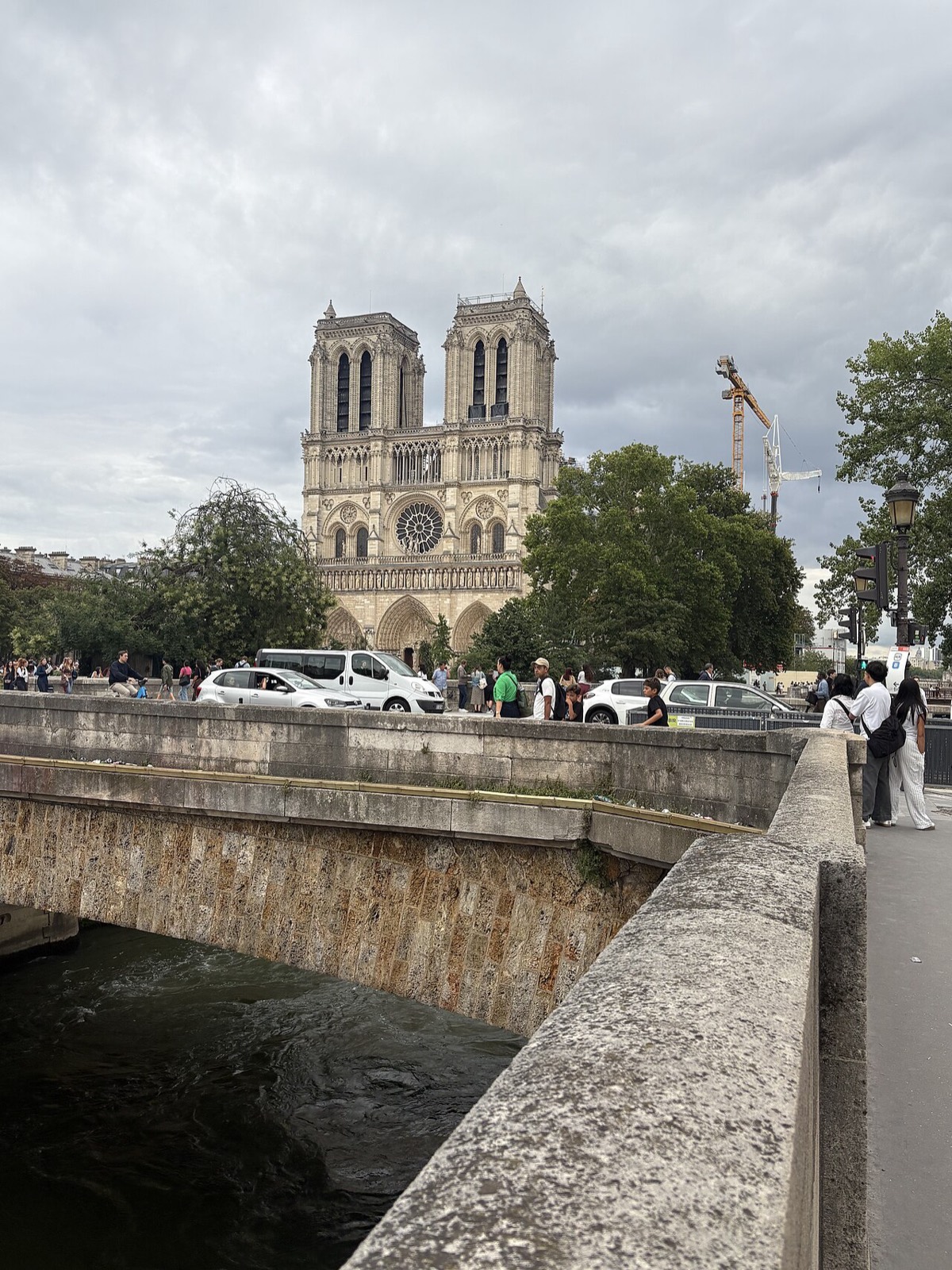
Notre-Dame de Paris
Continue to the cathedral where the Crown of Thorns is now kept and presented for public veneration.
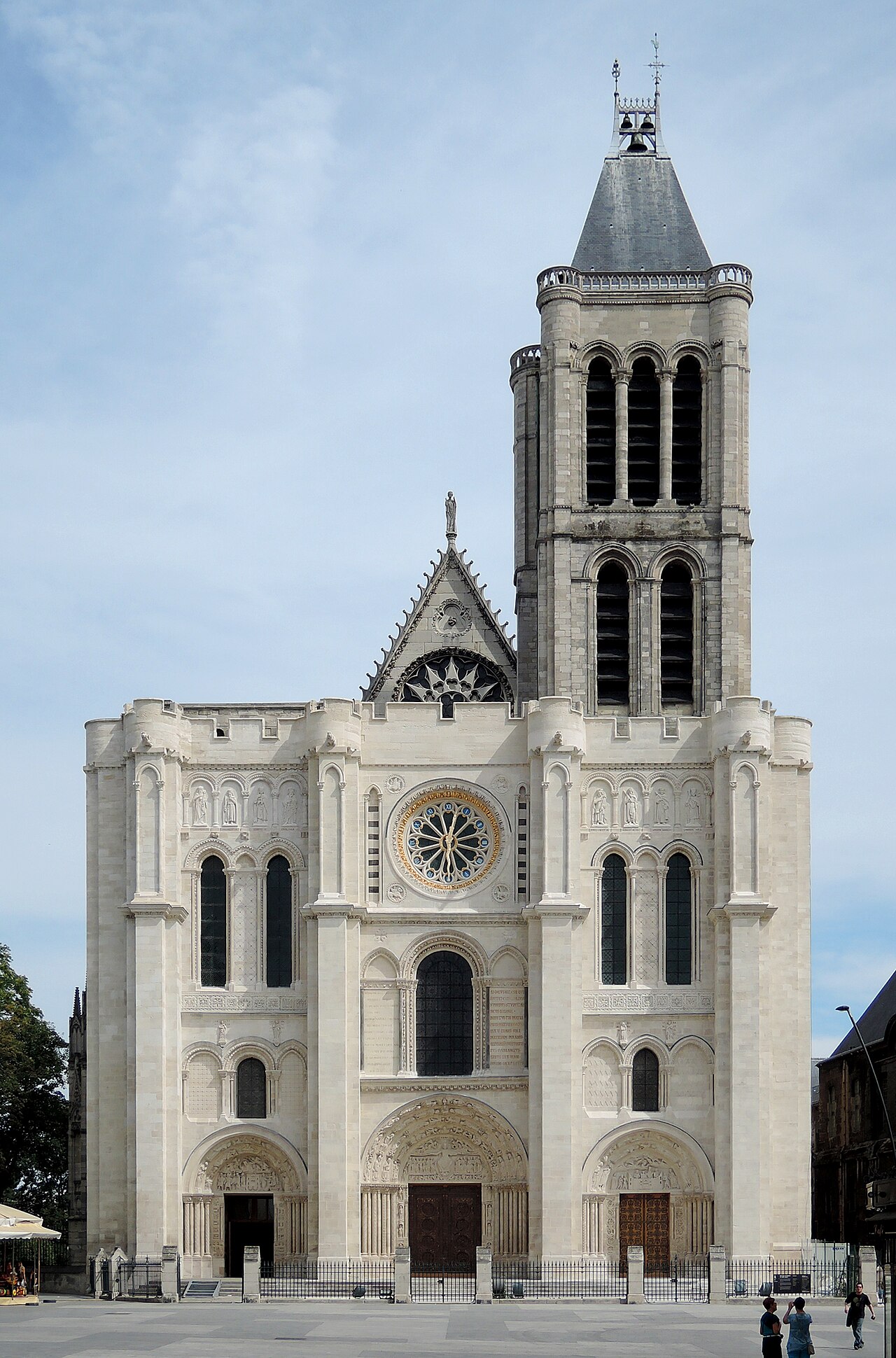
Basilica Cathedral of Saint-Denis
Visit the royal necropolis as a separate outing and remember that Louis’s own bodily relic tradition was disrupted and dispersed.
Louis IX’s Paris · 3 stops.
Begin with the chapel Louis built, continue to the cathedral that now keeps the Crown of Thorns, and treat Saint-Denis as a separate extension when time allows.
-
01 Founded here
Sainte-Chapelle
Île de la Cité, ParisRead the upper chapel as a vessel for the Passion relics and a proclamation of Capetian sacred power.
-
02 Later devotional association
Notre-Dame de Paris
Île de la Cité, ParisContinue to the cathedral where the Crown of Thorns is now kept and presented for public veneration.
-
03 Burial place
Basilica Cathedral of Saint-Denis
Saint-Denis, FranceVisit the royal necropolis as a separate outing and remember that Louis’s own bodily relic tradition was disrupted and dispersed.
Sainte-Chapelle and Notre-Dame already form the opening pair in the existing two-day Paris guide.
Continue with Paris · Two Days in Paris
Let the chapel hold the whole reign.
The upper chapel is beautiful enough to tempt a visitor into forgetting what royal sacred power could build and what it could injure.
The architecture was made to receive the Passion relics. Its glass and verticality direct attention toward the sacred treasury the king assembled.
The chapel stood inside the palace and exalted the Capetian monarchy. Piety and political prestige were not separate projects.
Remember the Jewish communities subjected to confiscation, book burning, and discriminatory restrictions under Louis’s rule.
The Crown of Thorns is now kept at Notre-Dame. The walk between the two places makes the relic’s changing Paris history visible.
A royal body dispersed, a chapel that remains.
Louis was buried at the royal abbey of Saint-Denis. The royal tombs were violated during the French Revolution, and his bodily relic tradition is now dispersed.
Sainte-Chapelle is not his tomb. It is his principal Paris life-site: the palace chapel he founded for the Passion relics.
Notre-Dame de Paris now identifies relics of Saint Louis among those kept in its reliquary cabinet; its public notice does not specify the bodily element.
Significant relics are venerated in more than one place.
Kept on August 25.
The Church celebrates Saint Louis on August 25, the date of his death near Tunis in 1270.
A Paris pilgrimage should place Sainte-Chapelle beside Notre-Dame, where the Crown of Thorns is now kept, rather than implying that the relic remains in the chapel.
Photo credits
- Saint page. Eternal Roam devotional rendering. Source. Eternal Roam commissioned generation.
- Sainte-Chapelle. Oldmanisold / Wikimedia Commons (CC BY-SA 4.0). Source. CC BY-SA 4.0.
- Notre-Dame de Paris. Dmarcovitz / Wikimedia Commons (CC0). Source. CC0.
- Basilica Cathedral of Saint-Denis. Thomas Clouet (ArchiH) / Wikimedia Commons (CC BY-SA 4.0). Source. CC BY-SA 4.0.