
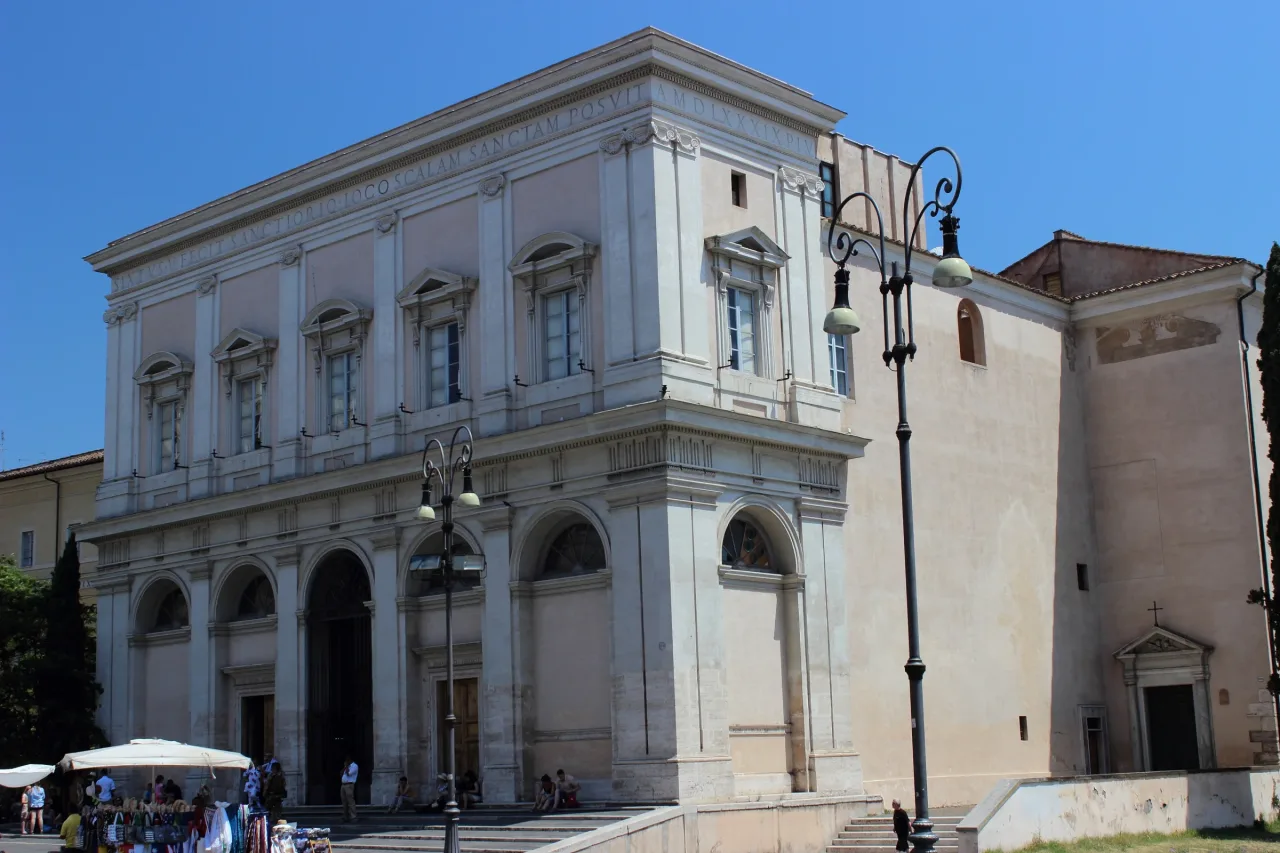
The Scala Sancta and the Sancta Sanctorum, Rome
Across the piazza from the Lateran, a staircase of twenty-eight marble steps is climbed on the knees. The Church has never pronounced on where the stones came from. It has blessed the climbing of them for centuries.
- Location
- Rome, Italy 41.8866° N · 12.5070° E
- Type
- Pontifical sanctuary and pilgrim shrine A late sixteenth-century building raised by Sixtus V to house the stairs and the surviving medieval papal chapel
- Dedication
- The Passion of Our Lord; the Sancta Sanctorum dedicated to Saint Lawrence The twenty-eight steps, ascended on the knees
- Time Needed
- 1 hour to half a day
The stairs pilgrims climb on their knees
Come because this is one of the few places in Rome where the pilgrim's body does the praying.
There is nothing to look at on the way up; the frescoes are above eye level and the steps are covered in wood. What there is, is twenty-eight risers taken one at a time on the knees, with a prayer at each, and the slow understanding of why the devotion was given this shape. Nothing here depends on settling the question of the marble. The Church has never settled it, and the devotion has never needed it settled.
Pilate's stairs, Helena, and what the Church has actually said
Christian tradition holds that these are the stairs Christ climbed to be judged in the praetorium of Pontius Pilate, and that Saint Helena had them brought from Jerusalem to Rome in 326. The Vatican Museums, who directed the recent restoration, state the origin in exactly those terms, as what the tradition holds. No pope has ruled on the provenance of the stones, and no examination has established it.
What is documented is the devotion. The stairs stood at the old Lateran patriarchal palace and led to the popes' private chapel, the Sancta Sanctorum, which survived when Sixtus V demolished the medieval palace in the late sixteenth century and built the present structure to shelter both. By then the ascent on the knees was already long established. In 1723 Innocent XIII had the marble covered with walnut boards, because pilgrims were wearing the steps away. Pius IX entrusted the sanctuary to the Passionists in the nineteenth century, and they have kept it since.
Between April 11 and June 9, 2019, at the end of a restoration lasting some fifteen months, the boards were lifted and the marble was exposed for the first time in about three centuries. Restorers found three medieval crosses set into the stone, and beneath the boards a mass of handwritten notes, coins, photographs and ex voto offerings left by pilgrims over generations, which the Passionists now keep. On June 9, Pentecost Sunday, the wood went back down. What a pilgrim touches today is the covering, not the stone.
Sixtus V's building is plain by design. It is a container for a relic and for a chapel, with the central staircase flanked by four others so that the devout ascent is never the only way up. The frescoes of the stairwells belong to his campaign and were recovered in the same restoration that exposed the marble. The Sancta Sanctorum above is the real survival: a small, dense, thirteenth-century papal chapel with a Cosmatesque floor, left standing when everything around it came down.
The four flanking staircases, for those who cannot ascend the central stairs on their knees
The inscription over the Sancta Sanctorum naming it the holiest place on earth, a medieval claim about its relics
The silence, which is enforced and is the point
The devotion asks for the knees before it asks for anything else.
This is a penitential place and it behaves like one. The ascent is slow, it is made in silence, and it is physically demanding in a way that surprises people who have not tried it. Pilgrims who cannot make the climb on their knees use the side stairs, and the Church has provided them for exactly that reason. Nobody should feel that the lateral staircase is a lesser visit.
Do Not Miss
-
The ascent itself
Twenty-eight steps, on the knees, in silence. Take the prayer at each step slowly. This is the visit, not a preliminary to it.
-
The Sancta Sanctorum
The old private chapel of the popes, with its Cosmatesque floor and the Acheropita. Opened separately from the stairs.
-
The eleventh step
One of three medieval crosses set into the marble was found here during the 2019 restoration. It is under the wood now, but it is there.
-
The lateral staircases
Provided so that nobody is excluded from the chapel at the top. Use them without hesitation if the knees are not possible.
-
The frescoes above you
Sixtus V's campaign across the stairwells, recovered in the recent restoration. Most pilgrims never look up, because they are looking down.
- How quiet it is, and how much of that quiet is kept by the people climbing rather than by any sign
- The pace, which is set by the slowest person on the stairs and which nobody resents
- The wear on the wood, which is only three hundred years of it
- That the building gives you no view, no vista, and nothing to photograph on the way up
- The change in the air entering the Sancta Sanctorum, which is small, dim, and much older than the shell around it
Visit Plans
-
The ascent, unhurried, with time to pray at the top.
-
The ascent and the Sancta Sanctorum, if it is open.
-
The Lateran, the baptistery, and the Holy Stairs together, which is how the complex was meant to be read.
Best in the morning, and best in Lent. Pair it with the Lateran across the piazza rather than treating it as a separate errand.
How to Visit
Come across the piazza from the Lateran, which is the order that makes sense of both. Allow time to wait: the central stairs move at the pace of whoever is on them, and that is not a queue to be impatient with. The Sancta Sanctorum is opened on its own terms and often separately ticketed. If the chapel matters to you, check before arriving rather than assuming it opens with the stairs. Photography inside is restricted.
- The ascent on the knees, made in silence, which is the ordinary use of the building
- Lent and Holy Week, when the stairs are busiest and the devotion is most at home
- Indulgences are attached to the devout ascent under the usual conditions
- The Sancta Sanctorum is opened separately from the stairs
Relics, Tombs, Sacred Objects
Tomb and Burial
- No saint is buried here. The building exists to house a relic of the Passion and the old papal chapel above it.
Relics and Sacred Tradition
- The twenty-eight marble steps, venerated as those Christ climbed in the praetorium of Pontius Pilate
- The relics long kept in the Sancta Sanctorum, the treasury of the medieval papal chapel
Sacred Objects
- The Acheropita, the image of Christ kept in the Sancta Sanctorum, so called because tradition holds it was not made by human hands
- The Cosmatesque floor and thirteenth-century decoration of the Sancta Sanctorum
- The frescoes of the stairwells, commissioned by Sixtus V across some two thousand five hundred square meters
- The walnut boards laid over the marble in 1723 by Innocent XIII, which protect what pilgrims come to touch
Continue Your Pilgrimage
-
City hub
Rome
Where this church sits within the wider Catholic geography of Rome.
-
Papal archbasilica
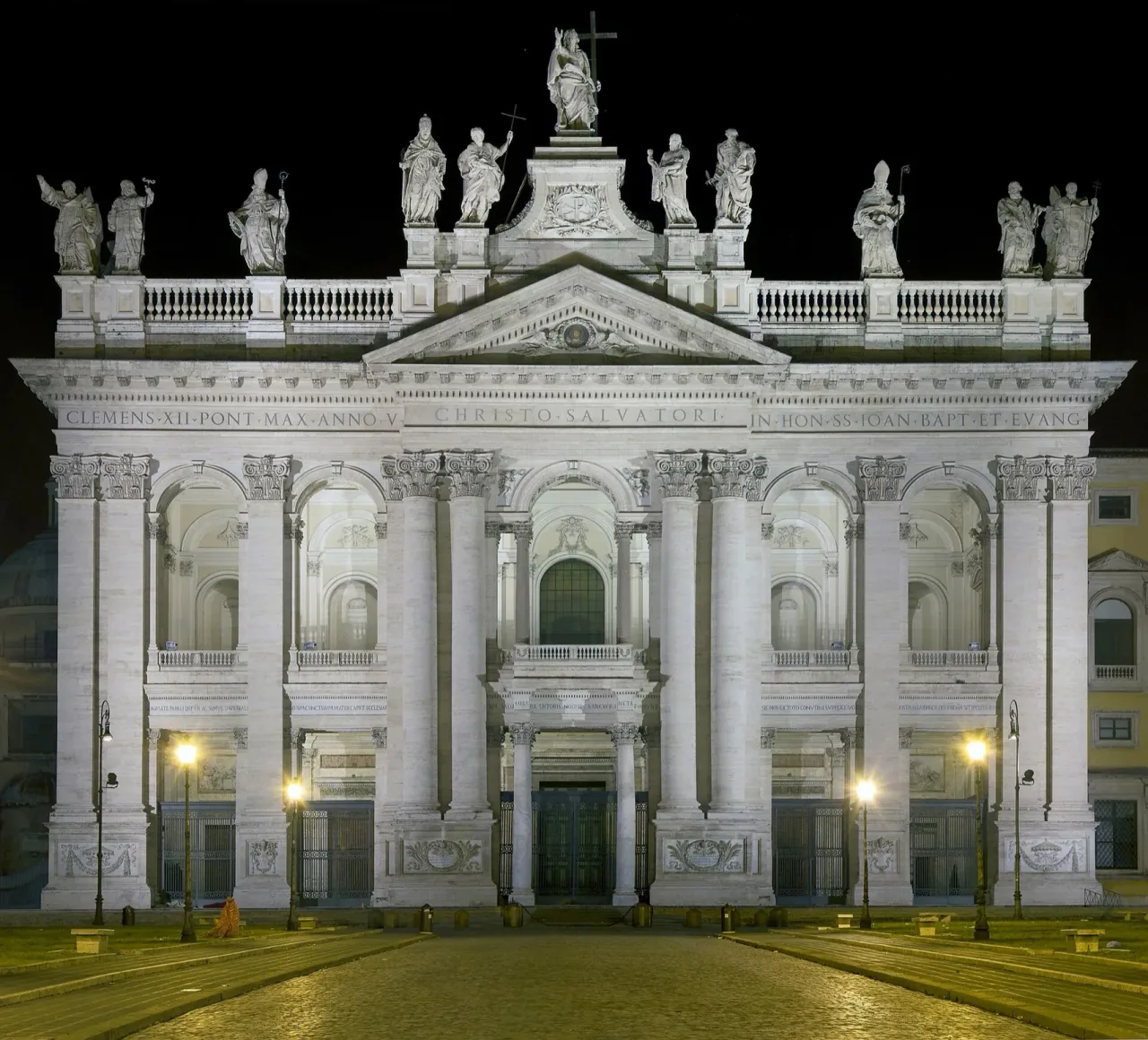
Archbasilica of St. John Lateran
The cathedral of Rome, and the reason this building stands where it does. The stairs served its patriarchal palace.
-
Early Christian baptistery
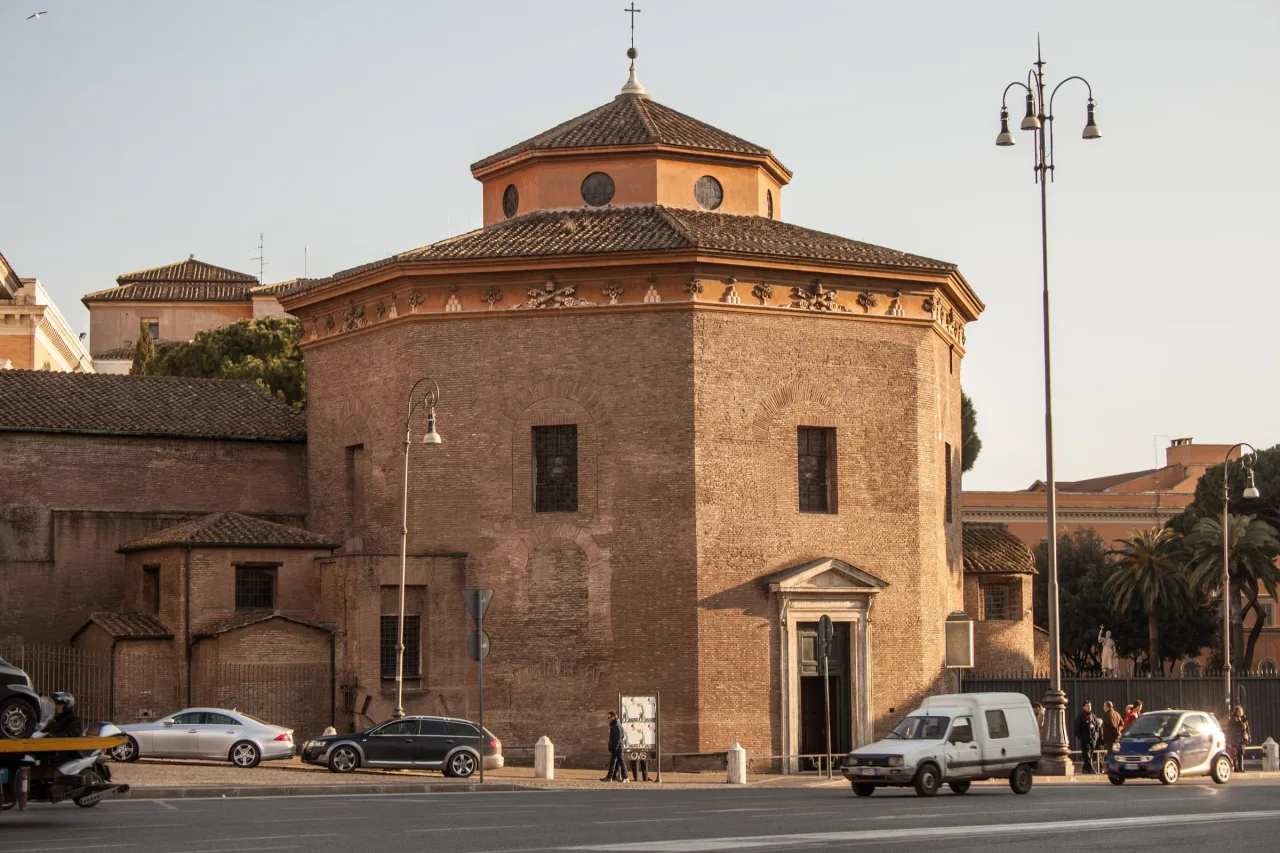
The Lateran Baptistery
The font of the Roman cathedral, a short walk across the same complex.
-
Basilica of the Passion relics
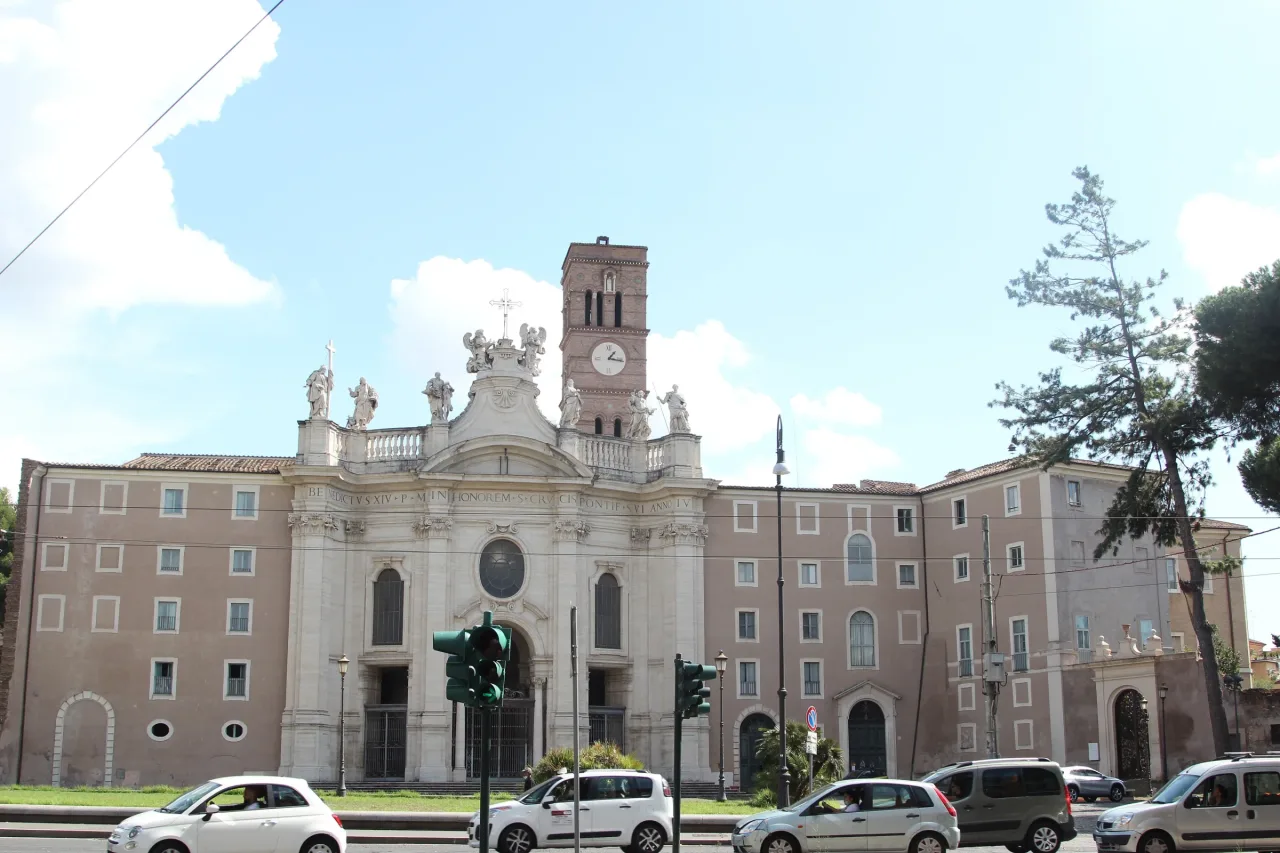
Santa Croce in Gerusalemme
The other half of Rome's Passion geography, and the other site bound to Helena. Walking between the two is the natural sequence.
-
Basilica and monastery
Santi Quattro Coronati
Up the hill toward the Caelian, where a thirteenth-century fresco cycle tells the papal version of Constantine and Sylvester.
Map
The Vatican Museums' account of the 2019 restoration and the Diocese of Rome.
September 13, 2026
Photo credits
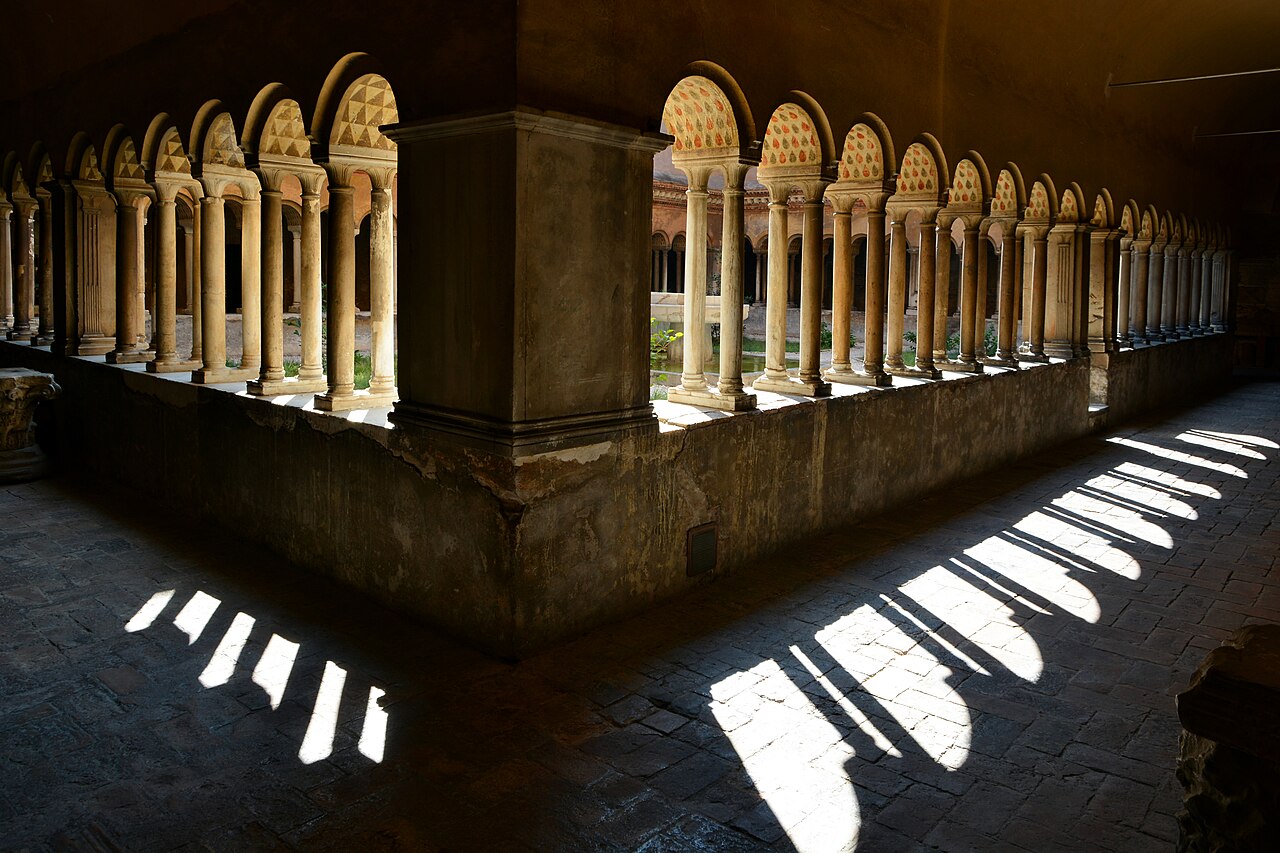
- Hero. Miguel Hermoso Cuesta, CC BY-SA 4.0, via Wikimedia Commons. Source. CC BY-SA 4.0.