
St. Ambrose
of Milan
A Roman governor made bishop by acclamation, whose teaching, hymns, and courage shaped Milan and the Latin Church.
The Life and Witness of Ambrose of Milan.
Ambrose did not set out to become a bishop. He was a Roman official in Milan when a disputed episcopal election drew him into the church, and the people acclaimed him as the one to lead them. Still a catechumen, he was baptized, ordained, and consecrated bishop within days.
As bishop of Milan, Ambrose became one of the strongest pastors of the late fourth century. He defended Nicene faith against Arian pressure, formed the city through preaching and worship, and gave the Western Church hymns that still carry his name and influence.
His courage before imperial power became a defining memory of his episcopacy. Ambrose insisted that emperors stood within the Church, not above it, and his confrontation with Theodosius after the massacre at Thessalonica became a landmark in Christian moral witness.
Augustine heard Ambrose preach in Milan and found, first, a mind that could read Scripture with depth and charity. Ambrose baptized Augustine at Easter in 387. Through that relationship, Milan became one of the great conversion places in Christian memory.
Ambrose belongs at the center of the Milan and patristic story: Augustine, Monica, Ambrose, Jerome, and Gregory form a readable Church Father cluster.
A life, in years and approximate ages.
-
c. 340BirthBirth at TrierAmbrose is born at Trier into a Roman Christian family connected with imperial administration.
-
374About 34Chosen Bishop of MilanWhile serving as a Roman governor, Ambrose intervenes in a disputed episcopal election and is acclaimed bishop by the people of Milan.
-
374About 34Baptism, Ordination, and ConsecrationStill a catechumen, Ambrose is baptized, ordained, and consecrated bishop in rapid succession, then begins a long episcopacy.
-
380sIn his 40sPreaching in MilanAmbrose's preaching draws Augustine, then a teacher of rhetoric, toward Catholic faith and a deeper reading of Scripture.
-
387About 47Baptizes AugustineAt the Easter Vigil, Ambrose baptizes Augustine in Milan, one of the most consequential conversions in Christian history.
-
390About 50Confrontation with TheodosiusAfter the massacre at Thessalonica, Ambrose calls Emperor Theodosius to public penance, a defining act of episcopal courage before imperial power.
-
397About 57Death in MilanAmbrose dies in Milan. Catholics venerate his relics at the basilica that bears his name.
Dates are approximate where the surviving record is traditional or incomplete.
5 places where this witness remains visible.

Basilica di Sant'Ambrogio
Begin at the church he built and where he lies. Ambrose began this basilica in 379, brought the martyrs Gervasius and Protasius into it in 386, and was buried beside them eleven years later. The three rest together in the crypt today. Allow an hour and a half, and do not skip the crypt for the mosaics.
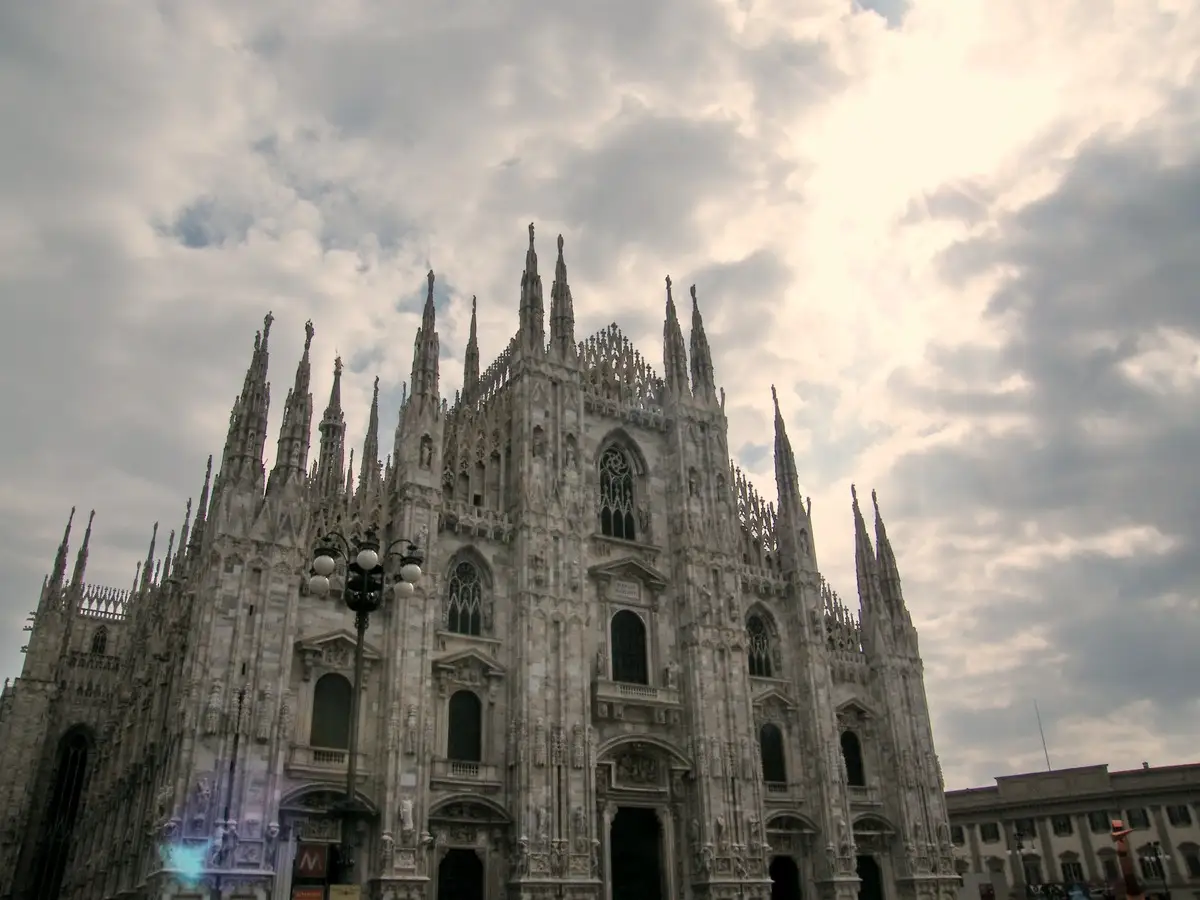
Milan Cathedral and the Baptistery of San Giovanni alle Fonti
The Duomo stands on the ground of Ambrose's cathedral. Beneath it survive the foundations of the octagonal baptistery of San Giovanni alle Fonti, where he baptised Augustine at the Easter Vigil of 387. The archaeological area is reached from inside the cathedral.

Basilica di San Nazaro in Brolo
Ambrose founded this church in 382 as the Basilica Apostolorum, on the Roman road south. It is the least visited of his foundations and among the quietest places in central Milan to sit for a while.

Basilica di San Simpliciano
End north of the center at the Basilica Virginum, the last of Ambrose's foundations, completed by Simplicianus who succeeded him as bishop. A short walk from the Brera quarter.
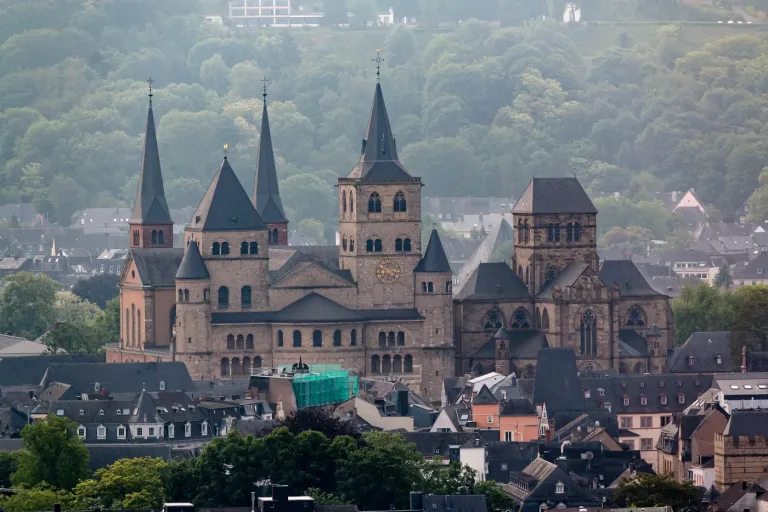
Trier
Ambrose was born about 339 at Trier, where his father served as praetorian prefect of Gaul. The Roman city he was born into is still legible: the Porta Nigra, the imperial baths, and the cathedral raised over Constantine's hall. No shrine of Ambrose stands here, but the world that formed him does.
Ambrose's Milan · 4 stops.
Four churches, all within the old city, three of them founded by Ambrose himself. Begin at his tomb, cross to the cathedral ground where he baptised Augustine, then walk to the two basilicas he raised for the apostles and the virgins. The whole circuit is walkable in a day, and the Milan Metro closes any gap you would rather not walk.
-
01 Tomb · Founded here
Basilica di Sant'Ambrogio
Piazza Sant'Ambrogio, Milan, ItalyBegin at the church he built and where he lies. Ambrose began this basilica in 379, brought the martyrs Gervasius and Protasius into it in 386, and was buried beside them eleven years later. The three rest together in the crypt today. Allow an hour and a half, and do not skip the crypt for the mosaics.
-
02 Ministry
Milan Cathedral and the Baptistery of San Giovanni alle Fonti
Piazza del Duomo, Milan, ItalyThe Duomo stands on the ground of Ambrose's cathedral. Beneath it survive the foundations of the octagonal baptistery of San Giovanni alle Fonti, where he baptised Augustine at the Easter Vigil of 387. The archaeological area is reached from inside the cathedral.
-
03 Founded here
Basilica di San Nazaro in Brolo
Corso di Porta Romana, Milan, ItalyAmbrose founded this church in 382 as the Basilica Apostolorum, on the Roman road south. It is the least visited of his foundations and among the quietest places in central Milan to sit for a while.
-
04 Founded here
Basilica di San Simpliciano
Piazza San Simpliciano, Milan, ItalyEnd north of the center at the Basilica Virginum, the last of Ambrose's foundations, completed by Simplicianus who succeeded him as bishop. A short walk from the Brera quarter.
To see nearby places, open the location page or add this route to a journey.
How to encounter Ambrose.
Meet Ambrose in the union of preaching, worship, and public responsibility. He is a bishop of the city as much as a Doctor of the Church.
His tomb and basilica belong to Milan's identity. Do not reduce him to Augustine's supporting character.
Ambrose helped teach the West that doctrine could be sung. His liturgical legacy is part of the encounter.
His writings are not detached treatises. They come from a bishop forming clergy, catechumens, and a city under pressure.
A Milan tomb at the center of his memory.
Ambrose is venerated at the Basilica of Sant'Ambrogio in Milan, where his relics are preserved with the martyrs Gervasius and Protasius.
The tomb language should stay tied to Sant'Ambrogio itself, not stretched into broader Milan claims before the basilica receives dedicated place treatment.
A principal relic site is named, with other fragments or reliquaries noted separately.
Basilica di Sant'Ambrogio
Ambrose was buried in 397 beside the martyrs Gervasius and Protasius, whose relics he had himself brought into this basilica eleven years earlier. In the ninth century Archbishop Angilbert II placed all three in a single porphyry sarcophagus and had the Golden Altar built over it. The basilica dates the finding of that sarcophagus and the official recognition of the relics to between 1871 and 1874. Since 1897 the three bodies have rested together in a silver and glass urn in the crypt, vested and visible to pilgrims.
- Body of Saint Ambrose
- Bodies of the martyrs Gervasius and Protasius
The crypt is below the high altar and is open to pilgrims through most of the day. The three lie together in one urn, and the visit is short: this is a grave rather than a chapel.
Saints Connected to Ambrose of Milan
-
Saint Augustine of Hippo
The convert Ambrose instructed by preaching and baptized in Milan. -
Saint Monica
The mother who came to Milan and lived to see Augustine baptized. -
Saint Gregory the Great
Another Western Doctor whose pastoral office shaped Rome and the Latin Church. -
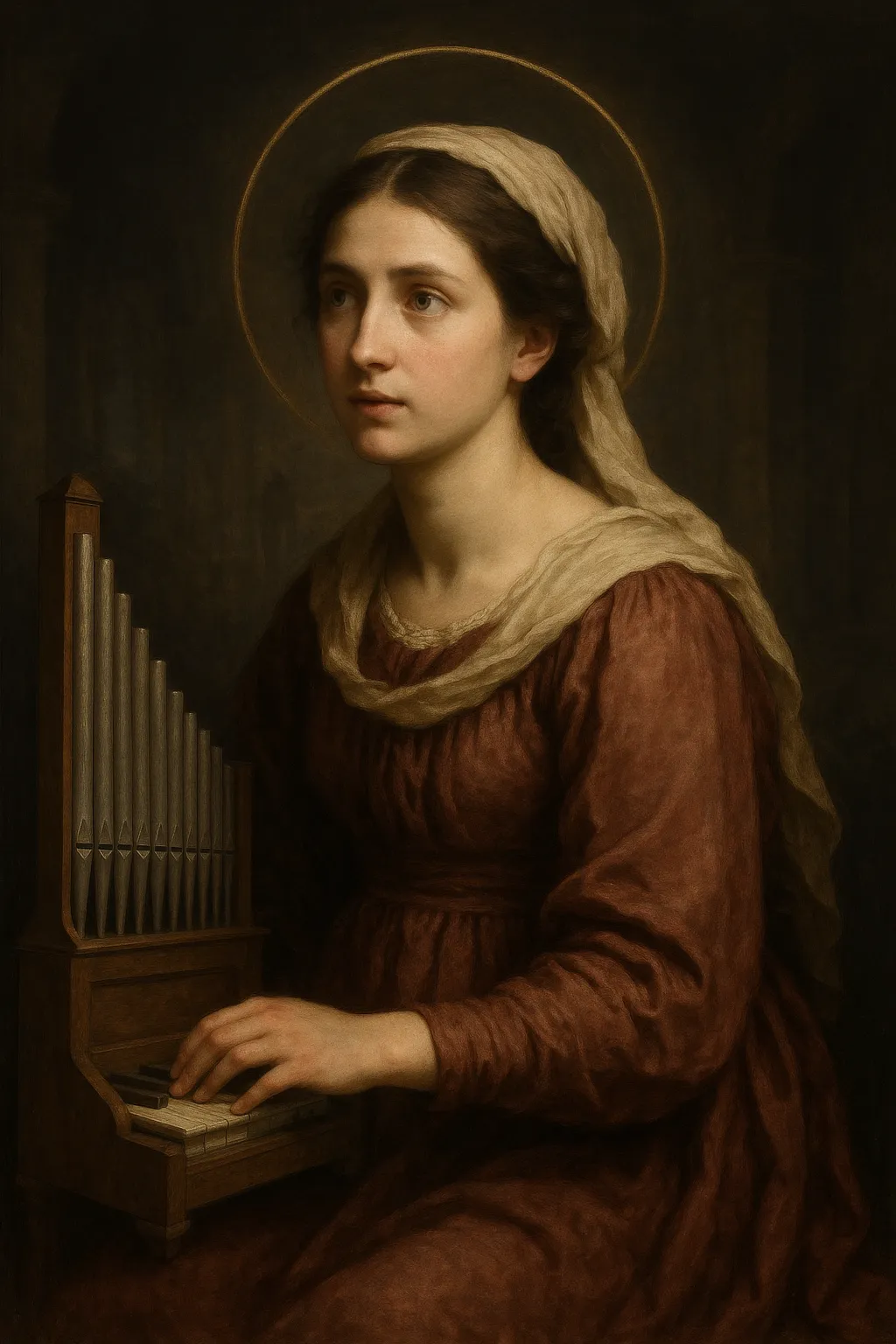
Saint Cecilia
A Roman martyr whose memory of sacred music pairs naturally with Ambrose's hymnody.
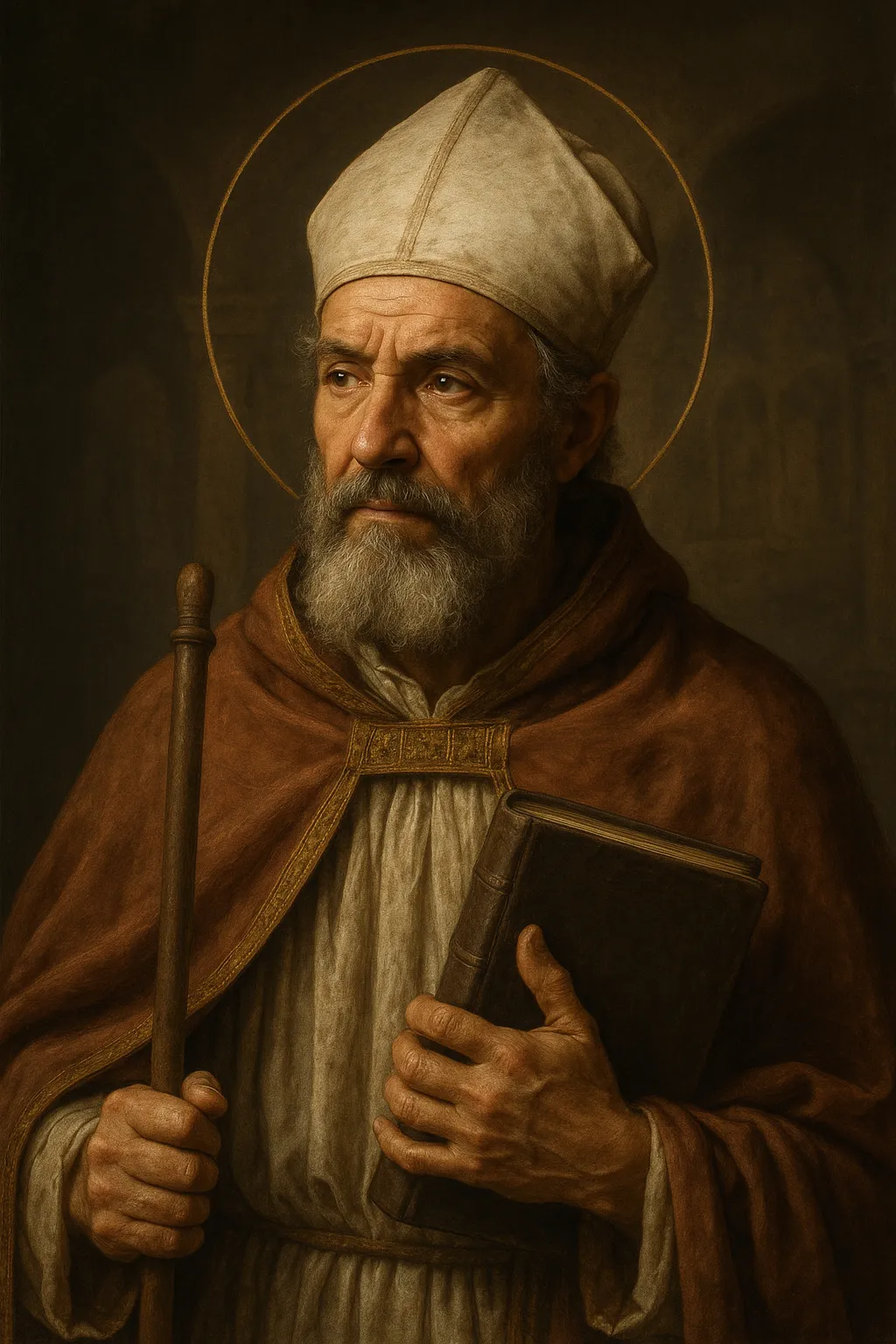

Kept on December 7.
December 7 is Ambrose's feast, especially loved in Milan. The Ambrosian Rite and the city's memory keep his presence unusually close.
The Basilica of Sant'Ambrogio in Milan preserves his tomb and remains the natural starting point for an Ambrose pilgrimage.
Milan as a school of doctrine, song, and conversion.
Ambrose belongs to Milan in a unusually complete way: government, election, preaching, liturgy, conflict, tomb.
The city did not receive Ambrose as a private spiritual writer. It received him as bishop, teacher, negotiator, and public Christian conscience.
For Augustine, Milan became the city where the Catholic faith stopped sounding intellectually small. Ambrose's preaching opened the Scriptures and prepared the ground for baptism.
Sant'Ambrogio holds the body of the bishop and the memory of the martyrs he venerated. It is the church that gives Ambrose's Milan memory its proper weight.
Photo credits
- Trier. Dietmar Rabich, CC BY-SA 4.0, via Wikimedia Commons. Source. CC BY-SA 4.0.
- Basilica di Sant'Ambrogio. Paolobon140, CC BY-SA 4.0, via Wikimedia Commons. Source. CC BY-SA 4.0.
- Basilica di San Nazaro in Brolo. Paolobon140, CC BY-SA 4.0, via Wikimedia Commons. Source. CC BY-SA 4.0.
- Basilica di San Simpliciano. Maurizio Moro5153, CC BY-SA 4.0, via Wikimedia Commons. Source. CC BY-SA 4.0.
- Milan Cathedral and the Baptistery of San Giovanni alle Fonti. Duomo di Milano - Facade. Pilgab / Wikimedia Commons (CC BY-SA 3.0). Source. CC BY-SA 3.0.