
St. Francis Xavier
A first companion of Ignatius, sent across the seas with the Gospel and remembered as one of the Church's great missionaries.
The Life and Witness of Francis Xavier.
Francis Xavier belongs to the restless edge of the Church's missionary life. He left home, country, language, and security because the Gospel had to be carried farther than the comfortable map allowed.
Born in 1506 at Xavier Castle in Navarre, Francis studied in Paris, where Ignatius of Loyola slowly drew him from ambition toward the service of Christ. In 1534 he joined the first companions who made vows at Montmartre, the small beginning from which the Society of Jesus would grow.
Sent east as a missionary, Francis traveled by sea to Goa and then through the wider Portuguese mission world. He preached, baptized, taught catechism, wrote letters, and moved constantly among coastal communities, fishing villages, hospitals, and new Christian settlements.
His desire carried him still farther, to Japan and toward China. He died in 1552 on Shangchuan Island, waiting for entry to the Chinese mainland. Catholics venerate his body at the Basilica of Bom Jesus in Goa, while his missionary memory reaches from Navarre and Paris to India, Japan, and beyond.
Francis Xavier gave the Society of Jesus its missionary shape and gave the Church a pattern of being sent: out of the lecture hall, past the familiar map, into languages and coasts that had not heard the Gospel. Navarre, Paris, Goa, Japan, and the island where he died all still carry his memory.
A life, in years and approximate ages.
-
1506BirthBirth at Xavier CastleFrancis is born at Xavier Castle in Navarre, into a noble Basque family.
-
1525About 19Studies in ParisFrancis studies at the University of Paris, where he meets Ignatius of Loyola and the companions who will form the Society of Jesus.
-
1534About 28Vows at MontmartreFrancis joins Ignatius and the first companions in vows at Montmartre, a hidden beginning of the future Society of Jesus.
-
1541–1542About 35Sent EastFrancis leaves Lisbon for the missions and reaches Goa, beginning years of travel, catechesis, and evangelization in Asia.
-
1549About 43Mission to JapanFrancis reaches Japan and begins one of the earliest Catholic missions there, learning how far culture and language must be honored in evangelization.
-
1552About 46Death on Shangchuan IslandWaiting for entry to China, Francis dies on Shangchuan Island. His missionary desire remains unfinished at the threshold.
-
1554After deathBody Brought to GoaFrancis Xavier's body reaches Goa from Malacca and is received at the College of St. Paul, the Jesuit college in the city.
-
1622After deathCanonizedPope Gregory XV canonizes Francis Xavier together with Ignatius of Loyola, Teresa of Avila, Philip Neri, and Isidore the Farmer.
-
1624After deathBody Moved to the Basilica of Bom JesusOn February 19 the relics are carried in procession from the College of St. Paul to the Jesuit church of Bom Jesus at Old Goa, where they have remained.
Dates are approximate where the surviving record is traditional or incomplete.
9 places where this witness remains visible.
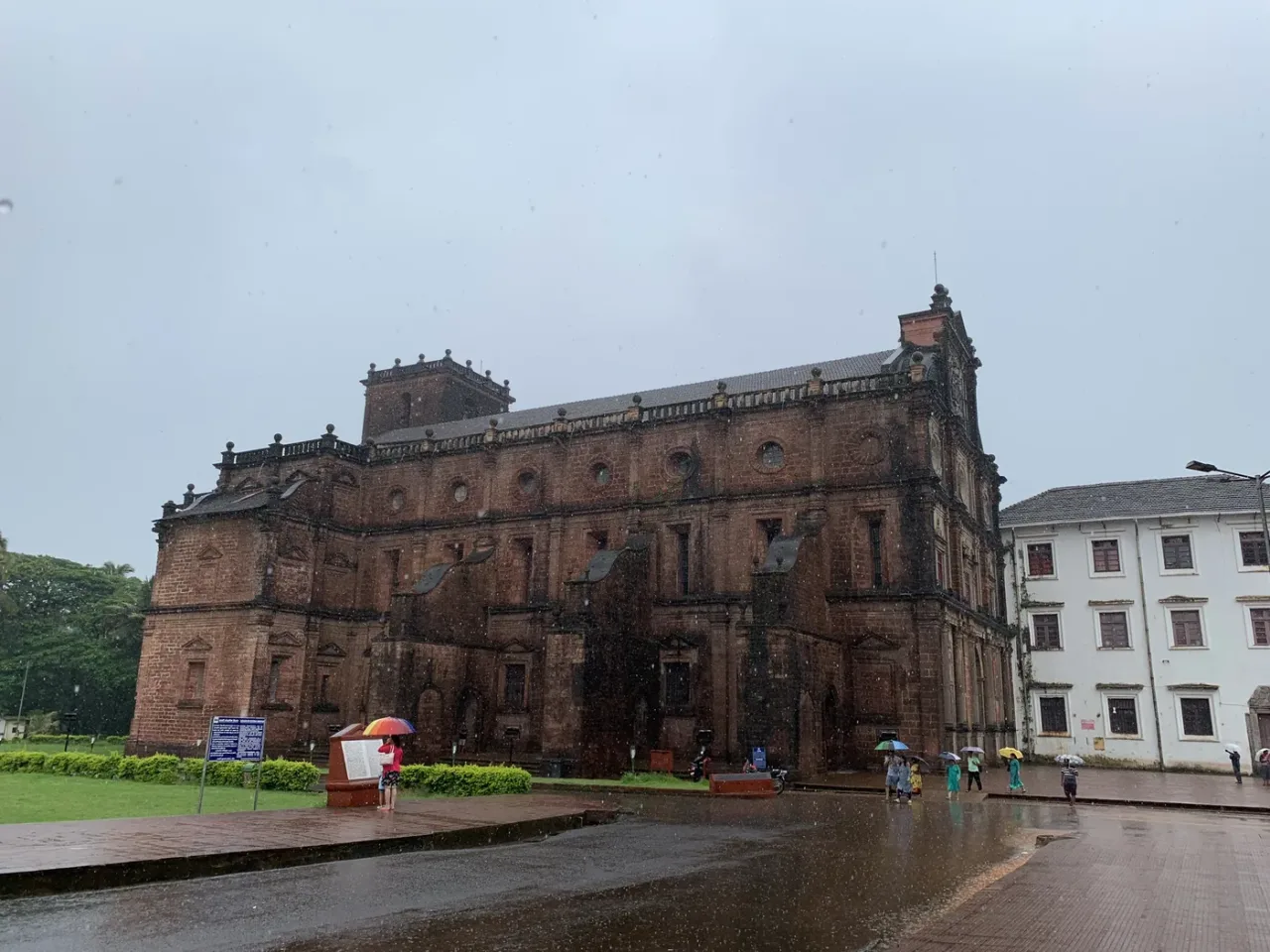
Basilica of Bom Jesus, Old Goa
Begin at the tomb. Xavier's body reached Goa in 1554 and was kept at the College of St. Paul until February 19, 1624, when it was carried into this church. The silver casket that holds it was finished in 1637; the Florentine marble mausoleum it stands on arrived in 1698. The chapel is off the south side of the transept, and the casket is set high enough to be read from the floor.
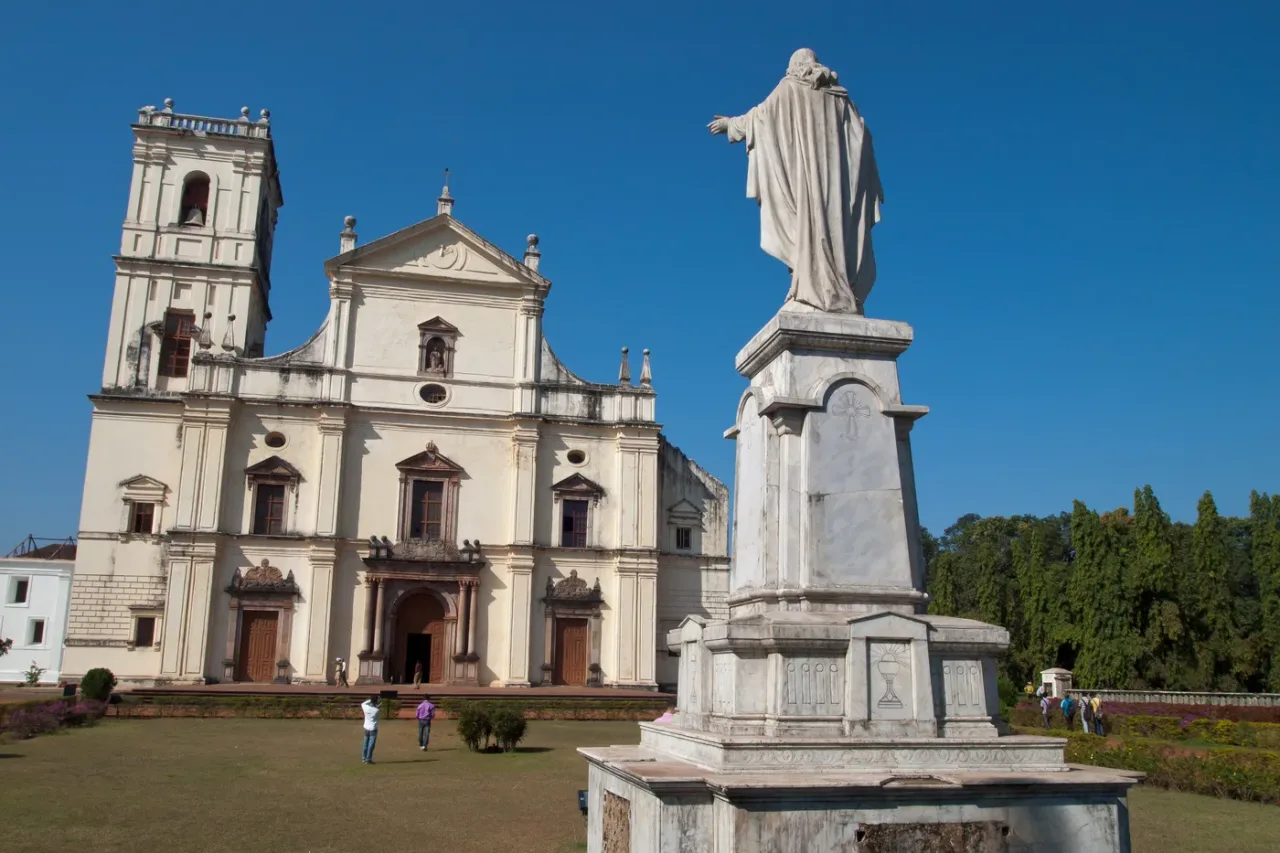
Se Cathedral, Old Goa
Cross the square to the cathedral, the largest church in Asia when it was finished. For an exposition the casket is lowered and carried here so that pilgrims can venerate the relics up close. The eighteenth exposition ran from November 21, 2024 to January 5, 2025 and has ended; no further one has been announced.

Church of the Gesu, Rome
The right forearm was detached in 1614 at the direction of the Jesuit superior general and sent to Rome, where it is venerated in a reliquary above the altar of Saint Francis Xavier in the mother church of the Society of Jesus. It is the arm with which he baptized.

St. Paul's Church, Malacca
Xavier's body lay in this hilltop church for some months in 1553 on its way from Shangchuan to Goa. The open grave is still shown in the ruined chancel. No relics remain; what the site keeps is the stage of the journey and the church he himself had used as a base for the missions east.
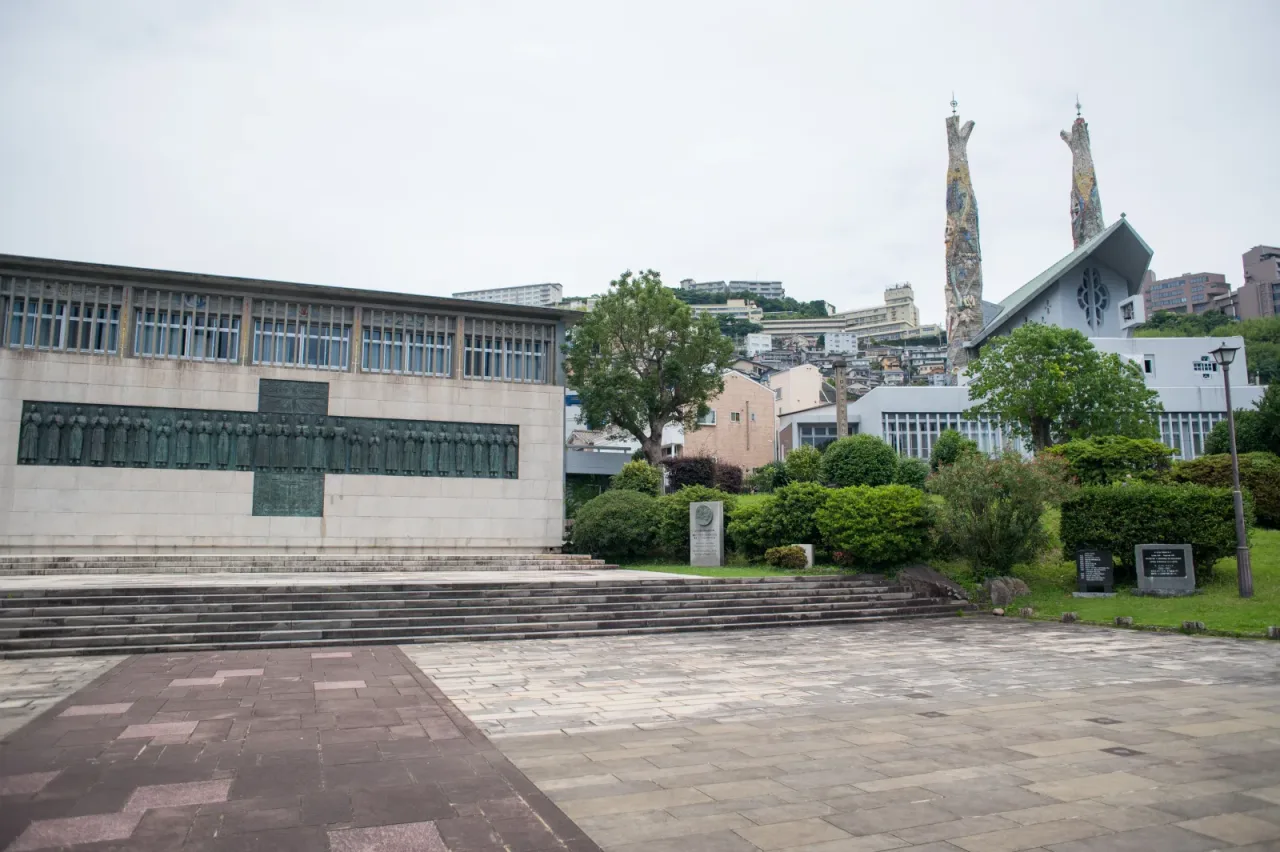
Twenty-Six Martyrs Museum, Nagasaki
The museum on Nishizaka holds original letters of Xavier, kept in the same rooms as the fumie and the Maria Kannon figures of the persecution that followed. It is the one place in Japan where the opening of the mission and its cost are shown together. Read the geography carefully: Xavier landed at Kagoshima on August 15, 1549, worked in places including Hirado and Yamaguchi, and left Japan in 1551. He did not work at Nagasaki, which was not yet the port it later became. What reaches this hill is the mission he began, not his own footsteps.
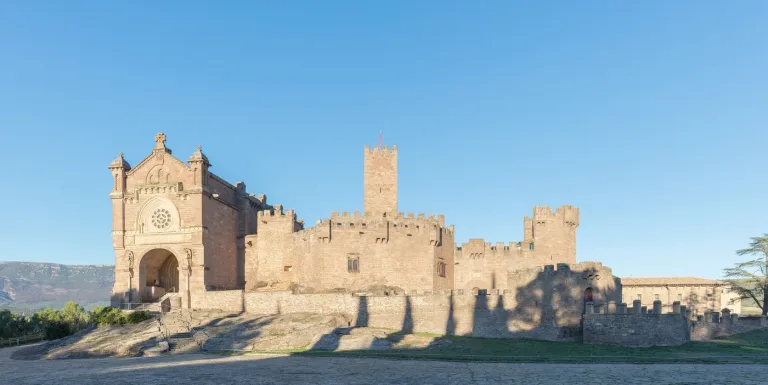
Castillo de Javier
Francisco de Jasso y Azpilicueta was born in this castle in 1506, the youngest child of a Navarrese noble family whose world was broken apart by the Castilian conquest of the kingdom. The castle is restored and open, with a chapel and a basilica beside it, and the Javierada pilgrimage walks here from Pamplona each March.

The Martyrium of Montmartre, Paris
Xavier came to Paris in 1525 to study and shared a room at the College Sainte-Barbe with Ignatius of Loyola, who spent years wearing down his resistance. On August 15, 1534, in the crypt chapel at Montmartre, Xavier and six companions took the vows from which the Society of Jesus grew. The chapel is open on limited days.
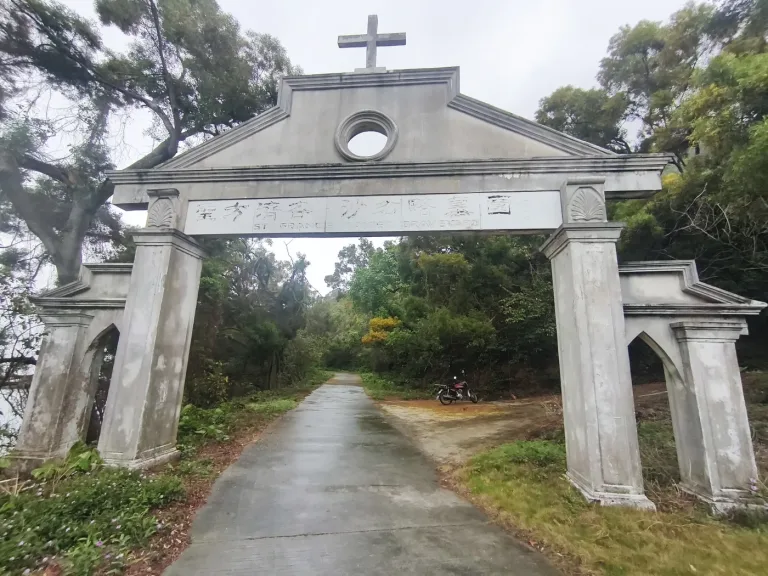
Shangchuan Island
Xavier died here on December 3, 1552, waiting for a passage to the Chinese mainland that never came, and was buried on the island in quicklime so that his bones could later be moved. A memorial chapel stands on the site of the first grave. Access depends on local conditions and permissions.
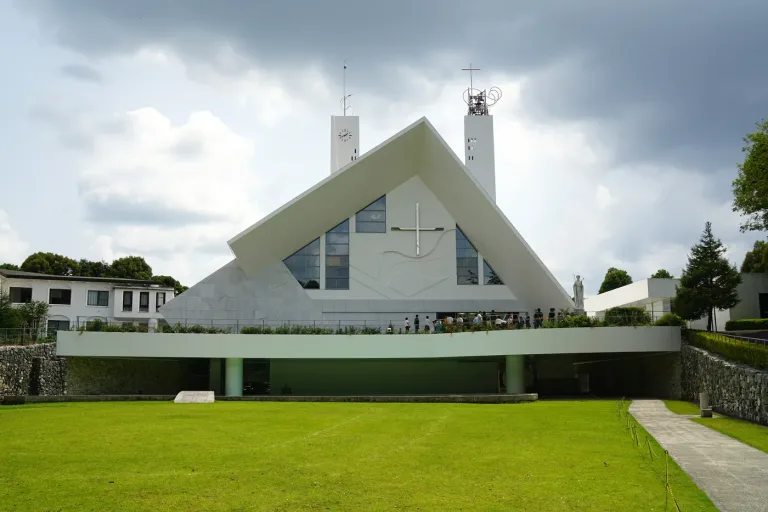
Xavier Memorial Church, Yamaguchi
Xavier reached Japan in 1549 and was given leave to preach at Yamaguchi by the local lord in 1551, the first sustained Christian mission in the country. The memorial church, rebuilt after a fire in 1991, marks the anniversary of that permission and holds a small museum of the mission.
Xavier in Old Goa · 2 stops.
The one route Xavier's life allows is the shortest. His body has lain in the Basilica of Bom Jesus since 1624, and for an exposition it is carried across the square to the Se Cathedral. Both stand within the ruins of the Portuguese capital at Old Goa, about ten kilometers from Panaji. Half a day covers them without hurrying.
-
01 Tomb
Basilica of Bom Jesus, Old Goa
Old Goa, Goa, IndiaBegin at the tomb. Xavier's body reached Goa in 1554 and was kept at the College of St. Paul until February 19, 1624, when it was carried into this church. The silver casket that holds it was finished in 1637; the Florentine marble mausoleum it stands on arrived in 1698. The chapel is off the south side of the transept, and the casket is set high enough to be read from the floor.
-
02 Later devotional association
Se Cathedral, Old Goa
Old Goa, Goa, IndiaCross the square to the cathedral, the largest church in Asia when it was finished. For an exposition the casket is lowered and carried here so that pilgrims can venerate the relics up close. The eighteenth exposition ran from November 21, 2024 to January 5, 2025 and has ended; no further one has been announced.
To see nearby places, open the location page or add this route to a journey.
How to encounter Francis Xavier.
Begin with movement. Francis is a saint of departure: from ambition, from home, from familiar language, from a small map of what God could ask.
The missionary begins as a student. His friendship with Ignatius changes the direction of his life.
His road ran from Lisbon to Goa, up the Fishery Coast, on to Malacca and Japan, and finally to an island within sight of China. Read it as distance and cost rather than adventure: months at sea, borrowed languages, and a mission left unfinished.
His life was exhausting, risky, and incomplete. The missionary road does not become holy by being easy.
A missionary body venerated in Goa.
Francis died on Shangchuan Island in 1552 while waiting to enter China. His body was eventually brought to Goa, where Catholics venerate it at the Basilica of Bom Jesus.
Rome keeps his right forearm at the Church of the Gesu, and Malacca keeps the open grave where his body rested on the way to Goa.
A principal relic site is named, with other fragments or reliquaries noted separately.
Basilica of Bom Jesus, Old Goa
Xavier died on Shangchuan Island off the Chinese coast in December 1552 and was buried there. His body was taken to Malacca in 1553 and on to Goa in 1554, where it was received at the College of St. Paul. It was moved into the Basilica of Bom Jesus on February 19, 1624, after his canonization in 1622, and has stayed. The silver casket that contains it was made by Goan silversmiths and completed in 1637; the marble mausoleum beneath it, given by Cosimo III de' Medici and carved in Florence by Giovanni Battista Foggini, was erected in 1698. The body is no longer presented as incorrupt.
- The body of Saint Francis Xavier, in the silver casket of 1637
The casket sits high on its mausoleum in the chapel off the south transept and is seen from the floor for all but a few weeks in a decade. An exposition is when pilgrims come close. Expositions have been held every ten years since 1974, but that interval is a modern practice rather than a rule.
Church of the Gesu, Rome
The right forearm was detached in 1614 at the direction of the Jesuit superior general and sent to Rome, where it is venerated in a reliquary above the altar of Saint Francis Xavier in the mother church of the Society of Jesus. It is the arm with which he baptized.
- The right forearm of Saint Francis Xavier
The altar is in the right transept, facing the chapel of Saint Ignatius across the church. The two first companions are honored in the one building.
St. Paul's Church, Malacca
Xavier's body lay in this hilltop church for some months in 1553 on its way from Shangchuan to Goa. The open grave is still shown in the ruined chancel. No relics remain; what the site keeps is the stage of the journey and the church he himself had used as a base for the missions east.
The church is a roofless ruin at the top of St Paul's Hill, above the old town. Go early, before the heat.
Saints Connected to Francis Xavier
-
Saint Ignatius of Loyola
His friend and founder, who sent him east as one of the first Jesuit missionaries. -
Saint Paul the Apostle
The apostolic missionary whose restless preaching gives a biblical pattern to Xavier's zeal. -
Saint Gregory the Great
Another saint whose mission from a Roman center reached beyond familiar borders.


Kept on December 3.
December 3 is Francis Xavier's feast, kept with particular devotion in Goa and across the Jesuit and missionary world.
The Basilica of Bom Jesus in Goa preserves his body and remains the principal place of veneration.
A road from Paris to the ends of the known world.
Francis Xavier's sacred geography is missionary: a classroom, vows, ships, coastal missions, Japan, and a final island outside China.
Paris is the first conversion of direction. Francis does not begin as a missionary hero. He begins as a brilliant student whose ambitions are slowly challenged by Ignatius.
Goa becomes the great visible anchor of his memory, both for mission and for veneration. Pilgrims come to pray before his body at the Basilica of Bom Jesus.
Japan and the coast of China reveal the unfinished quality of mission. Francis reaches farther than most, and still dies waiting at a threshold.
Photo credits
- Church of the Gesu, Rome. Finoskov, CC BY-SA 4.0, via Wikimedia Commons. Source. CC BY-SA 4.0.
- St. Paul's Church, Malacca. St. Paul's Church Malacca 2012. Bjørn Christian Tørrissen, CC BY-SA 3.0, via Wikimedia Commons. Source. CC BY-SA 3.0.
- Castillo de Javier. Diego Delso, CC BY-SA 4.0, via Wikimedia Commons. Source. CC BY-SA 4.0.
- The Martyrium of Montmartre, Paris. CryptemartyriumMontmartrefromthealtar. Remi Mathis, CC BY-SA 3.0, via Wikimedia Commons. Source. CC BY-SA 3.0.
- Shangchuan Island. GVZpedia, CC BY-SA 4.0, via Wikimedia Commons. Source. CC BY-SA 4.0.
- Xavier Memorial Church, Yamaguchi. 663highland, CC BY-SA 4.0, via Wikimedia Commons. Source. CC BY-SA 4.0.
- Basilica of Bom Jesus, Old Goa. Slyronit, CC BY-SA 4.0, via Wikimedia Commons. Source. CC BY-SA 4.0.
- Se Cathedral, Old Goa. Vyacheslav Argenberg, CC BY 4.0, via Wikimedia Commons. Source. CC BY 4.0.
- Twenty-Six Martyrs Museum, Nagasaki. BigCheddah / Wikimedia Commons. Source. CC BY-SA 4.0.