
St. Gregory
the Great
A Roman monk made pope, remembered for pastoral wisdom, mission, liturgy, and the life of Saint Benedict.
The Life and Witness of Gregory the Great.
Gregory the Great stands at a hinge in Christian history: late Roman, early medieval, monastic, papal, practical, and deeply pastoral. He wanted the monastery, but the Church received him as pope. His writings taught pastors how to carry souls, and his Dialogues preserved the most influential early life of Saint Benedict.
Born into a prominent Roman family around 540, Gregory served as prefect of Rome before turning his family home on the Caelian Hill into a monastery dedicated to Saint Andrew. That monastic desire never left him, even when ecclesial office pulled him back into public life.
Elected pope in 590 during a time of plague, pressure, and political instability, Gregory governed Rome with unusual practical energy. He organized relief for the poor, negotiated with Lombards, preached, wrote letters across the Christian world, and sent Augustine of Canterbury to evangelize the English.
His Pastoral Rule became a classic guide for bishops and priests. His Moralia on Job offered a vast spiritual reading of Scripture. His Dialogues, especially Book II on Benedict, connected Roman pastoral life with the monastic holiness that would shape Europe for centuries.
Gregory is a Roman, papal, Benedictine, liturgical, and missionary bridge, linking Benedict, Scholastica, Cecilia, Ambrose, Augustine, and the mission to England.
A life, in years and approximate ages.
-
c. 540BirthBirth in RomeGregory is born into a prominent Roman Christian family during a century of political instability and imperial transition.
-
c. 573About 33Prefect of RomeGregory serves as prefect of Rome, gaining administrative experience he will later use as pope.
-
c. 574About 34Turns His Home into a MonasteryGregory leaves public office and makes his family home on the Caelian Hill a monastery dedicated to Saint Andrew.
-
590About 50Elected PopeGregory is elected Bishop of Rome during a time of plague and pressure, reluctantly leaving the monastic life he loved.
-
596About 56Mission to EnglandGregory sends Augustine of Canterbury and companions from Rome to evangelize the English, one of the major missionary acts of his pontificate.
-
late 6th centuryIn his 50sPastoral Rule and DialoguesGregory writes works that will shape medieval pastoral care and monastic memory, including the Pastoral Rule and the Dialogues.
-
604About 64Death in RomeGregory dies in Rome and is buried at St. Peter's Basilica, where his tomb is venerated.
Dates are approximate where the surviving record is traditional or incomplete.
3 places where this witness remains visible.

San Gregorio Magno al Celio
Begin where he began. Gregory turned his family house on the Caelian into the monastery of Saint Andrew and lived here as a monk before he was made pope. From this community he sent Augustine and his companions to England in 596. The three oratories in the garden are worth the extra half hour.
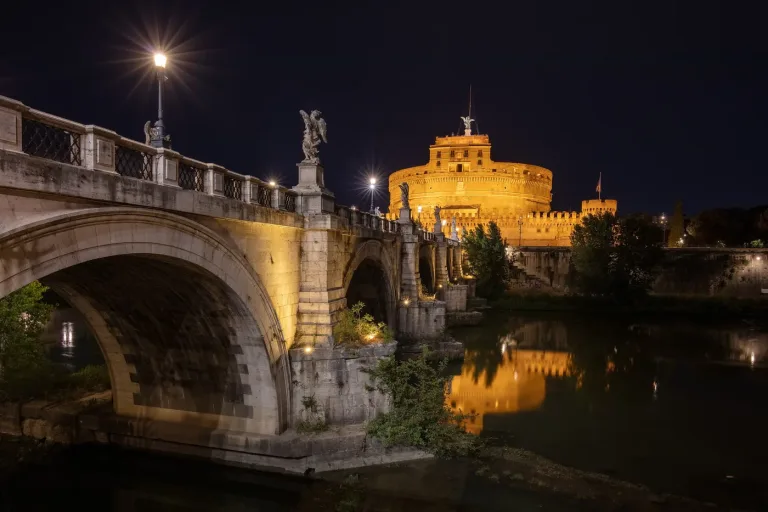
Castel Sant'Angelo
According to long-standing Roman tradition, Gregory led a penitential procession through the plague of 590 and saw the Archangel Michael sheathe his sword above Hadrian's mausoleum, which has carried the archangel's name ever since. The bronze Michael still stands on the roof.
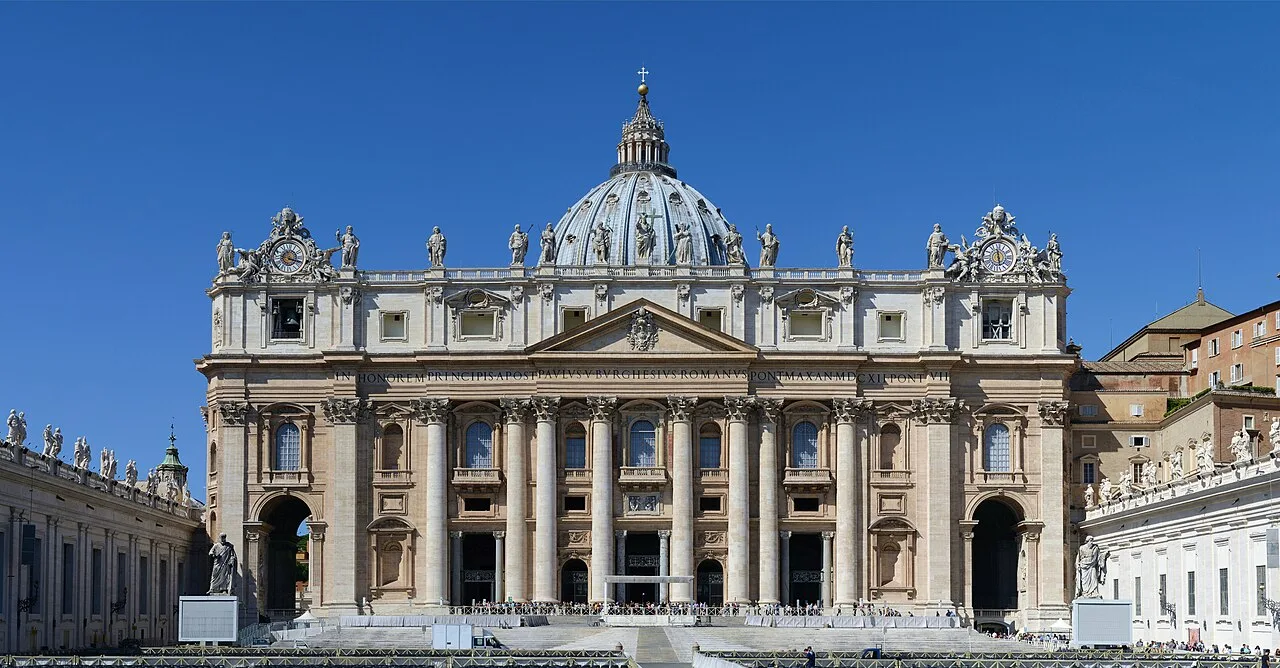
St. Peter's Basilica
End at his tomb. Gregory was buried in the portico of the old basilica in 604 and his relics were moved into the new one, where they rest beneath the altar of the Chapel of Saint Gregory in the right nave. A quiet altar in a crowded church.
Gregory's Rome · 3 stops.
Gregory's Rome runs from the hill where he gave up his family house to the basilica where he was buried. Begin on the Caelian at the monastery he made of his own home, cross the city to the castle that carries the memory of his plague procession, and end at his tomb in Saint Peter's. The middle stretch is best done by bus or metro.
-
01 Lived here · Founded here · Monastery of the saint
San Gregorio Magno al Celio
Piazza di San Gregorio, Rome, ItalyBegin where he began. Gregory turned his family house on the Caelian into the monastery of Saint Andrew and lived here as a monk before he was made pope. From this community he sent Augustine and his companions to England in 596. The three oratories in the garden are worth the extra half hour.
-
02 Later devotional association
Castel Sant'Angelo
Lungotevere Castello, Rome, ItalyAccording to long-standing Roman tradition, Gregory led a penitential procession through the plague of 590 and saw the Archangel Michael sheathe his sword above Hadrian's mausoleum, which has carried the archangel's name ever since. The bronze Michael still stands on the roof.
-
03 Tomb
St. Peter's Basilica
Vatican CityEnd at his tomb. Gregory was buried in the portico of the old basilica in 604 and his relics were moved into the new one, where they rest beneath the altar of the Chapel of Saint Gregory in the right nave. A quiet altar in a crowded church.
To see nearby places, open the location page or add this route to a journey.
How to encounter Gregory.
Read Gregory as a pastor first. His authority was not abstract; it was exercised in famine, plague, politics, preaching, mission, and care for souls.
It shows Gregory at his most practical: a bishop thinking carefully about speech, silence, correction, humility, and responsibility.
Dialogues, Book II is not modern biography, but it is the early source through which the West received Benedict's sanctity.
St. Peter's gives the papal tomb. The Caelian Hill gives the monastic memory. Together they explain the tension of his life.
A papal tomb in St. Peter's.
Gregory died in Rome in 604, and Catholics venerate his tomb in St. Peter's Basilica.
San Gregorio al Celio holds the other half of his memory: the family house he gave over as the monastery of Saint Andrew, and the community from which he sent Augustine to England.
The saint is publicly venerated at a named tomb.
St. Peter's Basilica
Gregory died in 604 and was buried in the portico of the Constantinian basilica. When the present Saint Peter's was built his relics were translated inside, and they rest today beneath the altar of the Chapel of Saint Gregory in the right nave.
- Relics of Saint Gregory the Great, beneath the altar of his chapel
The chapel is in the right nave, past the Blessed Sacrament chapel. Most visitors walk by it; it repays stopping.
San Gregorio Magno al Celio
The church stands on the site of Gregory's family home, which he gave over as the monastery of Saint Andrew. The chapel preserves the marble seat venerated by long-standing tradition as his episcopal chair, and the three oratories in the garden keep the memory of the community that formed him.
- The marble chair traditionally venerated as Saint Gregory's
The oratories of Saint Andrew, Saint Barbara, and Saint Silvia keep limited hours; check before planning around them.
Saints Connected to Gregory the Great
-
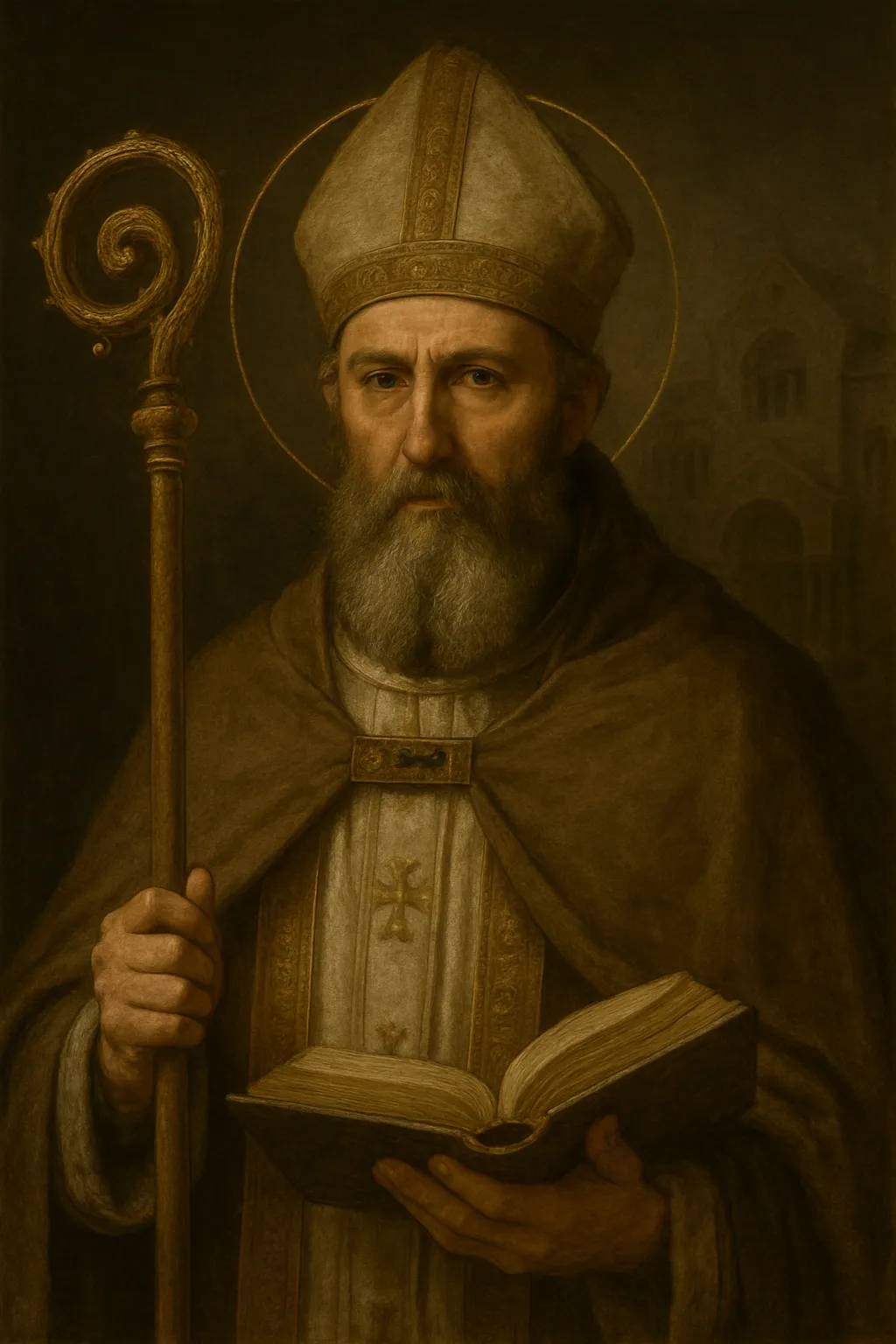
Saint Benedict of Norcia
The monk whose life Gregory preserved in the Dialogues and whose Rule shaped Western monasticism. -
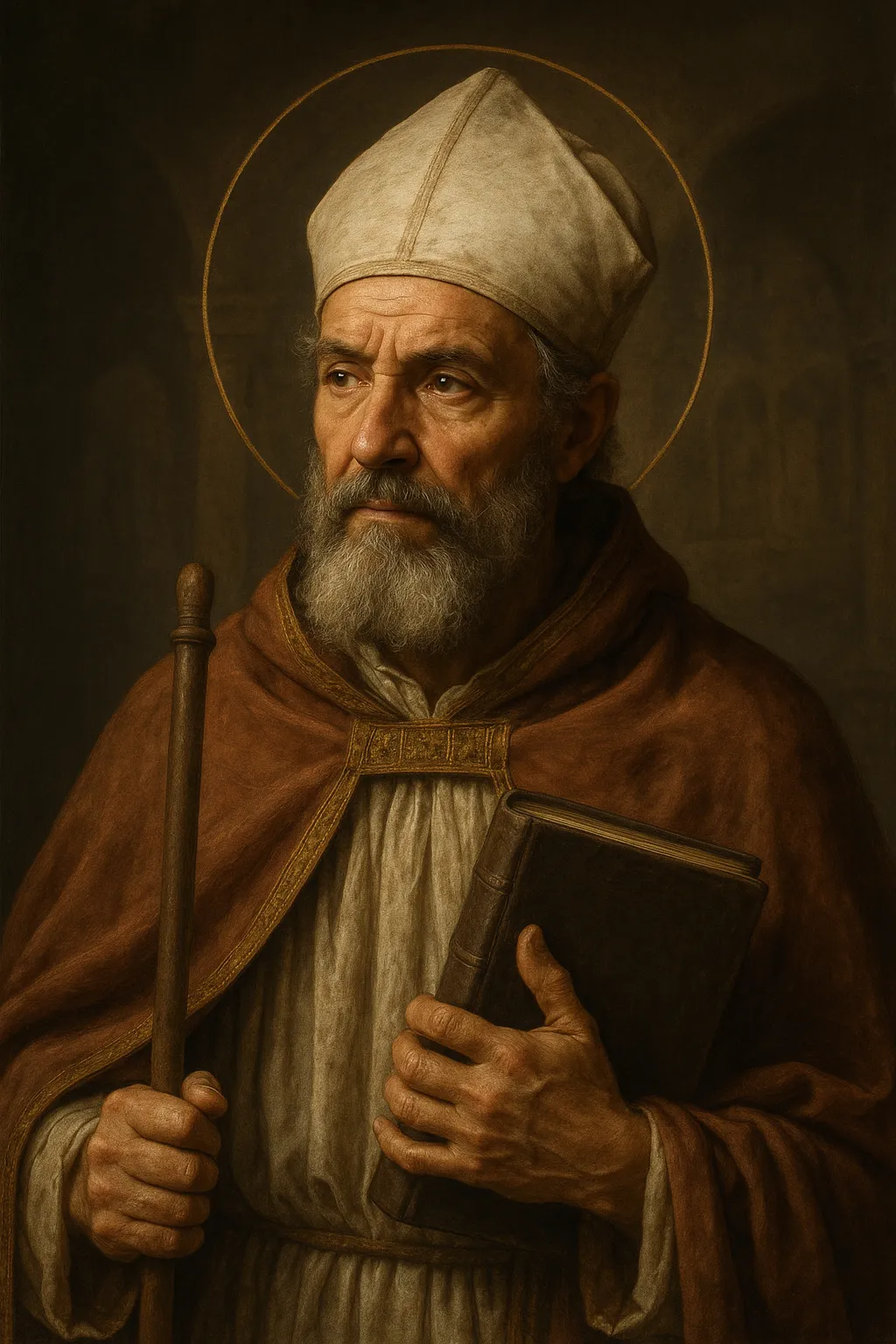
Saint Scholastica
Benedict's sister, known almost entirely through Gregory's account. -
Saint Ambrose of Milan
Another Western Doctor whose pastoral authority formed a major Christian city. -
Saint Augustine of Hippo
The Doctor whose thought Gregory carried into his own pastoral teaching, and with whom he is counted among the great Latin Doctors of the Church.


Showing 4 of 5 authored connections with full saint guides.
Kept on September 3.
September 3 is Gregory's feast in the current Roman calendar. Rome remembers him as pope, pastor, monk, teacher, and one of the principal Fathers of the Latin Church.
His tomb is venerated in St. Peter's Basilica. His family home on the Caelian Hill, now San Gregorio al Celio, remains an important Roman memory of his monastic beginning.
Rome between monastery, papal tomb, and mission.
Gregory's Rome is not only monumental. It is a city under strain, held together by prayer, administration, preaching, and mercy.
The Caelian Hill gives the first movement: a Roman aristocrat turning his household into a monastery, desiring hiddenness at the center of the city.
St. Peter's gives the second movement: the monk taken into papal office, buried among the successors of Peter after years of governing a fragile Rome.
The mission to England stretches the geography outward. Gregory does not remain a local Roman saint. From Rome, he sends the Gospel north through Augustine of Canterbury and the monks who followed him.
Photo credits
- San Gregorio Magno al Celio. Livioandronico2013, CC BY-SA 4.0, via Wikimedia Commons. Source. CC BY-SA 4.0.
- Castel Sant'Angelo. Diego Delso, CC BY-SA 4.0, via Wikimedia Commons. Source. CC BY-SA 4.0.
- St. Peter's Basilica. Alvesgaspar / Wikimedia Commons (CC BY-SA 4.0). Source. CC BY-SA 4.0.