
Nishizaka Martyrs' Shrine and Saint Philip Church
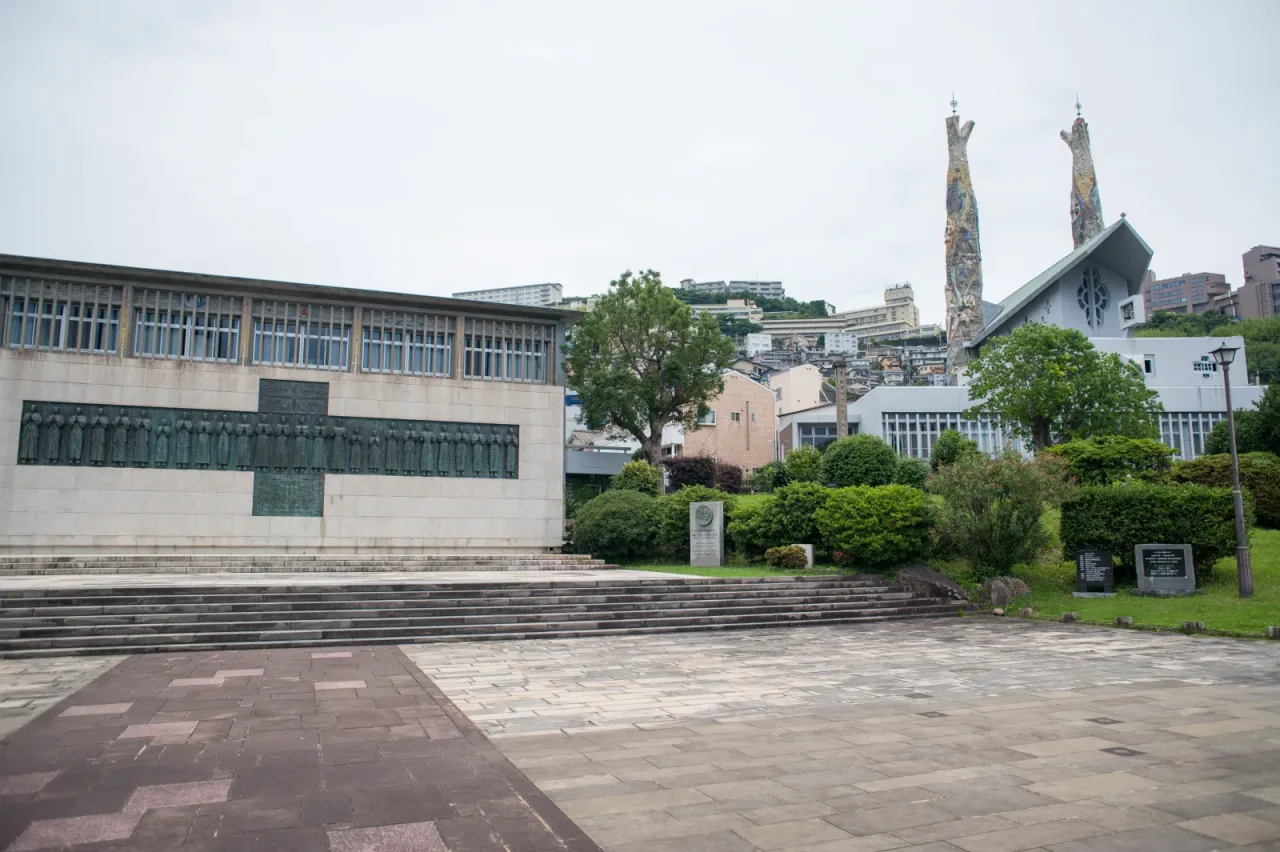
The hill above Nagasaki station where twenty-six Catholics were killed on February 5, 1597. The monument names the whole company, the museum sets them inside the longer history of Japanese Christianity, and Saint Philip Church keeps the site in Catholic use.
- Location
- Nagasaki, Japan 32.7547° N · 129.8717° E
- Type
- Martyr shrine
- Dedication
- The Twenty-Six Martyrs of Japan; the church is dedicated to Saint Philip of Jesus, one of the twenty-six
The hill where twenty-six were killed together
Nishizaka is the execution ground itself. The hill was chosen because it stands above the harbour and could be seen from the town, and the deaths were meant as a warning to Nagasaki's large Christian population. That intention failed in the way such intentions usually fail, and the site became the principal Catholic pilgrimage place in Japan. What Nishizaka does better than any other single stop in the country is hold the company together. The temptation is to reduce twenty-six people to Paul Miki, whose name carries the feast. The monument does not allow it. All twenty-six stand in a row, and the group includes Spanish and Mexican friars, Japanese Jesuits, catechists, an interpreter, and two boys.
An execution meant as a warning
Toyotomi Hideyoshi had banned Christian missionaries in 1587 and then largely left the ban unenforced. In late 1596 he moved against the Franciscans working openly in Kyoto and Osaka, and Catholics were arrested there on his order. They were mutilated and displayed publicly, then marched through the snow to Nagasaki, which was chosen so that the execution would serve as a deterrent to that city's large Christian population. On February 5, 1597 they were bound to crosses on Nishizaka, facing the harbour, and killed with lances. Accounts from the period record that Paul Miki preached from his cross and said he forgave those who had brought him there. The twenty-six were six Franciscans, four of them Spanish, with Philip of Jesus from Mexico and Gonsalo Garcia, born in India of a Portuguese father; three Japanese Jesuits, Paul Miki, John Soan de Goto, and James Kisai, none of them ordained priests; and seventeen Japanese lay Catholics, among them the boys Louis Ibaraki and Anthony of Nagasaki, who were around twelve and thirteen. Persecution did not stop with them. It intensified through the seventeenth century, and Japanese Catholics continued without clergy for roughly 250 years, until the hidden Christians of Urakami made themselves known at Ōura in 1865. Pius IX canonized the twenty-six in 1862, and the present complex was built for the centenary of that canonization.
The monument is a bronze high relief by the sculptor Yasutake Funakoshi, who worked on it from 1958 to 1962 and set the twenty-six standing life-size in a single row. The altar before it carries a plum blossom, because the plum flowers in February. Behind the monument, the museum and Saint Philip Church are both by the architect Kenji Imai, who introduced Antoni Gaudí's work to Japan. The church's two spires are faced in trencadís, the broken-tile mosaic of Catalan modernism, which is why they look unlike anything else in Nagasaki. All three were inaugurated together on June 10, 1962.
Spiritual Significance
The museum is a historical collection and the monument is public sculpture, but the hill is a place where Catholics pray and Saint Philip Church is a working church. Keep the difference in mind while moving between them. The period accounts are specific about what was done and to whom, and the two boys in the row are the part most worth sitting with.
Do Not Miss
-
The twenty-six figures on the monument
Funakoshi set them life-size in one row. Read every name before following any single story, and find Louis Ibaraki and Anthony of Nagasaki, who were about twelve and thirteen.
-
The fumie in the museum
Bronze plaques that suspected Christians were made to tread on. They are the clearest surviving evidence of how the persecution was actually administered.
-
The Maria Kannon figures
Statues of the Buddhist Kannon that hidden Christians used as images of Our Lady through 250 years without priests.
-
The letters of Saint Francis Xavier
The museum holds originals, which place Nishizaka at the far end of a mission that began in 1549.
-
The spires of Saint Philip Church
Kenji Imai faced them in trencadís after Gaudí. Enter for prayer when the church is open.
- That the hill overlooks the harbour. It was chosen to be seen, which is why the executions took place here rather than in Kyoto where the arrests were made.
- How mixed the company is. Friars from Spain, Mexico, and India stand beside Japanese catechists, an interpreter, and two boys.
- That the three Jesuits among them were not priests. Paul Miki was still a scholastic when he preached from the cross.
- The plum blossom on the altar before the monument, which marks the month the killings took place.
Visit Plans
-
The monument and the names
3 ordered stopsThe execution ground and the twenty-six names, without the museum.
- The Twenty-Six Martyrs Monument and the harbour view
- The plum blossom altar before the monument
- Saint Philip Church, when open
-
Nishizaka martyr pilgrimage
5 ordered stopsThe full site, with enough time for the museum to place 1597 inside the longer persecution.
- The Twenty-Six Martyrs Monument and the harbour view
- The museum: letters of Saint Francis Xavier
- The museum: fumie and the machinery of the persecution
- The museum: Maria Kannon and the hidden Christians
- Saint Philip Church, when open
How to Visit
Begin at the monument and read the names before anything else. The museum is the part most visitors underuse. It holds original letters of Saint Francis Xavier, fumie, the bronze plaques suspects were made to tread on to prove they were not Christian, and Maria Kannon figures, statues of the Buddhist Kannon that hidden Christians used as images of Our Lady. Finish at Saint Philip Church if it is open. Museum hours and admission change, so confirm them with the shrine before traveling.
Verify museum and church access before climbing Nishizaka.
Hours, admission, and liturgical access can change.
Plan the visit
- The site is on a hill.
- Travelers with limited mobility should ask about the current step-free approach.
- The museum states that neither the museum nor Saint Philip’s church has an elevator; movement from the first to the second floor is by stairs.
Connected Saints
Where the story goes next.
-
City hub
Nagasaki
Where this church sits within the wider Catholic geography of Nagasaki.
-
Basilica
Ōura Cathedral
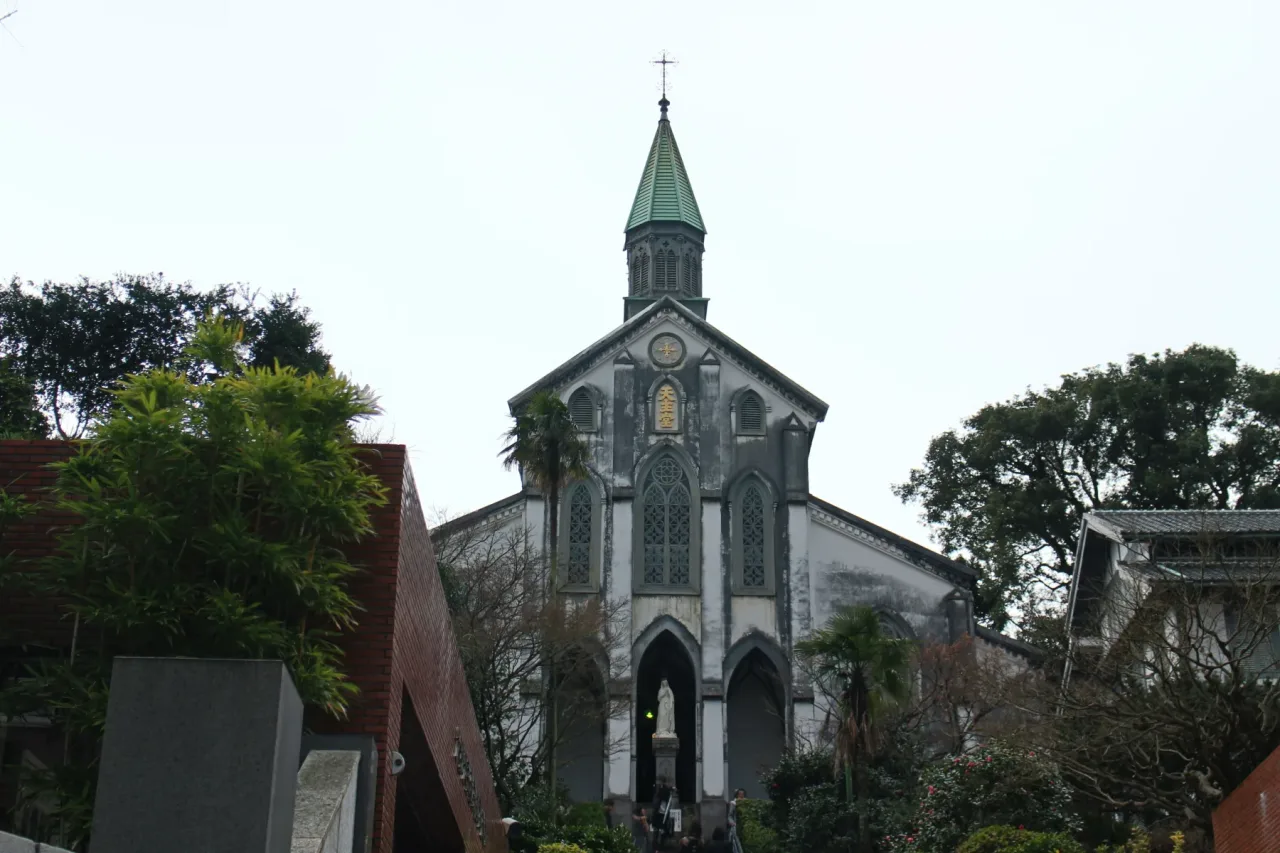
About two kilometers south, and dedicated to the twenty-six who died here. The Paris Foreign Missions Society set it facing this hill. Roughly fifteen minutes by tram with a change at Shinchi Chinatown.
-
Cathedral
Urakami Cathedral
About two and a half kilometers north. The parish of the community that survived the prohibition these executions began, and was deported in the 1870s for saying so.
-
Churches and villages
Sotome: Shitsu and Ono
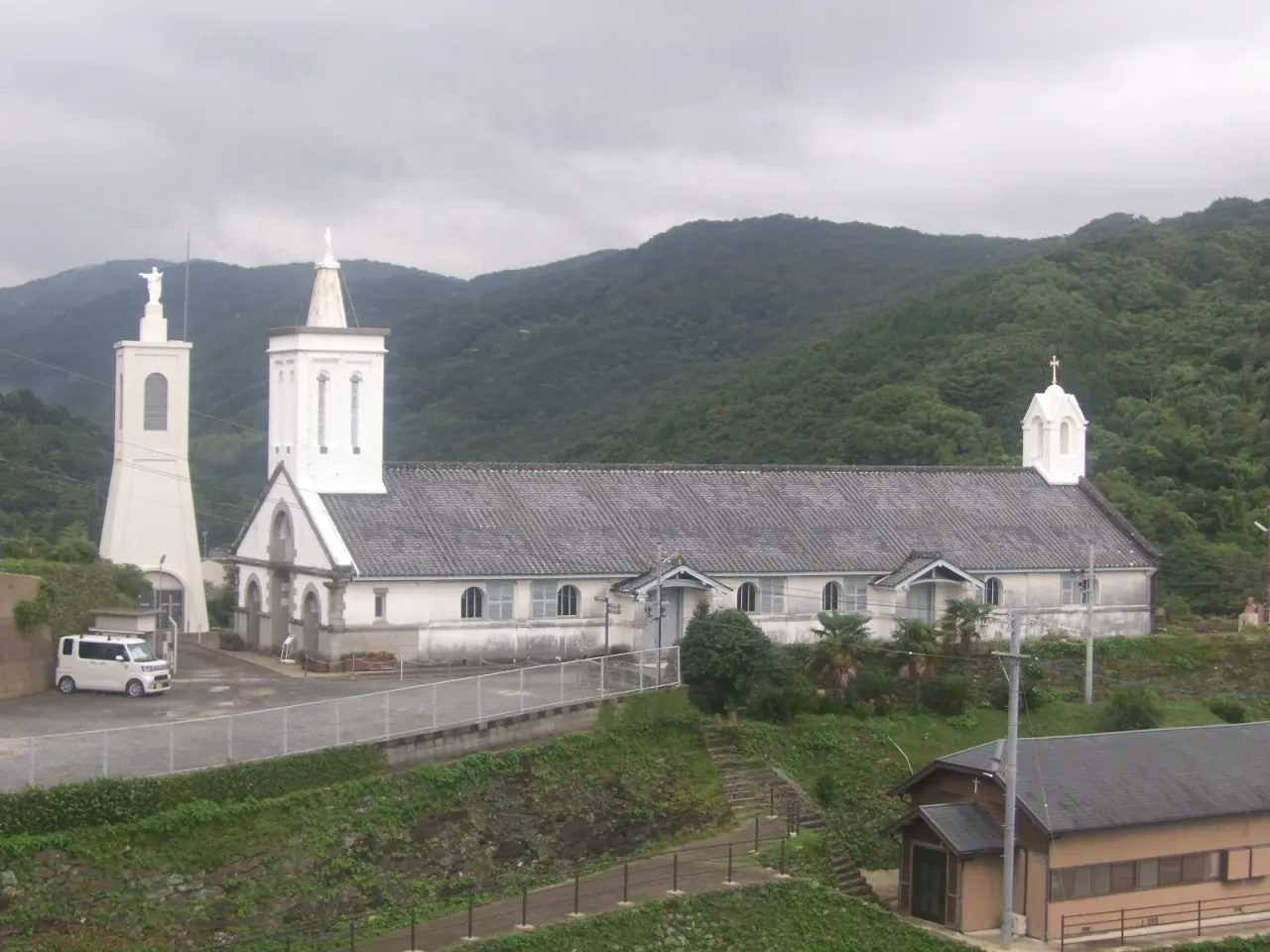
Roughly eighty minutes up the coast by bus. The villages where the faith was actually kept through the centuries the museum here documents.

Map
Nishizaka is presented here as a collective martyr shrine, which is how its custodians present it. The composition of the twenty-six and the 1962 inauguration follow the museum's own record. Individual relic claims and current museum hours are left to the shrine, which remains authoritative on both.
August 14, 2026
Photo credits
- Hero. BigCheddah / Wikimedia Commons. Source. CC BY-SA 4.0.