
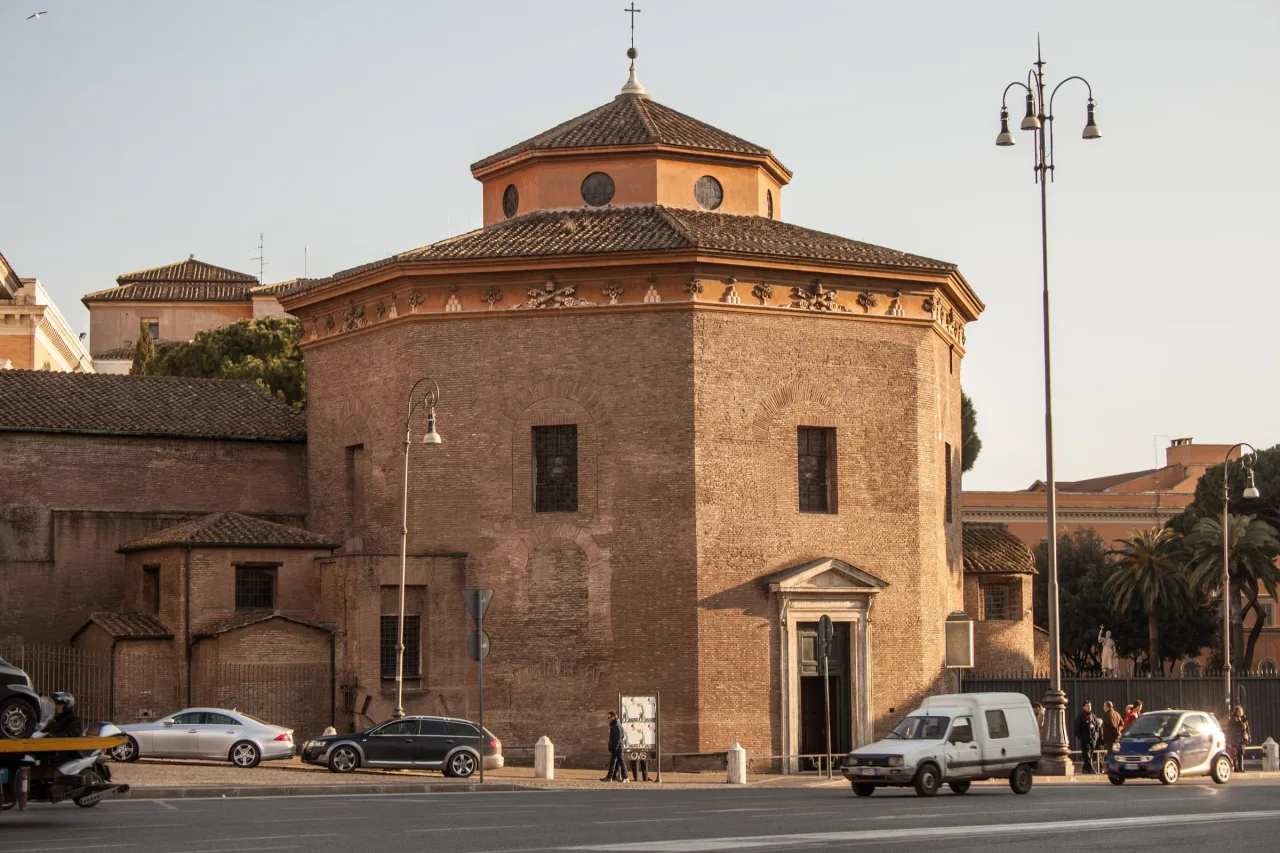
The Lateran Baptistery, Rome
The font of the cathedral of Rome. Constantine gave it a building; Sixtus III gave it eight sides, and every Western baptistery built for the next thousand years is downstream of that decision.
- Location
- Rome, Italy 41.8862° N · 12.5026° E
- Type
- Early Christian baptistery of the Roman cathedral A Constantinian foundation adapted from an existing nymphaeum, rebuilt on an octagonal plan by Sixtus III between 432 and 440
- Dedication
- Saint John the Baptist The octagonal font
- Time Needed
- 1 hour to half a day
Why Go
Where the Roman church baptized
Come because this is the sacramental center of the Lateran, and because the building explains itself if you let it.
The plan is an argument. Eight sides mean the eighth day, the day after the Sabbath, the day the tomb was found open, and the day the baptized enter. Sixtus III had that argument written out in verse on the architrave in case anyone missed it. Stand at the rim of the font and the whole theology of the rite is legible in the shape of the room.
Constantine's nymphaeum, Sixtus III's octagon, and a legend to set aside
The first baptistery here was Constantinian, made by adapting a nymphaeum that already stood on the site, which is why its earliest form was round. What a visitor sees now is the rebuilding carried out by Sixtus III between 432 and 440, the same pope who built Santa Maria Maggiore. The octagonal plan of the font and the double order of columns carrying the architrave are his.
Around that architrave he had a catechesis on baptism inscribed in eight verses, one to a side. It speaks of water that returns new what it received old, of a birth that is not of the flesh, and of a mother church bearing children by the Spirit. Part of the composition is attributed to the deacon who would become Leo the Great. For centuries this was the font of Rome, and for a long period the city baptized here and nowhere else, which is why the plan travelled: baptisteries across the West were built as octagons because this one was.
One thing should be set aside. It is often said that Constantine was baptized in this font. He was not. He received baptism near Nicomedia at the end of his life, the Roman story was already disputed in antiquity, and neither the basilica's own account of the baptistery nor the Diocese of Rome's makes the claim. The building needs no such legend. It is the cathedral's font, which is a larger thing.
An octagon within a square, with eight porphyry columns carrying an architrave and a second order above. The font is sunk at the center and was built for baptism by immersion. Chapels were added around the core over the centuries, so the approach passes through later work before arriving at the fifth-century room, which is abrupt and worth slowing down for.
The eight-sided plan, which is a statement about the Resurrection before it is an architectural choice
The scale, which is smaller than pilgrims expect and was built for a rite rather than a crowd
The position beside the Lateran, which makes the cathedral and its font one building in practice
Spiritual Significance
Eight sides for the eighth day, which is the day the tomb was found open.
This is a quiet building and an under-visited one, a few steps from a basilica that absorbs nearly everyone. Pilgrims who come here tend to come deliberately. It rewards standing still: the room is small, the inscription is at eye level for anyone who looks, and the font is the only thing in it that matters.
Do Not Miss
-
The font
Sunk at the center, octagonal, built for baptism by immersion. Stand at the rim rather than circling it.
-
The inscription on the architrave
Eight verses on baptism, one to a side, part of it attributed to the future Leo the Great as a deacon. The building's own explanation of itself.
-
The porphyry columns
Eight of them, carrying the architrave. Imperial stone put to sacramental use.
-
The surrounding chapels
Added around the fifth-century core over many centuries. Passing through them is part of the approach.
-
The moment of arrival
The transition from later work into the fifth-century octagon is sudden. Notice it happening.
What to notice
- That the room is smaller than its influence
- The eight sides, and then the eight columns, and then the eight verses, which is not a coincidence
- How little decoration the core needs
- That the font sits below you, so the rite required descending into it
- How few people cross from the basilica to here, a few steps away
Visit Plans
-
The baptistery unhurried, with time for the inscription.
-
The baptistery and the basilica together.
-
The Lateran, the baptistery, and the Holy Stairs, read as one complex.
Quietest early. Visit as the second stop of the Lateran, between the basilica and the Holy Stairs.
How to Visit
How to Visit
Visit with the Lateran, not separately. The baptistery is a short walk from the basilica within the same complex, and it is the natural second stop before crossing the piazza to the Holy Stairs. Allow more time than the size of the room suggests. Photography inside is restricted.
- Baptism, which is what the building is for and what its inscription is about
- The Easter Vigil, the night the font was built to serve
- Visits belong to the Lateran complex rather than to a separate parish life
Relics, Tombs, Sacred Objects
Tomb and Burial
- No saint is buried in the baptistery itself. The surrounding chapels hold burials and dedications of their own.
Relics and Sacred Tradition
- The baptistery is not a relic shrine. Its significance is sacramental rather than reliquary.
Sacred Objects
- The octagonal font, sunk at the center, where the Roman church baptized for centuries
- The eight columns of porphyry carrying the architrave
- The verse catechesis on baptism inscribed around the font, attributed in part to the future Leo the Great while he was still a deacon
- The surrounding chapels, added over the centuries around the original octagon
Connected Saints
Continue Your Pilgrimage
-
City hub
Rome
Where this church sits within the wider Catholic geography of Rome.
-
Papal archbasilica
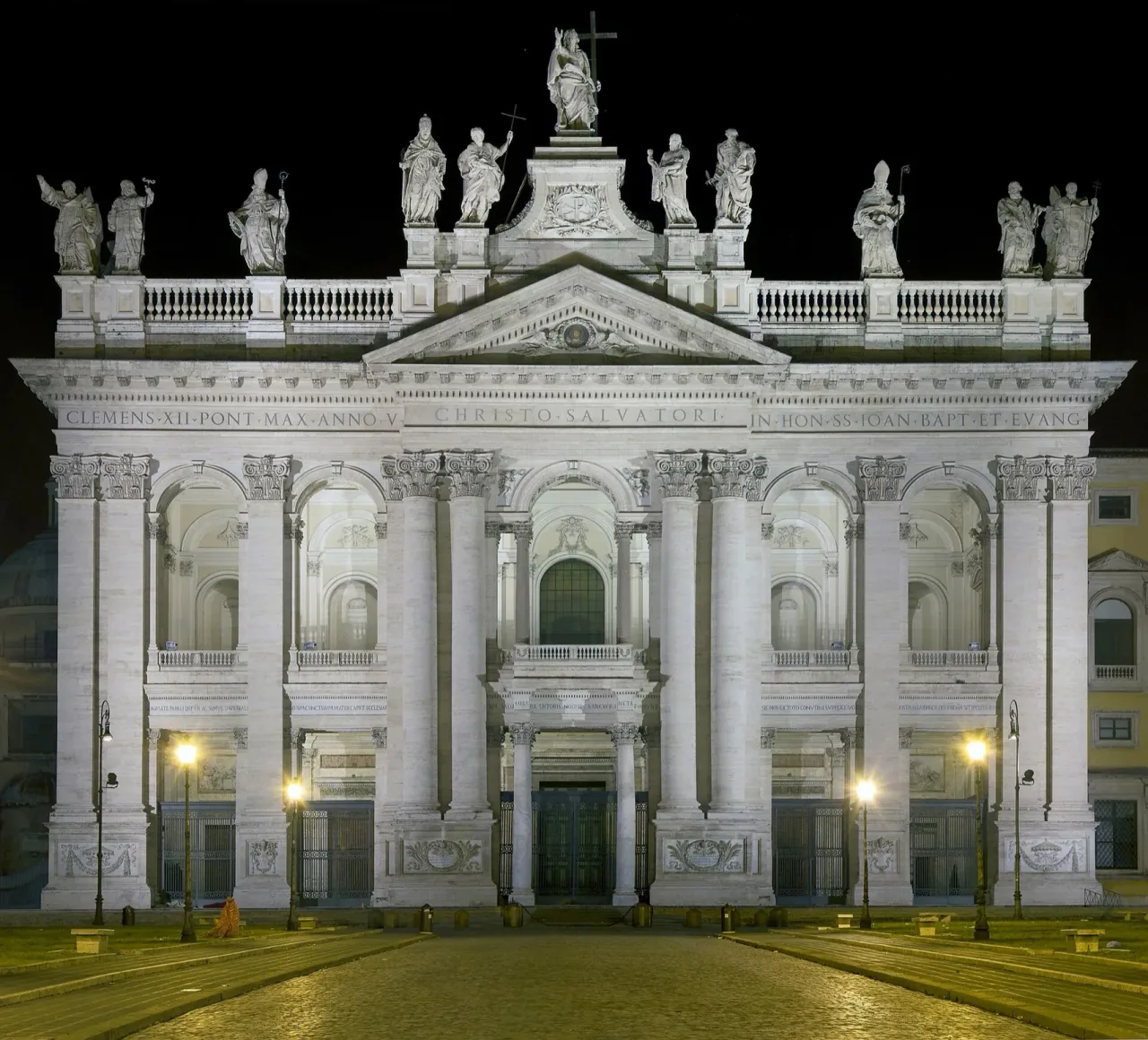
Archbasilica of St. John Lateran
The cathedral of Rome, whose font this is. The two belong to one complex and should be visited as one.
-
Pilgrim shrine
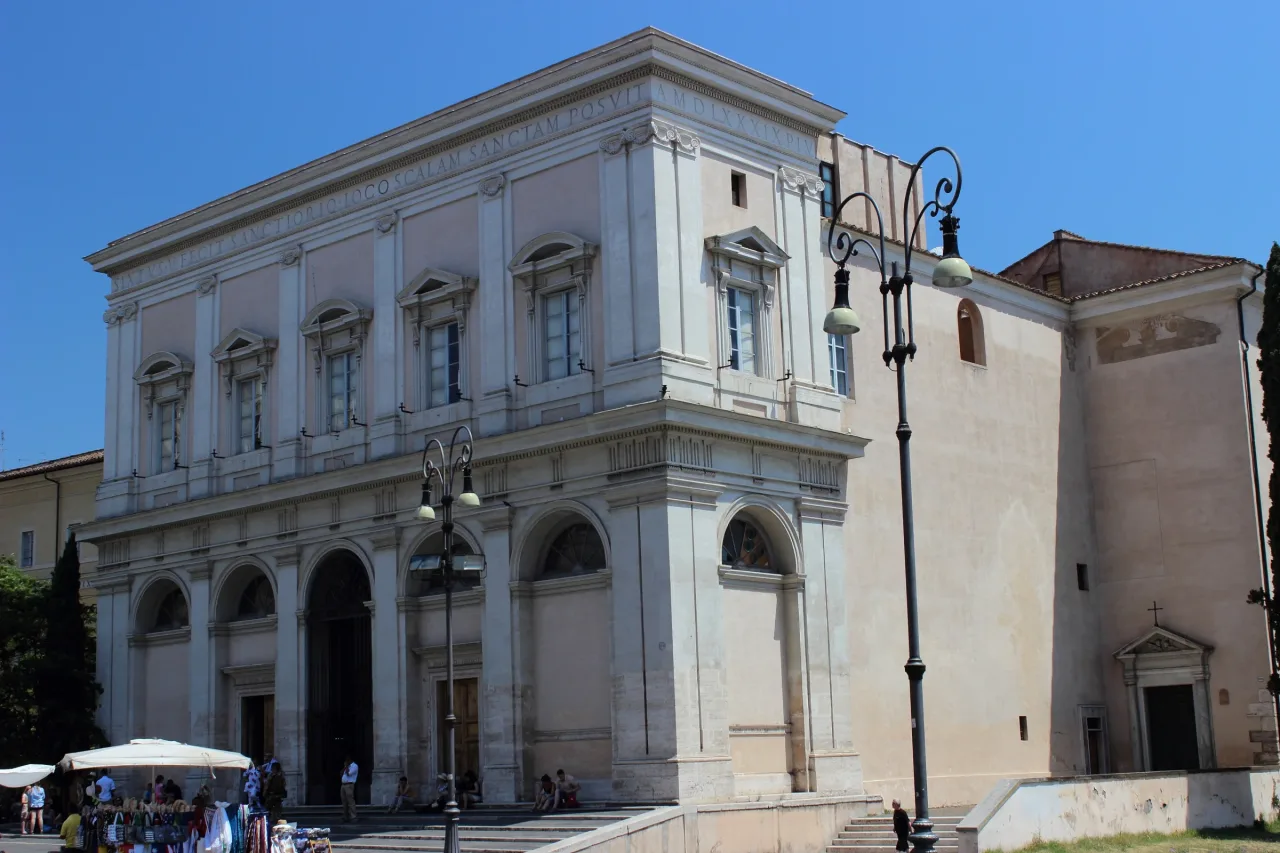
The Scala Sancta and the Sancta Sanctorum
The Holy Stairs, climbed on the knees, and the old private chapel of the popes above them.
-
Basilica and monastery
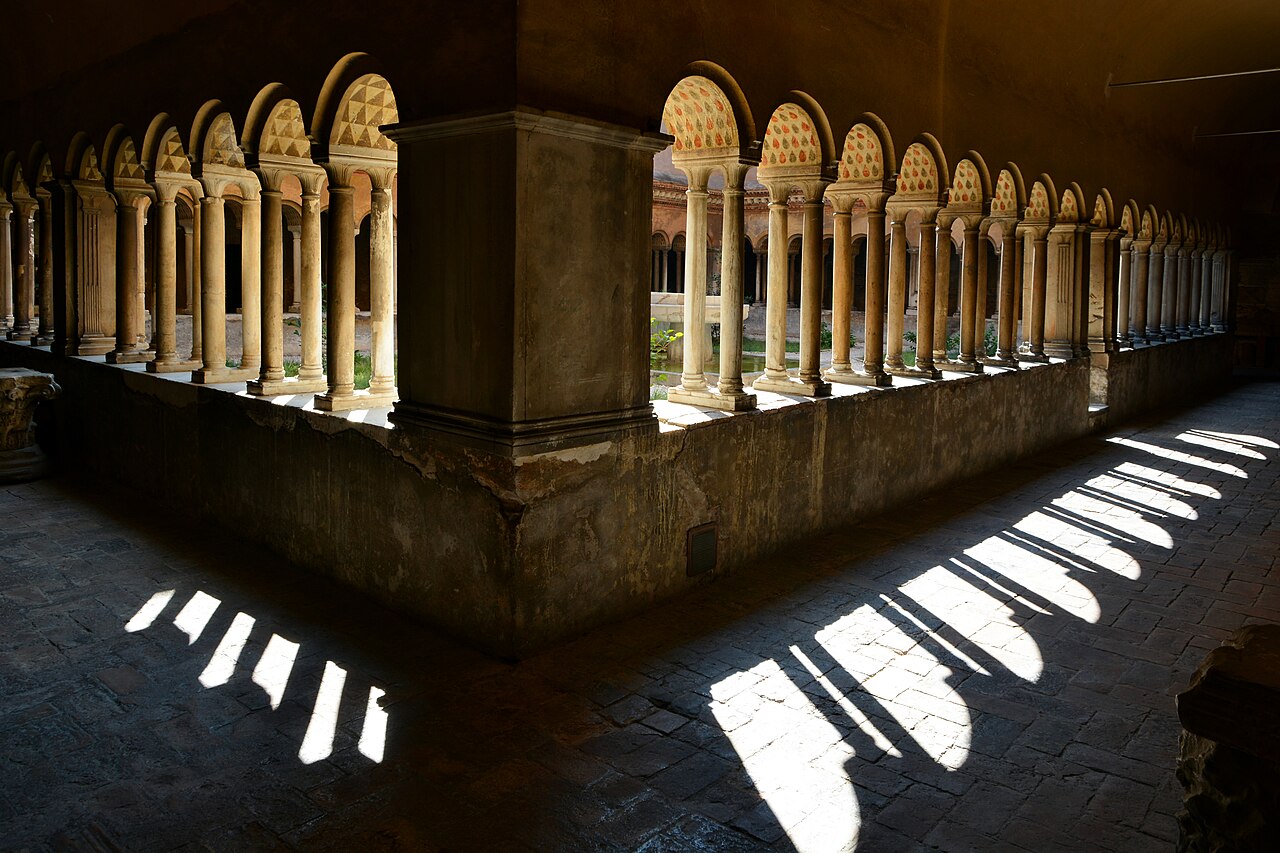
Santi Quattro Coronati
Toward the Caelian, where the Oratory of San Silvestro paints the legend of Constantine and Pope Sylvester.
Map
Editorial sources
The Basilica of San Giovanni in Laterano and the Diocese of Rome's catechesis on the baptistery.
Official
Last reviewed
September 13, 2026
Photo credits
- Hero. Szilas, Public Domain, via Wikimedia Commons. Source. Public Domain.