
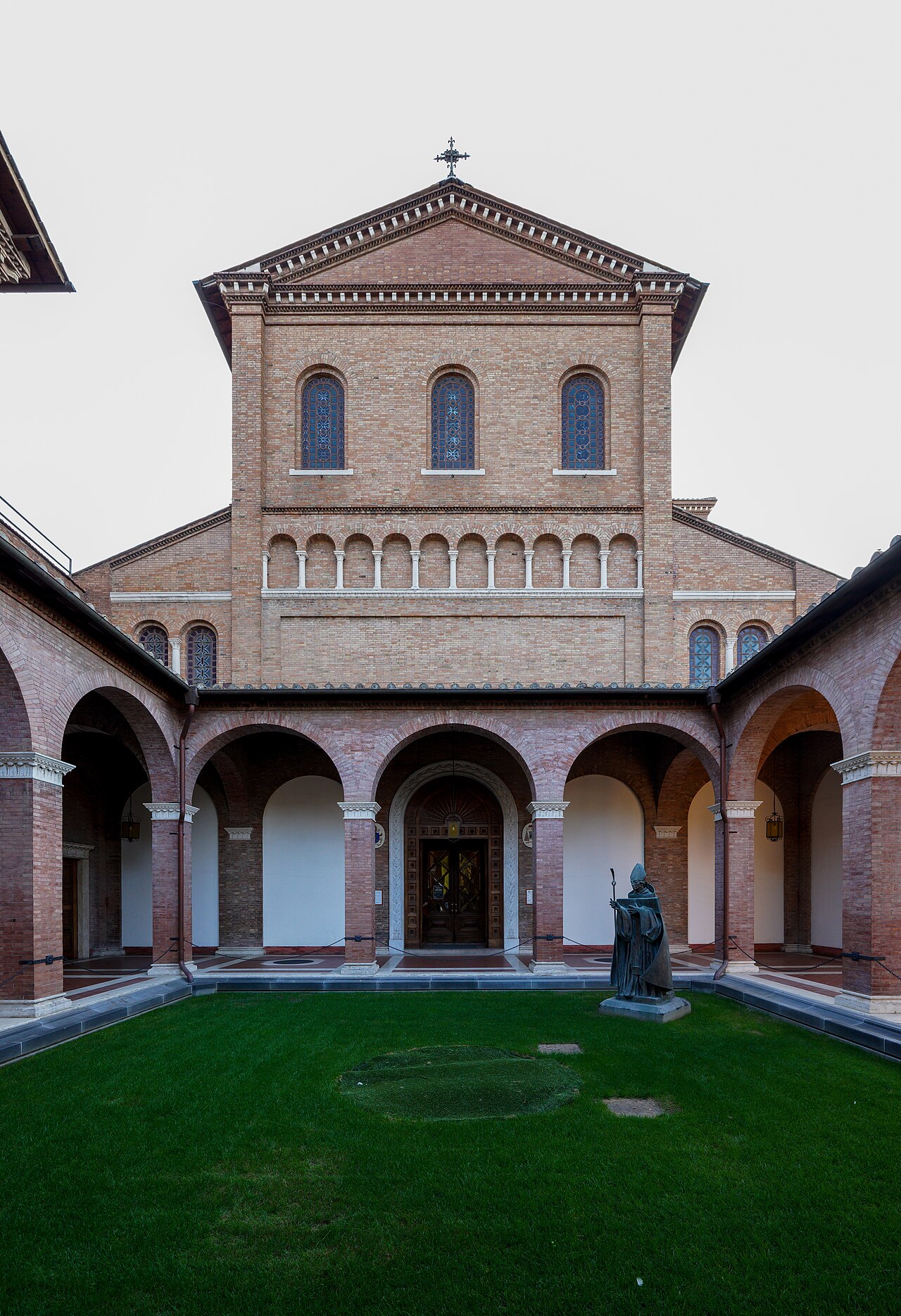
Sant'Anselmo all'Aventino, Rome
The Benedictine meeting point, built in the eighteen-nineties, where the Church studies its own liturgy and sings it.
- Location
- Rome, Italy 41.8826° N · 12.4821° E
- Type
- Benedictine abbey and pontifical athenaeum Neo-Romanesque, built between 1892 and 1900, deliberately archaic: a basilica plan, a columned atrium, and almost no ornament
- Dedication
- Saint Anselm of Canterbury Vespers, sung in Gregorian chant
- Time Needed
- 1 hour to half a day
Why Go
An Order Without a Center, Given One
Benedictines have no general, no headquarters and no central government.
Each abbey is autonomous, and that autonomy is written into the Rule. In 1893 Leo XIII drew the congregations into a confederation and put an abbot at its head, and the house on the Aventine was built to give that arrangement somewhere to happen. What a pilgrim finds now is not an ancient shrine. It is a place where the Office is sung properly every day, and where a great deal of what the rest of the Church knows about its own liturgy has been worked out.
A Nineteenth-Century Building for a Sixth-Century Rule
Leo XIII issued the brief in 1887 and the buildings went up between 1892 and 1900, in a deliberately plain Romanesque that was already out of fashion. The point was not to look old. The point was to build something that did not distract from what happens in it.
In 1893 the same pope established the Benedictine Confederation and the office of Abbot Primate, who lives here. The Athenaeum grew alongside: faculties of philosophy and theology, a school of monastic studies, and the Pontifical Institute of Liturgy, which is the Church's principal center for the study of how she prays. The liturgical reforms of the twentieth century ran through this building.
Since 1962 the Ash Wednesday procession has formed here and walked down the hill to Santa Sabina, with the Pope at its head, to open Lent for the city.
You come off the piazza into a columned atrium before you reach the church, which slows the entry deliberately. The church inside is a basilica without decoration: piers, arches, a flat wooden ceiling, and a choir that takes up the front of it. There is nothing to look at, which is the correct reaction and the intended one. The building was designed around a choir of monks singing, and it makes sense the moment they do.
The library and the Pontifical Institute of Liturgy, the Church's principal school for the study of the liturgy
The terrace and gardens looking across the Tiber
The gate of the Knights of Malta at the top of the square, with its keyhole view
Spiritual Significance
Benedictines are not a centralized order. Sant'Anselmo exists because Leo XIII thought they should at least have somewhere to meet.
The Aventine is quiet and Sant'Anselmo is quieter. There is no ticket, no queue and nothing on sale. Romans come up for Vespers on Sundays, sit at the back, and leave without speaking. That is the whole of the visit and it is worth arranging a day around.
The rest of the complex is an academic institution with a working library, which a visitor does not enter. The garden and the terrace are the community's. What a pilgrim is offered here is the liturgy, which is offered openly and without ceremony.
Do Not Miss
-
Sunday Vespers
Sung in Gregorian chant by the community. The single reason to come, and the reason Romans do.
-
The atrium
A columned court between the street and the church. It exists to slow you down before you go in, and it works.
-
The walk to Santa Sabina
Ten minutes along the hill, past the orange garden. The route the Pope walks on Ash Wednesday to open Lent.
-
The Knights of Malta keyhole
At the top of the piazza, in the gate of the Priory of the Knights of Malta. A famous view down an avenue of hedges to the dome of St. Peter's, and a two-minute detour.
What to notice
- The Benedictine Confederation was established by Leo XIII in 1893 and does not make the Benedictines a centralized order. Each abbey remains autonomous under the Rule, and the Abbot Primate presides over a confederation rather than governing an order.
- Sant'Anselmo is dedicated to Saint Anselm of Canterbury and holds no relic of him. He is buried in England.
- The Ash Wednesday procession from here to Santa Sabina has been kept since 1962. On that one day the two houses on this hill function as a single liturgical place.
- Vespers is a public act of worship, not a recital. Times change with the season and the academic calendar, and the community does not publish a fixed year-round schedule.
Visit Plans
-
Vespers, and the walk out through the atrium afterwards.
-
Vespers, the piazza and the Knights of Malta keyhole, and the walk along the hill to Santa Sabina.
-
The whole Aventine on foot, taken slowly, ending here for the evening Office.
Build the visit around the liturgy rather than around the building. Arrive before the community does, and leave without talking until you are back on the piazza.
How to Visit
How to Visit
Come for Vespers and come early enough to be seated before the community enters. The chant is sung by monks for whom it is the work of the day rather than a performance, which is audible immediately: it is unhurried, unamplified, and it stops when it stops.
Sit at the back. Do not follow along in a book unless one is offered. Do not applaud afterwards, and do not photograph the choir.
Afterwards walk out to the piazza and along the hill toward Santa Sabina, which is ten minutes away. That is the route the Church of Rome takes on Ash Wednesday, and walking it on an ordinary evening is the simplest way to understand why the two houses on this hill are usually spoken of together.
- The Divine Office sung daily by the monastic community
- Sunday Vespers in Gregorian chant, which Romans come up the hill for
- The penitential procession to Santa Sabina on Ash Wednesday, kept since 1962
- The academic life of the Athenaeum, including the Pontifical Institute of Liturgy
Relics, Tombs, Sacred Objects
Tomb and Burial
- No saint is buried here. Sant'Anselmo is a house of study and prayer rather than a shrine, which is unusual for a Roman church of any size.
Relics and Sacred Tradition
- The church holds no major relic and makes no claim to one. Its dedication honors Saint Anselm of Canterbury, who is buried in England.
Sacred Objects
- The organ and the choir, which exist for the chant rather than for concert performance
- The columned atrium, entered from the street before the church itself
Connected Saints
Saint Benedict of Norcia
His Rule is the reason this house exists
Sant'Anselmo is the Roman house of the confederation of monasteries that live by Benedict's Rule. Nothing here is from his century, and everything here is downstream of it. His own places are Norcia, Subiaco and Monte Cassino.
Saint Anselm
Patron of the house and the Athenaeum
Benedictine monk, Archbishop of Canterbury and Doctor of the Church, whose theological work gives the Athenaeum its name and its temper. He is buried in England, not here.
Saint Scholastica
The Benedictine tradition of women
Benedict's sister, and the figure the Benedictine women's houses look back to. The confederation seated on this hill includes them, and the Athenaeum's monastic studies faculty teaches their history alongside the friars'.
Continue Your Pilgrimage
-
City hub
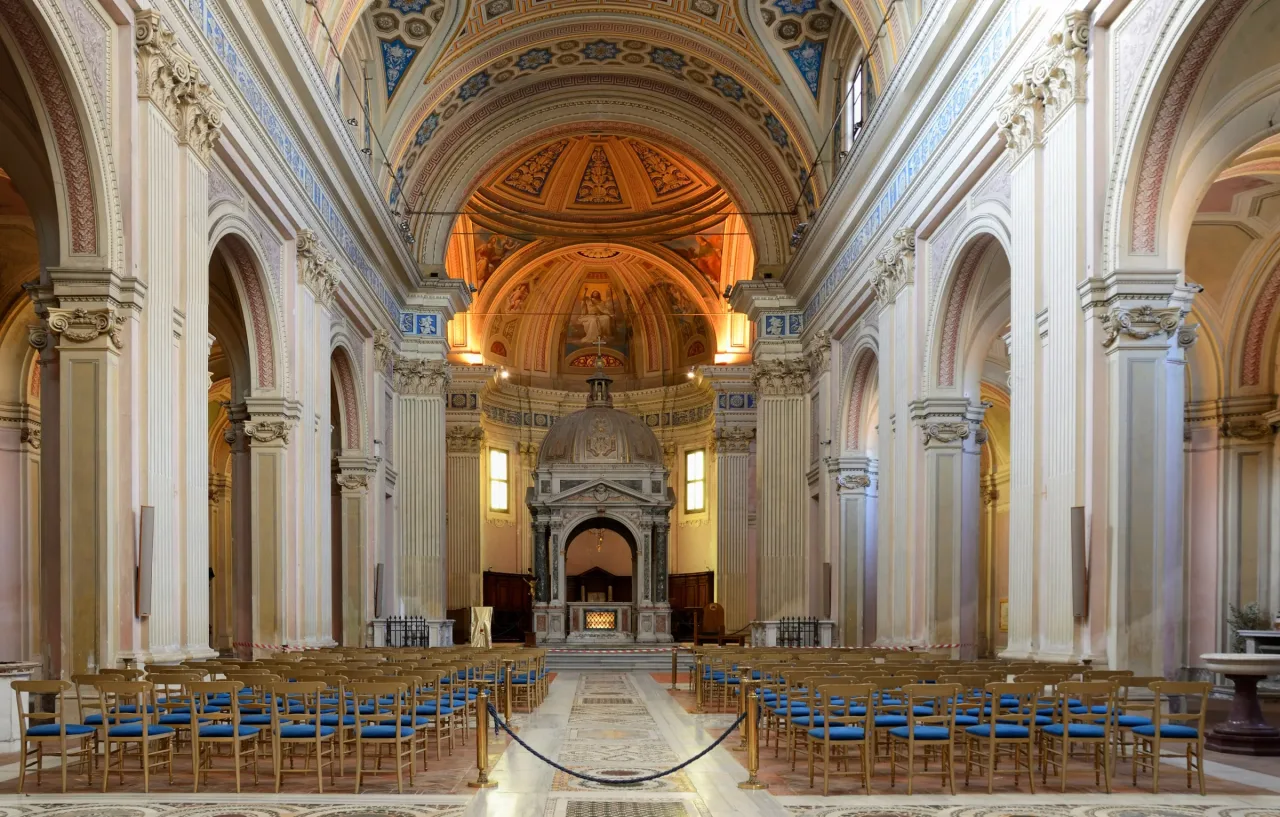
Rome
Where this church sits within the wider Catholic geography of Rome.
-
Minor basilica
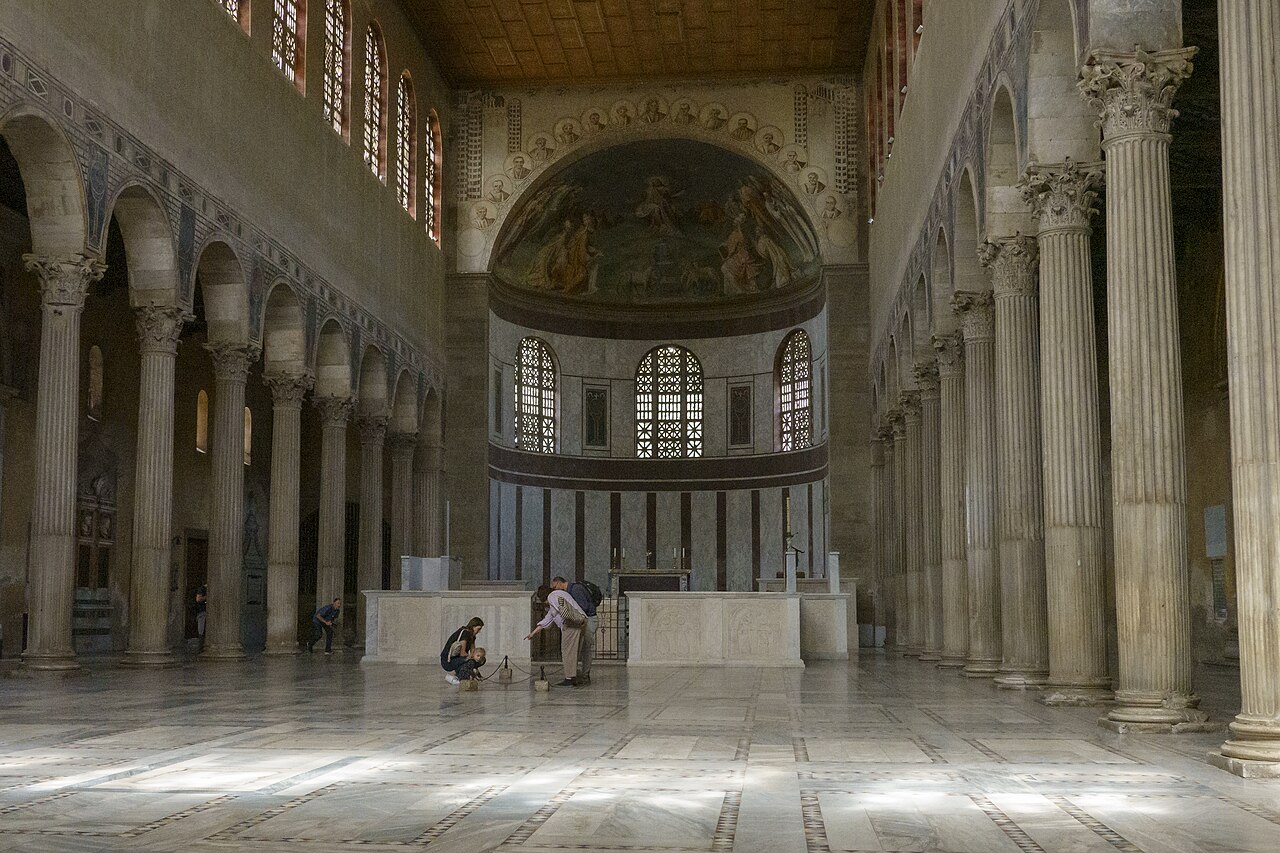
Basilica of Santa Sabina all'Aventino
The mother church of the Dominicans and the station of Ash Wednesday. The procession that opens Lent leaves from Sant'Anselmo and arrives there.
-
Minor basilica
Santi Bonifacio e Alessio all'Aventino
The Aventine's older monastic house, from which Adalbert of Prague went to the Slavs in the tenth century.
-
Titular church
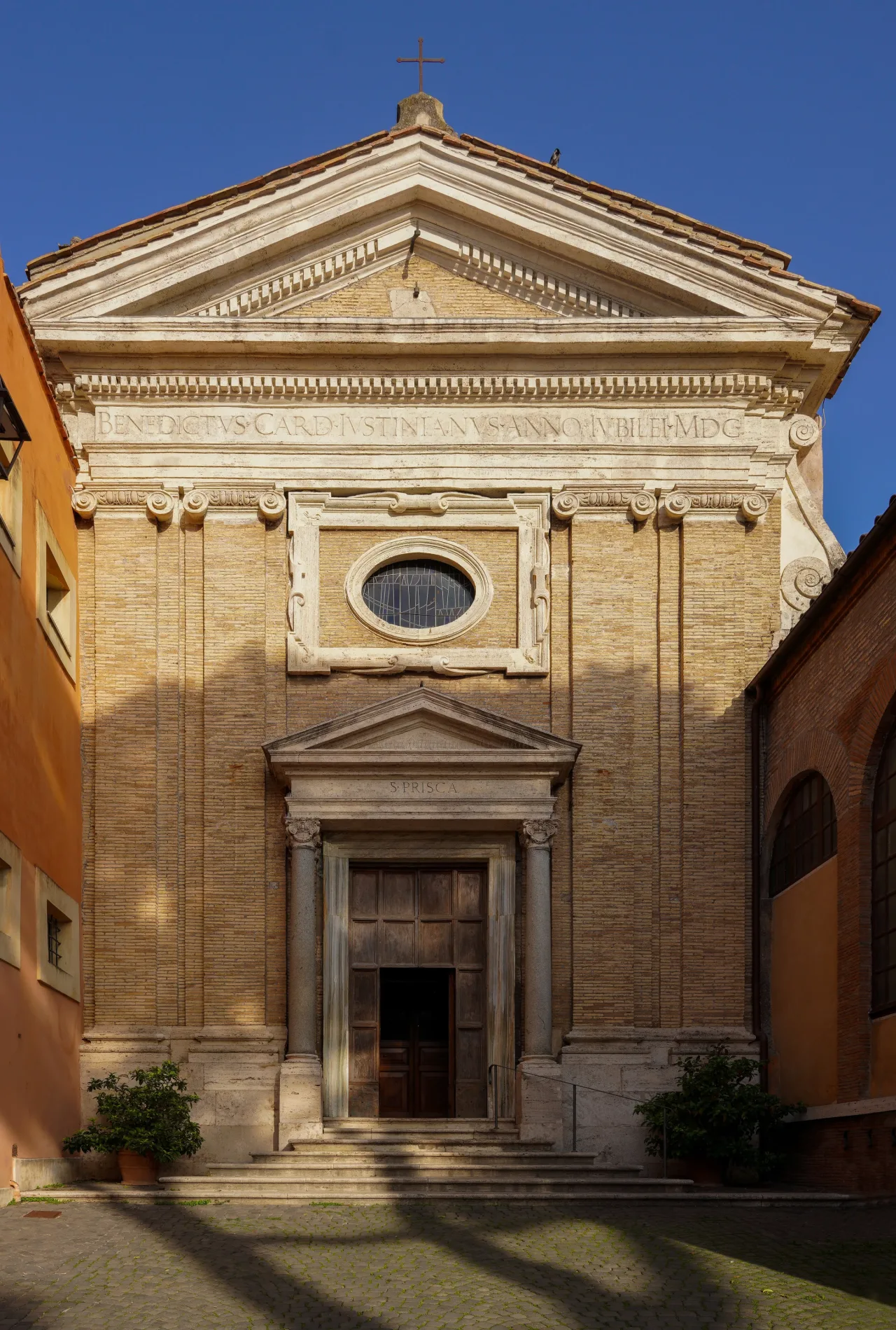
Santa Prisca
The oldest Christian ground on the Aventine, held by tradition to be the house of Aquila and Prisca, with a Mithraeum underneath it.
Map
Editorial sources
The Pontifical Athenaeum of Sant'Anselmo and the documented history of the Benedictine Confederation.
Official
Last reviewed
September 13, 2026
Photo credits
- Hero. Merulana / Wikimedia Commons (CC BY-SA 4.0). Source. CC BY-SA 4.0.