
- Location
- Rome, Italy 41.8831° N · 12.4839° E
- Type
- Titular church and parish An ancient titulus rebuilt after the Norman sack of 1084 and again about 1600, standing over Roman rooms and a second-century Mithraeum
- Dedication
- Saint Prisca, martyr The site venerated as the house of Aquila and Prisca
- Time Needed
- 1 hour to half a day
A House Church, Remembered
At the end of the letter to the Romans, Paul greets Prisca and Aquila, his fellow workers, and the church that meets in their house. Rome has held since antiquity that the house stood on this part of the Aventine. The church here is listed in the acts of the Roman synod of 499 as the titulus Aquilae et Priscae, which makes it one of the oldest Christian addresses in the city, and the Holy See's Jubilee guidance calls this the oldest site of Christian worship on the hill. What a pilgrim comes for is not a building. It is the continuity of an address.
Aquila, Prisca, and the Long Argument About Who Prisca Was
Aquila and Prisca were tentmakers, Jews expelled from Rome under Claudius, who met Paul at Corinth and worked with him at Ephesus before returning to Rome. Paul names them in three letters and calls the gathering in their house a church. Nothing in the New Testament locates that house, but Roman tradition has placed it here for a very long time, and the titulus name recorded in 499 preserves both of them.
The Church also venerates a martyr called Prisca, a Roman girl whose acts describe her as baptized by Peter as a child and killed for refusing to sacrifice, with her body found on this site in the third century. The Holy See's Jubilee guidance gives that tradition and presents Prisca as the daughter of Aquila and Priscilla. Historians generally treat the martyr's acts as a later composition and do not identify her securely with the Prisca of Romans 16. Both memories are attached to this ground, and the church holds them together rather than choosing.
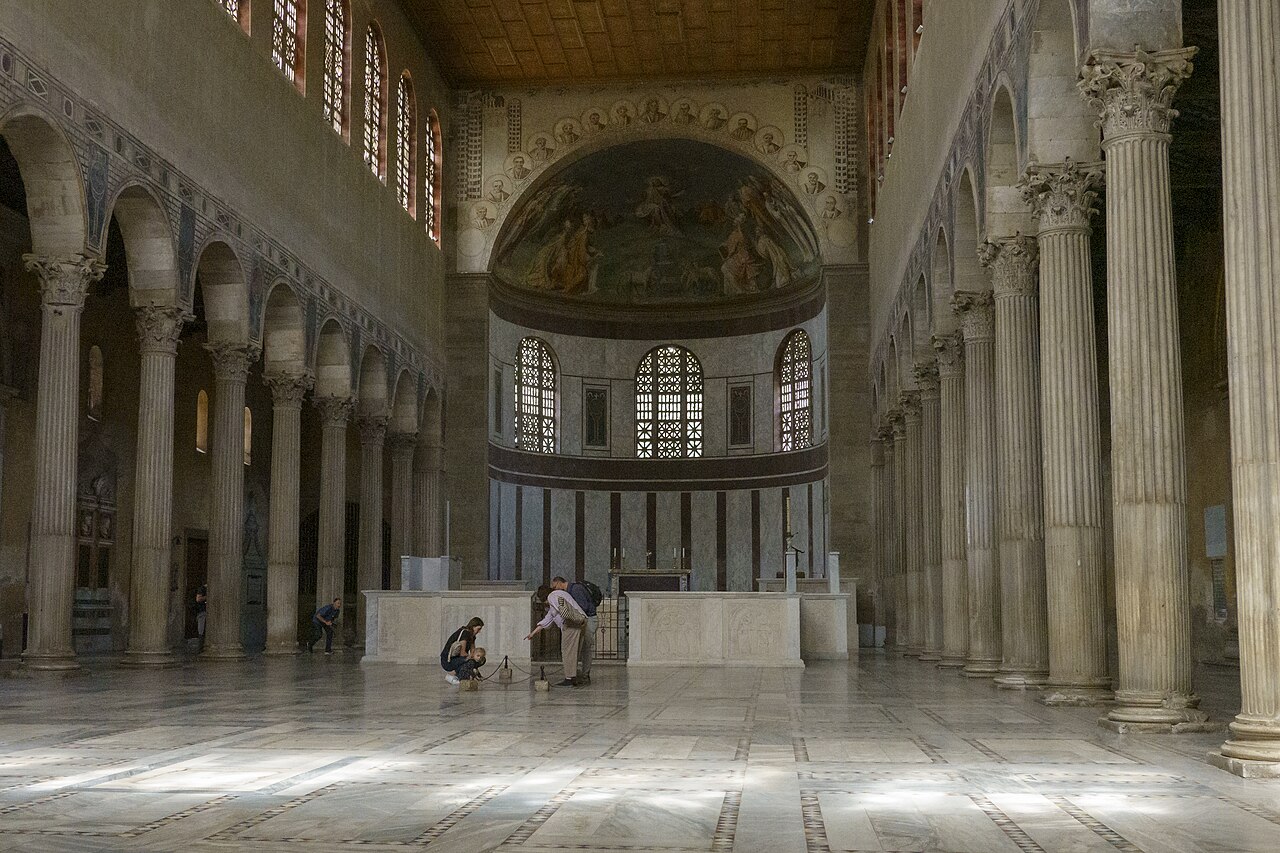
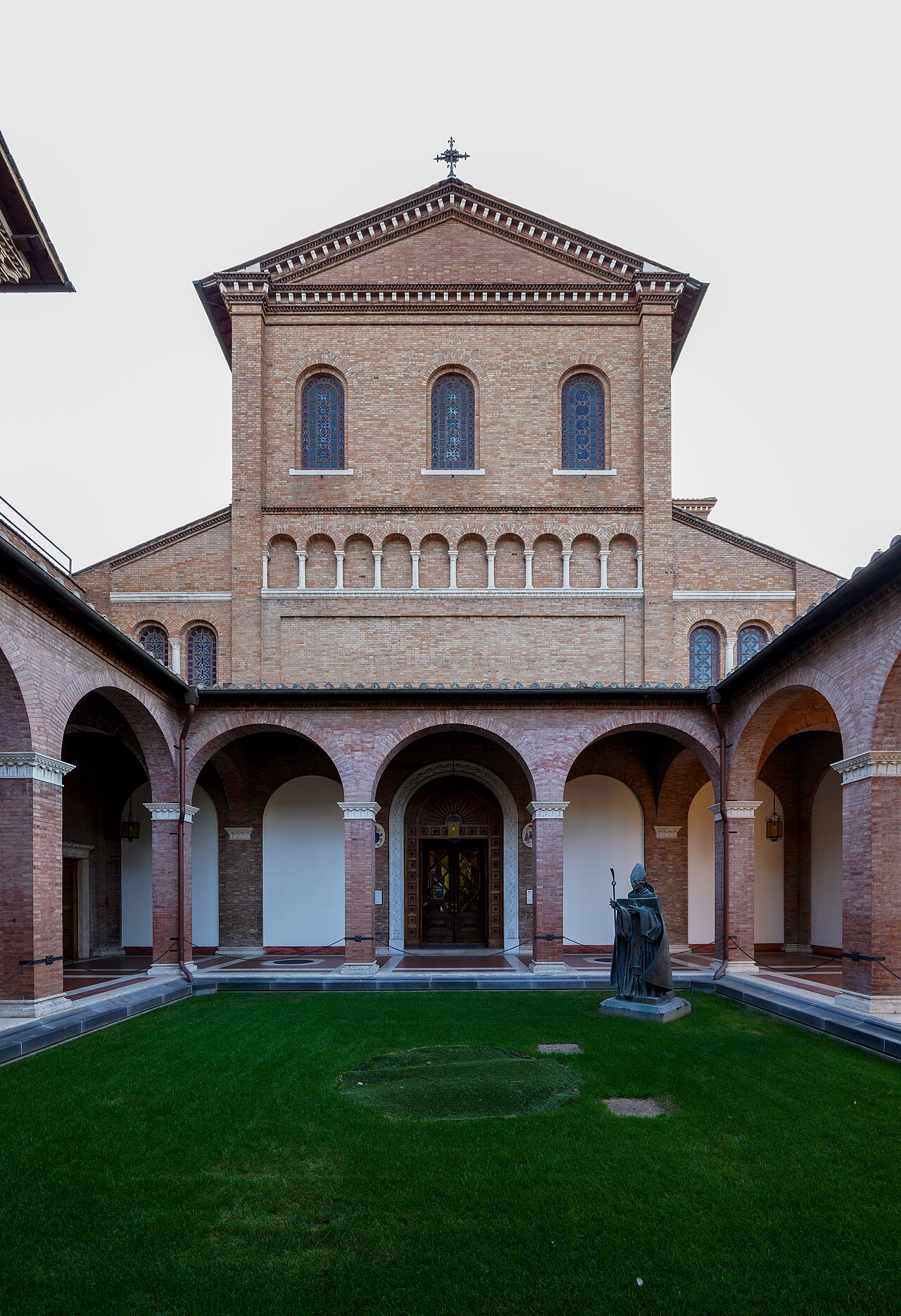
The Normans burned this part of Rome in 1084 and the church with it. What stands now is largely the rebuilding of about 1600.
The church is small, plain, and much later than its reputation. Do not come for the architecture. Come for what is under it: Roman rooms of the imperial period, and a Mithraeum made in the second century and enlarged in 220, with the bull-slaying scene painted on the wall and the seven grades of initiation running along beside it. It was destroyed at the end of the fourth century, after the imperial ban on the old cults, and the destruction looks deliberate.
The Mithraeum beneath the church, with its painted tauroctony and the grades of initiation on the walls
The quiet of the Aventine's far side, which almost no visitor reaches
The position at the top of the Clivo dei Publicii, the old climb up from the Circus Maximus
Paul sends greetings to Prisca and Aquila and to the church that meets in their house. Rome has thought for sixteen centuries that the house was on this spot.
Santa Prisca is a parish on the quiet side of a quiet hill and it receives almost nobody. That is the condition to accept rather than to work around. The church is used by the people who live here, it is the station of Tuesday in Holy Week, and it was named among the Jubilee churches, which is when most pilgrims discover it exists.
The Mithraeum is a separate matter entirely. It is an archaeological site under a church, managed on its own terms, and a visitor should not assume the two are one visit.
Do Not Miss
-
The Mithraeum
Second century, enlarged in 220, with the tauroctony painted on the wall and the seven grades of initiation beside it. Separately managed, restricted days, usually booked.
-
The paintings around the high altar
The martyrdom of Prisca and the translation of her relics by Pope Eutychian, which is how the church tells its own origin.
-
The Roman capital in the baptistery
Venerated as the font at which Peter baptized Aquila and Prisca in the house on this hill. A tradition, held here for centuries, and presented as one.
-
The climb up the Clivo dei Publicii
The ancient road up from the Circus Maximus. Walking up rather than arriving from the hilltop puts the church where it belongs.
- Aquila and Prisca are Scripture. Paul greets them in Romans 16 and names the church that met in their house, and the Roman synod of 499 records this titulus under both their names. That much is documented.
- That their house stood on this exact site is Roman tradition of great antiquity rather than an archaeological finding.
- The Holy See's Jubilee guidance presents the martyr Prisca as the daughter of Aquila and Priscilla, baptized by Peter and killed under Claudius. That is the tradition the Church carries. The acts on which it rests are generally judged a later composition, and the martyr is not securely identified with the Prisca Paul greets.
- The Mithraeum below is second and third century and was destroyed after the imperial ban on the old cults at the end of the fourth. It was not converted into a Christian space; it was ruined and covered.
Visit Plans
-
The church, the relics, and the walk up or down the Clivo dei Publicii.
-
As above, with the Mithraeum if access has been arranged in advance.
-
The whole Aventine, taking this as the last stop on the way down toward the Circus Maximus.
Walk up to it rather than down to it. The church is unremarkable from the street and the approach from the Circus Maximus is what explains why anyone built here.
How to Visit
Stand outside first and look at where you are. The Aventine drops away toward the Circus Maximus below, and the climb up here is the Clivo dei Publicii, an ancient road. If Aquila and Prisca kept a church in a house on this hill, people came up this way to it.
Inside, the church is quick. Find the relics venerated as Saint Prisca's and the capital kept as the font at which Peter baptized. Take both as the tradition offers them.
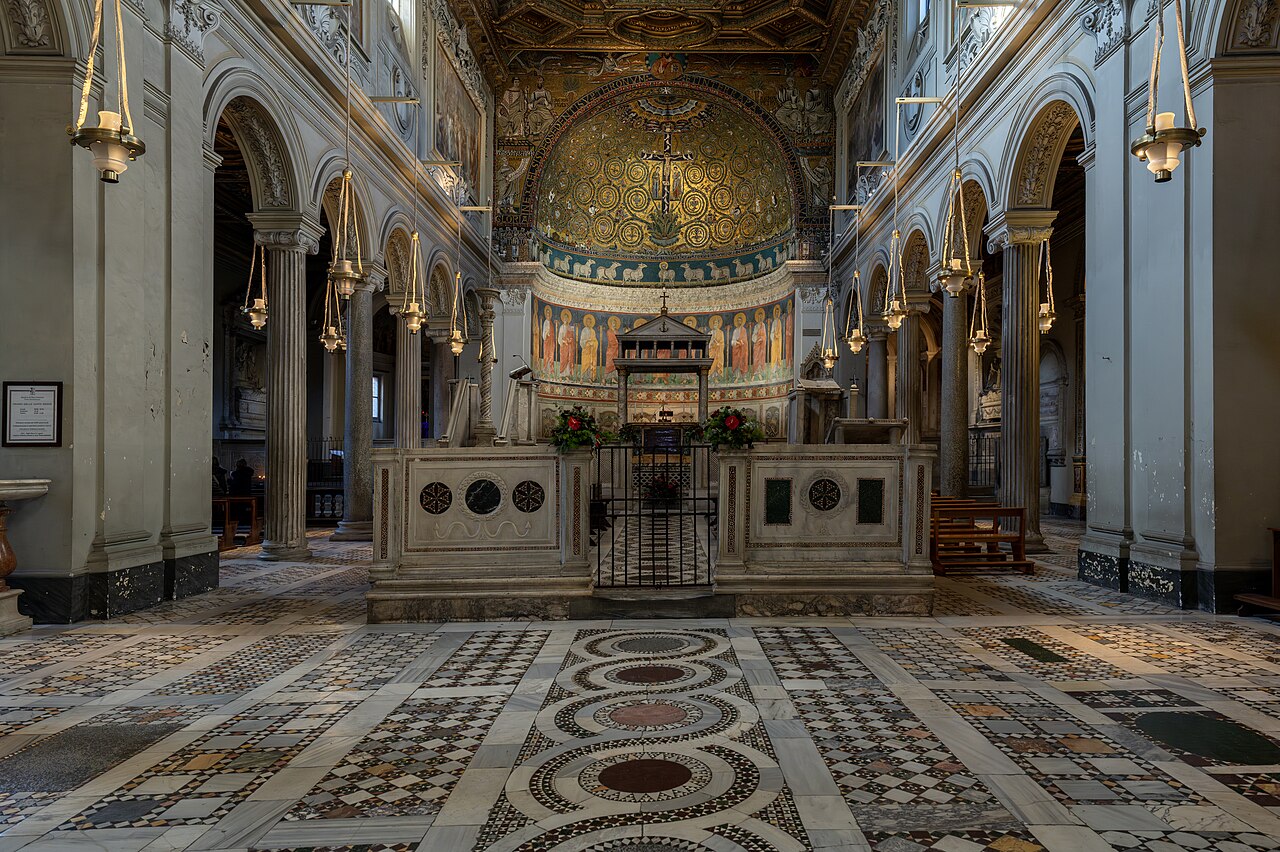
If you can get into the Mithraeum, go. It is one of the best preserved in Rome and it is directly beneath a Christian church, which makes the same point San Clemente makes across the city but with less company. Two religions used this hill in the same decades, and one of them is still using it.
- Parish life on a hill that is mostly residential
- The station of Tuesday in Holy Week in the Roman stational tradition
- The feast of Saint Prisca on January 18
- Named among the Jubilee churches of the Holy Year of 2025
Relics, Tombs, Sacred Objects
Tomb and Burial
- The tradition records that her body was found on this site in the third century and that a place of worship was dedicated over it. Her martyrdom and the translation of her relics by Pope Eutychian are painted around the high altar.
Relics and Sacred Tradition
- A Roman capital, kept in the baptistery, which the tradition identifies as the font at which Peter baptized Aquila and Prisca
Sacred Objects
- The apse fresco of the Roman rebuilding
- The ancient Roman structures beneath the nave, including part of a house of the imperial period
Connected Saints
Continue Your Pilgrimage
-
City hub
Rome
Where this church sits within the wider Catholic geography of Rome.
-
Minor basilica
Basilica of Santa Sabina all'Aventino
The fifth-century basilica at the other end of the Aventine, and the mother church of the Dominicans.
-
Benedictine abbey
Sant'Anselmo all'Aventino
The Benedictine house where Vespers is sung in Gregorian chant, and where the Ash Wednesday procession forms.
-
Basilica
Basilica of San Clemente al Laterano
The other Roman church with a Mithraeum beneath it, and the fuller version of the same story: a Christian basilica built directly over a rival cult.
Map
The Holy See's Jubilee guidance and the record of the titulus in the Roman synod of 499.
September 13, 2026