
St. Vincent de Paul
A French priest who turned a chance encounter with a dying peasant into a lifetime, and a religious family, devoted to the poor.
Let us love God, but let it be with the strength of our arms and the sweat of our brows.
Recorded in his conferences to the Daughters of Charity (Correspondance, entretiens, documents, ed. Pierre Coste) Well-attested
The Gascon priest who organized the Church's charity toward the poor and founded the Daughters of Charity
Vincent de Paul was born to a peasant farming family in Gascony and ordained a priest while still a very young man. A pivotal encounter with a dying peasant in 1617 turned his ministry toward the rural and urban poor, and over the following decades he founded the Congregation of the Mission for priests and, with Saint Louise de Marillac, the Daughters of Charity, the first women's religious community to serve the poor outside the cloister. He organized relief for war-torn provinces, foundlings, galley slaves, and the sick, and Paris still venerates him at the chapel of the community he founded.
Vincent de Paul was born around April 1581 at Pouy, a small village in Gascony in southwestern France, the third of six children of a peasant farming family. He studied with the Franciscans at Dax and later at the University of Toulouse, and was ordained a priest in 1600, still short of the usual canonical age for ordination.
By his own account, in 1605 he was captured at sea by Barbary corsairs and enslaved for two years in Tunis before escaping to France; the episode rests on Vincent's own letters, and historians have long debated some of its details, though the Church has traditionally accepted the outline of his account.
In the years that followed, Vincent served as a chaplain in Paris, including to the household of Emmanuel de Gondi, General of the Galleys of France, a position that exposed him to the suffering of the rural poor on the Gondi estates and of the galley convicts under the family's authority. The turn that shaped the rest of his life came on January 25, 1617, at Folleville: called to hear the confession of a dying peasant, Vincent realized how spiritually neglected the rural poor of France had become, and the sermon he preached afterward on that neglect is remembered by the Vincentian family as the birth of his charism. Later that same year, at Châtillon-les-Dombes, he organized ordinary laypeople into the first Confraternity of Charity, a structured, practical way of caring for the sick poor that became the model for the charitable works he built afterward.
In 1625 Vincent founded the Congregation of the Mission, priests and brothers dedicated to preaching missions in rural parishes and to forming the clergy, first housed at the Collège des Bons-Enfants in Paris. In 1632 the community was given the former leper hospital of Saint-Lazare, from which its members took their common name of Lazarists. In 1633, together with Louise de Marillac, he founded the Daughters of Charity, a new kind of religious community for women who took vows but lived and served among the poor in ordinary dress rather than behind convent walls, an arrangement so unusual for its time that Vincent described their convent as the streets of the city and their cloister as obedience.
Across the decades that followed, Vincent organized relief on a scale few of his contemporaries matched: for the provinces of Lorraine and Picardy devastated by the Thirty Years' War, for abandoned infants left in the streets of Paris, for galley convicts, for the ransom of Christians enslaved in North Africa, and for the ordinary sick poor of city and countryside alike. He also worked for years to reform the formation and discipline of the French clergy, organizing retreats for men preparing for ordination. He remained active in this work into old age, despite failing health, and died at Saint-Lazare in Paris on September 27, 1660, at the age of seventy-nine.
Pope Clement XII canonized Vincent de Paul in 1737, and in 1885 Pope Leo XIII declared him patron of all works of charity. The Congregation of the Mission and the Daughters of Charity he founded remain among the largest charitable religious families in the Catholic Church, and Paris still venerates him at the chapel of the Congregation's motherhouse, a short walk from the Daughters of Charity chapel where his heart is kept.
Vincent de Paul organized charity rather than simply performing it: the Congregation of the Mission, the Daughters of Charity, and the lay Confraternities of Charity he founded turned scattered almsgiving into a sustained, structured Catholic response to poverty that still operates in his name worldwide, including the lay Society of Saint Vincent de Paul founded in his honor in the nineteenth century. Catholics keep his feast on September 27.
A life, in years and approximate ages.
-
c. 1581 (April)BirthBirth at PouyVincent is born to a peasant farming family at Pouy, in Gascony, southwestern France, the third of six children.
-
160019Ordination to the PriesthoodVincent is ordained a priest at Château-l'Évêque, near Périgueux, still short of the usual canonical age.
-
1605–1607About 24-26Reported Enslavement in TunisBy Vincent's own account, he is captured at sea by Barbary corsairs and enslaved for two years in Tunis before escaping to France.
-
1617 (Jan 25)35The Sermon at FollevilleCalled to hear the confession of a dying peasant, Vincent recognizes how spiritually neglected the rural poor have become; his sermon afterward is remembered as the birth of his charism.
-
1617 (Aug)36First Confraternity of CharityAt Châtillon-les-Dombes, Vincent organizes laypeople into the first Confraternity of Charity, a structured way of caring for the sick poor that becomes the model for his later foundations.
-
162544Founding of the Congregation of the MissionVincent founds the Congregation of the Mission in Paris, dedicated to rural parish missions and the formation of the clergy. The community moves to the former leper hospital of Saint-Lazare in 1632.
-
163352Founding of the Daughters of CharityWith Louise de Marillac, Vincent founds the Daughters of Charity, a new community of women religious who serve the poor in the streets rather than behind convent walls.
-
1660 (Sep 27)79Death at Saint-LazareVincent dies at Saint-Lazare in Paris, the community he had built continuing his work of organized charity across France.
-
1737After deathCanonization by Pope Clement XIIPope Clement XII canonizes Vincent de Paul, recognizing in the universal Church the priest whose foundations had already spread across France.
Dates are approximate where the surviving record is traditional or incomplete.
2 places where this witness remains visible.
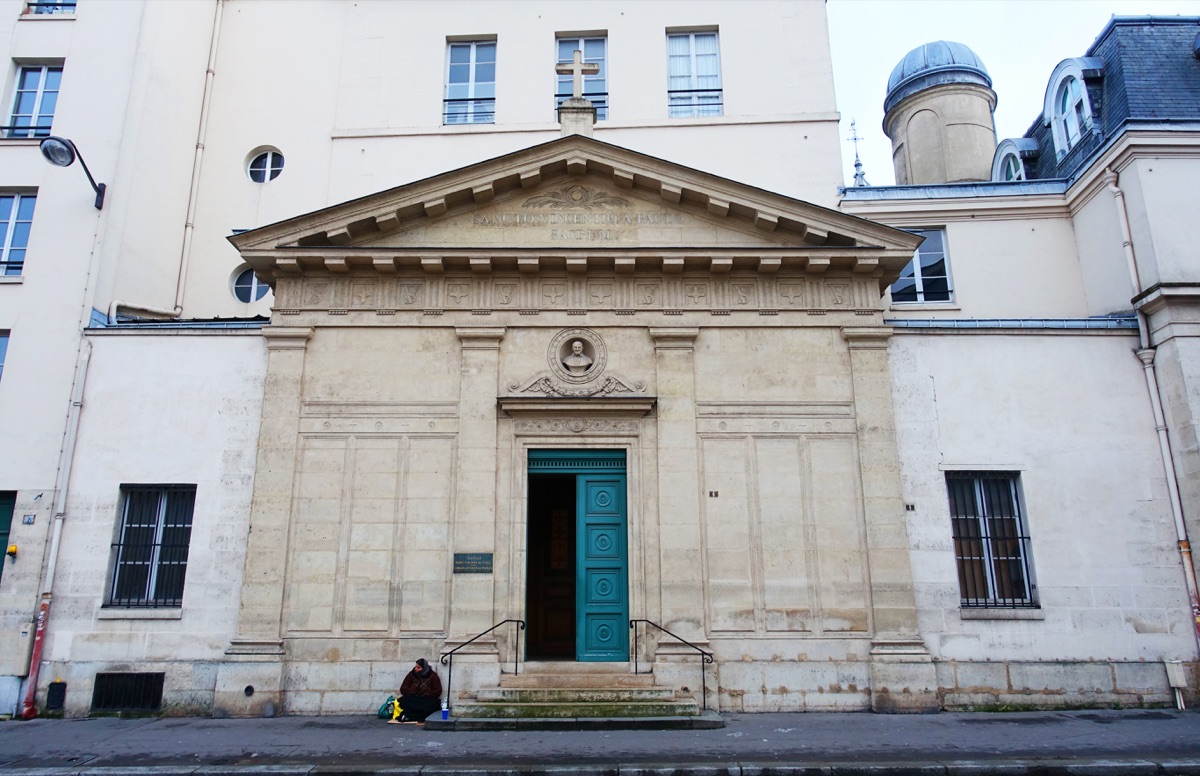
Chapelle Saint-Vincent-de-Paul
The chapel of the Congregation of the Mission, the community Vincent founded in 1625, where his body is venerated above the altar.
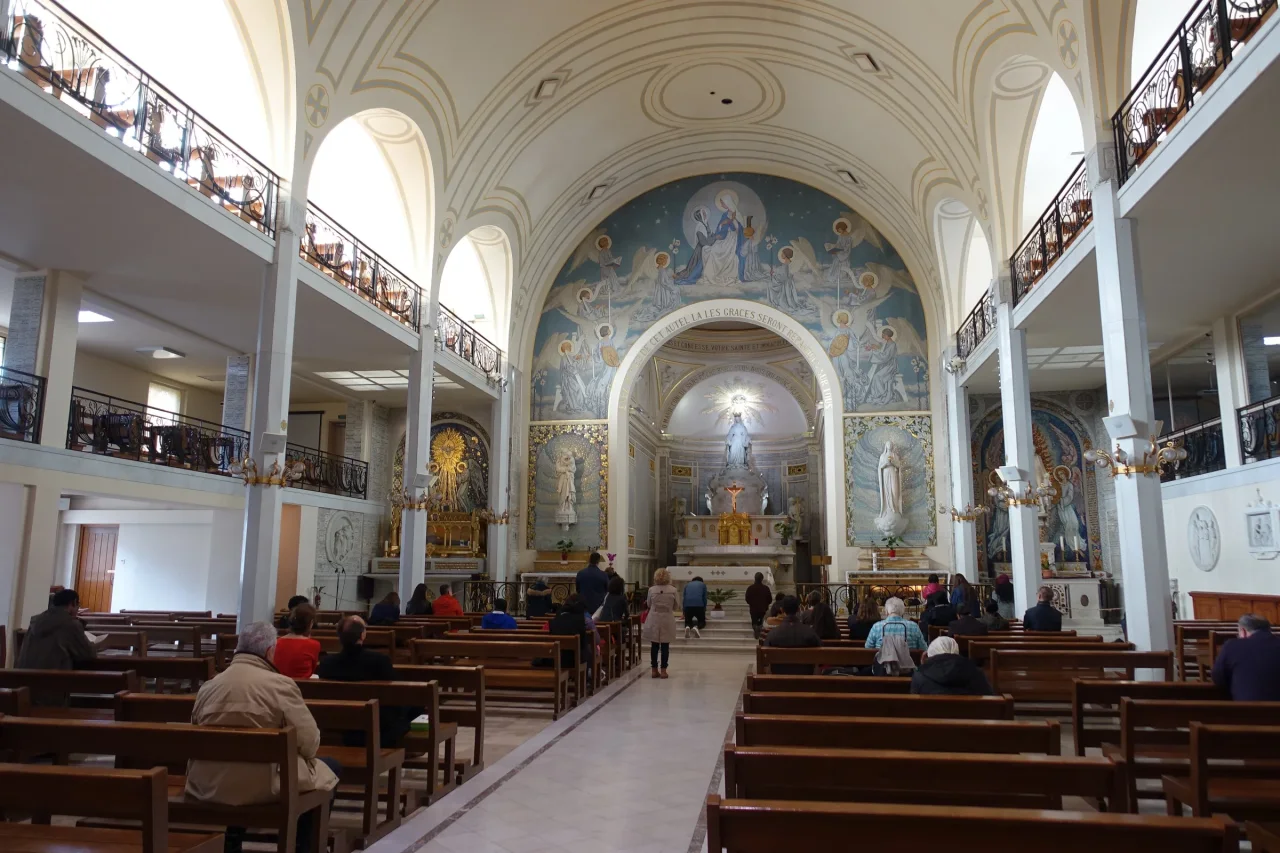
Chapel of Our Lady of the Miraculous Medal, Rue du Bac
The Daughters of Charity motherhouse chapel, founded within Vincent's own religious family, where his heart is venerated alongside the later Miraculous Medal apparitions of Saint Catherine Labouré.
Where the body is venerated.
Vincent de Paul is venerated in Paris at two chapels tied to the two communities he founded. His body rests above the altar of the Congregation of the Mission's chapel on the Rue de Sèvres, the community's Paris motherhouse. His heart is kept separately and venerated by the Daughters of Charity at their motherhouse chapel on the Rue du Bac, the same chapel associated with the later Miraculous Medal apparitions of Saint Catherine Labouré. Both shrines are kept by the two communities of his own religious family, and each remains a place of continuing public veneration.
The saint is publicly venerated at a named tomb.
- Principal tomb or body site
- The place the Church and long pilgrimage practice treat as holding the saint's body.
- Other documented publicly venerated relic
- A smaller relic holding that is publicly venerated and documented by the church or shrine that keeps it.
Body and motherhouse of the Mission
The chapel of the Congregation of the Mission, the community Vincent founded in 1625, where his body is venerated above the altar.
- The relics of Saint Vincent de Paul, venerated above the altar of the chapel
- Lazarist history and the memory of the Congregation of the Mission's founding
Begin here at the motherhouse chapel of the community he founded, then walk to Rue du Bac for the second half of the Vincentian visit.
Heart relic
The Daughters of Charity motherhouse chapel, founded within Vincent's own religious family, where his heart is venerated alongside the later Miraculous Medal apparitions of Saint Catherine Labouré.
- The heart of Saint Vincent de Paul, venerated by the Daughters of Charity
Pair this chapel with Chapelle Saint-Vincent-de-Paul to see the two halves of one Vincentian family: the Congregation of the Mission and the Daughters of Charity, a short walk apart.
Kindred witnesses
-
Co-founder of the Daughters of Charity
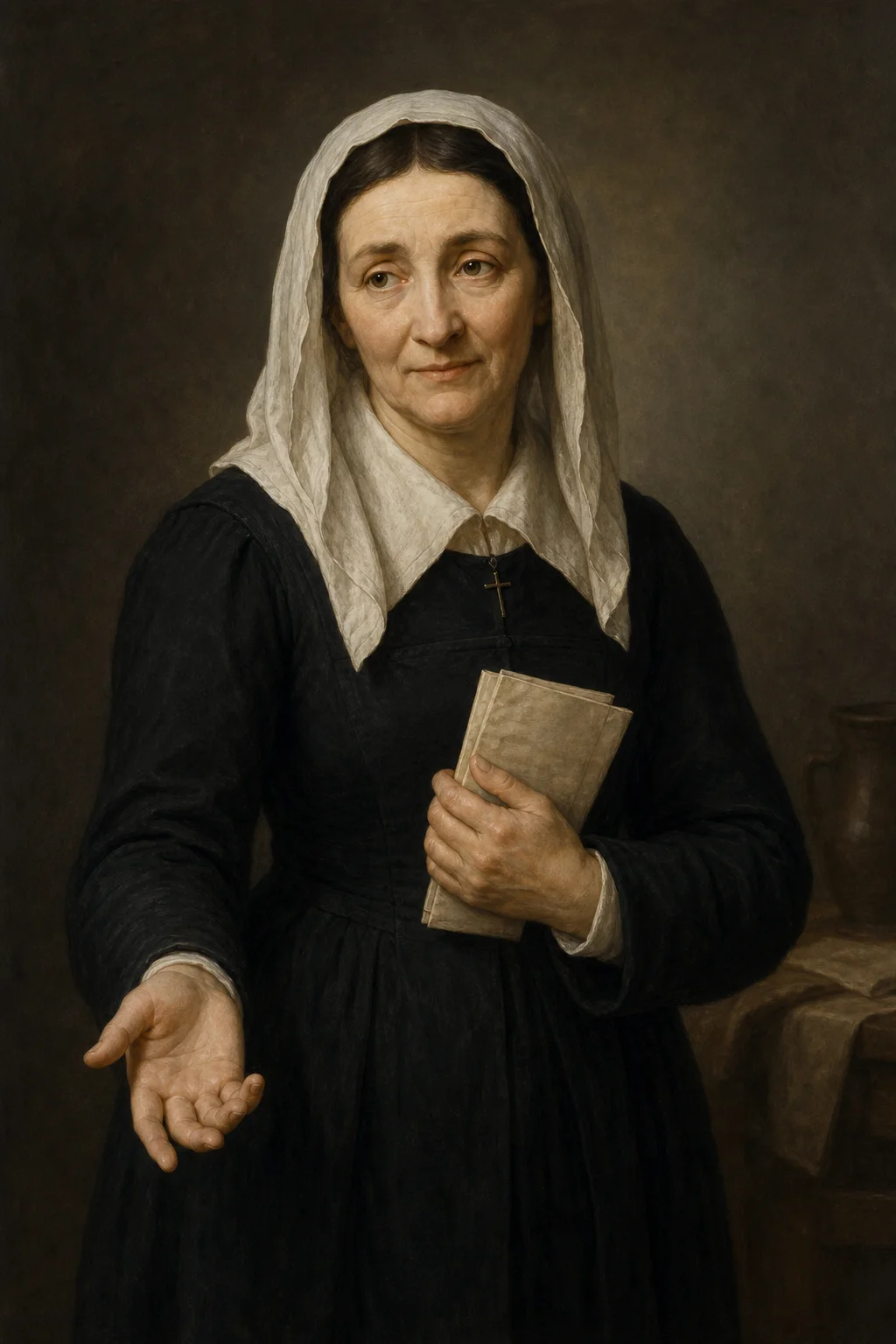
Saint Louise de Marillac
With Vincent she founded the Daughters of Charity in 1633 and formed its first sisters; her body is venerated at the Rue du Bac chapel that also keeps his heart. -
A Daughter of Charity of his religious family
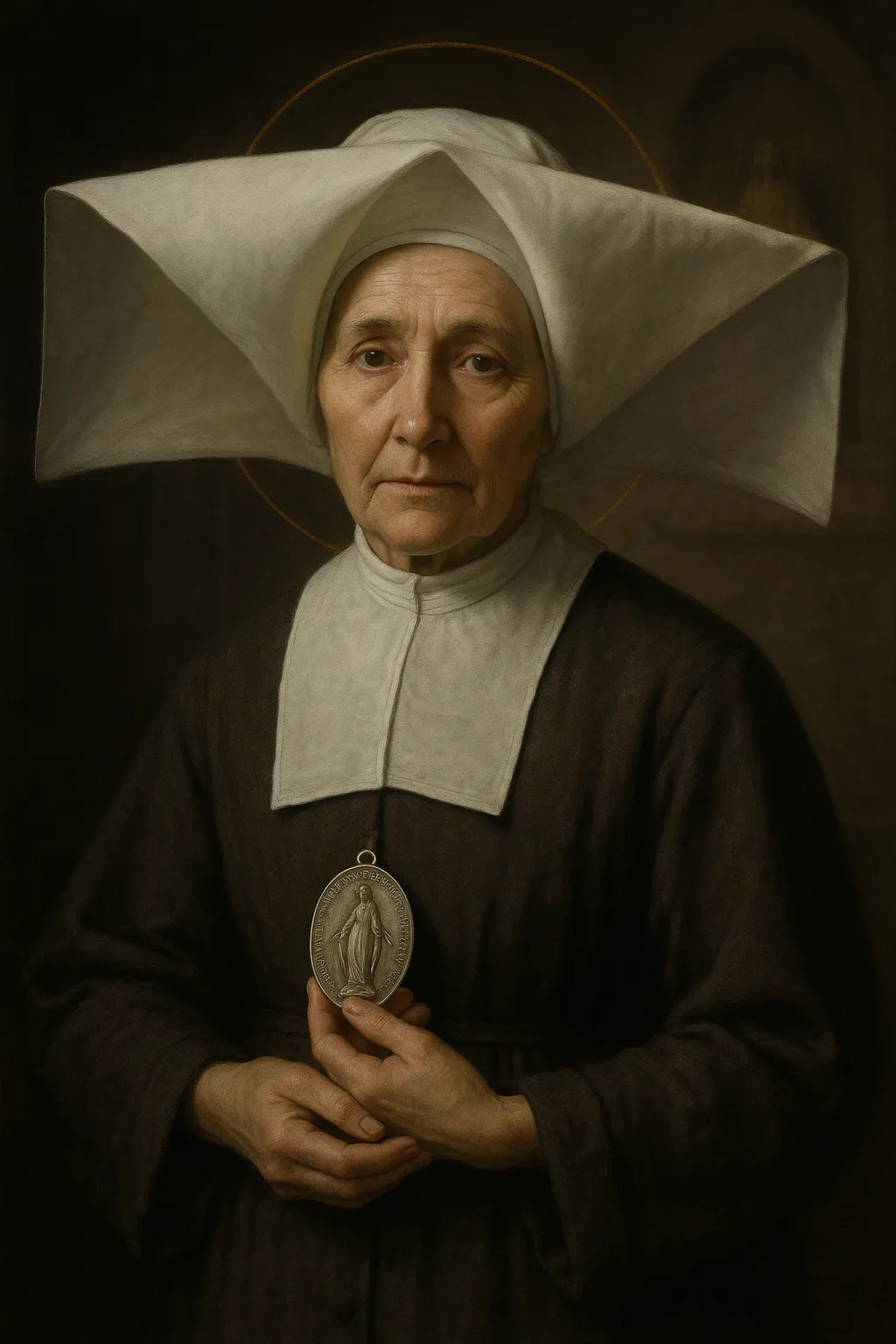
Saint Catherine Labouré
A Daughter of Charity within the community Vincent founded with Louise de Marillac; her Rue du Bac apparitions occurred in the motherhouse chapel of his own religious family.
Where this leads next.
Kept on September 27.
Vincent's feast falls on September 27, the anniversary of his death, kept with particular devotion at the Paris chapel of the Congregation of the Mission where his body rests.
A Vincentian visit to Paris is naturally a two-chapel pilgrimage: his body at the Congregation of the Mission chapel on the Rue de Sèvres, and his heart a short walk away at the Daughters of Charity chapel on the Rue du Bac, the same chapel where Saint Catherine Labouré later received the Miraculous Medal apparitions. Walking between the two traces the shape of the religious family he built.