
If the second day is not Monday
Build around the current midday Mass from Tuesday through Saturday or the Sunday morning schedule. The crypt may be closed, but the basilica, shrine image, sacred art, and prayer remain a complete pilgrimage.
Guide · Philadelphia
Pray beside Saint Katharine Drexel and Saint John Neumann on the first day, then give the second to Mary’s Miraculous Medal and Philadelphia’s enduring Perpetual Novena.
The argument
Catholic Philadelphia should not be reduced to a list of handsome churches. The city’s pilgrimage becomes coherent where three living places carry distinct spiritual weight. Saint Katharine Drexel rests within the mother church of the archdiocese she served. Saint John Neumann rests beneath a Redemptorist altar, surrounded by the sacramental mission that defined his episcopate. The Miraculous Medal Basilica receives a devotion born at Rue du Bac and makes it local through generations of Monday prayer.
Two days are honest because the places keep different rhythms. The cathedral and Neumann Shrine can share one day if the museum and liturgy schedule lead. Germantown deserves a second day, especially Monday, when novena, confession, adoration, crypt, and museum access make a fuller pilgrimage possible. This structure protects silence and refuses filler stops.
Day 1
Philadelphia’s two saints are encountered through the altar, their bodily remains, and the concrete missions that consumed their lives.
Morning through midday, around Mass or confession
Plan on two to three hours
Begin in Philadelphia’s mother church and venerate Saint Katharine Drexel where her bodily remains have rested since 2018. Her surrender of wealth becomes intelligible in the communities and schools she served.
Give your time to Mass or confession, the cathedral altar and nave, the high windows and dome, and unhurried prayer at Saint Katharine’s tomb.
Check the live cathedral and shrine schedule and any archdiocesan liturgies. Use the parking-lot accessible entrance if needed.
Walk, use transit, or take a short ride toward Fifth Street according to ability and the live schedule.
Pause · Early afternoon
A deliberate transfer keeps the day from becoming a race and protects the Neumann museum’s earlier closing time.
Afternoon, reaching the museum before its normal closing
Plan on two to three hours with worship
Venerate Saint John Neumann beneath the altar and receive his holiness through immigrant parishes, education, languages, sacramental ministry, and tireless pastoral duty rather than through legend.
Give your time to The tomb, museum, lower shrine, upper church, and confession or Mass when the schedule fits.
The museum normally closes before the last weekday Mass. Check each schedule separately and contact the shrine for a group pilgrimage.
Stop after the Neumann Shrine. Do not add another church. Check the next day’s Miraculous Medal schedule, especially if it is Monday.
Day 2
Philadelphia receives the Rue du Bac devotion not by claiming another apparition but by answering Mary’s intercession with Eucharist, confession, and generations of persevering prayer.
Most of the day on Monday; late morning through early afternoon on other weekdays
Plan on two to four hours
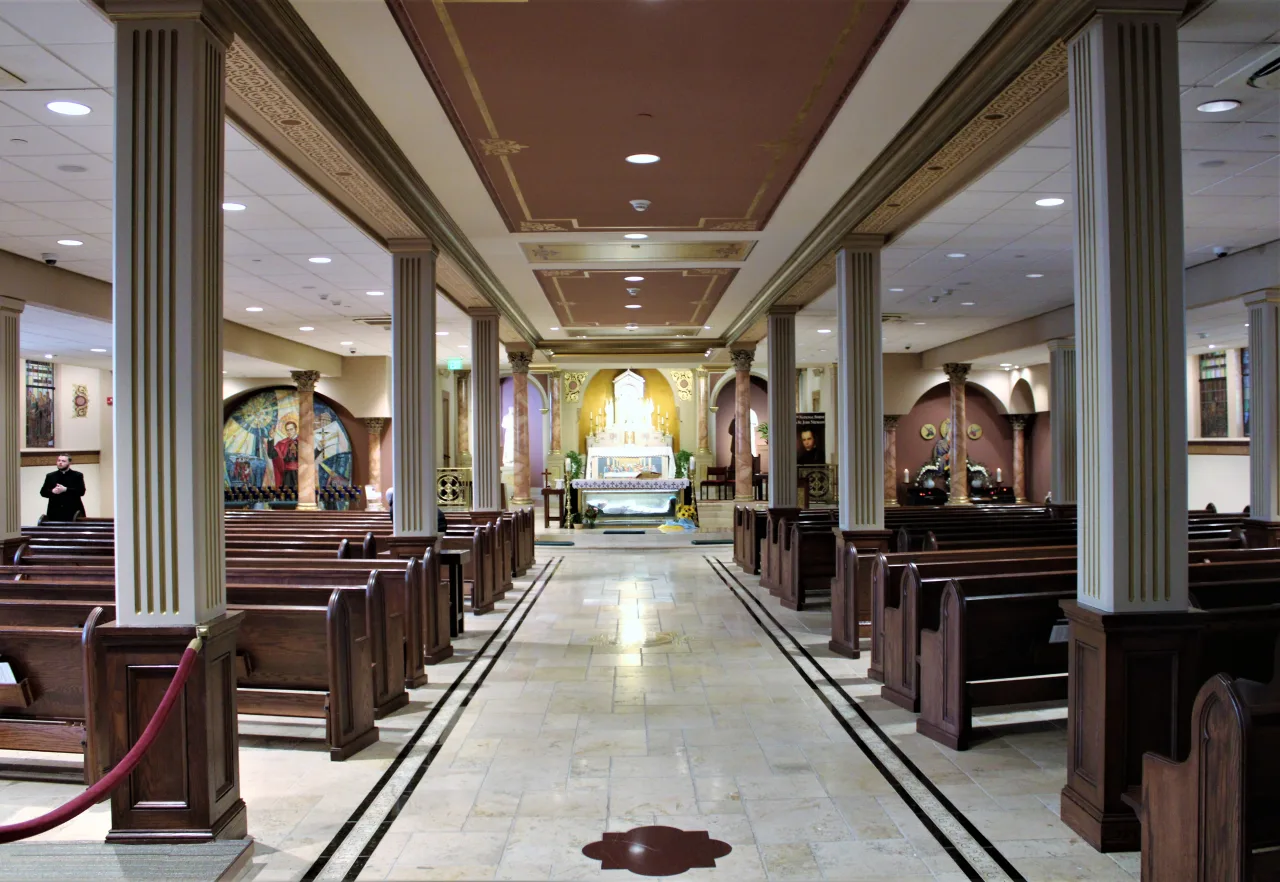
Join the Church’s Miraculous Medal devotion as Philadelphia has received it through Vincentian preaching and the Perpetual Novena. The apparitions occurred at Rue du Bac in Paris; this basilica is the faithful local response.
Whose lives these are Saint Catherine Labouré and Saint Vincent de Paul
Give your time to One novena or Mass, confession as offered, the shrine image and stained glass, then adoration, crypt, museum, or Rosary Walk according to current access.
Monday normally offers the fullest schedule and Monday-only crypt access. Other weekdays provide a quieter midday Mass. Confirm museum and garden access separately.
Let the basilica be the close. Carry one intention from the novena rather than adding another destination.
Geography
Numbered markers follow the day's order. Optional stops appear hollow.
When plans bend
Build around the current midday Mass from Tuesday through Saturday or the Sunday morning schedule. The crypt may be closed, but the basilica, shrine image, sacred art, and prayer remain a complete pilgrimage.
Keep the tomb, lower shrine, upper church, and sacramental schedule. Return for the museum rather than replacing it with an unresearched stop.
Use short rides between the first-day places, contact each institution about the current accessible entrance, and treat the optional Rosary Walk as weather and mobility permit.
My Journey
Two days, three canonical places. Confirm every Mass, confession, shrine, museum, novena, crypt, garden, and accessibility detail immediately before departure.
You choose the journey it joins before anything is saved.
Editorial responsibility
Researched and editorially reviewed from official Church, shrine, transport, and other reliable sources. Confirm current practical details with the official sources before travel.
Built from the three institutions’ current official history, worship, visitor, saint, novena, museum, crypt, and access pages, plus the Archdiocese of Philadelphia’s basilica announcement. Route sequence is editorial.
Opening hours, Mass times and access change; each place page above carries its current sources. How Eternal Roam researches and reviews its guides is described in our editorial standards.
Use this for corrections, broken links, missing places, and planning ideas.