
St. Perpetua
Perpetua's own account lets the Church hear a young mother choosing Christ before her death at Carthage.
The Life and Witness of Perpetua.
At the Carthage amphitheatre, the story of Perpetua is unusually near. Part of the account of her imprisonment speaks in her own voice.
Vibia Perpetua was a young mother and catechumen when she was arrested with other Christians in Roman Africa. The Passion's editor introduces her family and nursing child, then yields to her prison narrative. She writes of her father pleading with her, of baptism, of the cell, and of visions she understood through faith. Her words end before the execution account begins.
The editor describes the birth of Felicity's child and the group's entry into the amphitheatre on March 7, 203. He narrates the violence and their deaths; this part is not Perpetua's diary. The two women were very different in legal status, yet shared baptism, imprisonment, and martyrdom.
Their names entered the Roman Canon, and Augustine later preached about them. The surviving amphitheatre lets a pilgrim face the public ground of their witness. It does not identify the precise spot where either woman stood, nor does the consulted record establish a tomb to visit.
Perpetua left an early Christian woman's testimony in her own hand; the Church keeps her name at the altar.
A life, in years and approximate ages.
-
c. 181BirthBorn in Roman AfricaThe Passion describes her as about twenty-two at death; the birth year is inferred.
-
Early 203About 22Arrested as a catechumenPerpetua and other catechumens are imprisoned at Carthage.
-
Early 203About 22Baptized in custodyHer own prison narrative recalls baptism amid confinement.
-
March 7, 203About 22Dies in the amphitheatreThe editor of the Passion narrates her public martyrdom.
-
Fourth and fifth centuriesAfter deathRemembered in liturgyHer name is kept in the Roman Canon and Augustine preaches on the martyrs.
Dates are approximate where the surviving record is traditional or incomplete.
2 places where this witness remains visible.
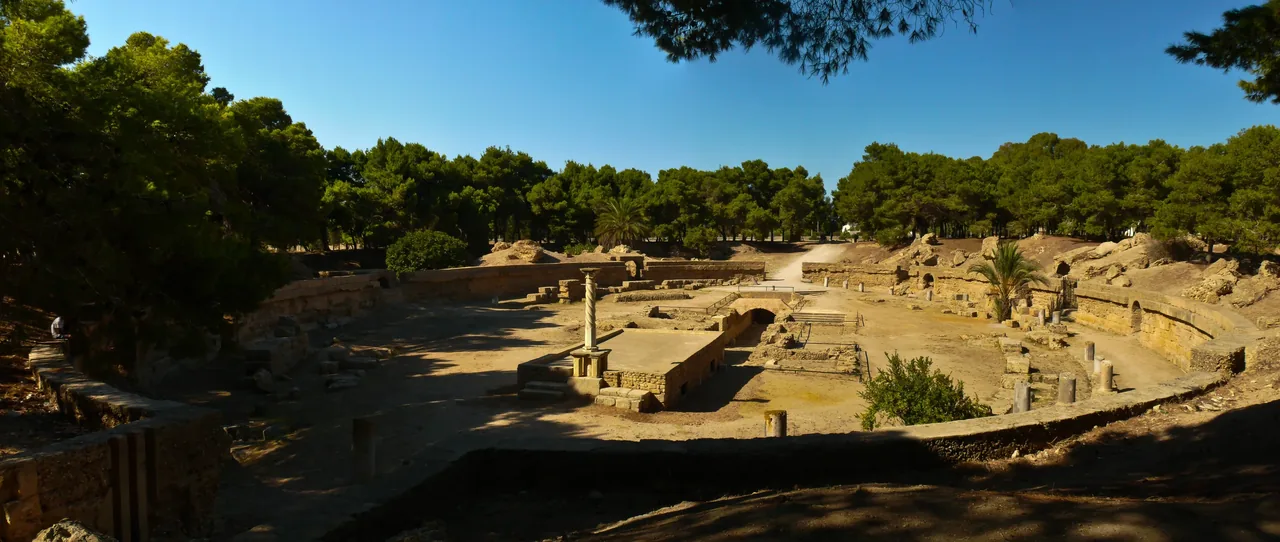
Amphitheatre of Carthage
The Passion places Perpetua and her companions in the Carthage amphitheatre on March 7, 203.
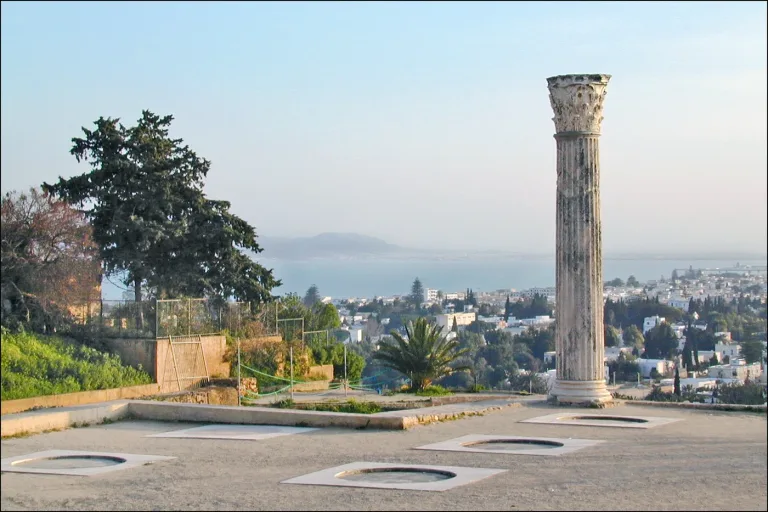
Christian Carthage
The wider Carthage landscape gives context to the Christian community that remembered Perpetua.
Follow Saint Perpetua in place
Read the Passion's first-person section before entering the amphitheatre; leave time for silence rather than trying to reconstruct the exact arena scene.
The amphitheatre is the martyrdom site remembered by the Passion; Christian Carthage places it within the wider African Church.
The Passion places Perpetua and her companions in the Carthage amphitheatre on March 7, 203.
Burial and relic tradition.
The consulted early record tells of martyrdom at the Carthage amphitheatre but does not securely identify Perpetua's burial or publicly venerated bodily relics. The amphitheatre is a memorial ground, not a demonstrated tomb.
The burial or relic tradition is not securely identified.
Saints Connected to Perpetua


Kept on March 7.
The Church commemorates Perpetua and Felicity together on March 7. Their names also remain in the Roman Canon at Mass.
Read the Passion's first-person section before entering the amphitheatre; leave time for silence rather than trying to reconstruct the exact arena scene.
Photo credits
- Amphitheatre of Carthage. Elena Tatiana Chis, CC BY-SA 4.0, via Wikimedia Commons. Source. CC BY-SA 4.0.
- Christian Carthage. Le site archéologique de Byrsa (Carthage, Tunisie) (49788396096). Jean-Pierre Dalbéra, CC BY 2.0, via Wikimedia Commons. Source. CC BY 2.0.