
St. Felicity
Felicity gave birth while imprisoned for Christ and joined the other martyrs at Carthage days later.
The Life and Witness of Felicity.
The Passion does not give Felicity a first-person diary. It tells enough to see a woman whose enslaved status, pregnancy, and faith all shaped the last days of her life.
Felicity was enslaved and was arrested as a catechumen with Revocatus, Perpetua, and others. The Passion's opening identifies Revocatus as a fellow enslaved person, but it does not supply Felicity's parents, birthplace, or earlier life. Her dignity in the text is not dependent on filling those silences with invention.
She was pregnant in prison. The editor says Roman practice delayed execution of a pregnant woman; Felicity feared separation from the companions with whom she expected to witness to Christ. She gave birth to a daughter shortly before the appointed day. The account says a Christian woman took the child into her care. It does not tell us the daughter's later life.
On March 7, 203, Felicity entered the Carthage amphitheatre with Perpetua and the others and was killed. Their shared feast and their names in the Roman Canon hold together women of unequal legal standing. At Carthage, a pilgrim can remember Felicity by name, without making her a footnote to Perpetua's diary.
The Church names Felicity in its Eucharistic prayer, remembering an enslaved mother who remained faithful to Christ.
A life, in years and approximate ages.
-
Birth date unrecordedBirth; date unknownBirth not documentedThe Passion gives no age or birthplace for Felicity; the sort year is only an era anchor.
-
Early 203Imprisoned as a catechumenShe is arrested with the group at Carthage.
-
Early 203Gives birth in prisonHer daughter is born shortly before the execution and is entrusted to a Christian woman.
-
March 7, 203Dies in the amphitheatreFelicity dies with Perpetua and the other Christians.
-
Later centuriesAfter deathNamed in the Roman CanonHer name enters the Church's Eucharistic prayer with Perpetua's.
Dates are approximate where the surviving record is traditional or incomplete.
2 places where this witness remains visible.
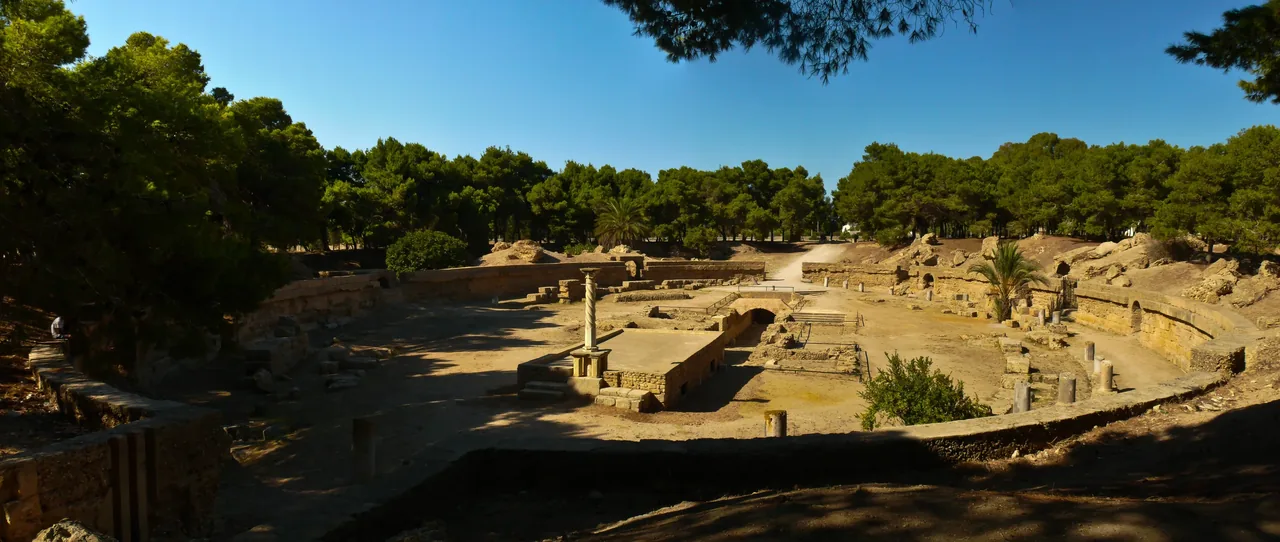
Amphitheatre of Carthage
The Passion records Felicity entering the amphitheatre after giving birth in prison.

Christian Carthage
The Christian landscape of Carthage situates the community that preserved Felicity's memory.
Follow Saint Felicity in place
At the amphitheatre, read the editor's account of Felicity's labor and ask her intercession for mothers facing confinement or fear.
The amphitheatre is Felicity's martyrdom geography; no secure tomb has been identified.
The Passion records Felicity entering the amphitheatre after giving birth in prison.
Burial and relic tradition.
The Passion places Felicity's death in the Carthage amphitheatre. The consulted sources do not identify an authenticated tomb or bodily relic available to visit.
The burial or relic tradition is not securely identified.
Saints Connected to Felicity


Kept on March 7.
Felicity and Perpetua share the March 7 memorial. Their names remain in the Roman Canon.
At the amphitheatre, read the editor's account of Felicity's labor and ask her intercession for mothers facing confinement or fear.
Photo credits
- Amphitheatre of Carthage. Elena Tatiana Chis, CC BY-SA 4.0, via Wikimedia Commons. Source. CC BY-SA 4.0.
- Christian Carthage. Le site archéologique de Byrsa (Carthage, Tunisie) (49788396096). Jean-Pierre Dalbéra, CC BY 2.0, via Wikimedia Commons. Source. CC BY 2.0.