
St. John the Apostle
A Galilean fisherman called with his brother James, who stood among the three closest to Jesus, and whom ancient tradition remembers at Ephesus in a long old age.
God is love, and he who abides in love abides in God, and God abides in him.
1 John 4:16 Traditional
Son of Zebedee, one of the Twelve, and in the Church's tradition the beloved disciple and the Evangelist
John, son of Zebedee, was a fisherman on the Sea of Galilee when Jesus called him with his brother James. With Peter and James he was among the three Jesus kept closest. The Church has long identified him with the disciple whom Jesus loved, who leaned on his breast at the Last Supper and stood at the Cross with Mary; ancient tradition gives him the Fourth Gospel and a long old age at Ephesus, where Christians have venerated his tomb since antiquity.
The first three Gospels tell the call plainly. Jesus saw James and John in their boat mending nets, and they left their father Zebedee with the hired men and followed him (Mark 1:19-20). He named the brothers Boanerges, "sons of thunder," and the Gospels do not hide why: they wanted fire from heaven on a Samaritan village, and they asked for the seats at his right and left in his glory. With Peter they alone went in to the daughter of Jairus, up the mountain of the Transfiguration, and further into Gethsemane on the last night.
The Fourth Gospel never names John, son of Zebedee. It speaks instead of "the disciple whom Jesus loved," who reclined beside him at the Supper, stood at the Cross with his mother and took her into his own home, ran with Peter to the empty tomb, and knew the Lord on the shore of Tiberias. Its last chapter says this disciple is the one "who has written these things." From the second century the Church identified him with John: Irenaeus, who had known Polycarp, wrote that John, "the disciple of the Lord, who also had leaned upon his breast," published the Gospel while living at Ephesus. Many scholars today question the identification, or see the Gospel as shaped by those who handed on his witness. The Church receives it as apostolic testimony, as she always has.
After the Resurrection, Acts shows John at Peter's side: going up to the Temple to pray, standing before the council, sent with Peter to the new believers in Samaria. "We cannot but speak of what we have seen and heard," the two of them answered (Acts 4:20). Paul, visiting Jerusalem, names James, Cephas and John as the "pillars" of the Church there (Galatians 2:9). Three letters in the New Testament bear the Johannine voice: "God is love."
The author of Revelation calls himself John, on Patmos "on account of the word of God and the testimony of Jesus" (Revelation 1:9). Early writers took him to be the apostle, though already in the third century some doubted it. Eusebius, following Irenaeus, says he was banished to the island under Domitian, returned to Ephesus when Domitian died, and lived there into the reign of Trajan. Tertullian adds that at Rome he was plunged into boiling oil and came out unharmed. Tradition remembers him as the one apostle who did not die a martyr's death.
Ephesus kept his memory. About the year 190 its bishop, Polycrates, wrote that John, who reclined on the Lord's breast, "sleeps at Ephesus." A memorial grew over a tomb on Ayasuluk Hill above the city, and in the sixth century Justinian raised a great domed basilica over it. Its ruins stand today above Selçuk; no relic is shown there, and archaeology cannot name the man buried beneath. A much later tradition places Mary with John near Ephesus in her last years. The Gospel says only that from that hour the disciple took her to his own home.
John is the Church's witness to the love of God made flesh: "And the Word became flesh and dwelt among us." His symbol is the eagle, for the height from which his Gospel begins. The Church keeps his feast on December 27, in the octave of Christmas, beside the first martyr and the Holy Innocents. Pilgrims meet him in the Holy Land where the Gospels place him, and at Ephesus, where the Church remembered his old age and his grave.
A life, in years and approximate ages.
-
c. 28 ADCalled from the boatJesus calls James and John from their father Zebedee's boat on the Sea of Galilee (Mark 1:19-20).
-
c. 29 ADThe TransfigurationWith Peter and James, John sees Jesus transfigured on the mountain (Mark 9:2).
-
c. 30 ADThe Supper, the garden, the CrossJesus takes Peter, James and John further into Gethsemane (Mark 14:33). At the Cross the beloved disciple receives Mary into his home (John 19:26-27).
-
c. 30–49 ADA pillar of the Jerusalem ChurchJohn preaches with Peter in the Temple and before the council (Acts 3-4) and goes with him to Samaria; Paul names him a pillar (Galatians 2:9).
-
c. 95 ADPatmosJohn of the Apocalypse is on Patmos "on account of the word of God" (Revelation 1:9); Eusebius dates the exile to Domitian's reign.
-
c. 100 ADIn old ageDeath at EphesusIrenaeus says John remained at Ephesus into the reign of Trajan; Polycrates says he "sleeps at Ephesus."
-
Sixth centuryAfter deathJustinian's basilicaA great domed basilica rises over the tomb Ephesian Christians venerated as John's on Ayasuluk Hill.
Dates are approximate where the surviving record is traditional or incomplete.
6 places where this witness remains visible.
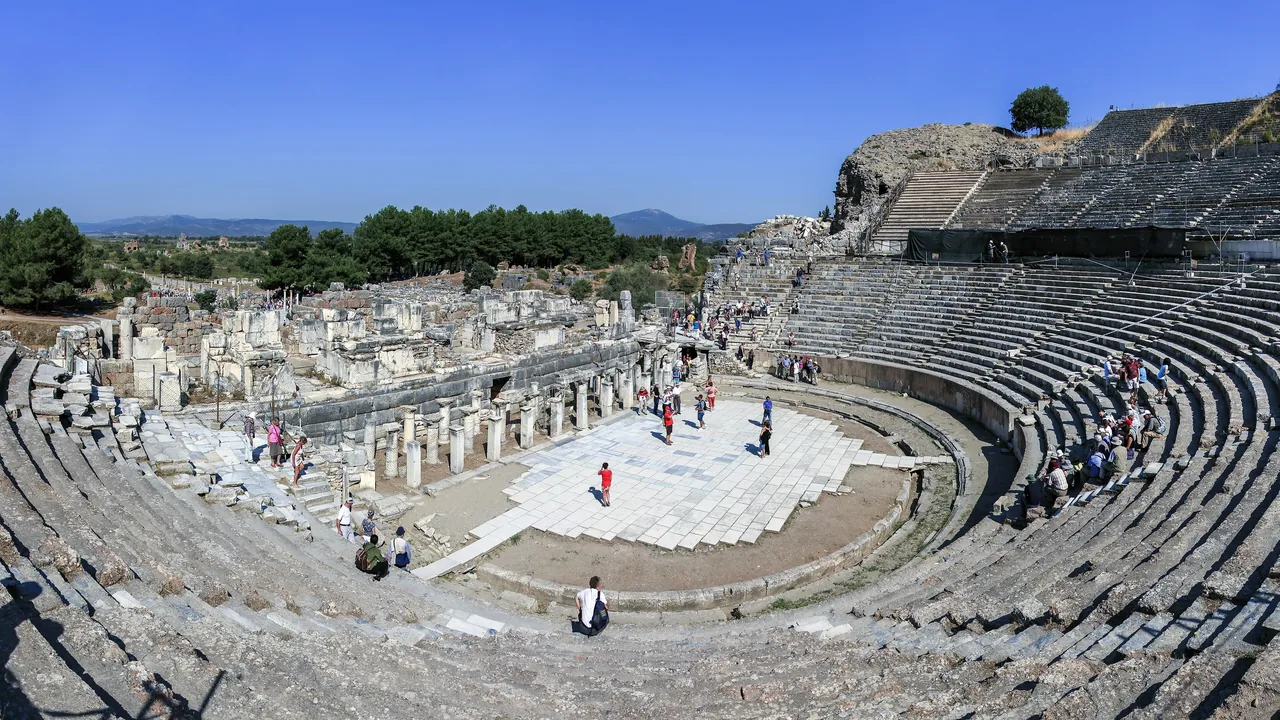
Ancient Ephesus
The city of Acts and of the letter to Ephesus in Revelation 2. Irenaeus places John here into the reign of Trajan; no surviving building can be tied to him.
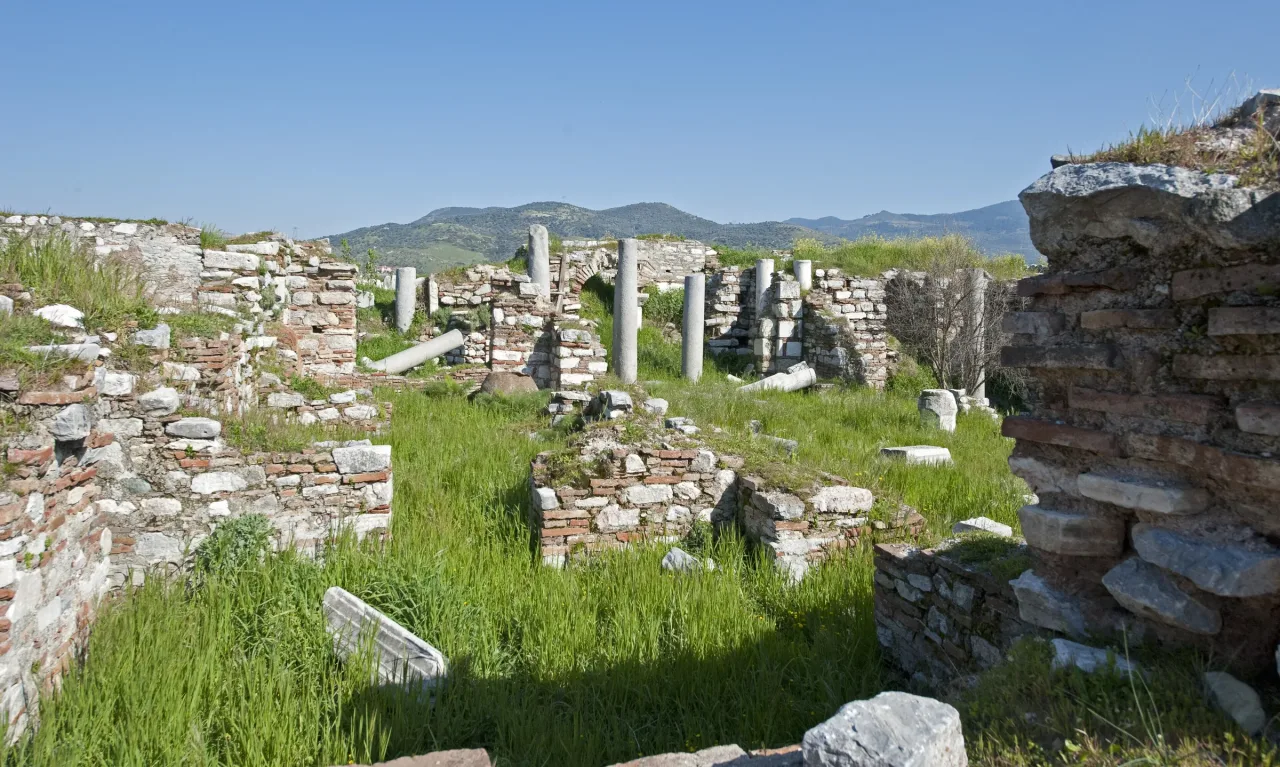
Basilica of St. John, Selçuk
The ruins of Justinian's basilica around the tomb Christians have venerated as John's since antiquity. The burial is a tradition; no relic is shown.
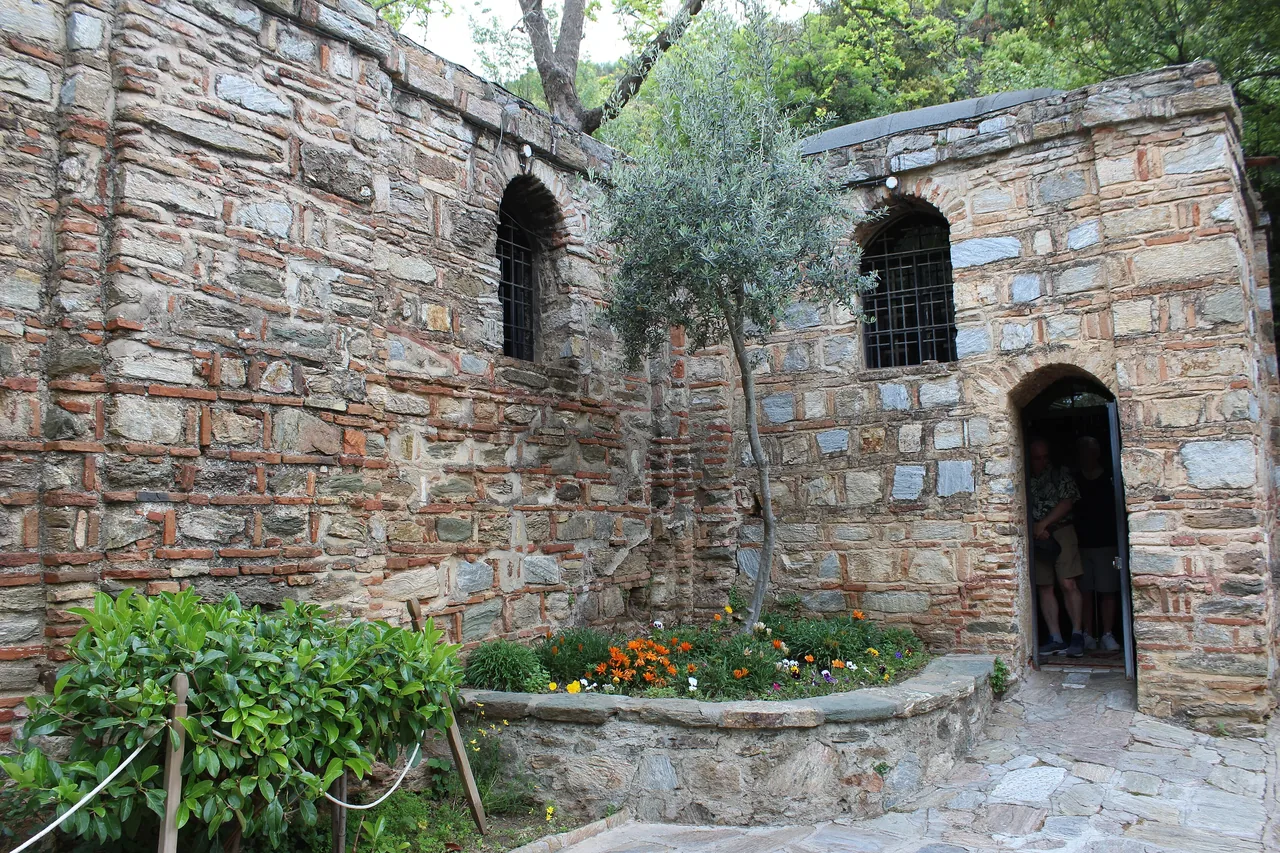
House of the Virgin Mary
A Marian shrine whose tradition, much later than the Gospels, places Mary near Ephesus in John's care. The Gospel says only that he took her into his home.
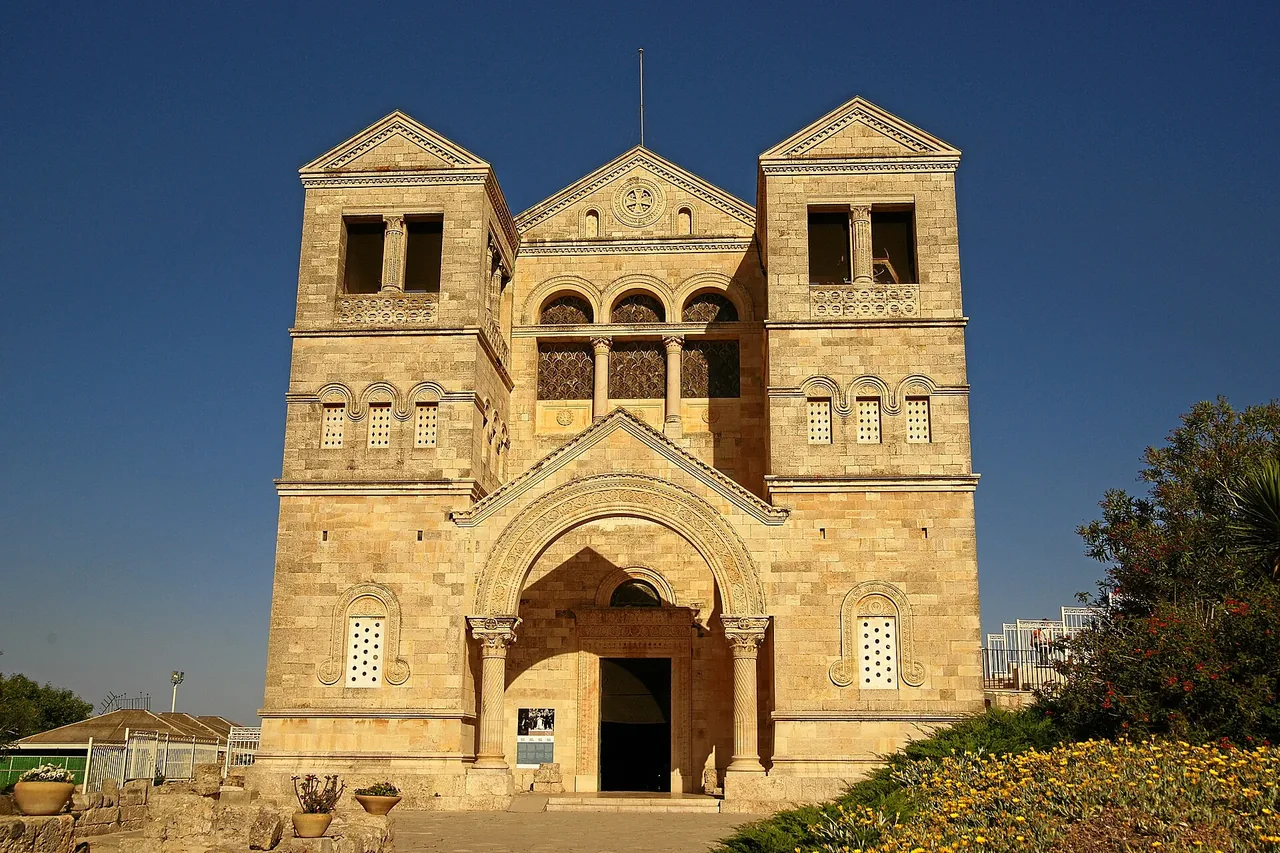
Mount Tabor and the Basilica of the Transfiguration
Mark names Peter, James and John as the three taken up the mountain (Mark 9:2); tradition identifies it as Tabor.

Gethsemane and the Basilica of the Agony
On the last night Jesus took Peter, James and John further into the garden and asked them to watch (Mark 14:33-34).

Church of the Holy Sepulchre
Calvary and the tomb: the beloved disciple stood at the Cross with Mary, and ran with Peter to the empty tomb (John 19:26-27; 20:2-8).
A tomb tradition at Ephesus.
Christians have venerated a tomb on Ayasuluk Hill above Ephesus as John's since at least the second century, when Polycrates wrote that he "sleeps at Ephesus." Justinian's sixth-century basilica stands in ruins around it. The central tomb is traditionally accepted as Saint John's, but archaeology cannot establish who was buried there, and no bodily relic is shown or asserted.
The burial or relic tradition is not securely identified.
Relics & pilgrimage
Where to encounter Saint John the Apostle
Kindred witnesses
-
His brother
Saint James the Greater
His brother, called with him from Zebedee's boat, and the first of the Twelve to die for Christ. -
Companion of the inner three
Saint Peter the Apostle
With John at the Transfiguration and in Gethsemane, and at his side in the first chapters of Acts. -
Fellow pillar; Ephesus
Saint Paul the Apostle
Paul names John among the pillars of the Jerusalem Church; both are remembered at Ephesus.
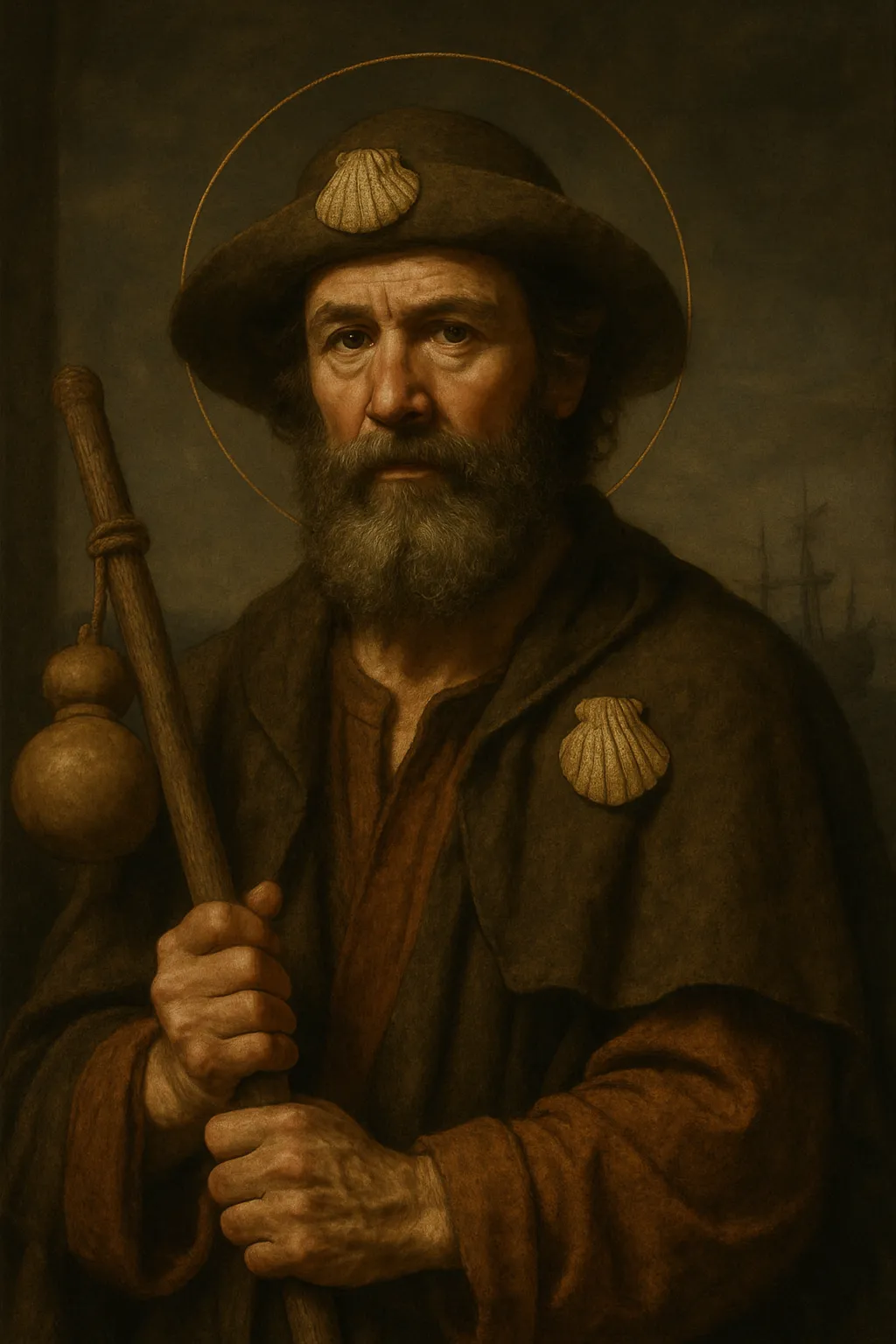
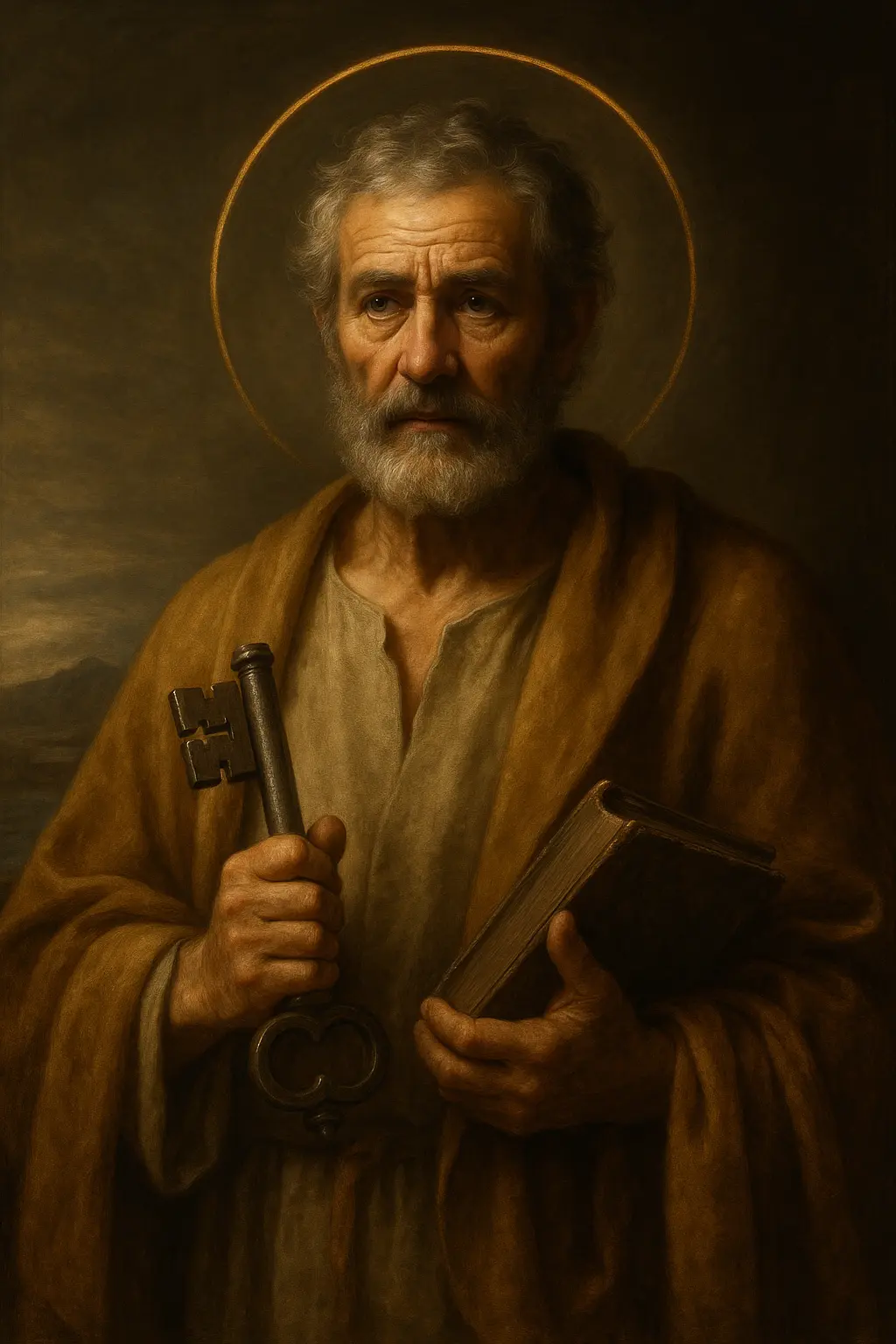

Showing 3 of 4 authored connections with full saint guides.
Where this leads next.
Kept on December 27.
December 27 is the Feast of Saint John, Apostle and Evangelist, the third day of the octave of Christmas, after Saint Stephen and before the Holy Innocents. A long-standing custom blesses wine on his feast, in memory of the tradition that he drank a poisoned cup unharmed.
At Ephesus, walk the ancient city first, where Acts places Paul and early tradition places John, then climb Ayasuluk Hill to the ruins of his basilica and the tomb at its center.
Photo credits
- Ancient Ephesus. Roy Egloff / Wikimedia Commons (CC BY-SA 4.0). Source. CC BY-SA 4.0.
- Basilica of St. John, Selçuk. Dick Osseman / Wikimedia Commons (CC BY-SA 4.0). Source. CC BY-SA 4.0.
- House of the Virgin Mary. Storyteller23 / Wikimedia Commons (CC BY-SA 4.0). Source. CC BY-SA 4.0.
- Mount Tabor and the Basilica of the Transfiguration. Mboesch / Wikimedia Commons (CC BY-SA 4.0). Source. CC BY-SA 4.0.
- Gethsemane and the Basilica of the Agony. Zairon / Wikimedia Commons (CC BY-SA 4.0). Source. CC BY-SA 4.0.
- Church of the Holy Sepulchre. Holy Sepulchre facade from parvis. Wknight94 / Wikimedia Commons (CC BY-SA 3.0). Source. CC BY-SA 3.0.