
St. James the Greater
One of the first disciples called by the Sea of Galilee, and the first of the Twelve Apostles to die for Christ.
We are able.
Mark 10:39 (James and John, answering Jesus' question about the cup he would drink) Documented
The fisherman apostle beheaded at Jerusalem, whose traditional tomb in Spain became the goal of the Camino de Santiago
James was a fisherman on the Sea of Galilee, called from his father Zebedee's boat alongside his brother John to become one of the Twelve. The Gospels place him among the inner circle closest to Jesus, present at the Transfiguration and in the Garden of Gethsemane, and Acts records him as the first apostle put to death. Centuries later, Catholic tradition in Spain identifies his tomb at Santiago de Compostela, which became one of medieval Christendom's three great pilgrimages alongside Rome and Jerusalem.
James was the son of Zebedee, a Galilean fisherman, and the brother of John. The Gospels describe the two brothers, along with Peter and Andrew, mending or casting nets on the Sea of Galilee when Jesus called them to leave their boats and become fishers of men. Their father's trade appears to have been prosperous enough to employ hired men, and the family is remembered in the tradition as one of some local standing around Capernaum and Bethsaida.
Mark's Gospel records that Jesus gave James and John the name Boanerges, "sons of thunder," a nickname that later tradition reads as a mark of their vigor and directness. Along with Peter, the brothers formed an inner circle within the Twelve: the three alone were taken up the mountain to witness the Transfiguration, the three alone were present at the raising of Jairus's daughter, and the three alone were asked to keep watch with Jesus in Gethsemane the night before his Passion. In one Gospel episode James and John, or their mother on their behalf, ask Jesus for the places of honor at his right and left hand in his coming kingdom; when Jesus asks whether they can drink the cup he is about to drink, the brothers answer without hesitation that they are able, a promise the Church has long read as pointing toward James's own death.
That death came first among the Twelve. The Acts of the Apostles records, briefly and without embellishment, that King Herod Agrippa I had James put to the sword at Jerusalem during a persecution of the young Church, probably around the year 44. No other apostolic martyrdom is dated with as much confidence, since it rests on the plain historical notice in Acts rather than on later tradition.
What Catholic Spain adds to this spare New Testament record is a tradition of translation and rediscovery. According to that tradition, James had preached in Hispania before returning to Judea, and after his martyrdom his disciples carried his body by sea to the Galician coast for burial. The place was lost to memory until the early ninth century, when a hermit's vision and the local bishop's inquiry led to the identification of a tomb near Iria Flavia. King Alfonso II had a church built over the site, and the settlement that grew up around it took the name Santiago de Compostela.
From that ninth-century beginning, the shrine drew pilgrims from across Europe in growing numbers through the Middle Ages, until the roads converging on Compostela, collectively called the Camino de Santiago, ranked with the pilgrimages to Rome and Jerusalem as one of medieval Christendom's three great journeys. The Romanesque cathedral raised over the tomb, consecrated in 1211 and enlarged in later centuries, still stands at the end of those roads, and pilgrims who complete an eligible stretch of the Camino receive the Compostela certificate that has marked the journey's end since the medieval pilgrim office first issued it.
James left no writings of his own; what endures is the pattern of his call and his death, and the road that grew up afterward. The Camino de Santiago remains one of the enduring forms of Catholic pilgrimage, walked today for reasons ranging from devotion to discernment to plain endurance, all of it converging on the tomb tradition holds to be his. Catholics keep his feast on July 25.
A life, in years and approximate ages.
-
c. 28 ADEarly adulthoodCalled by the Sea of GalileeJames and his brother John, sons of the fisherman Zebedee, leave their father's boat and nets on the Sea of Galilee to follow Jesus, among the first disciples called.
-
c. 29 ADEarly adulthoodWitness to the TransfigurationWith Peter and John, James is one of only three apostles taken up the mountain to witness Jesus transfigured in glory alongside Moses and Elijah.
-
c. 30 ADEarly adulthoodThe Agony in the GardenJames is again one of the three, with Peter and John, asked by Jesus to keep watch in the Garden of Gethsemane on the night before his Passion.
-
c. 44 ADDeathMartyrdom Under Herod Agrippa IThe Acts of the Apostles records that Herod Agrippa I had James put to the sword at Jerusalem, the first of the Twelve Apostles to be martyred.
-
Early 9th centuryAfter deathRediscovery of the Tomb in GaliciaSpanish tradition holds that a hermit's vision led the bishop of Iria Flavia to a tomb identified as that of Saint James, on the site that became Santiago de Compostela.
-
c. 1122After deathThe Compostelan Holy Year EstablishedTradition attributes to Pope Callixtus II the grant by which Compostela keeps a Jubilee year whenever the feast of Saint James on July 25 falls on a Sunday. The pattern still runs; the next Compostelan Holy Year is 2027.
-
1211After deathConsecration of the CathedralThe Romanesque cathedral raised over the tomb tradition, begun in the eleventh century, is consecrated, giving the Camino de Santiago its lasting pilgrim destination.
Dates are approximate where the surviving record is traditional or incomplete.
2 places where this witness remains visible.
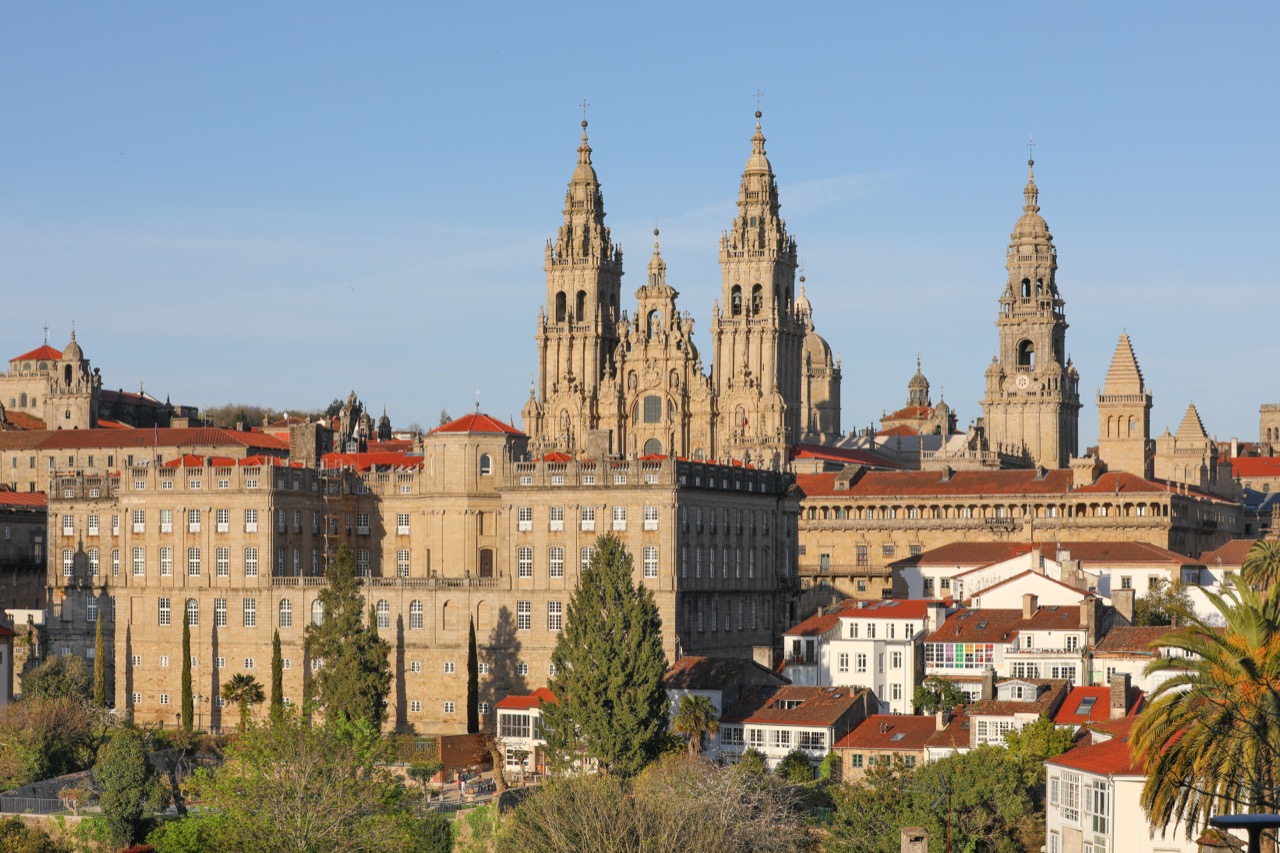
Santiago de Compostela Cathedral
The essential James pilgrimage stop: the cathedral raised over the tomb tradition identifies as that of the Apostle, and the goal of the Camino de Santiago.
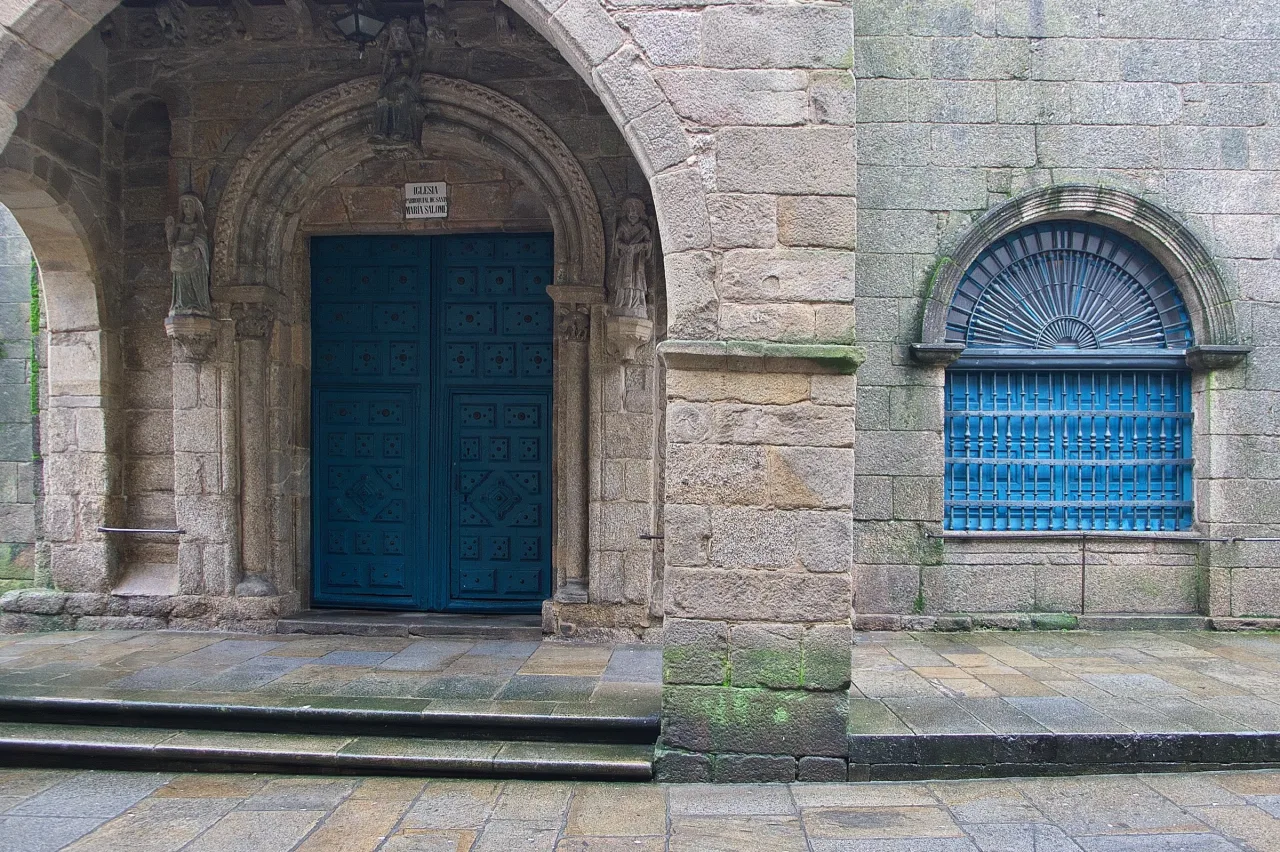
Church of Santa María Salomé
The one church in Santiago that remembers the Apostle through his mother, named in the Gospels among the women at the cross and at the empty tomb. A ten-minute stop that returns the Apostle to a family.
Where the relics are venerated.
Santiago de Compostela Cathedral holds the tomb long identified in Spanish Catholic tradition as that of the Apostle James: a silver urn beneath the high altar, venerated since a ninth-century tradition of rediscovery near Iria Flavia. The Church has honored this tradition for centuries, and the road to Compostela remains one of the great penitential journeys of Christendom. A separate and older tradition, kept by the Armenian Apostolic cathedral of St. James in Jerusalem, venerates a relic of the Apostle's head at the place associated with his martyrdom in that city.
A principal relic site is named, with other fragments or reliquaries noted separately.
Tomb and pilgrimage tradition
The essential James pilgrimage stop: the cathedral raised over the tomb tradition identifies as that of the Apostle, and the goal of the Camino de Santiago.
- The tomb tradition venerates as Saint James's burial place, in the silver urn beneath the high altar
- The statue of Saint James above the high altar, embraced by pilgrims by long tradition
- The Pórtico da Gloria, the Romanesque pilgrim threshold completed by Master Mateo in 1188
Go first to the tomb in the crypt before anything else, whether you arrive after a month on the Camino or a short visit to Galicia. The cathedral is built around the tomb; let the visit follow that order.
Kindred witnesses
-
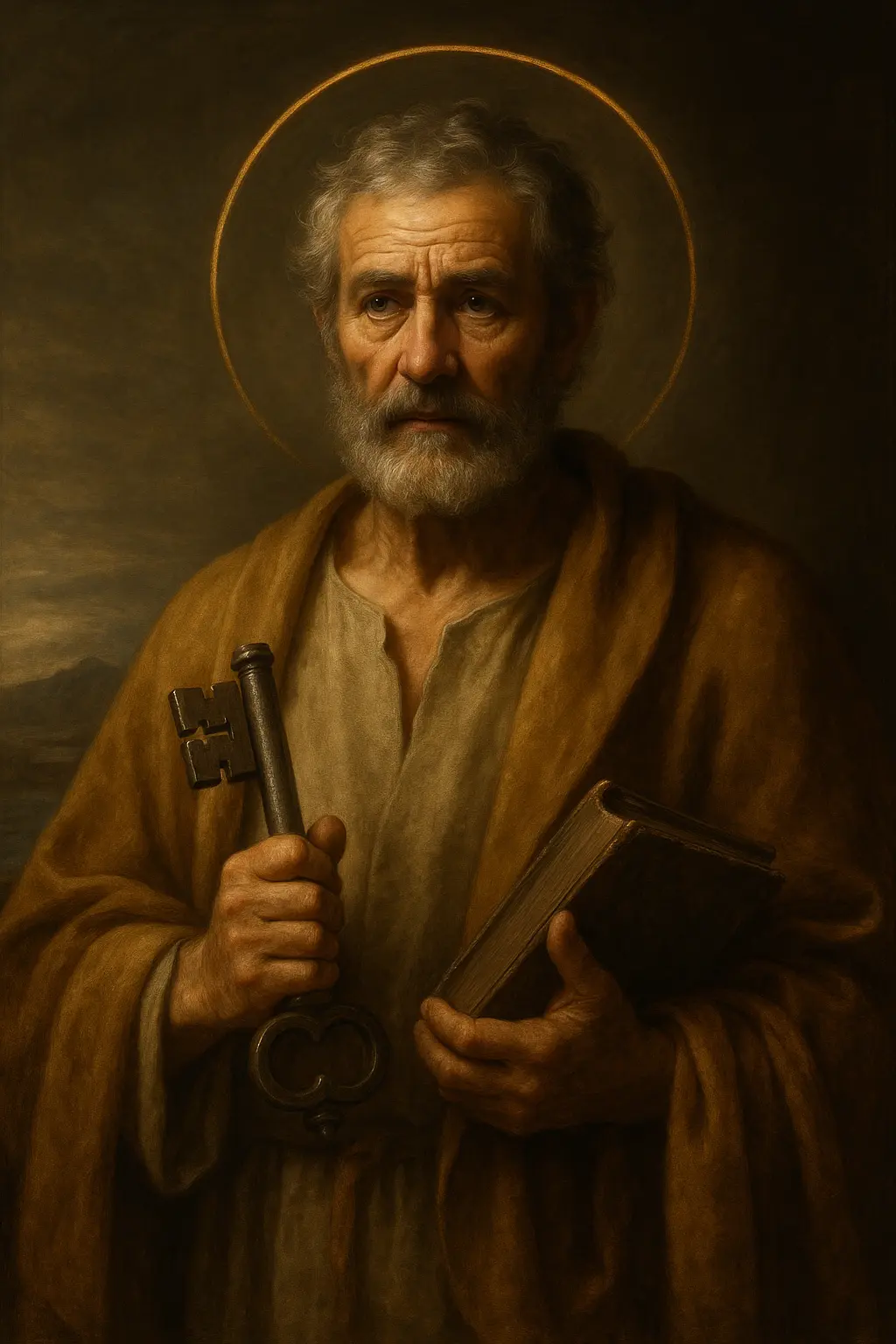
Fellow apostle of the inner three
Saint Peter the Apostle
With James and John, one of the inner three apostles present at the Transfiguration and the Agony in the Garden. -
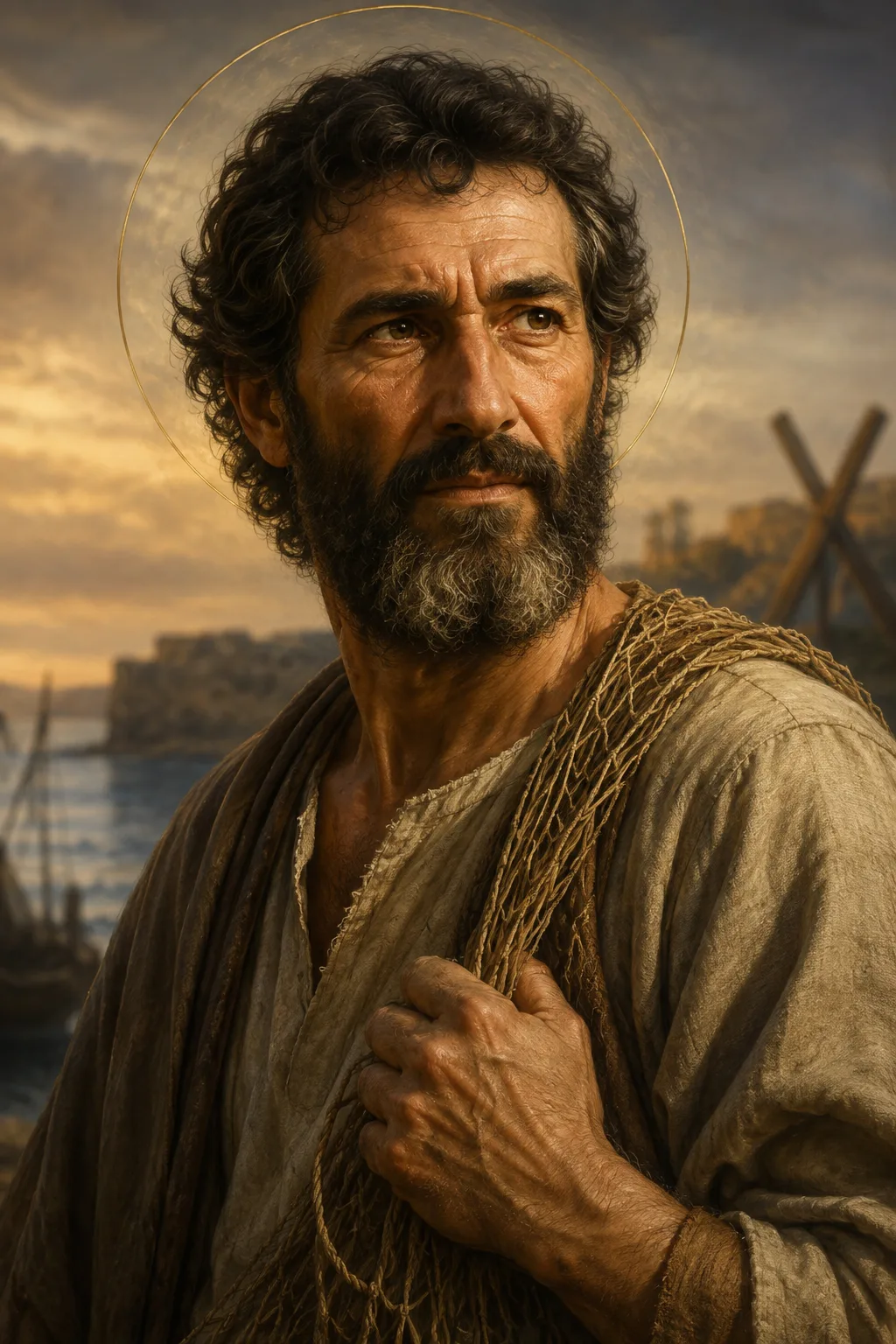
Fellow Galilean fisherman apostle
Saint Andrew the Apostle
A fellow fisherman of Galilee and Peter's brother, called to discipleship in the same early days by the sea.
Kept on July 25.
James keeps his feast on July 25, observed with particular solemnity at Santiago de Compostela, where it is one of the days the cathedral uses the great Botafumeiro censer. Whenever July 25 falls on a Sunday the whole year becomes a Compostelan Holy Year, the cathedral's Holy Door is opened, and a Jubilee indulgence is available on the Church's ordinary conditions. The last was 2021; the next is 2027.
Most pilgrims meet James not on his feast day but at the end of a road: the Camino de Santiago is walked across weeks, in every season, and arrives at the same tomb regardless of when the pilgrim sets out. Begin at the cathedral crypt, at the silver urn beneath the high altar, before anything else.
Photo credits
- Santiago de Compostela Cathedral. Luis Miguel Bugallo Sánchez (Lmbuga) / Wikimedia Commons (CC BY-SA 4.0). Source. CC BY-SA 4.0.
- Church of Santa María Salomé. Photo: Jl FilpoC, CC BY-SA 4.0, via Wikimedia Commons. Source. CC BY-SA 4.0.