
Basilica of St. John, Selçuk
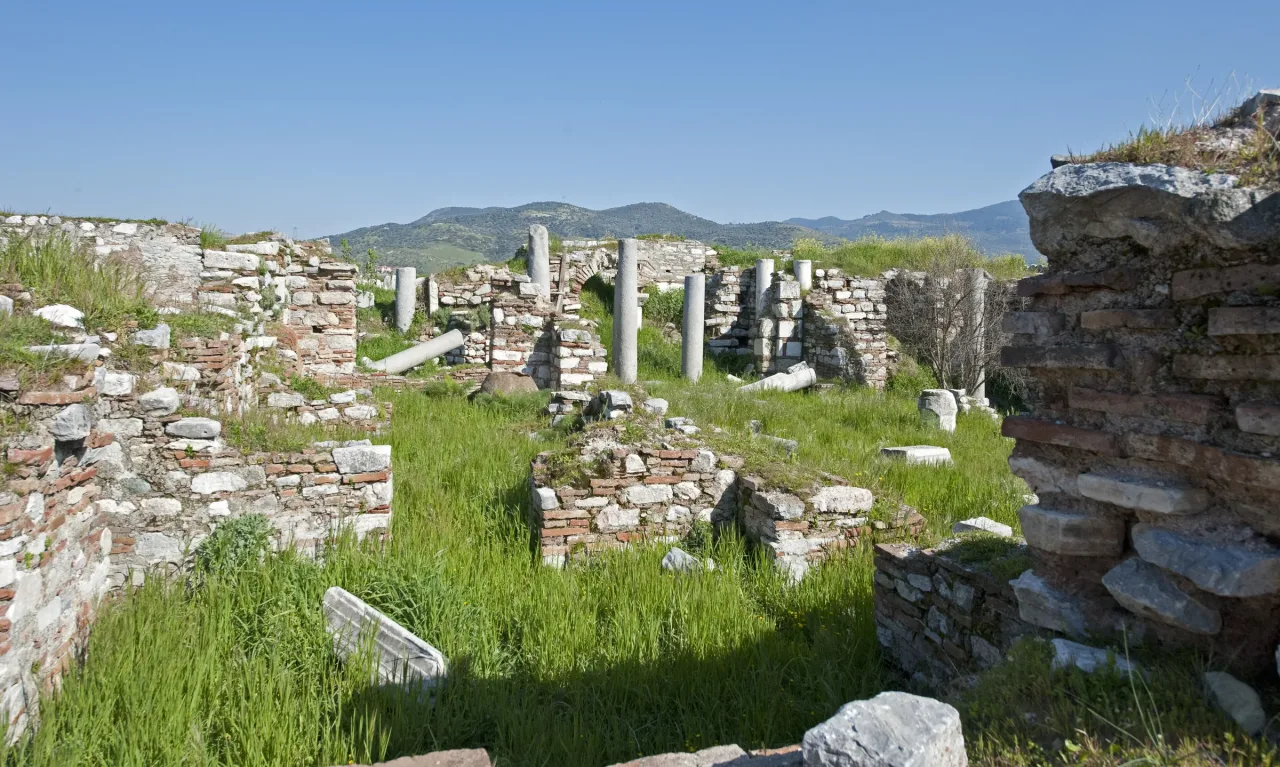
The ruined basilica on Ayasuluk Hill above Selçuk, built around a tomb that Byzantine and Christian tradition identified with St. John.
- Location
- Selçuk, Turkey 37.9525° N · 27.3678° E
- Type
- Archaeological basilica and apostolic tomb tradition A ruined cruciform, three-aisled basilica of the sixth century, covered in its day by six domes
- Dedication
- St. John the Apostle and Evangelist
A tomb remembered, a church raised around it
Climb Ayasuluk Hill and follow the ruined plan toward its center.
The traditional tomb is the place to pause. Polycrates’ early testimony gives John’s Ephesian memory a firmer ancient footing than the later tradition of Mary’s residence nearby, while the surviving sixth-century basilica shows how generations honored that memory. Pray here without asking the stone to prove an identity it cannot establish.
From a simple tomb to Justinian's basilica
Polycrates of Ephesus, writing in the late second century and preserved by Eusebius, says John fell asleep at Ephesus. This is an early local witness to John’s Ephesian memory. It does not tell us which surviving grave contains his body. Eusebius also records discussion of two Ephesian tombs associated with men named John.
Christians venerated a tomb on Ayasuluk Hill. A fifth-century church followed an earlier memorial; after damage in the early sixth century, Justinian’s monumental cruciform basilica rose above the site. Its six domes are gone, but the plan remains legible. The central tomb structure is traditionally accepted as Saint John’s. Archaeology cannot establish the identity of the person buried there, and no verified bodily relic is asserted.
UNESCO includes the hill in the wider Ephesus cultural landscape. The basilica belongs to the long Christian reception of John’s witness, not to the apostolic-era fabric of the city.
The Justinianic church was cruciform and three-aisled, covered by six domes. Where the ruins are legible, look for the nave, the transepts, the liturgical center, and the remains of the baptistery. Beneath the central liturgical space lies the tomb area. Read the plan as a former basilica of great scale.
How to pray on Ayasuluk Hill.
Begin with John, then ask how memory becomes a place.
John, the beloved disciple
Begin with John as beloved disciple and apostolic witness, and with his link to the Gospel tradition and to Mary. Let the scale of the ruin remind you how much this memory mattered to the Christians who built here.
Honor the tradition, and be honest about the proof
Christian and Byzantine tradition identified the burial with St. John. Archaeology cannot certify who is buried here. Pray with what the Church has venerated, and let the difference between tradition and proof stay in view.
How Christian memory becomes sacred geography
A simple tomb monument, a fifth-century church, and a sixth-century basilica stand on one hill. Ask what it means that generations of Christians kept coming back to this ground.
Spiritual Significance
This is a place of remembered witness. John is the beloved disciple and an apostolic witness, and his link to the Gospel tradition and to Mary makes Ayasuluk Hill part of a larger Ephesus story. Its meaning comes from what generations of Christians did here.
Do Not Miss
-
The tomb area
Beneath the central liturgical space, the tomb traditionally accepted as that of St. John. Hold the tradition and the archaeological caution together.
-
The scale of the plan
A cruciform, three-aisled church once covered by six domes. The size of the footprint is the argument for how much this memory meant.
- The cruciform plan, and the remains of the nave, transepts, and liturgical center where they are legible.
- The remains of the baptistery, where visible.
- The scale of the former basilica, and how it sits on Ayasuluk Hill.
- The tomb area beneath the central liturgical space, around which the basilica's Christian memory developed.
How to Visit
The basilica is an archaeological site administered as the Ayasuluk–St. Jean site through the Ephesus Museum Directorate. Consult current Turkish museum information before visiting.
Check Ayasuluk–St. Jean access
The Turkish ministry lists current visitor hours and ticketing for the archaeological site. Check the live page before visiting.
- Site
- Ayasuluk–St. Jean archaeological site
- Visit
- Check live hours, ticketing, and conservation access
Before arrival
- Hours, ticketing, and conservation access may change.
Continue Your Pilgrimage
-
City hub
Ephesus Selcuk
Where this church sits within the wider Catholic geography of Ephesus Selcuk.
-
Sacred place
Ancient Ephesus
The city where early tradition places John’s final years.
-
Sacred place
House of the Virgin Mary
A later Marian pilgrimage tradition, historically distinct from John’s early Ephesian memory.
Map
Turkish Ministry of Culture and Tourism, Ephesus Museum Directorate; UNESCO Ephesus documentation.
September 25, 2026
Photo credits
- Hero. Dick Osseman / Wikimedia Commons (CC BY-SA 4.0). Source. CC BY-SA 4.0. Cropped from the original.