
St. Dymphna
Almost nothing about Dymphna is recoverable as biography. What is recoverable is a grave at Geel, a pilgrimage of the mentally ill that ran for centuries, and a town that started taking those pilgrims into its houses and has not stopped.
The Life and Witness of Dymphna.
Dymphna is venerated at Geel in the Belgian Kempen, where her relics are kept in the Gothic church built for her pilgrimage. Catholics invoke her in mental and neurological illness, and the United States bishops name her a patron of those who suffer from it and of the people who treat them. The account of her life was written down several centuries after she is said to have lived, by an author who says plainly that he had it from oral tradition. What her devotion actually produced is easier to verify than she is.
Start with what can be supported. There was a grave at Geel, and veneration attached to it, before anything was written. The pilgrimage that grew around it drew people with mental illness from across northern Europe, and it drew them in enough numbers to reshape a town: the present church was begun in 1349 while the veneration was spreading, a college of ten vicars was founded in 1532 to serve the pilgrims and raised to a collegiate chapter in 1562, and a sickroom was built against the church tower in the seventeenth century so that pilgrims could stay the nine days their novena required. All of that is documented. None of it depends on the biography being true.
The biography comes from a single late source. Under Guiard of Laon, bishop of Cambrai between 1238 and 1248, a canon of the church of Saint-Aubert at Cambrai named Petrus Cameracensis wrote a life of her. He states in the text that he knows the story only through oral tradition, which is an unusually honest thing for a hagiographer to record, and it is the single most important fact about the source. The parish at Geel today says the legend was first written down in the first half of the thirteenth century and places her life around the year 800; older devotional literature places her in the seventh. There is no contemporary written evidence for either.
What that account says is this. Dymphna was the daughter of a pagan Irish king and a Christian mother, and was baptized in secret by the priest Gerebernus. Her mother died while she was a child. Her father, unable to find another woman who resembled his wife, resolved to marry his own daughter. Dymphna refused and fled with Gerebernus across the sea, landing near Antwerp and settling in the woods of the Kempen, where the two of them lived as hermits and cared for the poor. Her father traced them, came to Geel, and demanded the marriage again. When she refused a second time he had Gerebernus killed and beheaded Dymphna himself. That is what the medieval tradition says. It is not a document of the seventh century, or the eighth, and this guide does not present it as one.
The devotion that grew at the grave was specific from early on: Dymphna was invoked for people whose minds were failing them. Pilgrims came, made a nine-day novena, and lodged in the Ziekenkamer beside the tower. The Ziekenkamer was never large enough. The families of Geel took the overflow into their own houses, and what began as an improvised solution to a shortage of beds became the way the town works. Around a hundred families in Geel and the surrounding communes still take in people with serious and long-term psychiatric conditions, roughly a hundred and twenty of them, supported professionally by the public psychiatric center. In 2023 UNESCO entered the practice in its Register of Good Safeguarding Practices. It began as hospitality rather than as medicine, and it has outlasted almost every institution built since to do the same work.
The relics themselves have been examined. In work published in 2018, Kristof Haneca and Marjan Buyle dated the wooden reliquary associated with Dymphna and the human remains inside it. Two slender femurs traditionally identified as hers returned radiocarbon dates between the end of the seventh century and the third quarter of the ninth. This is not proof of the story. It cannot tell you whose bones these are, and no responsible reading turns it into an argument for the legend. What it establishes is narrower: the remains at the center of this devotion are several hundred years older than the text that explains them, and the veneration at Geel was attached to genuinely ancient burials rather than to a medieval invention. That is a real thing to know, and it is more interesting than the claim it is often mistaken for.
Dymphna belongs to people whose illness is in their mind, and to the families and clinicians who carry it with them. The devotion has never rested on cures. It rests on a town that decided the people arriving at its shrine could live in its houses, and that has kept doing it for seven centuries.
A life, in years and approximate ages.
-
Traditionally the 7th centuryBirthBirth in Ireland, according to the traditionThe medieval account makes her the daughter of a pagan Irish king and a Christian mother, baptized in secret by the priest Gerebernus. No year is given here, because none can be supported.
-
UndatedHer father demands the marriage, and she fleesThe account says that after her mother's death her father, unable to find another woman who resembled his wife, resolved to marry his own daughter, and that Dymphna refused and fled overseas with Gerebernus rather than submit.
-
UndatedA hermitage in the KempenThey are said to have landed near Antwerp, moved inland into the woods of the Kempen, and lived as hermits at Zammel, a hamlet of Geel, caring for the poor.
-
UndatedMartyrdom at GeelThe account says her father traced her to Geel, demanded the marriage a second time, had Gerebernus killed when they refused, and beheaded Dymphna himself. Both were buried by the local people, and the graves became a place of pilgrimage.
-
Late 7th to 9th centuryAfter deathThe remains later venerated as hers are laid downRadiocarbon dating published by Haneca and Buyle in 2018 placed two femurs from the reliquary between the end of the seventh century and the third quarter of the ninth. The dating cannot say whose they are. It does place them centuries before the written account that explains them.
-
1238 to 1248After deathThe life is written down at CambraiPetrus Cameracensis, a canon of Saint-Aubert at Cambrai, writes a life of Dymphna at the commission of Guiard of Laon, bishop of Cambrai. It is the earliest surviving account, several centuries after the events it narrates, and the author says so.
-
1349After deathThe present church is begun at GeelBuilding starts on the Sint-Dimpnakerk as the veneration spreads. It takes more than two centuries and the west tower is never finished.
-
1515After deathThe Dymphna retableA carved and gilded oak retable attributed to Jan van Wavere of Antwerp is placed on the high altar, telling the legend in more than two hundred figures. It is still there, and the relics are kept in the niche above it.
-
1532 and 1562After deathA college of vicars, raised to a chapterJan van Merode, lord of Geel, founds a college of ten vicars to serve the church and say Mass for the pilgrims. It is raised to a collegiate chapter in 1562. The scale of the pilgrimage is what required it.
-
1612After deathThe silver processional shrineWillem Jacques of Antwerp makes a silver shrine for the saint; Wierik Somers III adds its silver foot in 1716. It is the shrine carried in the Dymphna procession, which is held every five years.
-
17th centuryAfter deathThe Ziekenkamer, and the beginning of household careA sickroom is built against the church tower so pilgrims can lodge during their nine-day novena. It cannot hold them all, and the families of Geel begin taking the rest into their homes. This is the origin of the Geelse Gezinsverpleging.
-
2004After deathThe Roman Martyrology moves her feast to May 30The post-conciliar Roman Martyrology assigns her feast to May 30, the traditional day of her martyrdom, rather than May 15, which is the anniversary of a translation of her relics and had been her principal feast for centuries. Geel continues to keep May 15.
-
2018After deathThe reliquary and its contents are datedKristof Haneca and Marjan Buyle publish radiocarbon and dendrochronological dating of a wooden Dymphna reliquary and the bones inside it. Two femurs date between the end of the seventh century and the third quarter of the ninth; the reliquary's oak boards date to the late fourteenth century, with a later repair.
-
December 2023After deathGeel's household care enters a UNESCO registerUNESCO enters the Geel family-care model in its Register of Good Safeguarding Practices, under the title "Safeguarding foster care heritage in the merciful city of Geel: a community-based care model". This is the safeguarding register, not the Representative List.
Dates are approximate where the surviving record is traditional or incomplete.
One place where this witness remains visible.
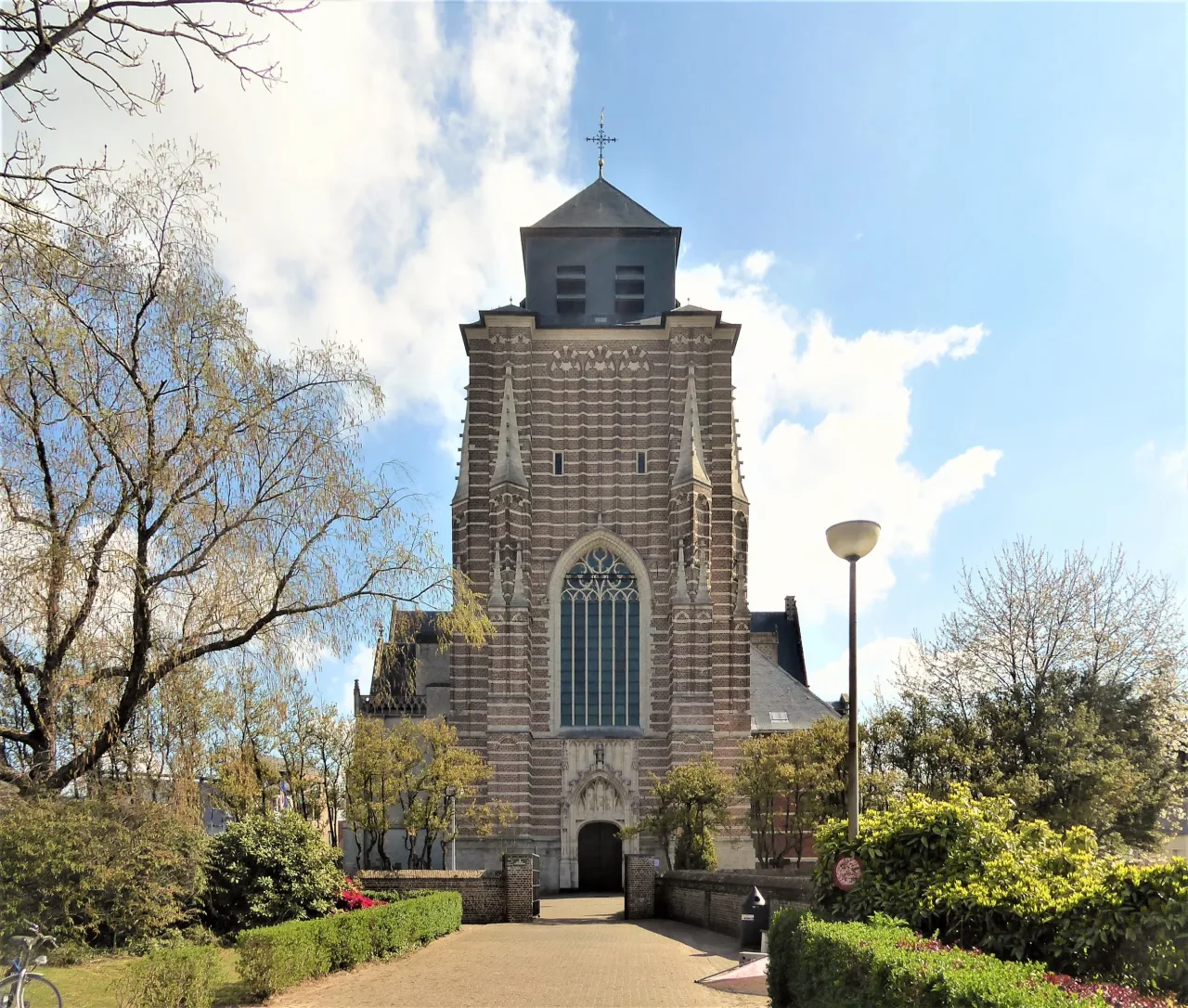
The shrine is one building. The tradition is a whole town.
Most of what makes Geel worth the journey is not inside the church, and the church itself is seasonal.
They are kept in a neo-Gothic shrine set in the niche above the carved Dymphna retable of 1515, together with the relics of Saint Gerebernus. There is no tomb to stand beside.
The seventeenth-century sickroom against the tower is where the nine-day novena was kept, and where the household tradition began when it ran out of room.
Open to visitors on Tuesday to Sunday afternoons from April through September, and through the winter only on the first two days of November or by appointment. It also opens half an hour before every service.
Her relics are kept in a shrine above the old high altar.
Her relics are kept in a neo-Gothic shrine in the niche above the 1515 retable in the Sint-Dimpnakerk at Geel, together with relics of Saint Gerebernus. A silver shrine of 1612 is used for the procession. Most of Gerebernus's remains were taken to Xanten in the Middle Ages. No other principal relic site was confirmed; the shrines dedicated to her elsewhere, including the national shrine at Massillon in Ohio, are centers of devotion.
A principal relic site is named, with other fragments or reliquaries noted separately.
Sint-Dimpnakerk, Geel
Saints Connected to Dymphna
-
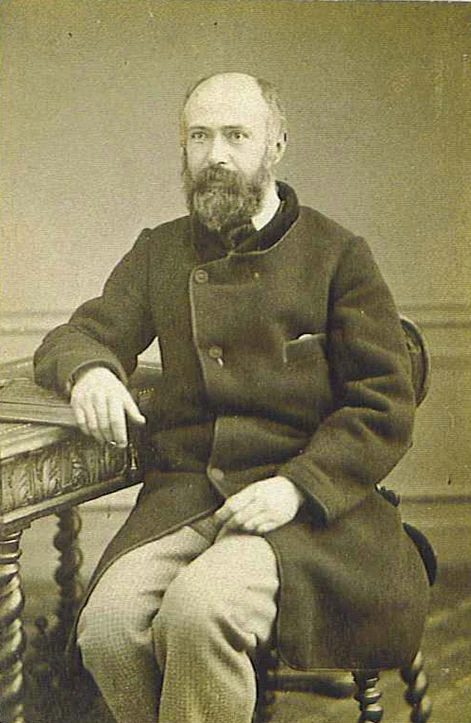
Saint Louis Martin
A canonized father of a canonized daughter who spent three years in a psychiatric hospital at Caen. Dymphna is the saint people ask; Louis Martin is the saint the records actually place inside an asylum. -
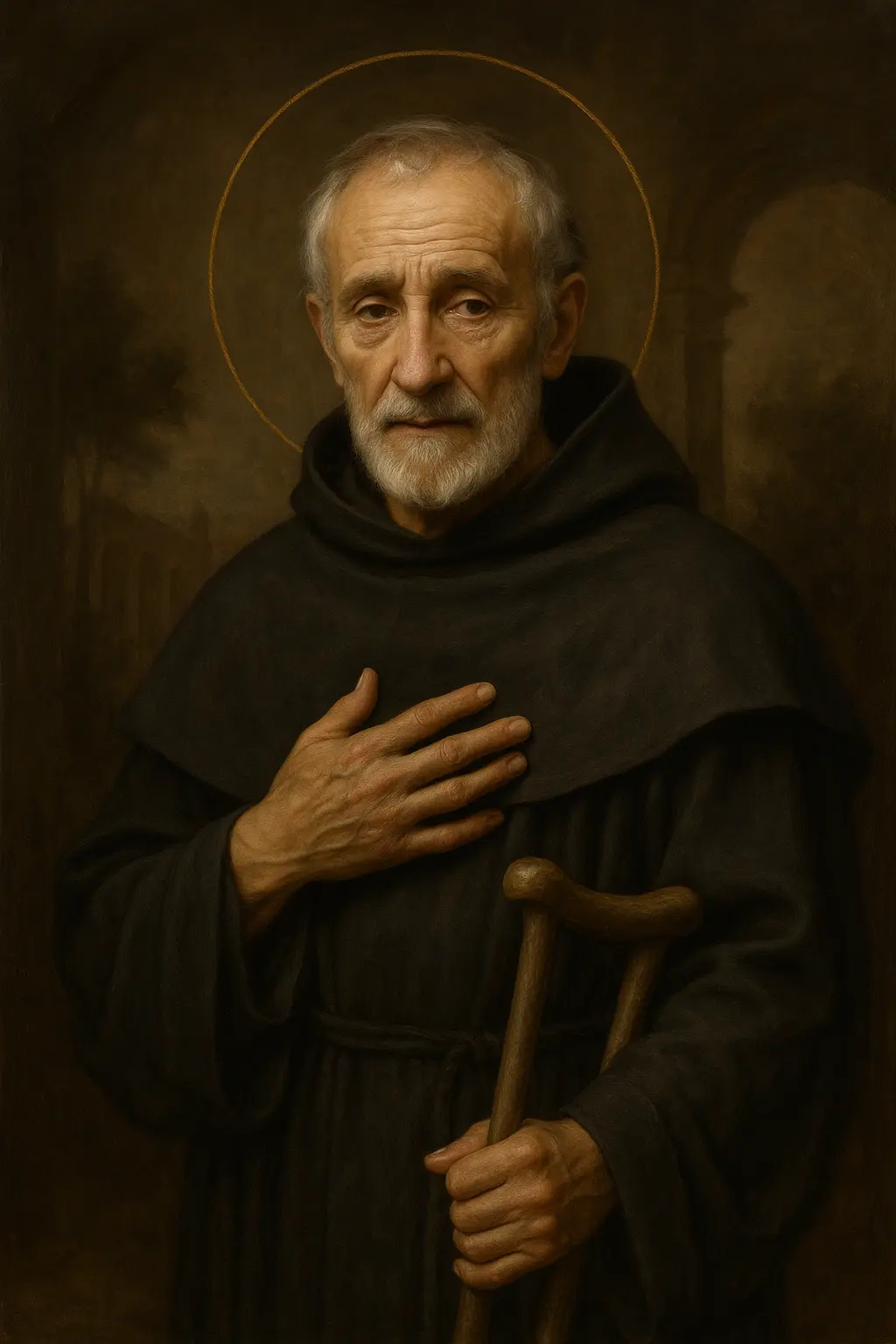
Saint Peregrine Laziosi
The saint Catholics invoke when the illness is physical and serious, and the closest structural parallel: a devotion far larger than the designation behind it.
Kept on May 30.
Two dates are in use and both are real. The Roman Martyrology, in its 2004 edition, assigns her feast to May 30, the day the tradition gives for her martyrdom. May 15 is the older feast, kept for centuries as the anniversary of a translation of her relics, and it is still the day Geel observes: the Dymphna procession, held every five years and most recently in May 2026, falls on May 15. If you are planning around a date, plan around Geel.
The more useful date for an ordinary pilgrim is neither feast. The parish keeps a pilgrimage day on the first Wednesday of every month from May through October, opening and closing with prayer in the church, and says that those prayer moments always take place and everyone is welcome.
Photo credits
- Saint page. Eternal Roam devotional rendering. Source. Eternal Roam original.
- Sint-Dimpnakerk, Geel. Chris06, CC BY-SA 4.0, via Wikimedia Commons. Source. CC BY-SA 4.0.