
St. Peregrine Laziosi
Peregrine Laziosi spent his youth on the wrong side of a papal interdict and the rest of his life in a Forlì friary. His body is still there, and so is the painted Crucifixion he is said to have prayed before the night his leg was to be amputated.
The Life and Witness of Peregrine Laziosi.
Peregrine Laziosi was born at Forlì in about 1265 and died there in about 1345, a Servite friar known for preaching, for hearing confessions, and for a penance of standing rather than sitting that ruined his leg. Catholics have invoked him for centuries in cancer and other grave illness. The disease the older sources actually describe is gangrene, which is a more interesting fact than the one the devotional literature settled on.
Forlì was a Ghibelline city, and in 1282 Martin IV placed it under interdict. Philip Benizi, prior general of the Servants of Mary, came to bring the city back to papal obedience and was violently driven out by its people. Peregrine, then about seventeen, was among the faction that drove him out. This is the best-documented episode of his life, and the Dizionario Biografico degli Italiani judges it credible. It also records that later Servite writers removed it from his story because it was politically awkward for relations between Forlì and Rome, and that correspondence from 1672 survives acknowledging in private what was denied in public. The detail everyone repeats, that Peregrine struck Benizi and Benizi turned the other cheek, belongs to tradition rather than to the record.
He repented, and tradition holds that he sought Benizi out at Ronco outside the city to ask pardon. He entered the Servants of Mary as a novice at around thirty, and not at Forlì but at Siena, where he spent about a year before being assigned to the Forlì community. He did not found that house. A Servite convent is documented at Forlì in the thirteenth century, before he returned to it, and the claim that he established it in 1322 is one of the errors that has traveled furthest in English.
At Forlì he preached, heard confessions, kept vigils and fasted, and adopted the austerity he is remembered for: for about thirty years he did not sit down. In 1325, aged around sixty, the leg gave out. The diocese and Treccani both describe gangrene, a spreading, ulcerating wound, and the convent physician, named in the archival record as Paolo de Salaghis, determined that the leg had to come off. Tradition holds that the night before the operation Peregrine prayed in the chapter room before the crucifix there, and that in the morning the leg was found sound. The physician is one of the few externally verifiable people in the story. The healing is not; it is what the tradition says, and the tradition has been saying it since the fourteenth century.
He died at Forlì in about 1345, of fever, at around eighty. The diocese preserves the detail that so many people converged on the city that the gates could not be shut. His feast at May 1 is attested in a martyrology printed at Venice in 1576. Public veneration was approved on March 21, 1609 under Paul V, Clement XI beatified him in 1702, and Benedict XIII canonized him on December 27, 1726, alongside John of the Cross and Francis Solano. In 1942 he was named a patron of Forlì. Treccani calls him, without qualification, the saint of the Servite Order who has enjoyed and still enjoys the greatest veneration.
Peregrine belongs to people who have been given a diagnosis and are waiting. The devotion did not grow because he was cured; it grew because he was a man facing the loss of his leg who spent the night in front of a crucifix, and because his body is somewhere a person can still go.
The life of St. Peregrine, in years and approximate ages.
-
c. 1265BirthBirth at ForlìPeregrine is born at Forlì, the only child of the Laziosi family. The two circulating chronologies give a death at about eighty or about eighty-five; the scholarly source supports about 1265.
-
1282 to 1283About 17The interdict, and Philip Benizi driven from ForlìMartin IV places Ghibelline Forlì under interdict. Philip Benizi, prior general of the Servants of Mary, comes to press the city back to obedience and is violently driven out. Peregrine is among the faction. The story that he struck Benizi and was answered by the turning of the other cheek is hagiographic.
-
c. 1283 to 1290Repentance, and the meeting at RoncoHe repents and, by tradition, seeks Benizi out at Ronco outside the city to ask pardon. Ronco is a locality outside the city with no attested devotional site, and is named here only in the narrative.
-
c. 1290 to 1295About 25 to 30Servite novitiate at SienaHe enters the Servants of Mary as a novice at around thirty, at Siena rather than at Forlì, and spends about a year there. Treccani records that he did not enter as a priest, and no authoritative source confirms a later ordination.
-
c. 1295 onwardAbout 30Assigned to the Forlì communityHe returns to Forlì, to a Servite convent documented there in the thirteenth century. He is remembered as a preacher and a readily available confessor, and for a penance of standing rather than sitting kept for about thirty years. He did not found the house, and the frequently repeated claim that he established it in 1322 is false.
-
1325About 60Gangrene of the leg, and an amputation orderedThe standing penance produces a gangrenous wound of the right leg. The convent physician, Paolo de Salaghis, determines that the leg must be amputated. Both the Diocese of Forlì-Bertinoro and Treccani describe gangrene. The medieval use of the word cancer for a spreading, ulcerating sore is what later English sources read as a modern cancer diagnosis.
-
1325 or 1326About 60The night in the chapter roomTradition holds that on the night before the operation he prayed in the chapter room before the crucifix there, and that the physician found the leg sound in the morning. The fourteenth-century painted Crucifixion attributed to Giuliano da Rimini is still in that room.
-
c. 1345about 80Death at ForlìHe dies of fever at about eighty. The diocese preserves the detail that so many people converged on the city that the gates could not be shut.
-
1576After deathThe feast attested at May 1His feast appears at May 1 in the martyrology of Francesco Maurolico, printed at Venice.
-
March 21, 1609After deathPublic veneration approvedPaul V approves his public veneration. English sources frequently and wrongly give this date as his beatification.
-
September 11, 1702After deathBeatificationClement XI beatifies him, ninety-three years after public veneration was approved.
-
1723After deathThe body placed in the urn at ForlìHis body is placed in an urn in the Chapel of San Pellegrino, three years before his canonization. It is still there.
-
December 27, 1726After deathCanonizationBenedict XIII canonizes him together with John of the Cross and Francis Solano.
-
1942After deathNamed a patron of ForlìHe is declared a patron of the city. The Madonna del Fuoco is also venerated as patroness of Forlì, so he is a patron of Forlì rather than the patron.
-
April 2026After deathRecognition of the body, and a total-body CT scanThe body is formally recognized on April 23, 2026, the first examination since 1958, and taken to the Morgagni-Pierantoni hospital for a total-body CT scan. A multidisciplinary study coordinated by the paleopathologist Mirko Traversari follows. Nothing about his illness should be inferred from the examination until the findings are published.
Dates are approximate where the surviving record is traditional or incomplete.
One place where this witness remains visible.
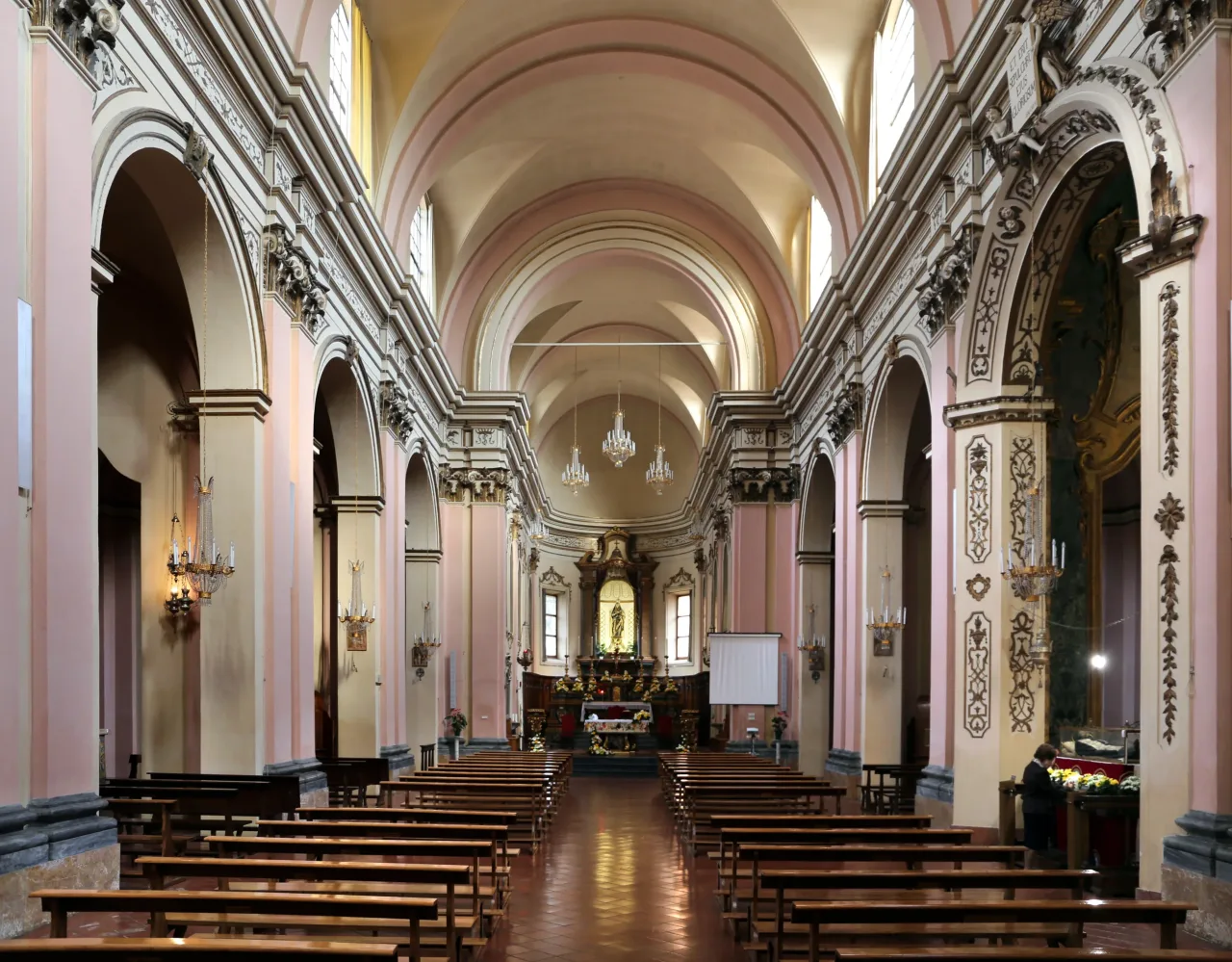
One church in Forlì holds two separate things.
The chapel and the chapter room are both part of this saint, and most visitors only find the first.
His body is preserved in an urn in the third chapel on the right, where it was placed in 1723. No diocesan, Servite or basilica source calls it incorrupt, and neither does this guide.
At the end of the nave, the fourteenth-century painted Crucifixion attributed to Giuliano da Rimini is still in place. The tradition puts his night of prayer in front of it.
The Latin and medieval sources use cancer to mean a spreading, ulcerating sore. Read forward into modern medicine it becomes a carcinoma, which is not what the Italian authorities describe. The devotion is real; the diagnosis is not established.
His body is preserved in an urn in the chapel.
His body is preserved in an urn in the Chapel of San Pellegrino at Forlì, where it was placed in 1723. No major relics elsewhere were confirmed; the shrines dedicated to him in Chicago, Portland, the Philippines and southern California are centers of devotion rather than relic sites.
A principal relic site is named, with other fragments or reliquaries noted separately.
Basilica of San Pellegrino Laziosi, Forlì
Saints Connected to Peregrine Laziosi
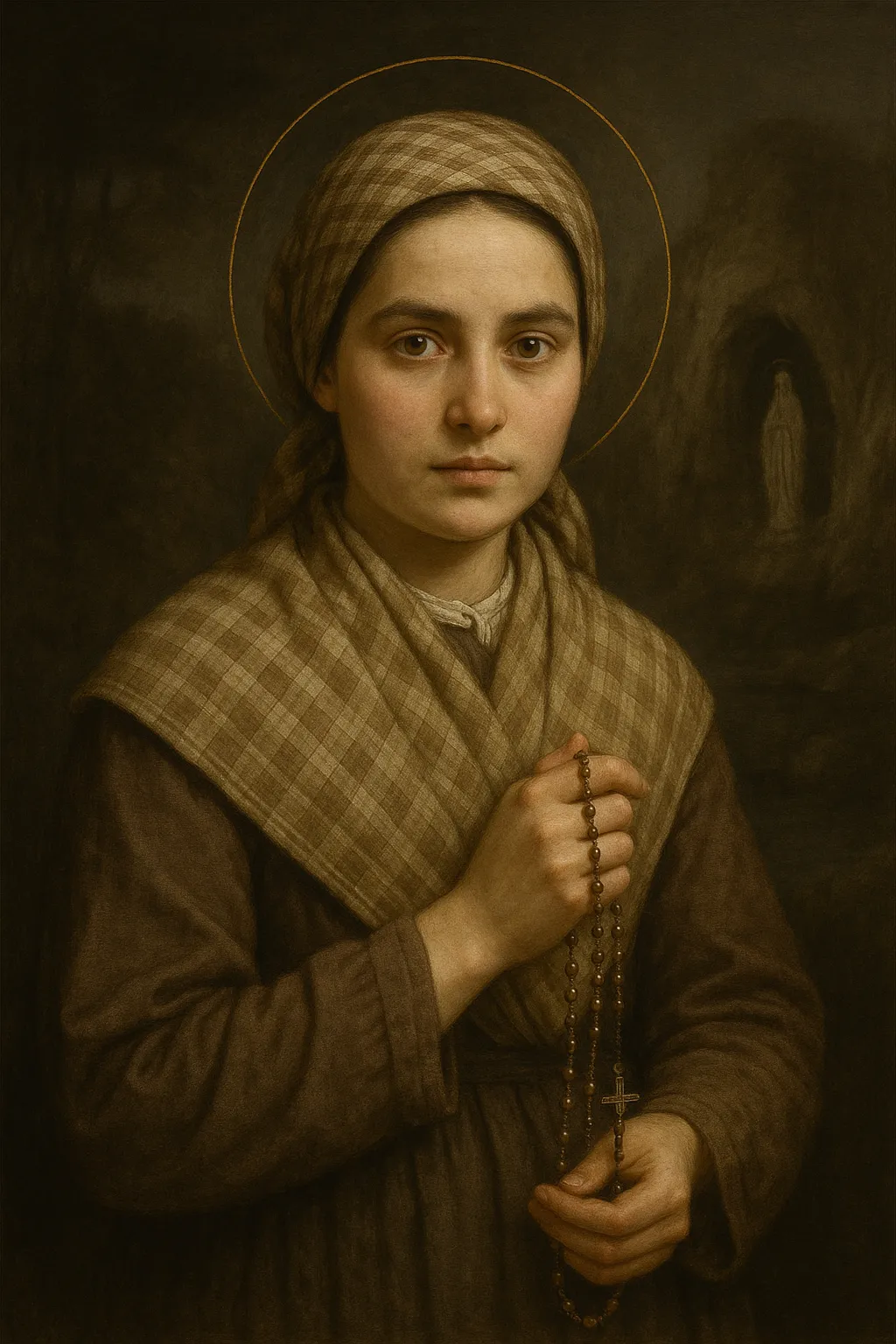
Showing 1 of 2 authored connections with full saint guides.
St. Peregrine feast day: May 1
His feast is May 1, attested at that date in a martyrology printed at Venice in 1576. At Forlì the day is kept from early morning with repeated Masses, and the church is busy throughout.
A quiet visit is not possible on May 1. Come the day before, or on an ordinary Wednesday, when the community prays at 17:00 for those with tumors.
Photo credits
- Saint page. Eternal Roam saint portrait. Source. Eternal Roam original.
- Basilica of San Pellegrino Laziosi, Forlì. Sailko, CC BY-SA 4.0, via Wikimedia Commons. Source. CC BY-SA 4.0.