
St. Denis
of Paris
Before the royal tombs and Gothic light, pilgrims came to Saint-Denis because the Church remembered a martyr buried there.
The early bishop and martyr whose grave became a shrine, an abbey, a cathedral, and the deep Christian memory of Paris
Denis is venerated as the first bishop of Paris and a martyr of the third century. The historical core is spare: a missionary bishop named Dionysius or Denis was killed during persecution, probably around the middle of the third century, and his grave north of the city became a place of Christian worship. The great basilica of Saint-Denis grew from that memory.
Later accounts name Rusticus and Eleutherius as his companions and place the martyrdom on Montmartre, the Mount of Martyrs. These traditions shaped the sacred geography of Paris, but their precise details arrive later than the event.
The famous image of Denis carrying his severed head is a medieval cephalophore legend. It should be read as devotional symbolism of a witness whose preaching could not be silenced, not as documented third-century biography.
Another medieval development identified Denis of Paris with Dionysius the Areopagite of Acts 17 and with the influential theologian now called Pseudo-Dionysius. Modern historical scholarship distinguishes these figures. The local martyr remains worthy of veneration without borrowing another man’s biography or writings.
By the fifth century a church stood at the burial site. Tradition associates Saint Geneviève with an early chapel there. The abbey later became the royal necropolis of France, and Abbot Suger’s twelfth-century rebuilding made the shrine a threshold of Gothic architecture. The kings came because the saint was already there.
Denis gives Paris a Christian geography older than its monuments: proclamation, martyrdom, burial, and a community that kept returning to the grave until a cathedral rose around it.
A life, in years and approximate ages.
-
3rd centuryAdultServes as missionary bishopDenis is remembered as an early bishop who preached in Roman Paris.
-
c. 250–270MartyredDenis is killed during persecution and remembered with companions Rusticus and Eleutherius.
-
5th centuryAfter deathA church rises over the graveA first church is established at the burial site; later tradition associates Geneviève with it.
-
c. 639After deathRoyal abbey developsDagobert I strengthens the abbey and chooses burial beside the saint.
-
9th centuryAfter deathIdentities are conflatedMedieval authors identify the Paris martyr with the Areopagite and the mystical theologian; scholarship now distinguishes them.
-
June 11, 1144After deathSuger’s choir dedicatedThe new luminous choir is dedicated above and around the martyr’s shrine.
Dates are approximate where the surviving record is traditional or incomplete.
2 places where this witness remains visible.
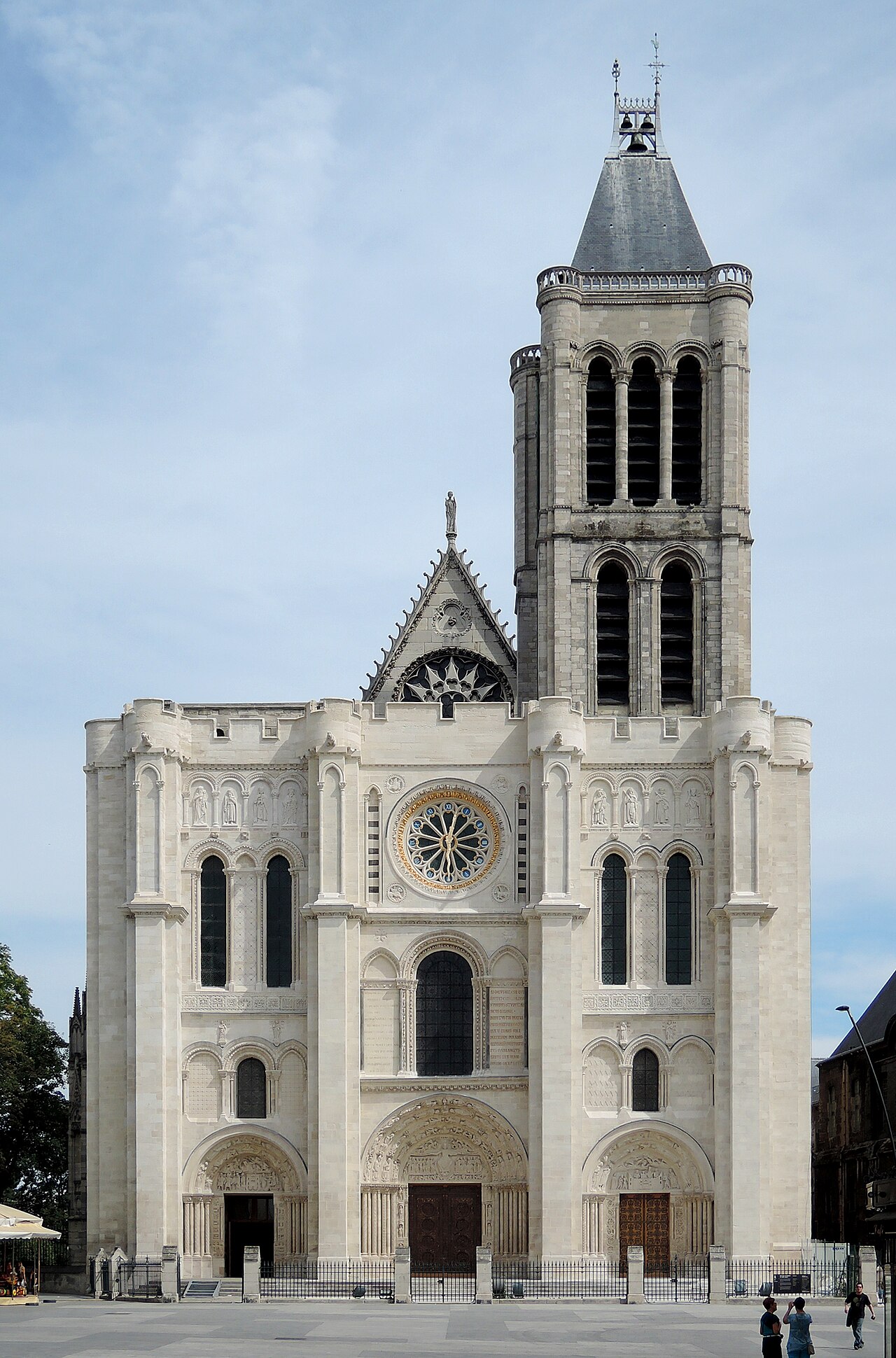
Basilica Cathedral of Saint-Denis
Walk inward from the royal tombs toward the martyr memory that gave the church its reason to exist.
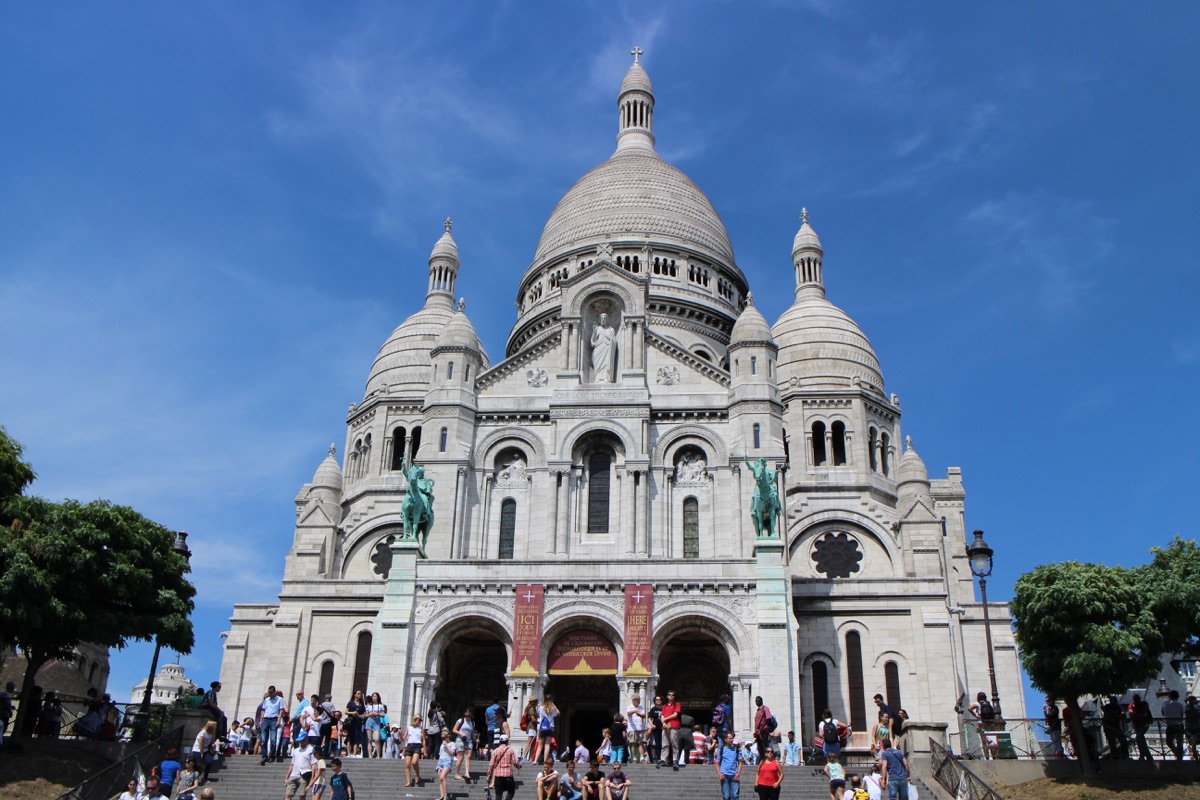
Sacré-Cœur, Montmartre
Hold Montmartre as the traditional martyrdom landscape, without treating later cephalophore detail as documented fact.
The martyr’s tomb at the heart of Saint-Denis
The basilica rises over the grave where the Christians of Paris buried the martyr they honor as their first bishop. A church stood on the site by the fifth century, and long-standing Paris tradition credits Saint Geneviève with the earliest of them. The Revolution emptied the royal tombs and broke up the medieval shrine and treasury, and the abbey served for years as a warehouse before worship was restored in 1806. What endures is the burial tradition itself, kept at the place where it began.
Significant relics are venerated in more than one place.
Traditional tomb and shrine
The church, abbey, royal necropolis, and Gothic choir grew around the place venerated as Denis’s tomb.
- Tomb and relic tradition of Saint Denis
Begin with the martyr’s shrine; then read the kings and architecture as later layers gathered around it.
Kindred witnesses
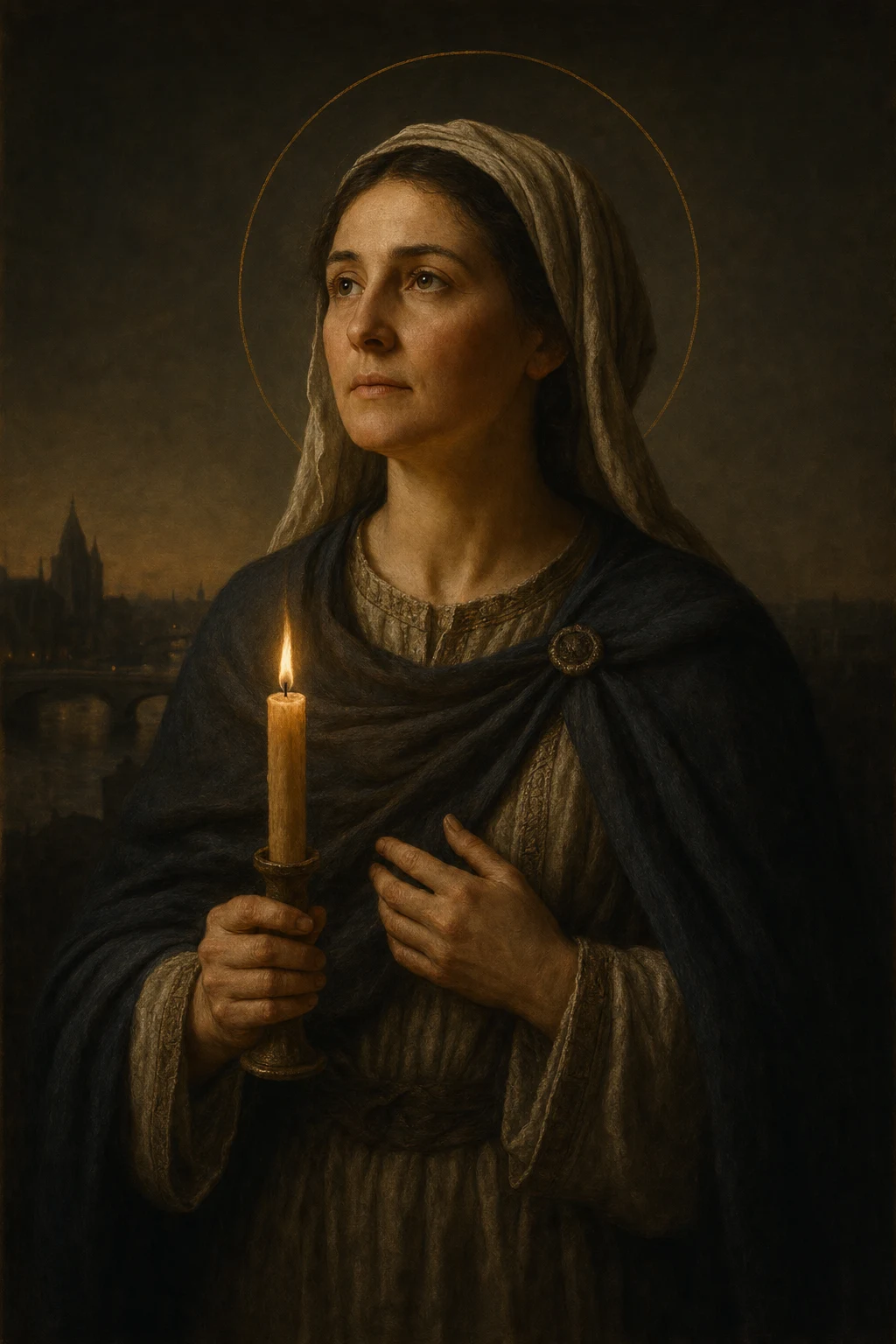
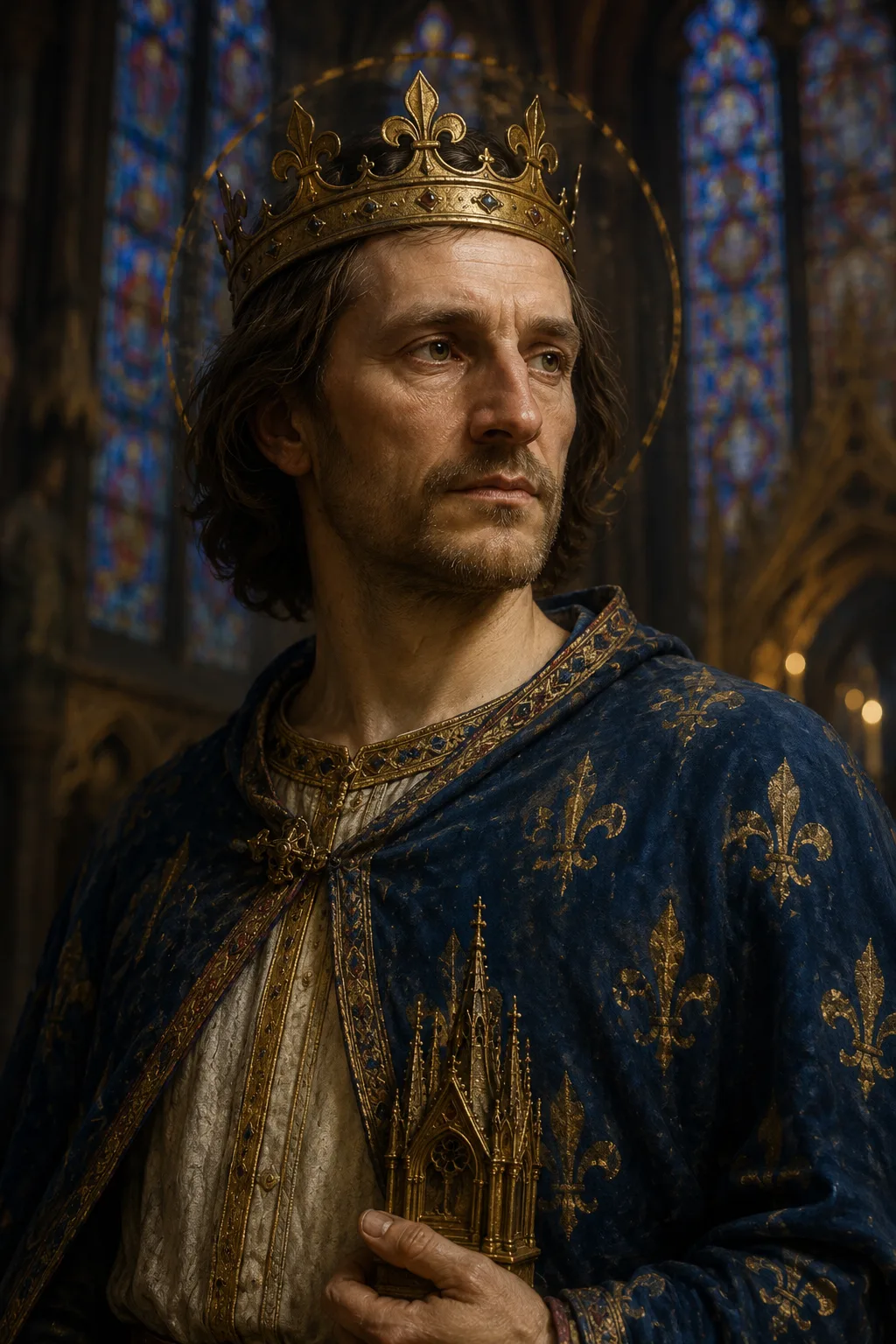
Where this leads next.
Kept on October 9.
October 9 is kept in Paris as the feast of Saint Denis and his companions.
A pilgrimage can move from Montmartre, the traditional martyrdom area, to the basilica built over his burial tradition.
From the Mount of Martyrs to the martyr’s grave.
The Paris tradition joins Montmartre to Saint-Denis: death remembered on the hill, burial remembered north of the city, and centuries of pilgrimage between them.
Montmartre’s association with the martyrdom is venerable, though it is attested later than the event itself. The way pilgrims trace from the hill to the grave is devotional geography, held in Catholic memory rather than recorded by a witness.
The basilica is the strongest pilgrimage ending. Its official history distinguishes the early veneration at the burial place from the ninth-century elaboration that conflated Denis with the Areopagite.
Photo credits
- Saint page. Eternal Roam devotional rendering. Source. Eternal Roam commissioned generation.
- Basilica Cathedral of Saint-Denis. Thomas Clouet (ArchiH) / Wikimedia Commons (CC BY-SA 4.0). Source. CC BY-SA 4.0.
- Sacré-Cœur, Montmartre. Suicasmo / Wikimedia Commons (CC BY-SA 4.0). Source. CC BY-SA 4.0.