
St. Agnes
A young Roman witness whose courage still marks the city with tomb, relic, and public memory.
A Roman virgin martyred at twelve, named in the Roman Canon
Agnes was a Christian girl in Rome, only twelve or thirteen, and already wholly given to Christ. Powerful men could threaten her, flatter her, and try to shame her, but they could not purchase her heart. Rome still remembers her in two places: the quiet basilica and catacombs on the Via Nomentana, and the public square of Piazza Navona.
The Church remembers her as a child of noble birth who refused marriage because she had consecrated herself to the Lord. When a rejected suitor exposed her as a Christian, Agnes was dragged into the machinery of Roman power: interrogation, humiliation, and the demand that she surrender both her faith and her purity.
She did neither. The old accounts tell how God protected her when men tried to dishonor her, and how Agnes stood before her judges with a courage far beyond her years. At last she was killed by the sword, winning the martyr crown while still a girl.
Her grave on the Via Nomentana quickly became one of Rome's beloved holy places. Catholics have prayed beside her memory for centuries because Agnes does not feel remote: she is young, vulnerable, clear-eyed, and immovable in Christ.
To follow Agnes in Rome is to hold two truths together. Sant'Agnese fuori le Mura gives her burial and body relic tradition a quiet, ancient home; Sant'Agnese in Agone places her witness in the visible heart of the city.
Pilgrims still meet Agnes through lambs, lilies, catacombs, relic veneration, and the annual blessing of lambs whose wool is woven into pallia for archbishops. Her life reminds the Church that holiness is not measured by age, status, or worldly strength.
A life, in years and approximate ages.
-
Late 3rd centuryBirthBirth in Christian RomeAgnes is remembered by the Church as a young Christian girl from a noble Roman family.
-
c. 303About 12A Heart Given To ChristAgnes refuses powerful suitors because she has consecrated her life to Christ. Her refusal sets the events of her martyrdom in motion.
-
c. 304About 12–13Public Trial And WitnessDuring the Diocletianic persecution, Agnes is brought before Roman authorities and refuses to deny her faith or offer sacrifice.
-
c. 304About 12–13MartyrdomAgnes gives her life as a martyr, killed by the sword. She becomes one of the most beloved young witnesses of the early Church.
-
4th centuryAfter deathDevotion Grows On The Via NomentanaChristians venerate Agnes at the catacombs along the Via Nomentana. Her burial place quickly becomes one of Rome's beloved holy sites.
-
7th centuryAfter deathSant'Agnese fuori le MuraA basilica rises above the catacombs on the Via Nomentana, giving pilgrims a permanent sacred place to pray near her relics.
Dates are approximate where the surviving record is traditional or incomplete.
3 places where this witness remains visible.
Prefer a ready-made pilgrimage? See the Follow St. Agnes in Rome.

Sant'Agnese fuori le Mura
Essential. Begin at her burial place: the basilica above the catacombs where Agnes has been venerated since the fourth century. Allow about ninety minutes.
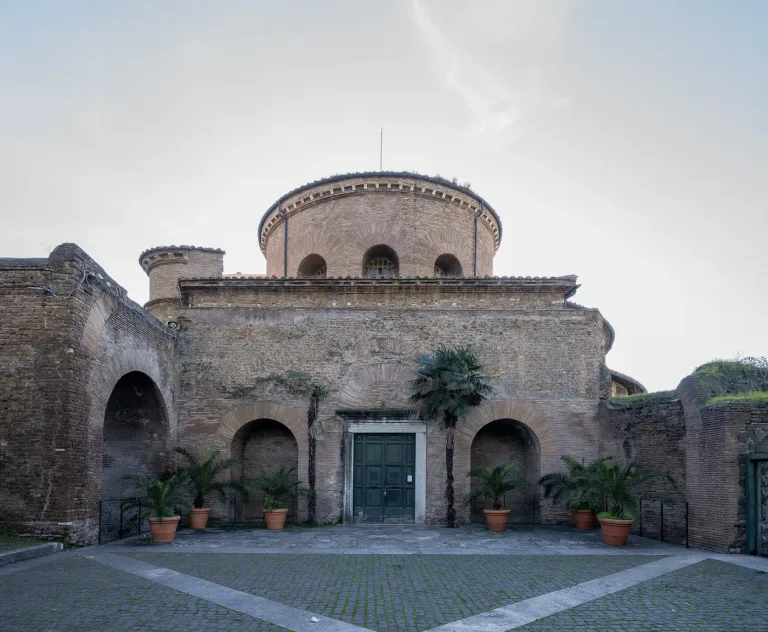
Santa Costanza
Optional. Steps away in the same complex, this round fourth-century mausoleum keeps some of Rome's earliest Christian mosaics. A quiet half hour.
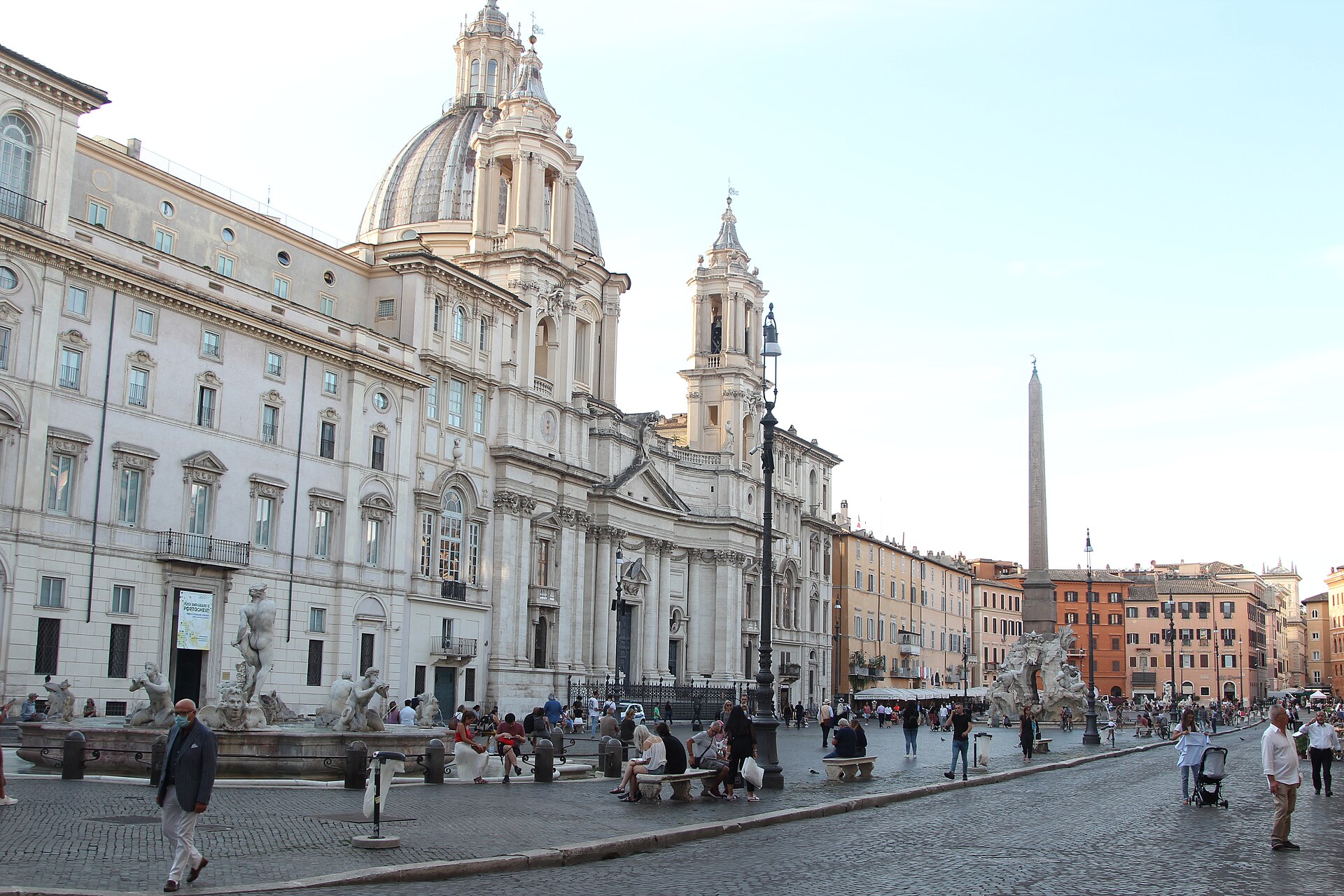
Sant'Agnese in Agone
Essential. Cross to Piazza Navona, where the church tied to her public witness keeps her skull relic. End with prayer where Rome is busiest.
Relics and burial.
Significant relics are venerated in more than one place.
- Principal tomb or body site
- The place the Church and long pilgrimage practice treat as holding the saint's body.
- Traditional or qualified association
- Venerated according to long-standing tradition, where the surviving record is incomplete or more than one church preserves a rival claim.
Tomb and body relics
The essential Agnes pilgrimage stop: a basilica above the catacombs where her burial memory and body relic tradition are venerated.
- Body relics and tomb devotion of Saint Agnes
- Catacombs of Saint Agnes beneath the basilica
- Annual blessing of lambs connected to the pallium
Skull relic and martyr-site tradition
The Piazza Navona church stands over the place associated with Agnes's public witness, and pilgrims venerate her skull relic in a shrine.
- Skull relic of Saint Agnes
- Crypt connected to her public trial and protection
- Piazza Navona, above the ancient Stadium of Domitian
Kindred witnesses

Showing 1 of 6 authored connections with full saint guides.
Follow St. Agnes in Rome · 3 stops.
Begin where the Church has prayed at her tomb for seventeen centuries, and end where Rome remembers her public witness. Reach the basilica by bus or taxi along the Via Nomentana; returning to the center takes about twenty minutes. Catacomb access can be limited, so check the basilica's schedule before you go.
-
01 Tomb
Sant'Agnese fuori le Mura
Via Nomentana, RomeEssential. Begin at her burial place: the basilica above the catacombs where Agnes has been venerated since the fourth century. Allow about ninety minutes.
-
02 Burial place
Santa Costanza
Via Nomentana, RomeOptional. Steps away in the same complex, this round fourth-century mausoleum keeps some of Rome's earliest Christian mosaics. A quiet half hour.
-
03 Place of martyrdom
Sant'Agnese in Agone
Piazza Navona, RomeEssential. Cross to Piazza Navona, where the church tied to her public witness keeps her skull relic. End with prayer where Rome is busiest.
Kept on January 21.
On January 21, the Pope traditionally blesses two lambs at Sant'Agnese fuori le Mura. Their wool is later woven into the pallia, the liturgical vestments worn by newly appointed archbishops worldwide. The name Agnes echoes the Latin agnus, "lamb," making the symbolism both devotional and linguistic.
Sant'Agnese fuori le Mura on the Via Nomentana is the primary pilgrimage church. The catacombs beneath the basilica are among Rome's best-preserved early Christian sites. January 21 is the ideal time for pilgrims to visit.
Two churches, two parts of her Roman story
Rome keeps Agnes in two places: the basilica raised over her tomb beyond the walls, and the church on Piazza Navona that marks the tradition of her martyrdom.
-
Principal tomb
Sant'Agnese fuori le Mura
Agnes's grave lies beyond the walls on the Via Nomentana. The basilica, catacomb, and apse mosaic gather around the place where Rome first kept her memory.
TraditionalThe basilica and catacomb preserve the ancient Roman tradition of Agnes's burial on the Via Nomentana.
-
Place of witness
Sant'Agnese in Agone
On Piazza Navona, the church keeps the memory of Agnes's public witness in the Stadium of Domitian. Her skull is venerated in the shrine below.
-
Follow the thread
Rome of the Early Martyrs
Agnes and Cecilia make the early Church visible across tombs, house-church memory, and the catacomb roads beyond the center.
Traditional attributions are identified in context.