
Saints for real life
The Saint Catholics Invoke for the Internet
St. Carlo Acutis
Carlo Acutis built websites, played PlayStation, and died of leukemia at fifteen. He is now widely called the patron saint of the internet. That title is how Catholics speak of him rather than something the Church has formally decreed, and the distinction is worth keeping, because what he actually did is more interesting than the label.

- Primary patronage Popularly invoked for the internet and young people
- Feast day October 12
- Where to visit Santuario della Spogliazione, Assisi
- Best for Teenagers and young adults, a modern witness, Assisi
Why Catholics turn to St. Carlo
-
 He used the tool without worshipping it
Carlo taught himself to code and built an online catalog of Eucharistic miracles. The internet was something he worked with, not something he was.
He used the tool without worshipping it
Carlo taught himself to code and built an online catalog of Eucharistic miracles. The internet was something he worked with, not something he was.
-
 He chose Assisi
He asked to be buried here because he loved St. Francis. His body was brought from Ternengo in 2007 and has been venerated at the Spogliazione since 2019.
He chose Assisi
He asked to be buried here because he loved St. Francis. His body was brought from Ternengo in 2007 and has been venerated at the Spogliazione since 2019.
-
 An ordinary teenager
He went to a Jesuit school in Milan, kept unremarkable friendships, and was noticed mainly for being kind to people nobody else bothered with.
An ordinary teenager
He went to a Jesuit school in Milan, kept unremarkable friendships, and was noticed mainly for being kind to people nobody else bothered with.
-
 Two lives, one town
Assisi now holds a thirteenth century renunciation and a twenty first century laptop. They meet in one town without becoming the same story.
Two lives, one town
Assisi now holds a thirteenth century renunciation and a twenty first century laptop. They meet in one town without becoming the same story.
Start with the answer
Is St. Carlo Acutis really the patron saint of the internet?
St. Carlo Acutis is the saint Catholics most often name as patron of the internet. It is important to be exact: the Church has not formally designated a patron saint of the internet, and Carlo has been given no such official title. He was canonized by Pope Leo XIV on September 7, 2025, the first millennial saint. His feast is October 12 and his tomb is in Assisi.
He is called that constantly, and it is not a title the Church has conferred. There is no formal designation of a patron saint of the internet, for Carlo or for anyone else. A proposal to name St. Isidore of Seville, the seventh century encyclopedist, circulated in the late 1990s and was never enacted. So the honest answer is that Catholics have given Carlo this patronage the way most patronages began, by praying it, and that the Church has not yet spoken to it either way.
What the Church has done is canonize him. Pope Leo XIV declared Carlo Acutis a saint on September 7, 2025, in St. Peter's Square, alongside Pier Giorgio Frassati. He was born in London in 1991, grew up in Milan, and died of acute leukemia in October 2006, within days of the diagnosis, at the age of fifteen. He is the first saint of his generation.
The work people point to is a website. As a boy he began gathering documented accounts of Eucharistic miracles into an online exhibition that has since travelled the world. It matters what order things came in: the devotion was first and the code served it. He is a useful patron for anyone who works on a screen precisely because he did not confuse the two, and because he had a short life and did not waste it.
Assisi, where he asked to be
Visit St. Carlo
-
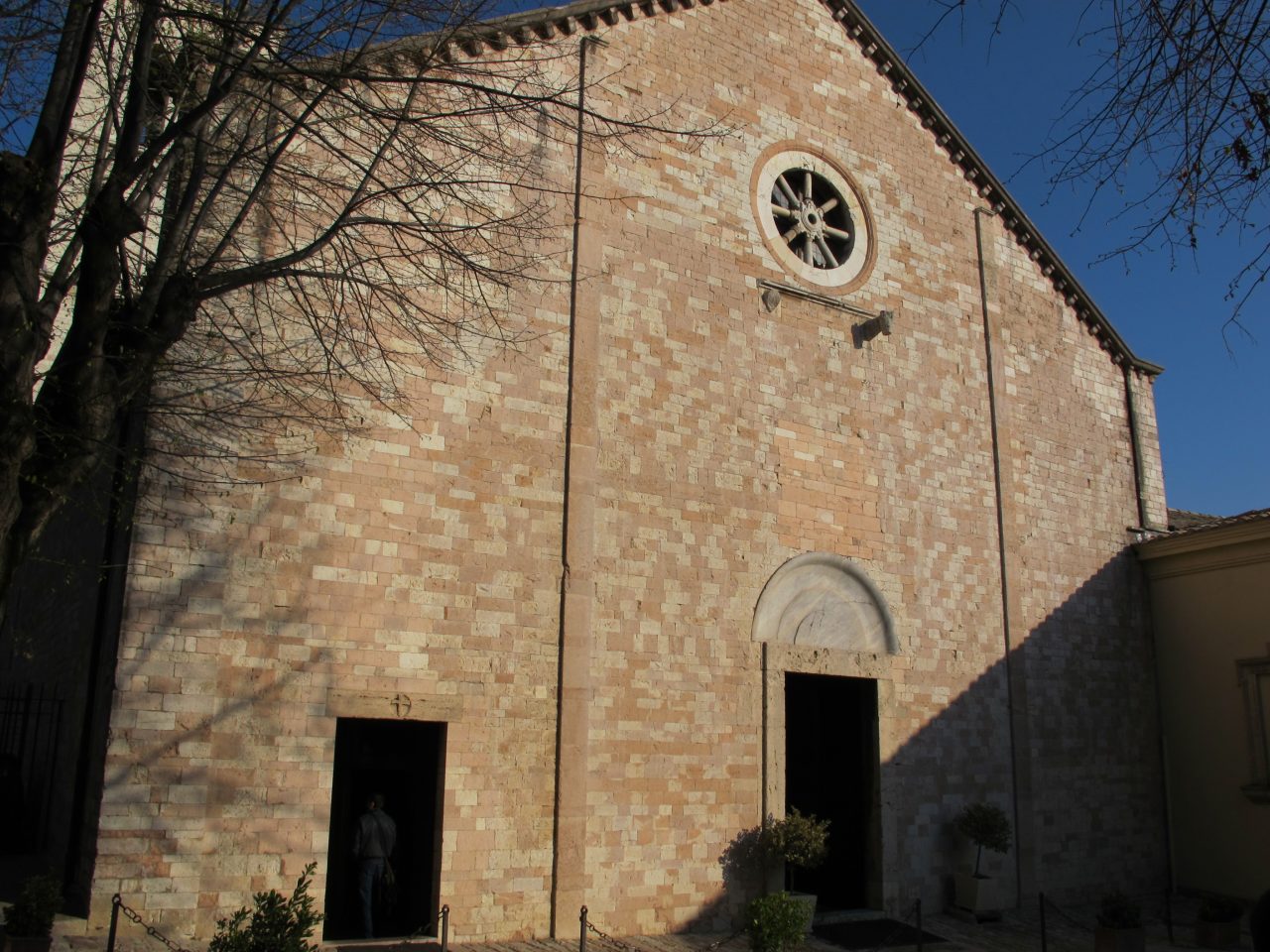 Santuario della Spogliazione
The church of Santa Maria Maggiore, where his body has been venerated since 2019. This is the tomb, not the Basilica of St. Francis.
Santuario della Spogliazione
The church of Santa Maria Maggiore, where his body has been venerated since 2019. This is the tomb, not the Basilica of St. Francis.
-
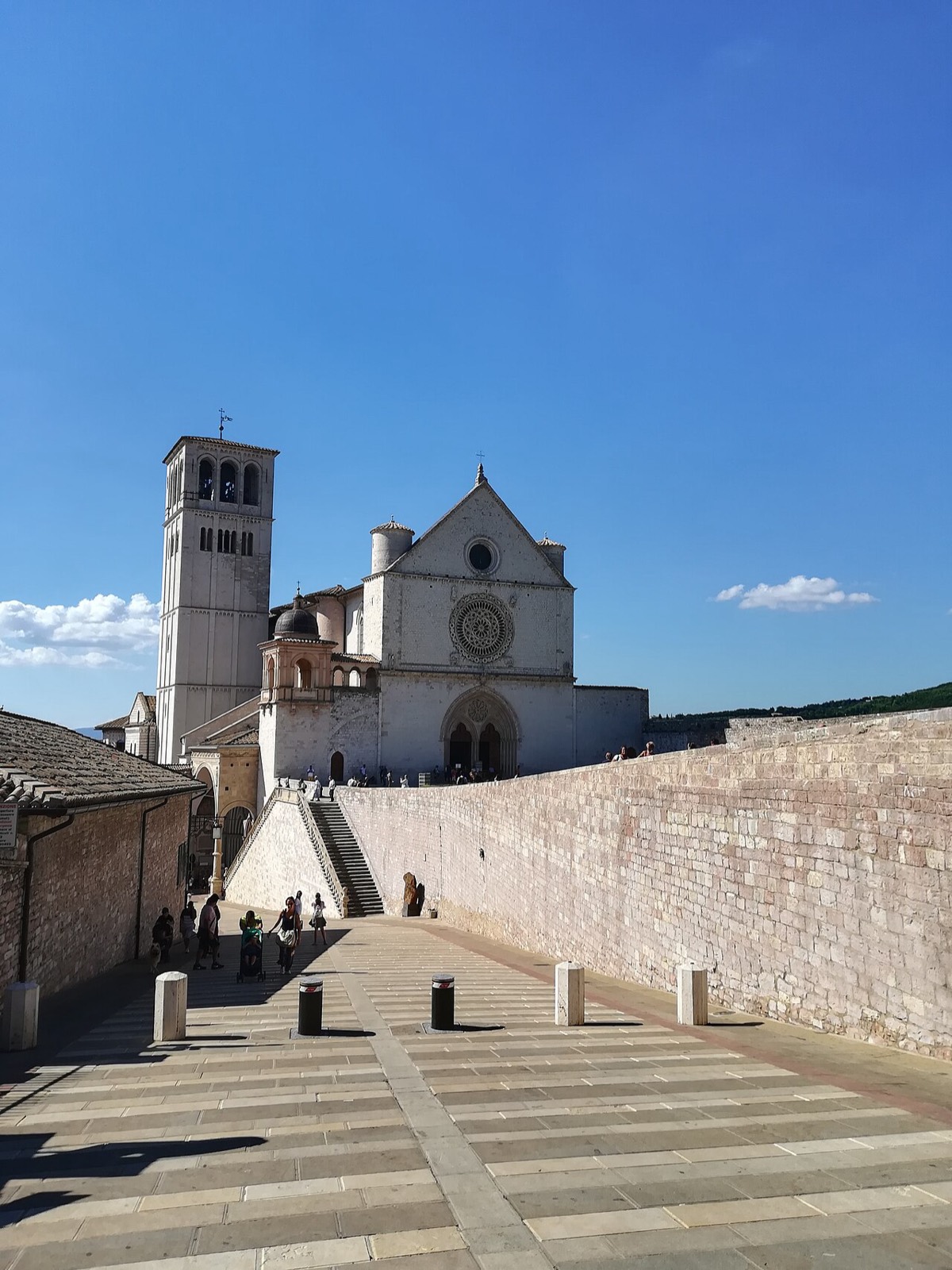 Basilica of St. Francis
A few minutes up the hill, and the reason Carlo wanted to be buried in this town at all.
Basilica of St. Francis
A few minutes up the hill, and the reason Carlo wanted to be buried in this town at all.
-
The town of Assisi
Small, walkable, and now carrying two very different lay vocations within the same walls.
Plan a pilgrimage
View pilgrimage guidesRelated saints
Explore more saints

Photo credits
- Hero; Santuario della Spogliazione. Assisi, santa maria maggiore. sailko / Wikimedia Commons. Source. CC BY-SA 3.0.
- He used the tool without worshipping it; The town of Assisi. Luca Aless / Wikimedia Commons. Source. CC BY-SA 4.0.
- He chose Assisi. Basilica di San Francesco d'Assisi, Assisi, Italy. Christoph Strässler / Wikimedia Commons. Source. CC BY-SA 2.0.
- An ordinary teenager. Stifone / Wikimedia Commons. Source. CC BY-SA 4.0.
- Two lives, one town. Bramfab / Wikimedia Commons. Source. CC BY-SA 4.0.
- Basilica of St. Francis. Fabriziogitto / Wikimedia Commons. Source. CC BY-SA 4.0.