
St. Thomas Aquinas
A Dominican friar who set faith and reason in lasting conversation in the medieval universities.
All that I have written seems to me like straw.
Reportedly said to Reginald of Piperno after his vision of December 1273; recorded in the testimony of his canonization process Traditional
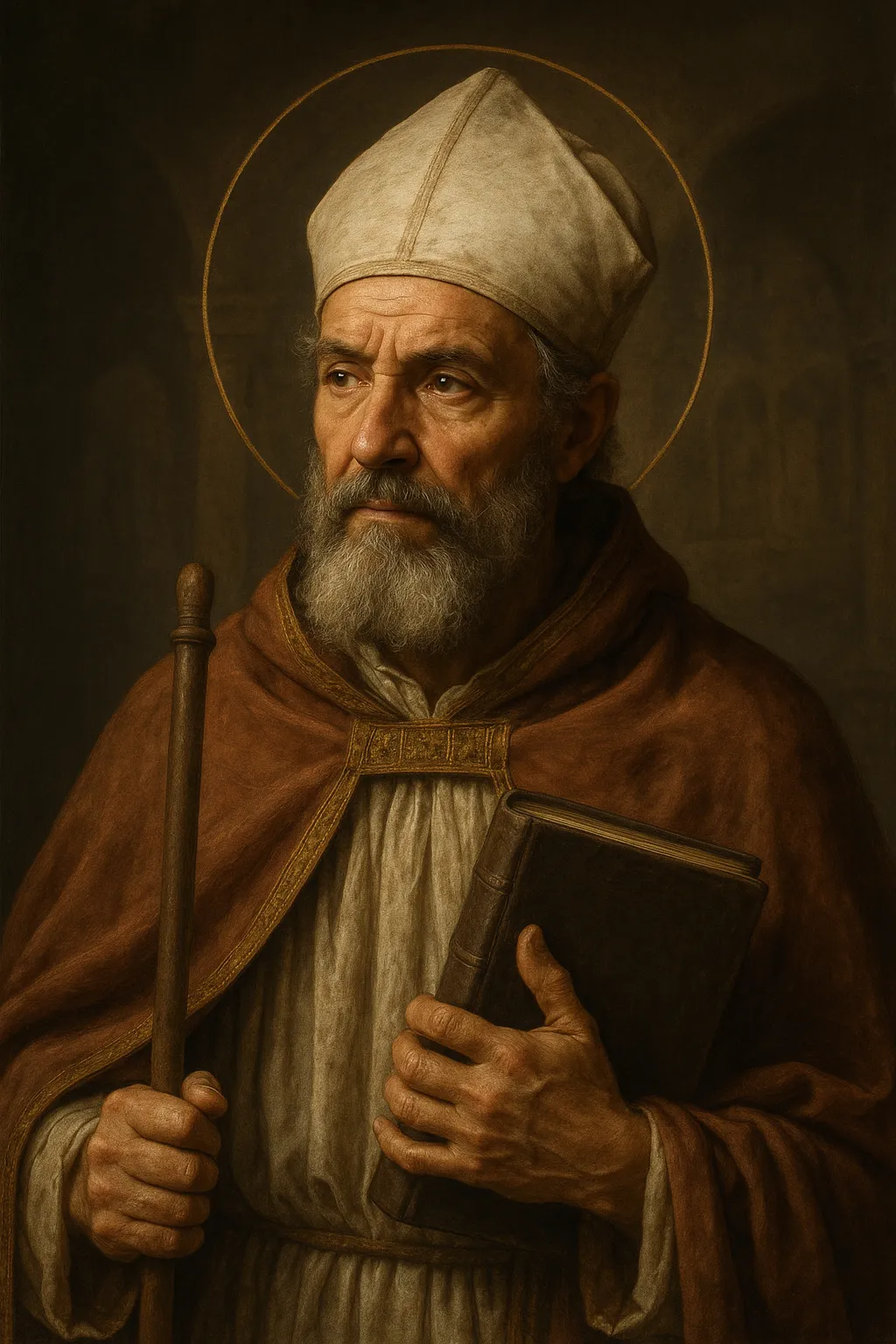
The Angelic Doctor, whose Summa shaped Catholic theology and philosophy
Thomas Aquinas was a Dominican friar and theologian who, against his family's wishes, gave his life to study and teaching. His great unfinished work, the Summa Theologiae, brought together Scripture, the Church Fathers, and the philosophy of Aristotle into a synthesis that has shaped Catholic thought ever since. He is honored as the Angelic Doctor.
Born around 1225 at Roccasecca in southern Italy, Thomas came from a noble family who intended him for a powerful abbacy. When he chose instead the new, poor Order of Preachers, his brothers seized him and held him for many months, but he held firm and was released to join the Dominicans.
He studied at Paris and Cologne under Albert the Great, who recognized the genius behind his quiet manner. As a master in Paris and at the papal court, Thomas wrote at extraordinary pace: commentaries on Scripture and Aristotle, disputed questions, the Summa contra Gentiles, the liturgy and hymns for the feast of Corpus Christi, and the Summa Theologiae, his ordered account of God, creation, the moral life, and Christ.
Near the end of his life, after a profound experience during Mass in December 1273, he stopped writing, saying that what he had seen made all his work seem like straw. He died a few months later, in March 1274, on the way to the Council of Lyon, at about forty-nine. He was canonized in 1323 and named a Doctor of the Church.
Thomas gave the Church a theology in which faith and reason illuminate one another rather than compete. His thought, taught for centuries as the framework of Catholic philosophy and theology, still anchors much of the Church's intellectual life, and his Eucharistic hymns are sung to this day.
A life, in years and approximate ages.
-
c. 1225BirthBirth at RoccaseccaThomas is born to the noble family of the counts of Aquino at Roccasecca, near Aquino in southern Italy. As a boy he is given to the abbey of Monte Cassino to be educated.
-
c. 1244About 19Joins the DominicansAgainst his family's plans, Thomas joins the new Order of Preachers. His brothers seize and hold him for many months, but he refuses to relent and is released to the Dominicans.
-
c. 1245About 20Study under Albert the GreatThomas studies at Paris and Cologne under Albert the Great, who sees the brilliance behind his quiet manner and predicts that his teaching will fill the world.
-
c. 1256About 31Master of Theology at ParisThomas becomes a master of theology at the University of Paris and begins the great period of teaching and writing that will produce the Summa and his commentaries on Scripture and Aristotle.
-
c. 1273About 48He Lays Down His PenAfter a profound experience during Mass in December, Thomas stops writing, leaving the Summa unfinished. Asked why, he says that what he has seen makes all he has written seem like straw.
-
c. 1274About 49Death at FossanovaTraveling to the Council of Lyon, Thomas falls ill and dies at the Cistercian abbey of Fossanova in March, at about forty-nine.
-
1369After deathRelics Translated to ToulouseBy decree of Pope Urban V, the relics of Thomas are brought to Toulouse, the mother city of the Dominican order, where they rest in the Church of the Jacobins.
Dates are approximate where the surviving record is traditional or incomplete.
2 places where this witness remains visible.
Church of the Jacobins, Toulouse
The mother church of the Dominican order preserves the relics of Thomas Aquinas beneath its altar. Pilgrims come to this great brick Gothic church to pray before the Angelic Doctor.
Fossanova Abbey
The Cistercian abbey where Thomas died in 1274 on his way to the Council of Lyon. The room of his death is kept and shown to visitors.
Where the body and relics are venerated.
The relics of Thomas Aquinas rest in Toulouse, in the Church of the Jacobins, brought there in 1369 by decree of Pope Urban V. He died at the abbey of Fossanova in Italy, where he is also remembered.
A principal relic site is named, with other fragments or reliquaries noted separately.
Church of the Jacobins, Toulouse
The mother church of the Dominican order preserves the relics of Thomas Aquinas beneath its altar. Pilgrims come to this great brick Gothic church to pray before the Angelic Doctor.
- Relics of Saint Thomas Aquinas, beneath the altar of the Jacobins
Note the famous palm-tree vaulting of the choir; the relics rest beneath the altar at the church's center.
Fossanova Abbey
The Cistercian abbey where Thomas died in 1274 on his way to the Council of Lyon. The room of his death is kept and shown to visitors.
A quiet Cistercian site in the Lazio countryside, south of Rome.
Kindred witnesses

Kept on January 28.
January 28 is the feast of Saint Thomas Aquinas, kept with special honor in Dominican communities and in Catholic schools and universities, of which he is a patron. His Eucharistic hymns are often sung on the day.
His relics rest in Toulouse, in the Church of the Jacobins, the mother church of the Dominican order, where they were brought in 1369. Fossanova Abbey, where he died, and Roccasecca, his birthplace, are associated sites in Italy.