
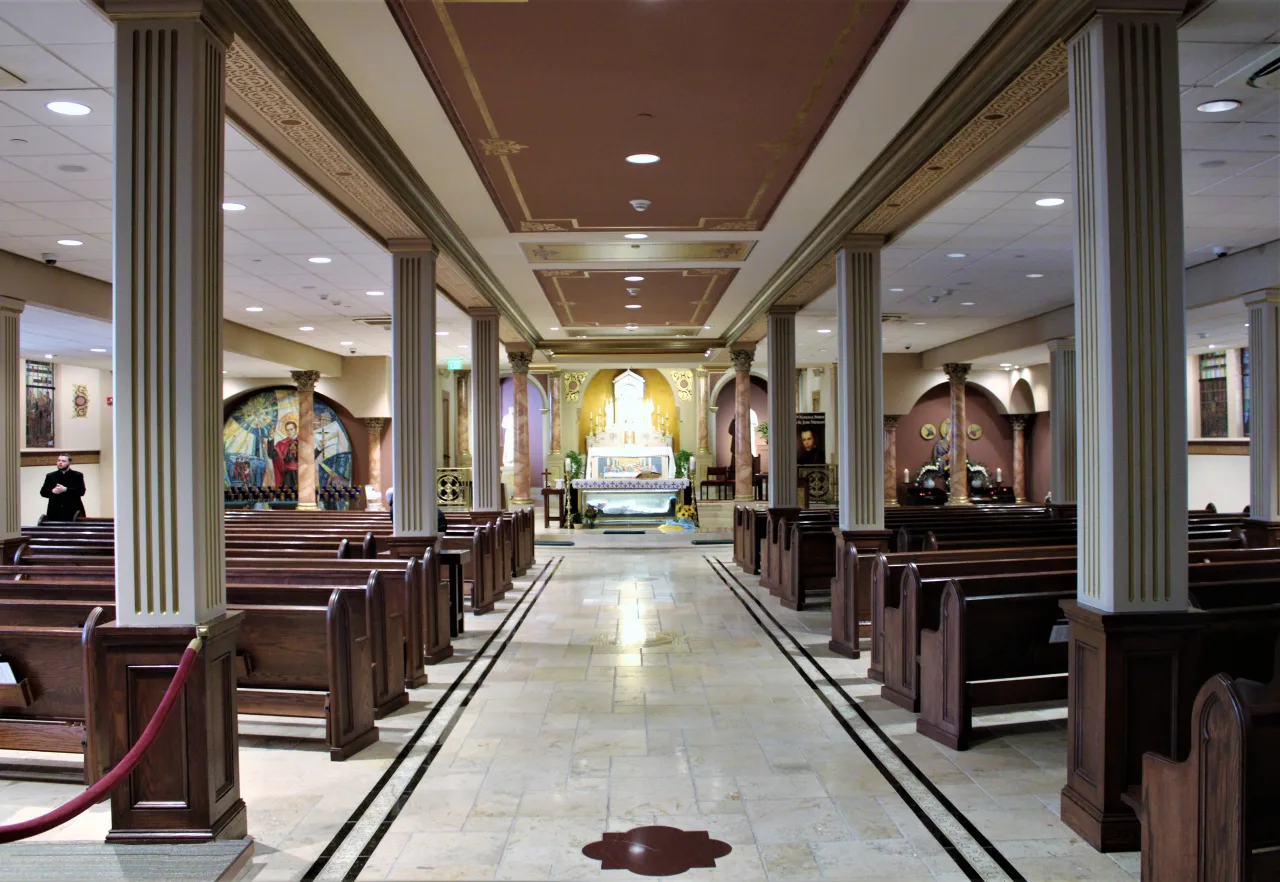
National Shrine of Saint John Neumann
The National Shrine of Saint John Neumann is the bodily resting place of Philadelphia’s missionary bishop and a living center of Redemptorist worship.
- Location
- Philadelphia, Pennsylvania, United States 39.9698° N · 75.1448° W
- Type
- Roman Catholic national shrine, saint’s tomb, and Redemptorist parish church Historic upper parish church with a lower national shrine centered on the tomb altar
- Dedication
- Saint Peter the Apostle, with the National Shrine of Saint John Neumann
- Time Needed
- 2 hours to half a day
A missionary bishop beneath the altar
Come to encounter Saint John Neumann where Philadelphia Catholics first laid him to rest.
His bodily remains beneath the altar make the communion of saints startlingly concrete. He crossed languages and neighborhoods, built Catholic schools, heard confessions, and spent himself for immigrant parishes. The shrine’s answer is still sacramental: Mass, reconciliation, intercession, and renewed missionary fidelity.
The bishop who would not stop walking
Born in Bohemia, John Neumann came to the United States as a missionary priest, entered the Redemptorists, and became Philadelphia’s fourth bishop. He strengthened parish life and Catholic education while serving immigrant communities in several languages. After his sudden death in 1860, he was buried at Saint Peter the Apostle Church. Pilgrims came to his grave, and the site developed into the national shrine that now keeps his remains beneath its altar.
The pilgrimage unfolds through the active upper parish church, the lower shrine church, and the museum. The lower sanctuary concentrates attention on the glass tomb beneath the altar rather than separating the saint’s memory from the Eucharist.
Saint John Neumann was buried in the church basement in January 1860.
The Redemptorists developed the site as a national shrine as devotion grew.
Neumann was canonized in 1977.
The shrine continues Eucharistic worship, reconciliation, pilgrimage, and retreat ministry.
Spiritual Significance
The Redemptorists present the shrine as a place of Eucharist, reconciliation, mission, and retreat. Veneration of the saint belongs within that living sacramental purpose.
Do Not Miss
-
The tomb beneath the altar
Receive the bodily reality of the saint in prayer, without turning the visible remains into spectacle.
-
The museum
Connect the saint’s familiar image to his missionary labor, languages, schools, and pastoral burdens.
-
The sacramental rhythm
Mass and confession express the mission more fully than a tomb visit alone.
- How the tomb remains physically ordered to the altar
- The Redemptorist emphasis on mission, reconciliation, and Eucharist
- The ordinary pastoral work behind Neumann’s sanctity
Visit Plans
-
Tomb, museum, and missionary witness
3 ordered stopsBegin at the tomb, receive the museum as the story of a missionary pastor, and return to the church for prayer.
- Pray at Saint John Neumann’s tomb beneath the altar.
- Visit the museum before its earlier closing time.
- Return to the church and ask for fidelity in ordinary pastoral duty.
-
The Redemptorist shrine at full depth
3 ordered stopsLet the shrine’s sacramental schedule shape the visit, keeping saintly veneration ordered toward Christ.
- Arrive for confession or Mass according to the current schedule.
- Venerate the saint’s remains and visit the museum and upper church.
- Close with prayer for immigrants, teachers, pastors, and missionary vocations.
How to Visit
Use the live shrine hours, Mass and confession schedule, and pilgrimage information. The museum closes earlier than some shrine services, so do not leave it to the end without checking.
- Daily and Sunday Mass according to the current shrine schedule
- Frequent scheduled confession
- Prayer and veneration at Saint John Neumann’s tomb
- Pilgrimages, retreats, and Redemptorist ministry
Build the visit around the museum window, Mass, and confession.
The shrine publishes separate hours for visiting, the museum and gift shop, worship, and confession. Confirm all of them before travel.
- Address
- 1019 North 5th Street, Philadelphia, PA 19123
- Time needed
- Two to three hours with museum, prayer, and worship
- Museum note
- The museum and gift shop normally close before the final weekday Mass; verify current hours
Worship and veneration
- Check the current calendar for feast days and pilgrimages.
- Arrive before the published period begins.
Museum and groups
- Visit before late-afternoon worship.
- Contact the shrine before bringing a group.
Relics, Tombs, Sacred Objects
Tomb and Burial
- Saint John Neumann, fourth bishop of Philadelphia
Relics and Sacred Tradition
- The bodily remains of Saint John Neumann are visible in a glass case beneath the lower shrine altar, vested as a bishop and covered by a wax mask
Sacred Objects
- Saint John Neumann’s tomb beneath the shrine altar
- The lower shrine church
- The historic upper church of Saint Peter the Apostle
Connected Saints
Continue Your Pilgrimage
-
Cathedral, basilica, and Saint Katharine Drexel shrine
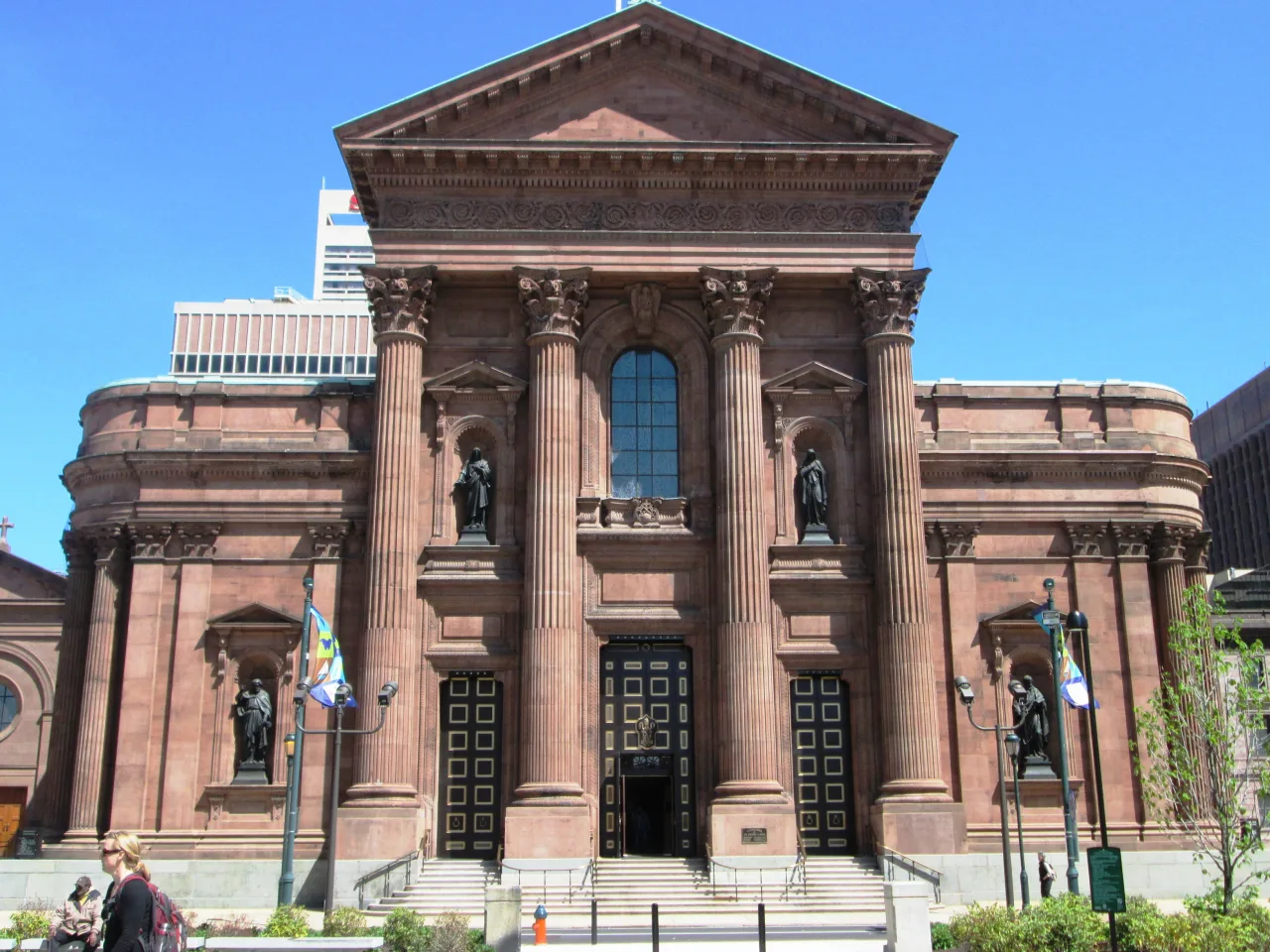
Cathedral Basilica of Saints Peter and Paul
Visit the cathedral Saint John Neumann helped build and pray at Saint Katharine Drexel’s tomb.
-
Marian basilica and Vincentian shrine
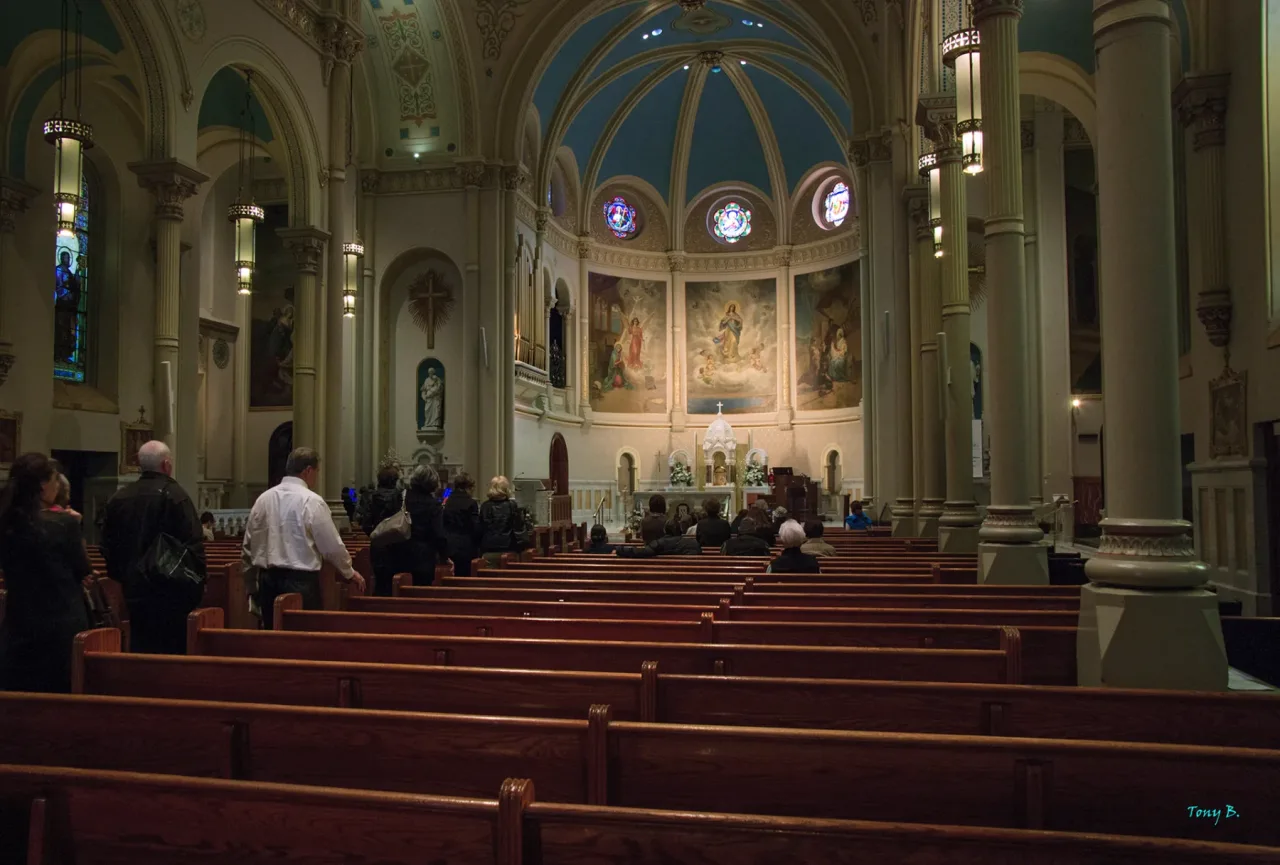
Basilica Shrine of Our Lady of the Miraculous Medal
A Germantown Marian pilgrimage sustained by the Vincentian Perpetual Novena.
Map
The visible figure is described precisely as the saint’s bodily remains vested as a bishop and covered by a wax mask, following the shrine’s own wording.
August 24, 2026
Photo credits
- Hero. Farragutful, CC BY-SA 4.0, via Wikimedia Commons. Source. CC BY-SA 4.0.
- Saint John Neumann’s tomb. Farragutful, CC BY-SA 4.0, via Wikimedia Commons. Source. CC BY-SA 4.0.