
National Shrine Grotto of Our Lady of Lourdes
On Saint Mary’s Mountain, the American Lourdes devotion grows from an older place of Catholic prayer and Mother Seton’s own Emmitsburg story.
- Location
- Emmitsburg, Maryland, United States
- 39.6825° N · 77.3566° W
- Type
- Roman Catholic national Marian shrine and outdoor pilgrimage landscape
- Dedication
- Our Lady of Lourdes
- Time Needed
- 90 minutes to half a day
Lourdes remembered truthfully on an American mountain
Come to ask Our Lady’s intercession, celebrate Mass or confession, walk the mountain paths, and pray for healing in the confidence that Mary always leads the pilgrim to Christ. The Maryland grotto is a beloved devotional continuation of Lourdes; it is not the place of the 1858 apparitions.
DuBois, Seton, and the grotto built after Lourdes
Father John DuBois came to Saint Mary’s Mountain after the French Revolution and established a church and grotto landscape in the early nineteenth century. Elizabeth Ann Seton stayed nearby in 1809 while her Emmitsburg home was prepared, worshiped on the mountain, taught children, and walked near the grotto. After the apparitions at Lourdes in 1858, seminarians built the present replica in 1875.
The pilgrimage is chiefly a landscape: Corpus Christi Lane, outdoor devotional groups, chapels, the older grotto site, and the stone replica set into the wooded mountain. The physical sequence matters more than one building.
Father John DuBois established the mountain’s early Catholic sacred landscape in the first decade of the nineteenth century.
Elizabeth Ann Seton lived near the mountain for about six weeks in 1809, attended Sunday Mass, taught children near the rock that bears her name, and visited the grotto landscape.
Seminarians completed the present Lourdes replica in 1875, seventeen years after the apparitions in France.
The site was declared a public oratory and national shrine in 1958.
Spiritual Significance
This shrine shares in Lourdes devotion without borrowing Lourdes history. Our Lady appeared to Bernadette at Massabielle in France. Here, Catholics remember that grace in prayer, penance, the sacraments, and trust in Christ.
- The difference between the older DuBois–Seton landscape and the 1875 Lourdes replica
- How the devotional path prepares the grotto rather than merely leading to it
- The shrine’s living sacramental rhythm
Do Not Miss
-
01
The Lourdes grotto
Pray in union with Lourdes without suggesting that an apparition occurred in Maryland.
-
02
Mother Seton’s Rock
Receive the documented memory of Seton’s weeks on the mountain before continuing to her principal shrine.
-
03
Corpus Christi Chapel
Notice how the older mountain devotion predates the present Lourdes replica.
Visit Plans
-
Half day Pilgrims joining Lourdes devotion to Mother Seton’s mountain history.
Seton’s mountain and the Lourdes grotto
Walk the older mountain story before receiving the Lourdes grotto as a later and living Marian devotion.
- Begin at the visitors center and confirm the current worship and access plan.
- Pause at Mother Seton’s Rock and Corpus Christi Chapel.
- Continue to the Lourdes grotto for prayer.
How to Visit
Allow at least ninety minutes and more if attending Mass, confession, or adoration. The route includes grades and outdoor paths; use the shrine’s accessibility and parking guidance.
Let the mountain path set the pace, and verify outdoor and sacramental conditions.
The shrine publishes regular Mass, confession, adoration, parking, and accessibility information. Weather and liturgical events can change the day.
- Address
- 16330 Grotto Road, Emmitsburg, MD 21727
- Time needed
- At least 90 minutes; two to three hours with Mass and the full devotional path
- Terrain
- Outdoor mountain paths with grades; review current accessibility before travel
Worship
Mass is regularly offered, with different weekday and weekend times.
- Use the live plan-your-visit page for the exact day.
Weekend confession and scheduled Eucharistic adoration are normally available; weekday confession is also listed after Mass when the schedule permits.
- Outdoor and seasonal changes may apply.
Ground and access
The grotto cave stands at the end of a devotional path through the mountain shrine.
- Allow more time than a direct map distance suggests.
Much of the pilgrimage is outdoors on sloping ground.
- Ask the visitors center for the most accessible route and current shuttle information.
Relics, Tombs, Sacred Objects
Tomb and Burial
- No saint is claimed as buried here. Saint Elizabeth Ann Seton is entombed at the separate Seton Shrine in Emmitsburg.
Relics and Sacred Tradition
- The site’s central significance is Marian devotion and sacred memory; no Lourdes apparition or bodily relic of Saint Bernadette is claimed in Maryland.
Sacred Objects
- The 1875 replica of the Grotto of Massabielle
- Mother Seton’s Rock
- Corpus Christi Chapel on the older grotto site
- The Corpus Christi Lane devotional path and outdoor Stations
Connected Saints
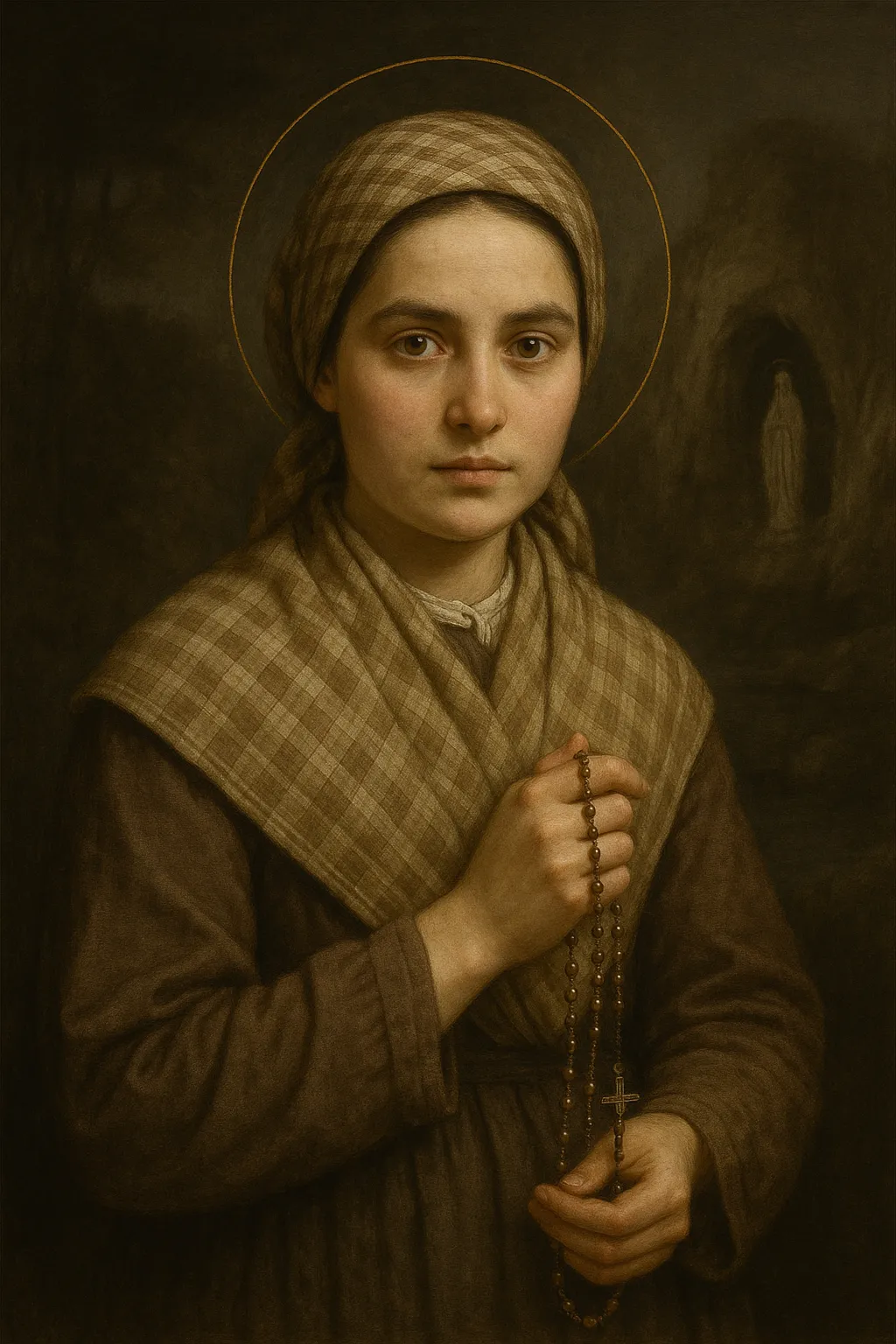
- Saint Bernadette Soubirous Devotional continuation of Lourdes The Emmitsburg grotto recalls Mary’s apparitions to Bernadette at Massabielle in France; Bernadette never came to Maryland.
- Saint Elizabeth Ann Seton Documented prayer and teaching on Saint Mary’s Mountain Seton stayed near the mountain in 1809, worshiped and taught here, and visited the older grotto landscape before the Lourdes replica existed.

Continue Your Pilgrimage
-
Basilica, tomb, and historic campus
National Shrine of Saint Elizabeth Ann Seton
Mother Seton’s principal shrine and tomb in Emmitsburg, about ten miles east by road.
-
Basilica and national shrine
Baltimore Basilica
America’s first cathedral forms the historical middle day of the Washington–Emmitsburg pilgrimage.
Map
Photo credits
- Hero. Bohemian Baltimore, CC BY-SA 4.0, via Wikimedia Commons. Source. CC BY-SA 4.0.
- The mountain shrine grounds. Bohemian Baltimore, CC BY-SA 4.0, via Wikimedia Commons. Source. CC BY-SA 4.0.