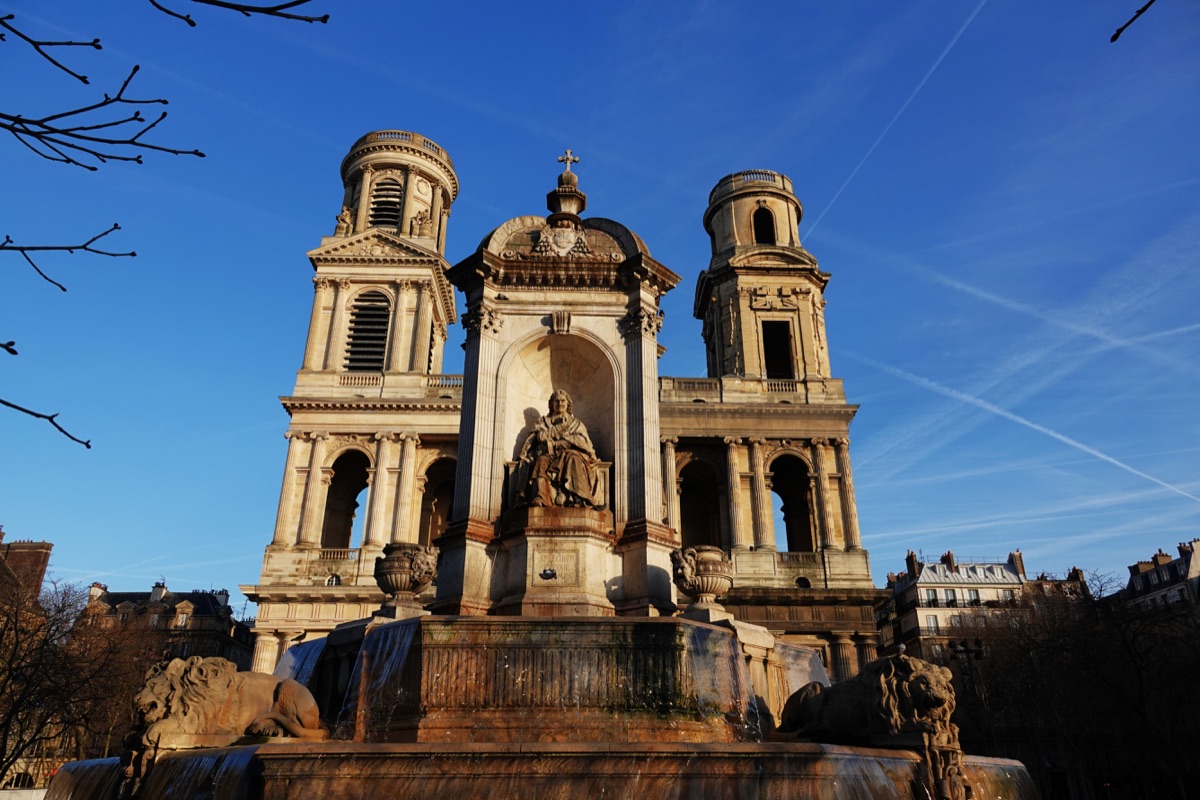
A large Left Bank parish church where Delacroix, the Lady Chapel, the gnomon, organ music, and Sulpician memory belong to the same Catholic interior.
Location
Paris, France 48.8509° N · 2.3345° E
Type
Parish church / sacred art site Large 17th and 18th-century Parisian church with classical facade, vast nave, side chapels, gnomon, and major organ tradition
Dedication
Saint Sulpicius
Time Needed
30 minutes to 2 hours
Why Go
A Serious Parish of Art and Prayer
Visit Saint-Sulpice for the Catholic culture of the Left Bank at full scale. The church is large, sober, active, and layered: a parish with daily worship and Confession, a sacred-art site with Delacroix, a musical landmark, and a place where scientific curiosity and ecclesial time once met in the gnomon.
The Left Bank at Parish Scale
The present church began in the 17th century, replacing an older parish church and growing with the religious and cultural life of the quarter. Its history is inseparable from Jean-Jacques Olier and the Sulpician tradition of priestly formation, from the large parish world of the 6th arrondissement, and from the arts that entered the building without making it stop being a church.
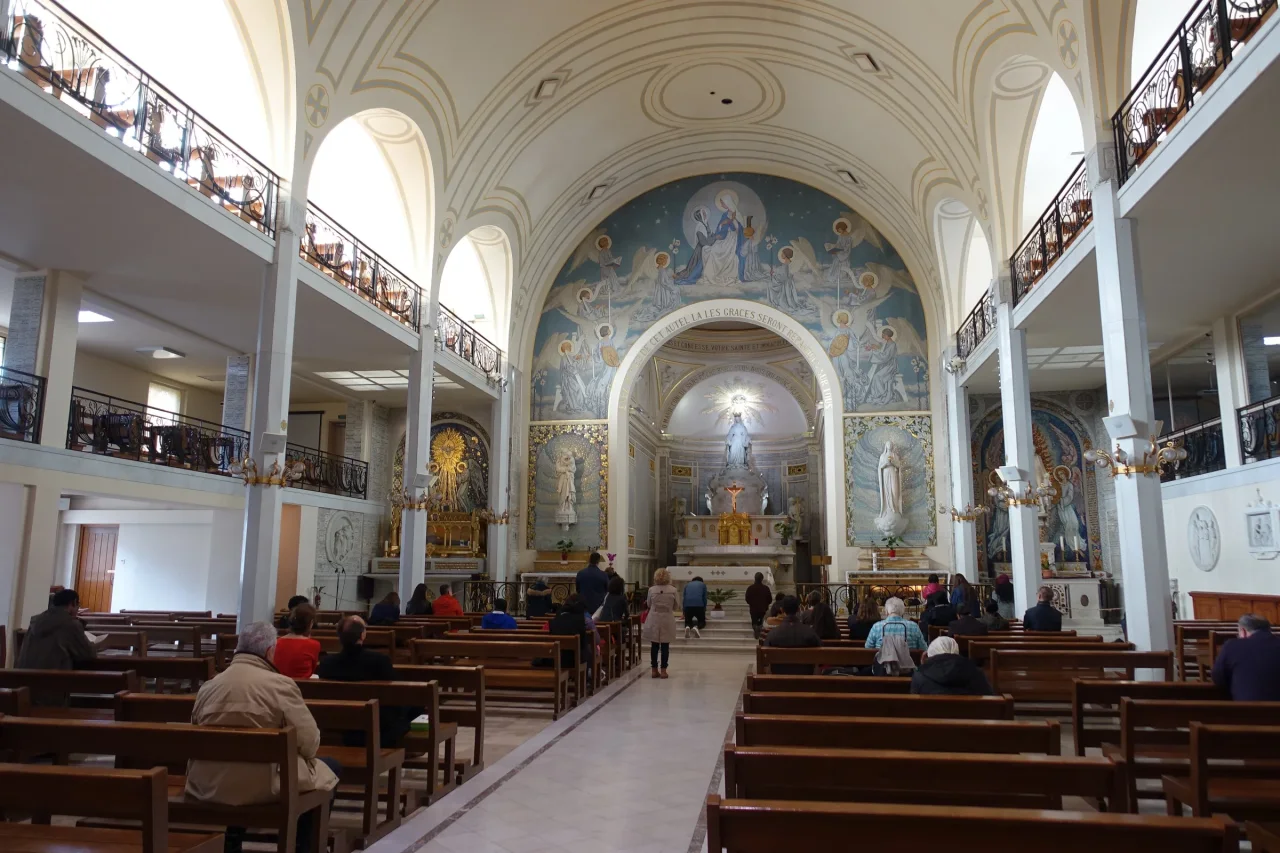
Saint-Sulpice is not intimate. The facade is broad, the nave long, the chapels substantial, and the scale asks the visitor to move slowly. The Lady Chapel draws the eye eastward; the Chapel of the Holy Angels gathers Delacroix’s paintings into a compact sacred-art encounter; the gnomon crosses the transept as a measured line in stone and brass. The church is best read by walking its side chapels, not by standing only in the nave.
Sacred artDelacroix in the Chapel of the Holy AngelsThe Delacroix chapel gives Saint-Sulpice one of the strongest sacred-art stops on the Left Bank.
Saint-Sulpice is not a pop-culture detour. It is one of the serious Catholic interiors of Paris.
The best visit holds art and parish life together: Delacroix, prayer, Confession, music, and the scale of the nave.
The gnomon should be explained as a church instrument for astronomical measurement and calendar calculation, not as occult theater.
Spiritual Significance
Spiritual Significance
The spiritual significance of Saint-Sulpice is its seriousness. It is a parish church where art, music, priestly formation, Confession, adoration, and the Rosary have not been separated from one another. The sacred art is not decoration added to a tourist space. It belongs to a Catholic interior still ordered around prayer.
Do Not Miss · 5 stops
Do Not Miss
The Chapel of the Holy Angels
Spend time with Delacroix’s Jacob wrestling with the angel, Heliodorus driven from the Temple, and Saint Michael defeating the dragon. This is sacred art inside a church, not a detached museum room.
The Lady Chapel
Let the Marian chapel reset the church after Delacroix. The visit should not be all art history.
The gnomon
Read it as an 18th-century church instrument for astronomical measurement and calendar calculation.
The great organ
Look west before leaving. Saint-Sulpice belongs to the musical memory of Parisian Catholic worship.
Jean-Jacques Olier and the Sulpician context
The church is tied to the history of priestly formation and the spiritual seriousness of the French school.
What to notice
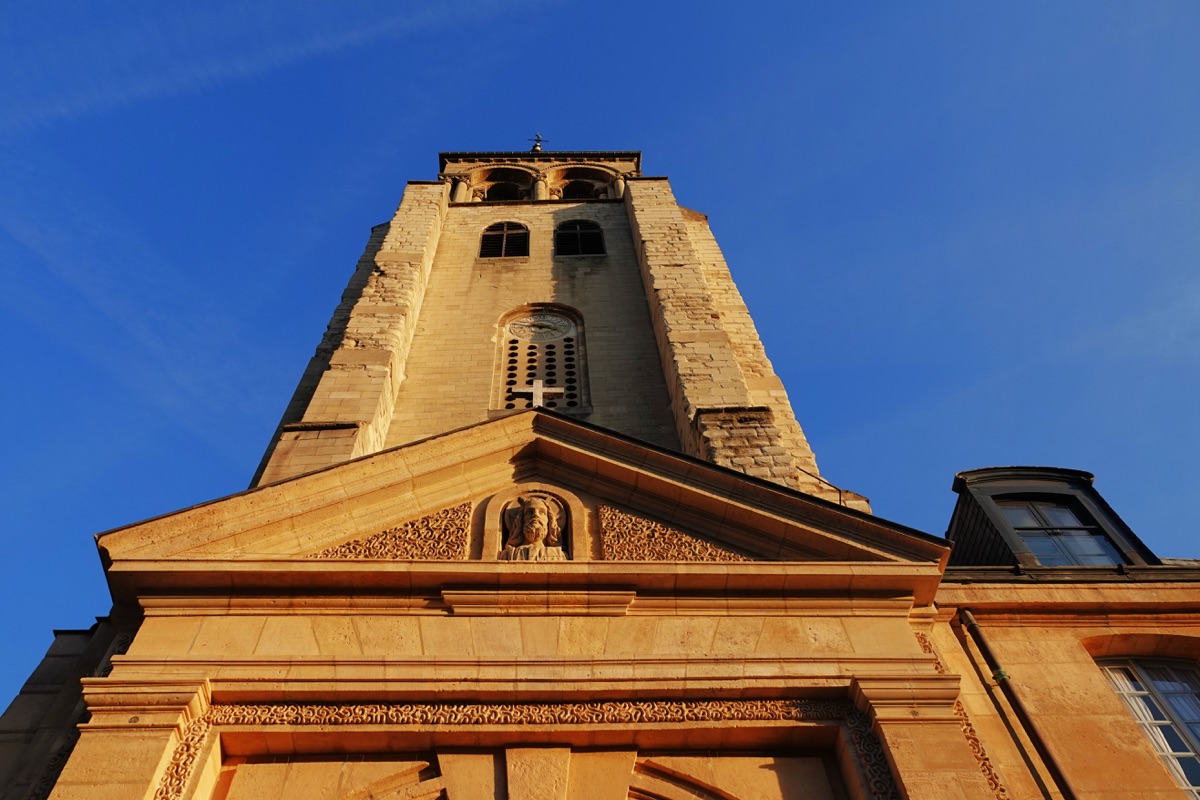
How large the parish church feels compared with nearby Saint-Germain-des-Prés.
How Delacroix’s chapel remains a sacred-art encounter rather than a museum detour.
How the gnomon belongs to calendar, science, and church time.
How Mass, Confession, adoration, music, and visits share the same active parish space.
Visit Plans · 2 plans · add to a journey
Visit Plans
DurationBrief visitBest forFor a first church stop
Delacroix, Lady Chapel, gnomon
5 ordered stops
Enter through the nave, go first to the Chapel of the Holy Angels, return toward the Lady Chapel, then read the gnomon without letting it dominate the church.
Enter and take the scale of the nave seriously.
Spend time in the Chapel of the Holy Angels.
Continue to the Lady Chapel.
Find the gnomon and read it soberly.
Look back toward the organ before leaving.
DurationSlower visitBest forFor a Left Bank sacred-art walk
Pair it with Saint-Germain-des-Prés
4 ordered stops
Use Saint-Sulpice and Saint-Germain together: one large parish of sacred art and liturgical life, one older abbey church of early Catholic Paris.
Begin at Saint-Germain-des-Prés or Saint-Sulpice.
Let Saint-Germain carry abbey memory.
Let Saint-Sulpice carry Delacroix, music, and parish scale.
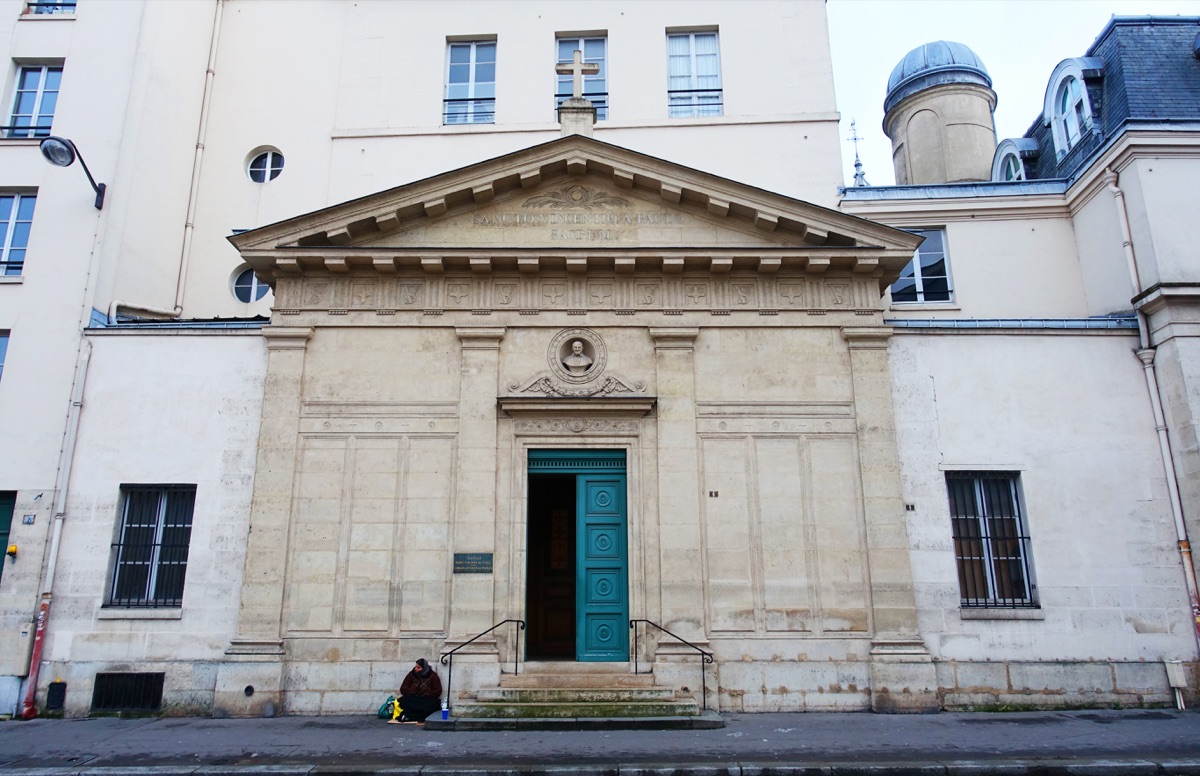
Continue west to Rue du Bac if the day is devotional.
How to Visit
Give the church enough time to be more than Delacroix.
Use the official parish site for current Mass, Confession, adoration, and guided-visit information. Enter as you would an active parish church. Give the Delacroix chapel time, then walk to the Lady Chapel, look for the gnomon in the transept, and remember that the organ and music tradition belong to worship before cultural prestige.
Check the parish scheduleUse the parish site for Mass, Confession, adoration, Rosary, concerts, and guided visits before planning the day.
Start with prayerful scaleLet the nave and chapels set the pace before moving to the famous details.
Read Delacroix in a chapelThe paintings belong to the Chapel of the Holy Angels and to Catholic spiritual combat, not only to art history.
Explain the gnomon plainlyIt is an astronomical instrument tied to church time and the equinox, not a mystery prop.
Current Practical Info · reviewed July 7, 2026
Verify worship, Confession, and guided visits.
Saint-Sulpice is an active parish church with a substantial visitor program. Use official parish pages before relying on Mass, Confession, adoration, concerts, or guided visits.
Mass, Confession, and adoration
The parish publishes regular Mass, Confession, Rosary, and adoration patterns on its official site. Parish schedule listings
Guided visits
The parish lists general church visits, crypt visits, gnomon visits, the facade and upper parts, and Delacroix chapel visits when scheduled. Visiter et découvrir
Art and architecture
The parish art page identifies Delacroix’s Chapel of the Holy Angels and the gnomon as important parts of the church’s cultural and spiritual reading. Art et architecture
Schedules can change for holidays, liturgies, school breaks, concerts, and parish events. This section records official-source categories and current review discipline.
Relics, Tombs, Sacred Objects
What the church preserves.
Relics and Sacred Tradition
Saint-Sulpice is not principally a relic church. Its Catholic weight comes through parish worship, sacred art and architecture, the great organ and its music, and the Sulpician tradition of priestly formation that carries the parish name.
Sacred Objects
The Chapel of the Holy Angels, decorated by Eugène Delacroix, where Jacob wrestling with the angel, Heliodorus driven from the Temple, and Saint Michael defeating the dragon give the church one of Paris’s major sacred-art chapels.
The Lady Chapel, a devotional and architectural focus within the large church.
The gnomon, an 18th-century astronomical instrument built for ecclesial timekeeping and the calculation of the equinox.
The great organ and the church’s long musical tradition.
The parish spaces connected to Jean-Jacques Olier and the Sulpician memory of priestly formation.
Connected Saints
A dedication, a chapel, and a serious parish memory.
The saint context at Saint-Sulpice is liturgical and artistic rather than relic-centered: the dedication to Saint Sulpicius and the Holy Angels chapel.
The gnomon in the north transept is described here following the parish's own art and architecture guidance and plain astronomical history, rather than the popular fiction later attached to it.
Delacroix in the Chapel of the Holy Angels.
La lutte de Jacob avec l'Ange d'E. Delacroix (église St Sulpice, Paris) - Flickr - dalbera.
Jean-Pierre Dalbéra / Wikimedia Commons (CC BY 2.0).Source.
CC BY 2.0.
Feedback
Use this for corrections, broken links, missing places, and planning ideas.