A former Benedictine abbey church on the Left Bank, where Saint Germain of Paris, early medieval memory, restored color, and living parish prayer still meet.
Location
Paris, France 48.8539° N · 2.3346° E
Type
Parish church / former Benedictine abbey church Romanesque and early Gothic abbey church with 19th-century painted decoration by Hippolyte Flandrin and collaborators
Dedication
Saint Germain of Paris
Time Needed
30 minutes to 1 hour
Why Go
An Ancient Abbey on the Left Bank
Visit Saint-Germain-des-Prés when you want Paris to feel older than its elegant streets. The church keeps the memory of a Benedictine abbey, Saint Germain of Paris, Merovingian burial, Romanesque stone, Gothic rebuilding, and a parish still praying in the middle of the Left Bank.
From Abbey Fields to the Modern Left Bank
The abbey began in the 6th century, outside the old city, in the fields that gave Saint-Germain-des-Prés its name. It became a major monastic presence, associated with royal and episcopal memory, and was eventually dedicated to Saint Germain of Paris after his burial and veneration here. War, rebuilding, reform, and the French Revolution stripped away much of the old abbey complex, but the church survived as the place where the neighborhood still has a Catholic root.
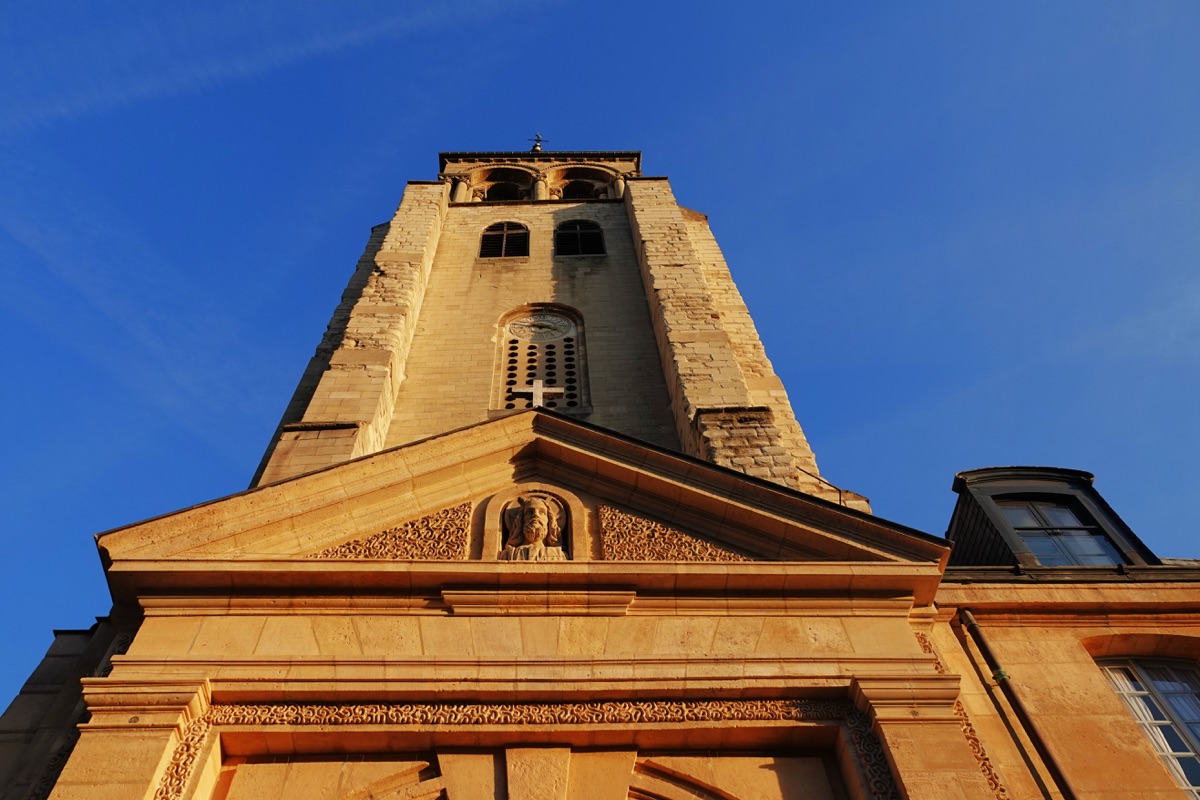
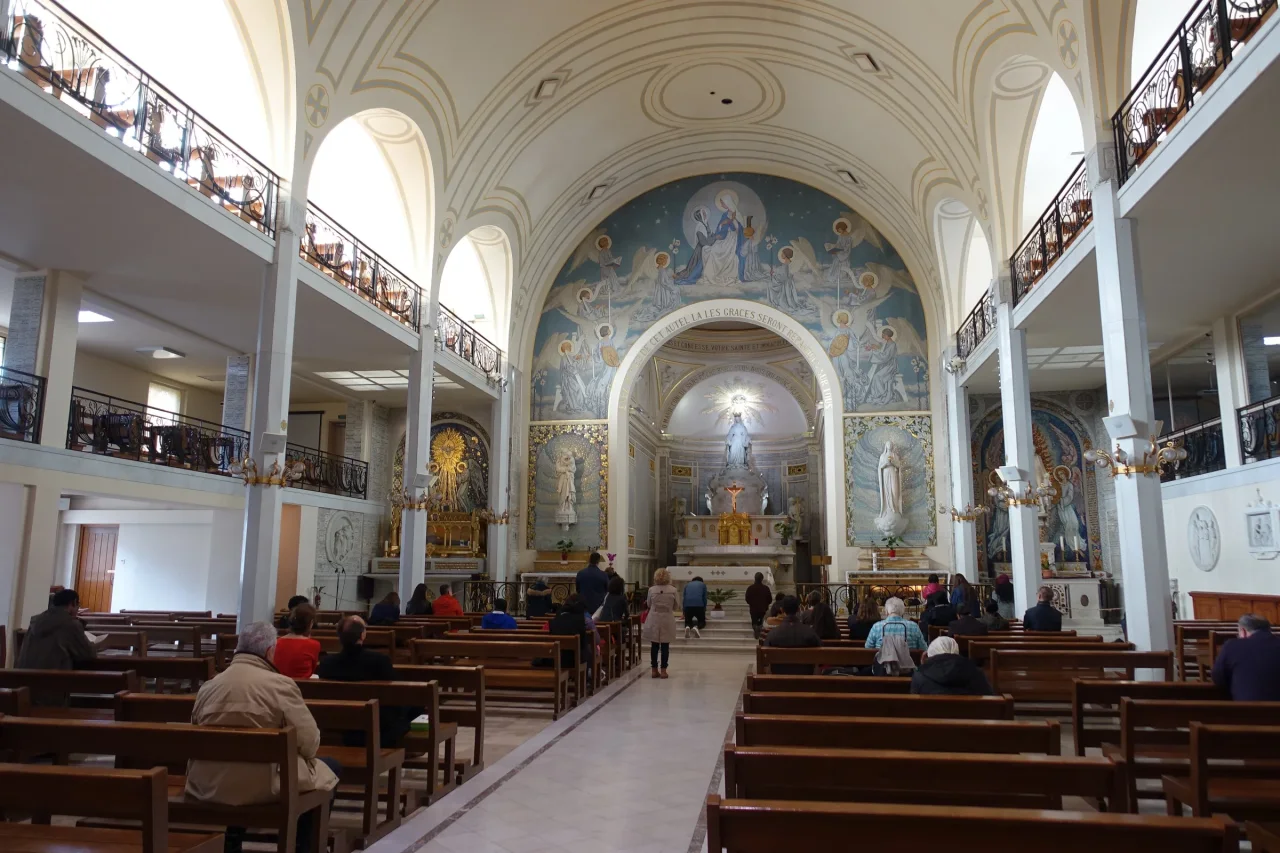
The building is layered rather than uniform. The Romanesque tower and older masonry hold the west end; the choir carries the ambition of the medieval abbey; the painted 19th-century interior gives the nave a color many visitors do not expect. Restoration has made that color legible again. A serious visit lets these layers remain layered: early Paris, monastic Paris, parish Paris.
Abbey churchThe restored choirThe restored interior helps the visitor read Saint-Germain-des-Prés as a church with deep layers, not only as a famous neighborhood name.
Saint-Germain-des-Prés gives Catholic Paris a depth older than the familiar boulevards and museums.
The church is most powerful when read as a surviving abbey, not as a neighborhood label.
Its restoration matters because the painted interior is part of the way the church teaches.
Spiritual Significance
Spiritual Significance
The spiritual significance here is memory that has not disappeared. Catholics have long venerated Saint Germain of Paris, and the church that bears his name keeps the Left Bank from becoming only literary cafes, galleries, and shopping streets. It is a place to remember that this quarter grew around an abbey before it became a cultural address.
Do Not Miss · 5 stops
Five things to notice first.
The choir and restored painted interior
Look for the way color, architecture, and restoration make the old abbey church visible again.
The memory of Saint Germain of Paris
Keep the visit anchored in the bishop whose burial and veneration gave the abbey its name.
The Romanesque tower
The exterior tower makes the church feel older than the streets around it.
The Chapel of Saint Symphorien
A small, older space that helps the abbey complex remain more than a historical abstraction.
The Left Bank threshold outside
Step out and notice how the parish church still anchors the neighborhood.
What to notice
How the church makes the Left Bank feel older than modern Paris.
How restoration has returned the painted interior to the visitor experience.
How Saint Germain of Paris gives the church a saint-centered identity.
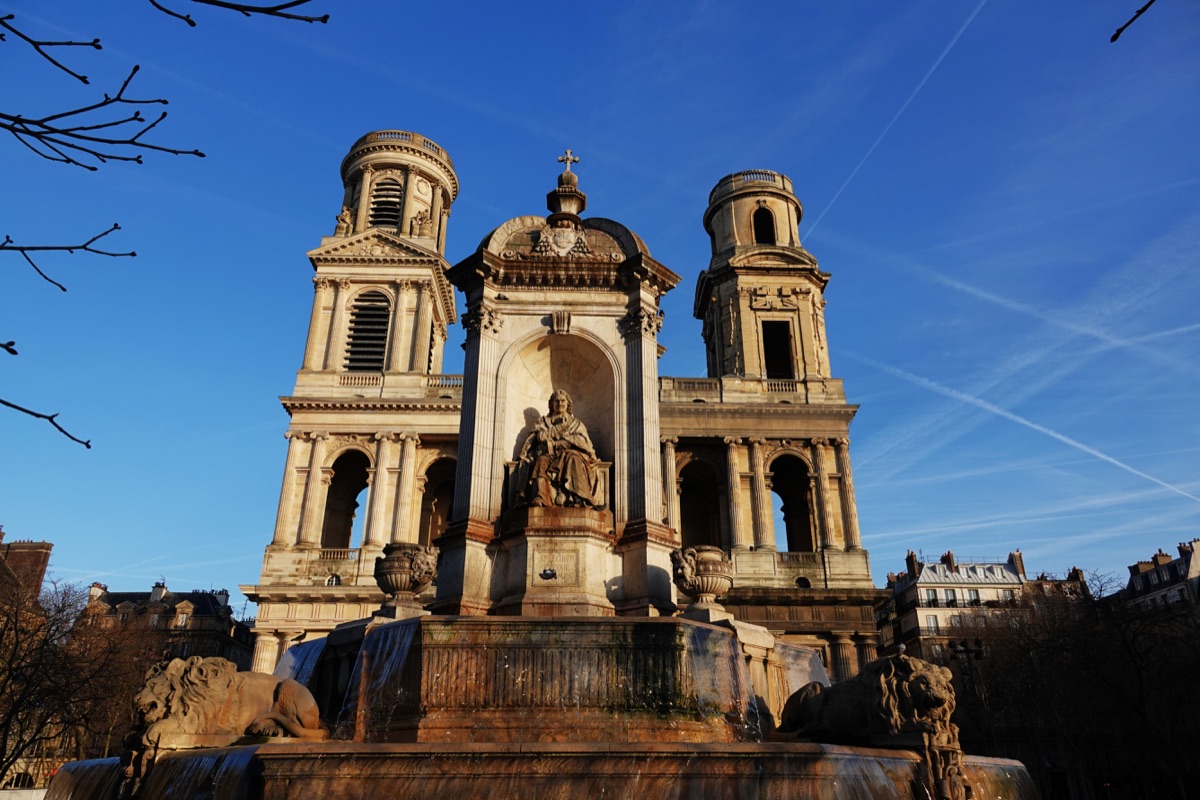
How the church pairs naturally with nearby Saint-Sulpice without becoming the same kind of visit.
Visit Plans · 2 plans · add to a journey
Visit Plans
DurationBrief visitBest forFor a focused Left Bank stop
The abbey memory first
5 ordered stops
Enter from the busy square, read the nave and choir, keep Saint Germain in view, and leave with the sense that the neighborhood grew around a church.
Pause outside at Place Saint-Germain des Prés.
Enter and read the nave toward the choir.
Notice the restored painted decoration.
Remember Saint Germain of Paris.
Step back outside and read the neighborhood from the church outward.
DurationSlower visitBest forFor a Left Bank church walk
Pair it with Saint-Sulpice
4 ordered stops
Use Saint-Germain for older abbey memory, then walk to Saint-Sulpice for parish scale, sacred art, the gnomon, and the Left Bank at another register.
Begin at Saint-Germain-des-Prés.
Spend time with the choir and painted interior.
Walk to Saint-Sulpice.
Read the Delacroix chapel and gnomon as a different kind of Catholic culture.
How to Visit
Let the abbey remain visible beneath the neighborhood.
Use the official parish site for current opening times, Masses, and restoration notes before planning around a specific hour. Enter from the busy neighborhood and give yourself enough time for the choir, murals, Chapel of Saint Symphorien, and the exterior abbey context.
Check current parish accessUse the parish site for opening times, Masses, and restoration notices before planning around a specific hour.
Start with the building, not the quarterThe church is the reason the neighborhood has its name. Let that order shape the visit.
Read the restored colorThe murals and painted decoration make the church more than a stone survival.
Pair it with Saint-SulpiceThe short walk between the two churches gives a strong Left Bank sacred-art and parish-life pairing.
Current Practical Info · reviewed July 7, 2026
Verify parish hours and restoration context.
Saint-Germain-des-Prés is an active parish church and a restored historic church. Use the parish site before relying on opening times, Masses, or special visits.
Opening and Mass
The parish publishes current church-opening and Mass schedules, including seasonal summer schedules. Parish hours page
Restoration context
The parish restoration page describes the church as founded in the 6th century and still undergoing major restoration work. Parish restoration page
Guided visits
The parish lists guided visits and visitor resources separately from worship; verify the current week before planning around them. Parish home page
Summer, feast, restoration, and parish notices can change access and worship patterns. This section records official-source categories, not a guaranteed schedule.
Relics, Tombs, Sacred Objects
Sacred memory in the old abbey church.
Tomb and Burial
Saint Germain of Paris was buried in the abbey church and remains the saint who gives the place its Catholic identity.
Relics and Sacred Tradition
The early abbey preserved major relic traditions, including the Holy Cross and Saint Vincent context associated with King Childebert, but the present pilgrim page should focus on the surviving church and Saint Germain memory rather than overstate visible relic access today.
Sacred Objects
The choir and sanctuary, where the old abbey church still gathers the eye eastward.
The painted decoration by Hippolyte Flandrin and collaborators, restored in recent years, which gives the interior its distinctive color and theological program.
The Chapel of Saint Symphorien, one of the oldest visible spaces connected to the abbey complex.
The Romanesque tower and older fabric, which keep the church from reading like only another Left Bank monument.
Connected Saints
A bishop remembered in the old abbey church.
The saint connection here is compact but strong: Saint Germain of Paris gives the church its name and its deepest Catholic identity.
Saint Germain of ParisPatronal memoryBishop of Paris, buried and venerated at the abbey church that now bears his name.Saint Vincent of SaragossaEarly abbey relic contextThe earliest abbey tradition is associated with relics of Saint Vincent brought by King Childebert, a context to handle historically and carefully.