
St. Michael
the Archangel
The archangel who stands between God's people and destruction, invoked for protection across seventeen centuries of Catholic prayer.
The Lord rebuke you.
Jude 1:9 Documented
The Life and Witness of Michael the Archangel.
Michael appears in Sacred Scripture as a defender of God's people, a prince of the heavenly host, and the one who contends against evil at the end of time. He is not a human saint but an angel, a created spiritual being of a different order than humanity, and the Church has venerated him since its earliest centuries.
His name in Hebrew means "Who is like God?", itself a declaration against the pride of those who set themselves against the divine. In the book of Daniel, he appears as the great prince who stands for Israel. In Revelation, he leads the heavenly host against the dragon. In the letter of Jude, he disputes with the devil over the body of Moses, not presuming to insult even so an enemy but saying only: "The Lord rebuke you."
Catholic tradition has long associated Michael with protection, spiritual warfare understood rightly, not as sensationalism, but as the sober conviction that powers of evil are real and that God's authority over them is absolute. The great shrines built in his honor across Europe, Mont Saint-Michel in France and Monte Sant'Angelo in Italy among them, are places where Catholics have long come to invoke his intercession. Castel Sant'Angelo in Rome, Hadrian's mausoleum long before it was the Pope's fortress, carries his name from the tradition of the angel seen sheathing his sword above it.
Pope Leo XIII composed the Prayer to Saint Michael and in 1886 added it to the prayers said after Low Mass, where it remained for decades. A tradition long recounted in Catholic memory connects the prayer to a vision the Pope received at Mass. The Church continues to invoke him in her exorcism rites and in the Liturgy of the Hours. He shares his feast on September 29 with the other archangels, Gabriel and Raphael.
Michael's patronage covers soldiers, police, emergency responders, and all who stand between the innocent and harm. The great shrines dedicated to him, particularly Mont Saint-Michel, remain among the most visited pilgrimage sites in Europe.
Scripture, devotion, and the great shrines.
-
c. 6th century BCAppearance in the Book of DanielMichael appears in Daniel 10 and 12 as "the great prince, the protector of your people", a protector of Israel and a heavenly prince who contends against the princes of other nations.
-
1st century ADRevelation and the Letter of JudeRevelation 12 describes Michael leading the heavenly host against the dragon. Jude 9 records his dispute over the body of Moses, notable for his refusal to use presumptuous language even against the devil.
-
c. 490–492 ADFirst Apparition Shrine, Monte GarganoAccording to the tradition of the Monte Sant'Angelo sanctuary, Michael appeared to the Bishop of Siponto, requesting that a cave on Monte Gargano in Puglia be consecrated in his honor. The cave became the oldest sanctuary dedicated to Michael in the West, and the model for the Michael shrines founded after it.
-
708 ADApparition at Mont Saint-MichelAccording to the tradition of the Norman shrine, Michael appeared to Aubert, Bishop of Avranches, and commanded a sanctuary to be built on the tidal island. The abbey that grew there became one of the great pilgrimage sites of medieval Europe.
These are not the years of a human life. They mark the scriptural witness and the shrine traditions associated with Michael the Archangel, dated approximately where the record is ancient or local.
3 places where this witness remains visible.
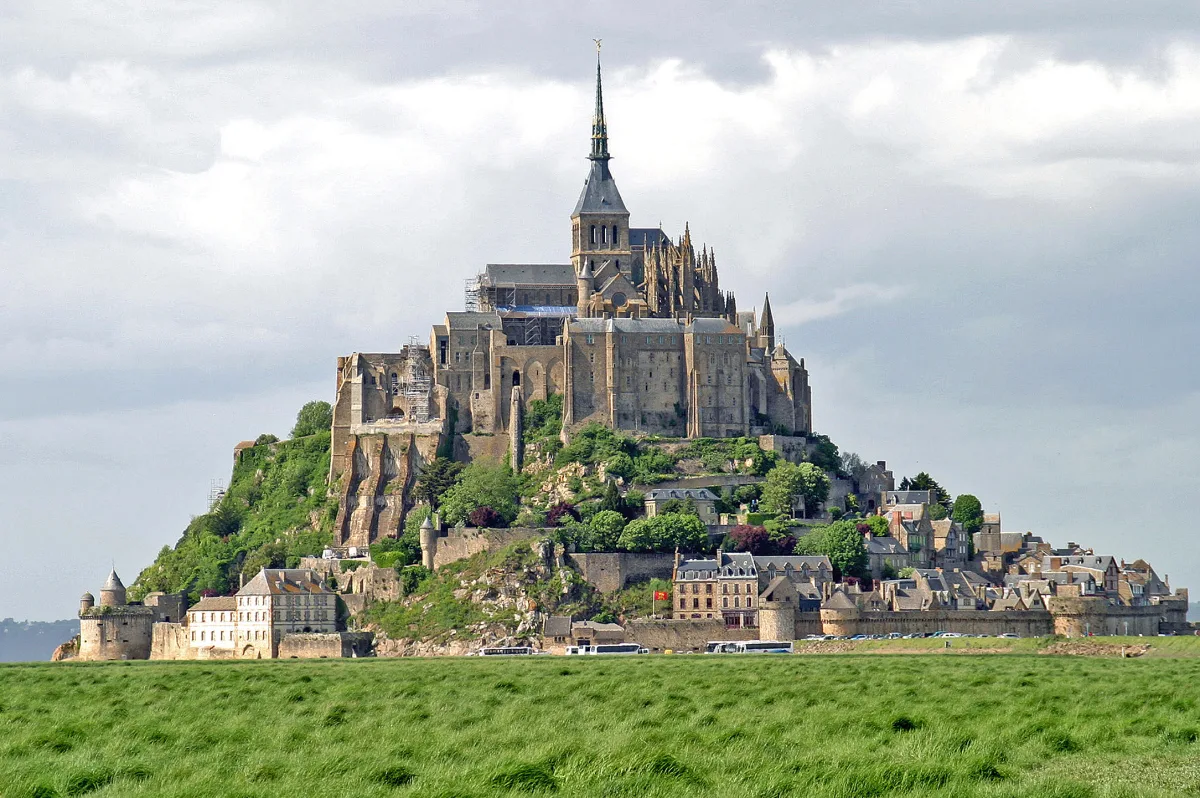
Mont Saint-Michel
The Norman island abbey, reached across tidal sand. The long climb to the church is itself the pilgrimage.
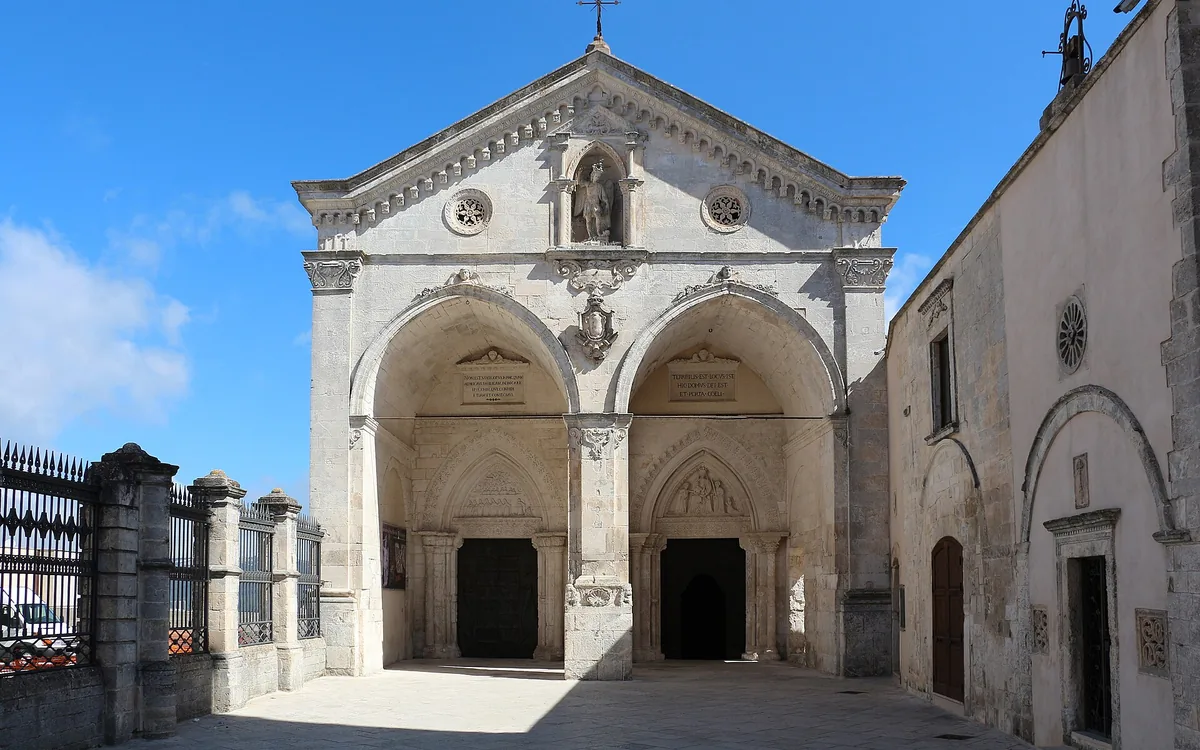
Sanctuary of Monte Sant'Angelo
The cave on Monte Gargano where, according to long-standing local tradition, Michael was first venerated in the West. Here the pilgrimage is a descent into the rock rather than a climb.
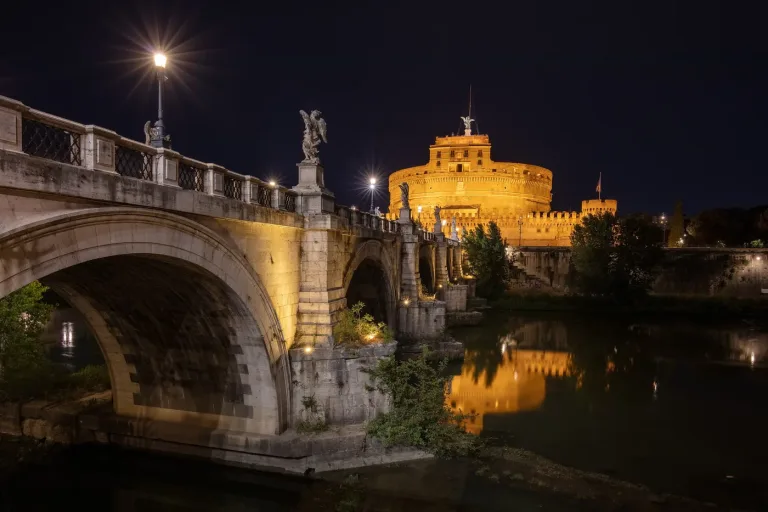
Castel Sant'Angelo
The fortress crowned by a bronze Michael, recalling the tradition of the angel who sheathed his sword over Rome as a plague lifted under Pope Gregory the Great.
The Line of Saint Michael · 3 stops.
Michael has no single shrine. His devotion runs along the heights of Europe, from a Norman tide-rock to a cave in the Gargano to the bronze angel over Rome. Read these as one pilgrim line held together by a single petition for protection, not a journey for one afternoon.
-
01 Later devotional association
Mont Saint-Michel
Normandy, FranceThe Norman island abbey, reached across tidal sand. The long climb to the church is itself the pilgrimage.
-
02 Apparition site
Sanctuary of Monte Sant'Angelo
Monte Gargano, Puglia, ItalyThe cave on Monte Gargano where, according to long-standing local tradition, Michael was first venerated in the West. Here the pilgrimage is a descent into the rock rather than a climb.
-
03 Apparition site
Castel Sant'Angelo
Rome, ItalyThe fortress crowned by a bronze Michael, recalling the tradition of the angel who sheathed his sword over Rome as a plague lifted under Pope Gregory the Great.
To see nearby places, open the location page or add this route to a journey.
How to encounter Michael.
You do not visit a tomb. You climb to a height, step through a threshold, and ask for protection, soberly and in the Church's own words.
Read Daniel 10 and 12, Revelation 12, and Jude 9 before you travel. Michael is known first through the word of God, not through legend, and the shrines only echo what Scripture already says of him.
Pray the Prayer to Saint Michael, composed by Pope Leo XIII and added in 1886 to the prayers after Low Mass. The Church invokes Michael against evil with confidence and without spectacle; let your own prayer keep that restraint.
Michael's places are heights and thresholds: a tidal causeway, a mountain cave, a fortress roof. Walk them slowly. The body learns what the devotion means, that protection is asked for at the edge.
September 29 is Michaelmas, kept with Gabriel and Raphael and one of the oldest feasts in the calendar. Where you can, join the Mass and the Liturgy of the Hours for the Archangels.
No tomb, and no bodily relics.
Michael is an archangel, a created spirit and not a man who lived and died. There is no grave to visit, no body to venerate, and no first-class relic, and the Church has never claimed otherwise.
What pilgrims encounter instead is place and prayer: sanctuaries raised on heights, the cave on Monte Gargano kept since the earliest centuries, chapels and dedications beyond counting, images of the armed archangel above altars, and the liturgy that still names him. His presence is marked not by what remains of a body but by where the Church has long asked for his protection.
No bodily relic context is expected for this figure.
Saints Connected to Michael the Archangel
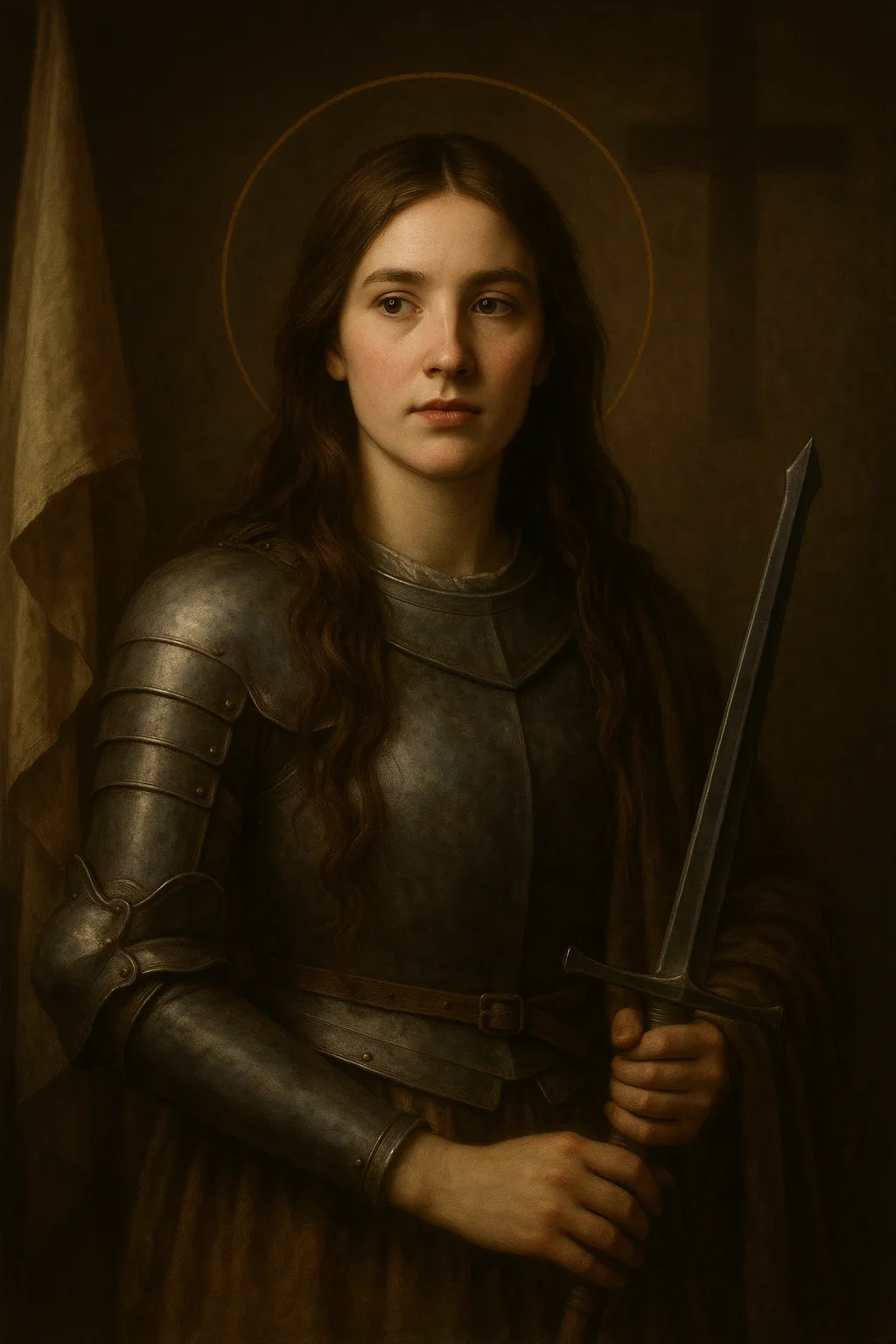
Showing 1 of 4 authored connections with full saint guides.
St. Michael feast day: September 29
September 29 is Michaelmas, the feast shared by Michael, Gabriel, and Raphael. It is one of the oldest feasts in the Church's calendar, celebrated since at least the 5th century. The traditional Low Mass conclusion included the Prayer to Saint Michael until the reforms of 1964.
Mont Saint-Michel in Normandy, France, is the most celebrated Michael shrine in the West, drawing millions of visitors each year. Monte Sant'Angelo sul Gargano in Puglia, Italy, is the oldest sanctuary dedicated to Michael in the West, where tradition places his appearance to the bishop of Siponto in the years around 490.
Devotion built on the heights.
Human saints leave a geography of birthplace, tomb, and relic. Michael leaves a geography of terrain. His sanctuaries gather where the land rises or narrows, and that is less a matter of taste than a reading of who he is.
Heights. Mont Saint-Michel rises from the sea; Monte Sant'Angelo sits on the Gargano massif; chapels to Michael crown hilltops and city gates across Europe. The archangel of God's defense is honored at the points hardest to reach and easiest to defend.
Caves and thresholds. The Gargano shrine is a cave, entered by descending into the rock, a sanctuary made by going down rather than up. Tidal causeways, mountain passes, and fortress walls recur in his dedications: Michael is invoked at the edge, where one realm gives onto another.
Coast and frontier. Many Michael sites guard a boundary, a shoreline or a city under threat. Long before any single apparition, Catholics placed his protection where they felt most exposed.
Local tradition differs from sanctuary to sanctuary, and each is named here as its own shrine tells it.
Photo credits
- Castel Sant'Angelo. Diego Delso, CC BY-SA 4.0, via Wikimedia Commons. Source. CC BY-SA 4.0.
- Mont Saint-Michel. W. Bulach / Wikimedia Commons (CC BY-SA 4.0). Source. CC BY-SA 4.0.
- Sanctuary of Monte Sant'Angelo. Bernard Gagnon / Wikimedia Commons. Source. CC0.
- Photo. Mont Saint-Michel: photo by W. Bulach, Wikimedia Commons (CC BY-SA 4.0). Source. CC BY-SA 4.0.
- Photo. Sanctuary of Monte Sant'Angelo: photo by Bernard Gagnon, Wikimedia Commons (CC0). Source. CC0.
- Photo. Castel Sant'Angelo, Rome: photo by Diego Delso, Wikimedia Commons (CC BY-SA 4.0). Source. CC BY-SA 4.0.