
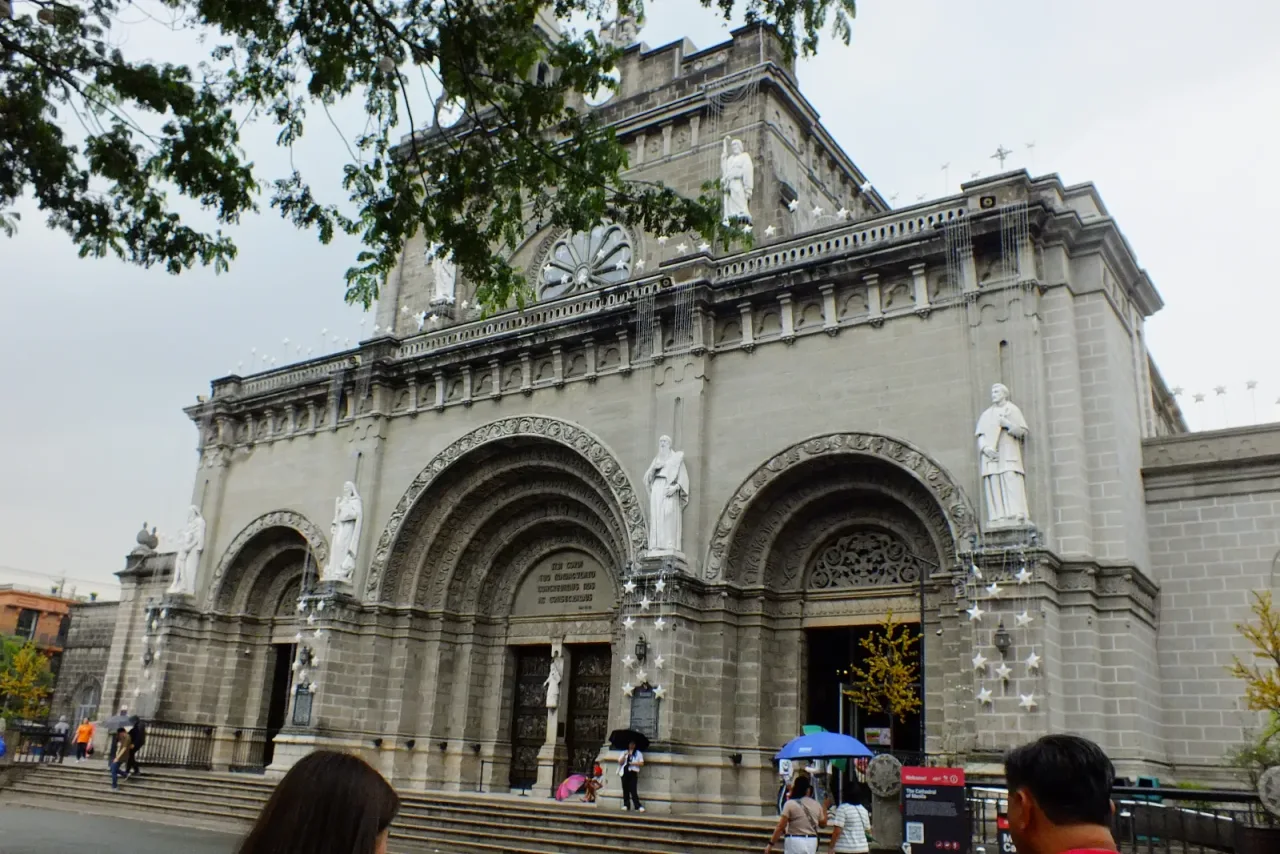
Manila Cathedral
Manila's mother church: cathedral, metropolitan seat, and minor basilica, dedicated to the Immaculate Conception and rebuilt after the Battle of Manila.
- Location
- Manila, Philippines 14.5915° N · 120.9736° E
- Type
- Metropolitan cathedral and minor basilica
- Dedication
- The Immaculate Conception of the Blessed Virgin Mary
The local Church gathered around bishop, altar, and Eucharist
Begin here because Catholic Manila is not only a collection of devotions. It is a local Church. The cathedra names the bishop's ministry; the altar and Eucharist gather the people; the dedication to the Immaculate Conception places that communion under Our Lady's patronage. The building has been lost and rebuilt repeatedly, but the cathedral's identity has endured.
Eight cathedrals, one episcopal church
Pope Gregory XIII established the Diocese of Manila in 1579. Bishop Domingo de Salazar formally raised the parish church to cathedral rank under the title of the Immaculate Conception in 1581. Manila later became a metropolitan archdiocese. Fire, earthquake, war, and rebuilding produced a succession of cathedral buildings rather than one uninterrupted fabric. The seventh cathedral was destroyed during the Battle of Manila in 1945. The present eighth cathedral was dedicated in 1958. It is therefore wrong to call the present building sixteenth-century. Its deeper continuity is ecclesial: the same cathedral church repeatedly taking architectural form again.
Enter through the broad west front into a long nave whose arches draw the eye toward the altar. The main altar's program joins the Immaculate Conception to the mystery of the Incarnation rather than treating Marian devotion as decoration. The episcopal throne makes visible that this is a cathedral. Stained glass throughout the building teaches the faith, much of it through Marian subjects. Beneath the main altar, the crypt holds former archbishops of Manila; current access should never be assumed.
Read the cathedral as communion, not chronology.
Three elements keep the building's Catholic identity clear.
The cathedra
The bishop's chair names this as the metropolitan church of Manila, not simply a large historic basilica.
The altar
The building opens toward the altar because Eucharistic worship is the cathedral's center.
The Marian program
The Immaculate Conception dedication runs through the altar and glass, joining Our Lady to the mystery of Christ's Incarnation.
Spiritual Significance
A cathedral is read most truthfully during worship. The bishop's chair has meaning because it serves communion; the altar has meaning because Christ gathers his people in the Eucharist. Saint John Paul II celebrated Mass here on February 17, 1981, the day before he beatified Lorenzo Ruiz in Manila. That link belongs within the city's sacred geography: cathedral communion opening toward the witness of a lay martyr formed in Binondo.
Do Not Miss
-
The main altar
Read its Marian imagery within the Incarnation and the Eucharistic life of the cathedral.
-
The episcopal throne
The visible sign that this is the bishop's church.
-
The stained glass
Look for the Marian and catechetical sequence rather than treating the windows as color alone.
-
The crypt below the altar
Former archbishops of Manila are buried here; confirm whether access is currently permitted.
- The present fabric dates from 1958, while the cathedral institution reaches back to 1581
- The line from cathedra to altar
- The way Marian dedication is joined to the Church's worship rather than isolated from it
Visit Plans
-
Altar, cathedra, and Marian program
3 ordered stopsBegin with prayer, then read the three signs that make this Manila's cathedral.
- The nave and altar
- The episcopal throne
- The Marian stained glass
How to Visit
Check the cathedral's official site for current Masses, office hours, special liturgies, weddings, and event closures. If you enter during worship, join reverently or wait for another time to study the architecture. The crypt is beneath the main altar, but ordinary public access varies and should be confirmed rather than expected.
A working cathedral before a heritage attraction
Masses, diocesan events, weddings, and closures change the visitor day.
Worship and access
- Visiting may pause during Mass, weddings, or archdiocesan events.
- Do not assume public access; ask the cathedral about current arrangements.
Connected Saints
Continue Your Pilgrimage
-
City hub
Manila
Where this church sits within the wider Catholic geography of Manila.
-
Augustinian church and archdiocesan shrine
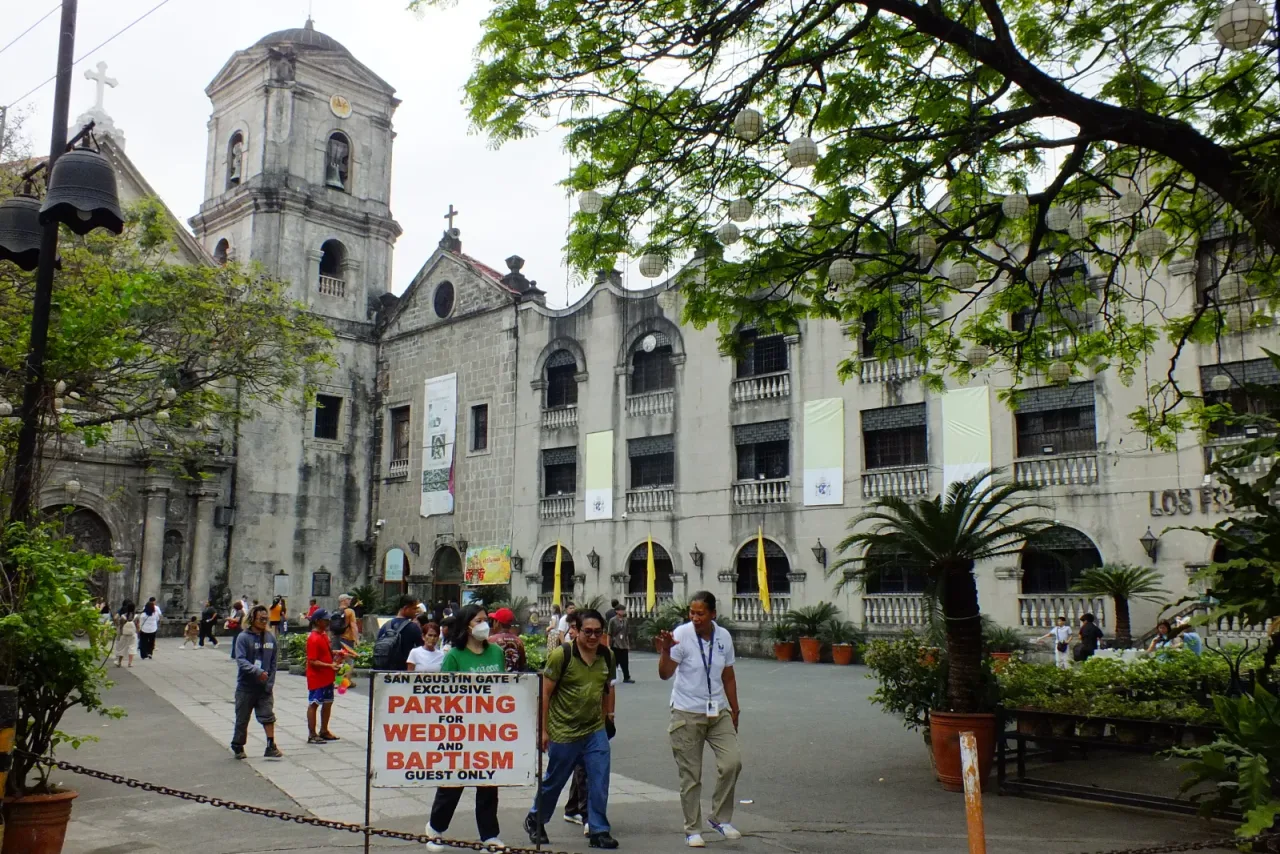
San Agustin Church
A short walk through Intramuros, joining cathedral communion to Augustinian worship and sacred art.
-
National shrine and minor basilica
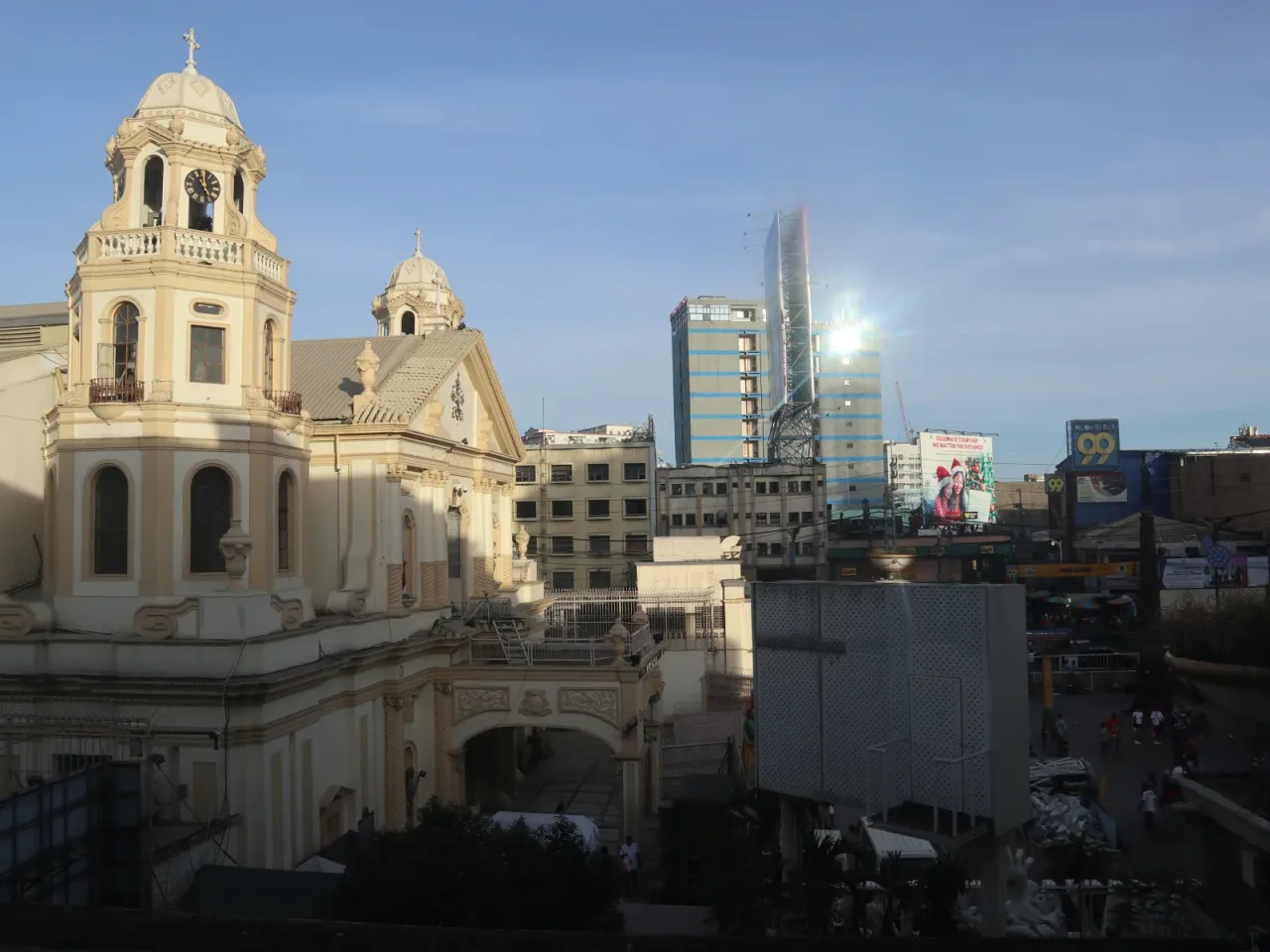
National Shrine of Jesus Nazareno
Across the river in Quiapo; make it a separate district visit rather than an extension of the Intramuros walk.
Map
Institutional dates and architectural interpretation follow the Manila Cathedral's official history and architecture pages. The present building is identified explicitly as the eighth cathedral dedicated in 1958.
September 23, 2026