
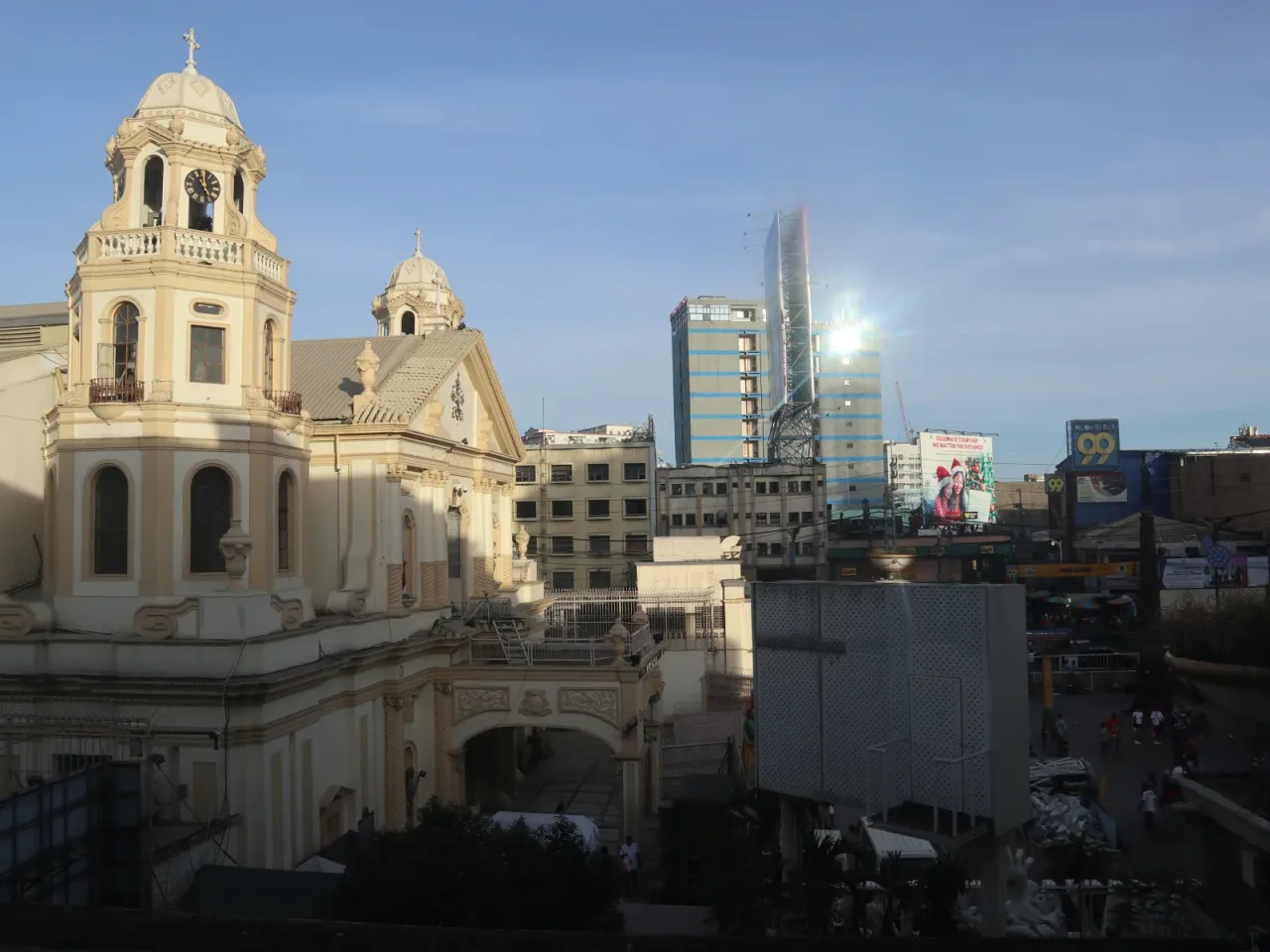
Minor Basilica and National Shrine of Jesus Nazareno
A working parish, minor basilica, and national shrine where Manila's devotion to Jesus Nazareno gathers around Christ in his Passion.
- Location
- Manila, Philippines 14.5988° N · 120.9838° E
- Type
- Minor basilica, national shrine, and active parish
- Dedication
- Jesus Nazareno; canonical parish identity of St. John the Baptist Parish
Christ carrying the Cross in the heart of Quiapo
Come for Our Lord in his Passion. Petition, thanksgiving, penance, a panata or vow, Friday devotion, novena, Mass, and procession all belong here when they lead deeper into conversion and discipleship. The shrine's own catechesis joins three words: Debosyon. Traslacion. Misyon. Devotion and procession are meant to become Christian witness.
A devotion whose exact arrival date remains unknown
Quiapo became a district in 1586 and its parish was established in 1588. Augustinian Recollect missionaries arrived in the Philippines in 1606. The shrine's history says the image of Jesus Nazareno is generally believed to have been brought from Mexico through the galleon trade, but no specific arrival date can be verified. Pope Innocent X authorized the confraternity in 1650. A replica or image was transferred to Quiapo between 1767 and 1787, making the devotion accessible beyond Intramuros. Fire, earthquake, and reconstruction repeatedly changed the church. Saint John Paul II recognized it as a minor basilica in 1987. It became an archdiocesan shrine in 2023, was solemnly declared the National Shrine of Jesus Nazareno on January 29, 2024, and received its current official title by decree on October 3, 2024.
The basilica meets the city without a long approach. Plaza Miranda is the threshold. The facade and twin towers hold one edge while commerce, traffic, and dense pedestrian life press against the other. Inside, the sanctuary is not a museum display. It is the focus of a working pilgrimage church where the image of Christ carrying the Cross belongs within Mass, prayer, preaching, confession, and the life of the parish.
A parish, shrine, and city threshold
The church becomes legible through three relationships.
The sanctuary
Jesus Nazareno depicts Christ carrying the Cross. The shrine's prayer is Christ-centered, not worship of an object.
The working basilica
Come outside the feast as well. Friday devotion, Mass, novena, confession, and parish life reveal the place more fully than one procession.
Plaza Miranda
The square is the threshold between dense city street and shrine, making public devotion physically visible without turning it into a spectacle.
Spiritual Significance
Catholic veneration of Jesus Nazareno passes through the image to Jesus Christ himself. The physical image is not adored as God. Devotees approach the Lord who carries the Cross, bringing suffering, thanksgiving, vows, and hope. Friday gives the devotion its weekly rhythm; January 9 gives it a national feast. Neither should be reduced to spectacle or crowd size.
Do Not Miss
-
Jesus Nazareno in the sanctuary
Pray before Christ carrying the Cross and keep the Catholic distinction between veneration of the image and worship owed to God.
-
The church as a working pilgrimage basilica
Mass, prayer, and parish life matter beyond the annual feast.
-
Plaza Miranda
Pause at the threshold where the city's public life reaches the shrine door.
-
St. John the Baptist parish identity
The returned parish image in the baptistry recalls that Quiapo remains a parish as well as a national shrine.
- How close the city presses against the church
- The difference between ordinary weekday prayer and Friday devotion
- The shrine's movement from devotion and procession toward mission
Visit Plans
-
Devotion, sacrament, and mission
3 ordered stopsApproach through Plaza Miranda, pray before Jesus Nazareno, and leave room for the current sacramental life of the parish.
- Plaza Miranda and the threshold
- Jesus Nazareno in the sanctuary
- St. John the Baptist parish context
How to Visit
An ordinary weekday and a Friday are different visits. Friday is spiritually powerful and substantially busier. January 9 fundamentally changes access, transport, crowds, and procession conditions and should never be planned from an ordinary-day guide. Use the shrine's official channels for current Masses, confessions, novena details, feast arrangements, and access restrictions.
Friday and January 9 require different planning
Schedules, procession routes, crowd measures, and closures are dynamic.
Ordinary visits
- Friday is traditionally busier and more devotional activity may be present.
January 9
- Access, crowds, transport, procession routes, and security arrangements change each year.
- Follow current shrine and local-authority guidance.
Continue Your Pilgrimage
-
City hub
Manila
Where this church sits within the wider Catholic geography of Manila.
-
National shrine, minor basilica, and parish
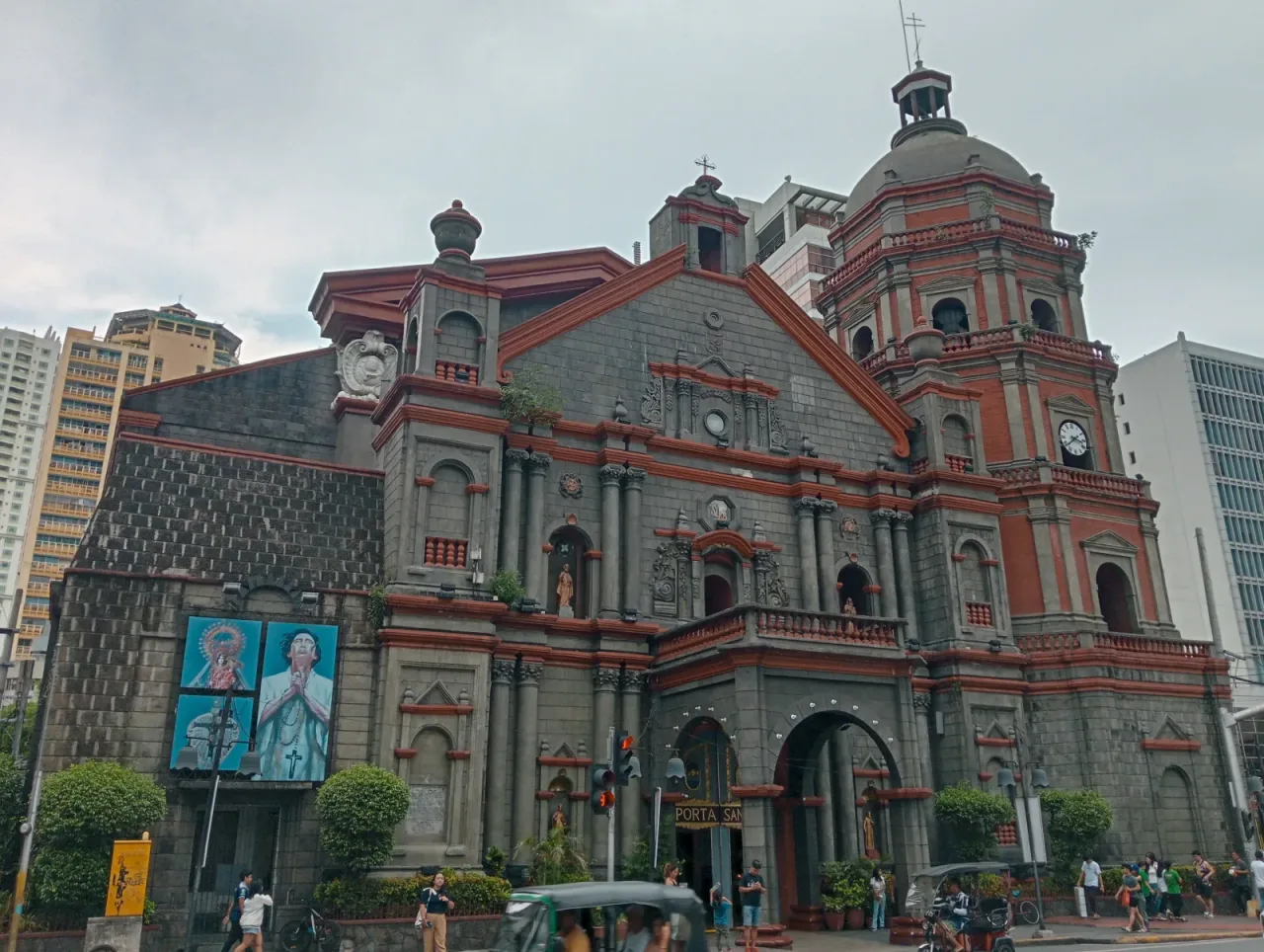
National Shrine of San Lorenzo Ruiz
In neighboring Binondo; the guide moves from Christ carrying the Cross to the lay martyr formed in parish and family life.
-
Metropolitan cathedral and minor basilica
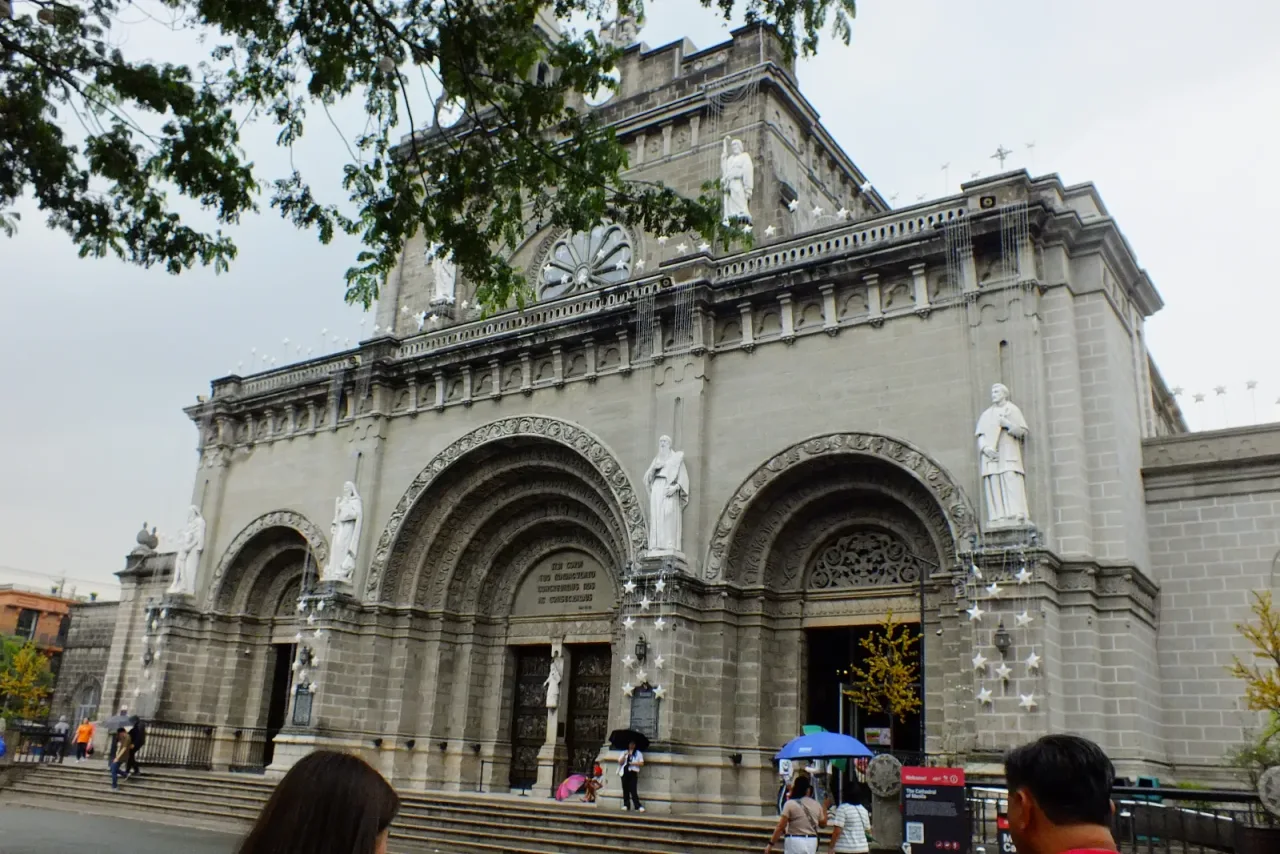
Manila Cathedral
Across the river in Intramuros, best kept for the separate cathedral day.
Map
Chronology and devotional interpretation follow Quiapo Church's official 2024 history and catechetical material. The arrival of the image is deliberately not dated to 1606 because the shrine says no specific date can be verified.
September 23, 2026
Photo credits
- Hero. Patrickroque01 / Wikimedia Commons (CC BY-SA 4.0). Source. CC BY-SA 4.0.