

Basilique Sainte-Jeanne-d'Arc du Bois-Chenu
A large sanctuary church on the hillside above Domrémy, begun in 1881 and solemnly consecrated in 1926, on ground long associated with the beginning of Joan's voices. The Diocese of Saint-Dié marked the centenary of the consecration in 2026. It remains a living place of pilgrimage.
- Location
- Domrémy-la-Pucelle, France 48.4281° N · 5.6694° E
- Type
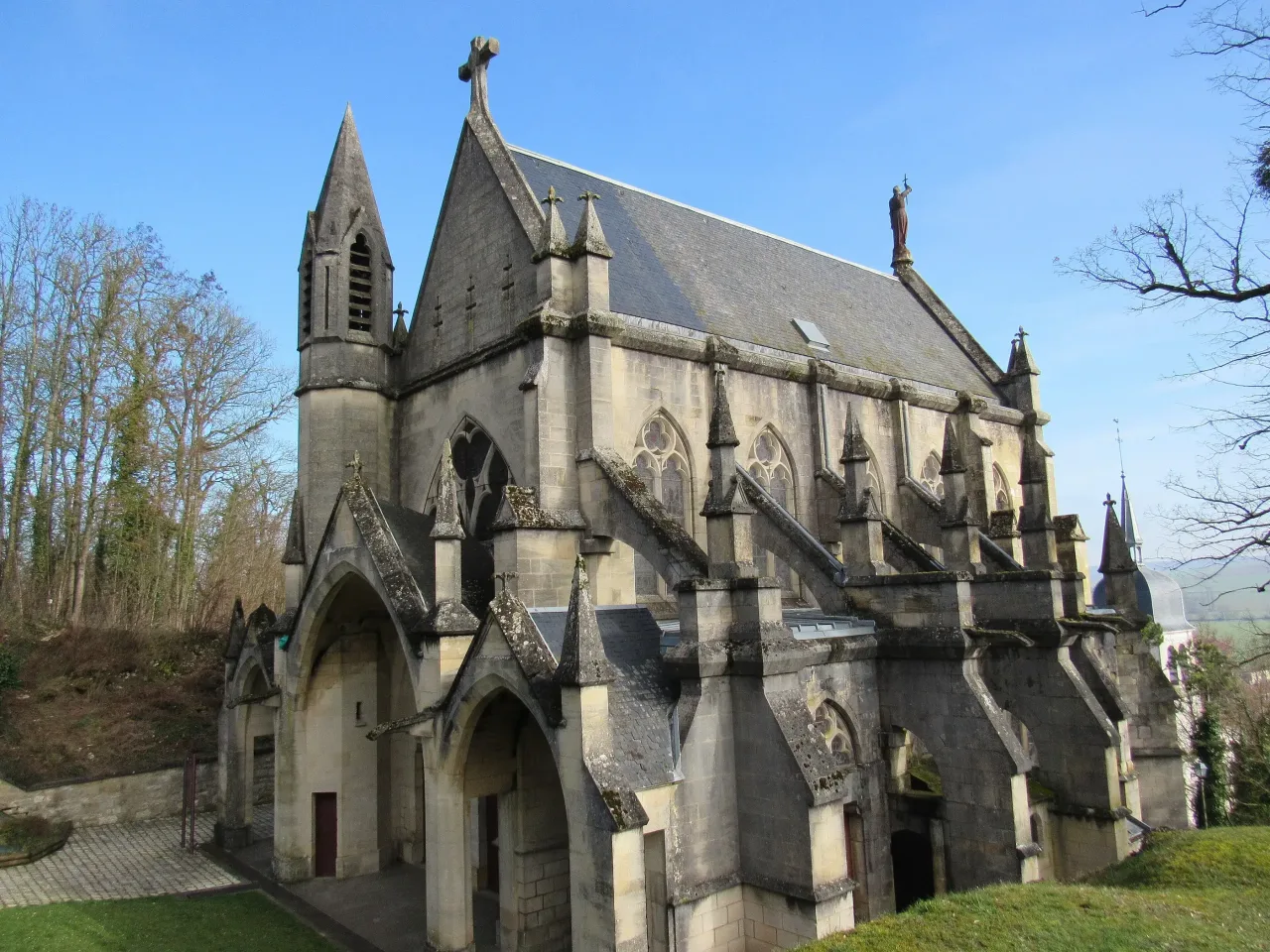
- Basilica A large Romano-Byzantine devotional church of the later nineteenth and early twentieth centuries, with a tall western spire, an arcaded porch and a domed sanctuary, set on a terrace cut into the hillside
- Dedication
- Saint Joan of Arc
A Nineteenth-Century Church on Fifteenth-Century Ground
The interest of Bois-Chenu is not the building. It is that the Church chose to put a building here at all, on a slope above a village, because of what a teenage girl said had happened to her on it. Come for the ground and for the fact that Catholics still walk up to it every May. The basilica is honest about being modern once you know when it was built, and knowing that frees you to receive the landscape as the older thing.
The Ground, and Then the Church
Under interrogation at Rouen Joan said that she was about thirteen when she first heard a voice, that it came in her father's garden, and that she was frightened. She named Saint Michael first, and afterwards Saint Catherine and Saint Margaret. The hillside above the village, the Bois-Chenu, has been connected with those first experiences for as long as the tradition can be followed. Private revelation of this kind does not belong to the deposit of faith, and the Church has never asked Catholics to hold any particular reconstruction of what happened on this slope. What the Church has done is canonize the woman it happened to. In the nineteenth century, as devotion to Joan grew toward her beatification in 1909 and her canonization in 1920, a great sanctuary was begun here. Work started in 1881 and continued in stages. The solemn consecration came in 1926, and the Diocese of Saint-Dié kept the centenary of that consecration in 2026.
A tall Romano-Byzantine church in pale stone, its spire visible from the valley floor, with an arcaded porch, a domed sanctuary and a painted and mosaic cycle of Joan's life within. It is a confident piece of nineteenth-century French devotional building and reads as exactly that.
Spiritual Significance
On an ordinary weekday the basilica is large, cool and nearly empty, and the walk up to it does more spiritual work than the interior does. At the end of May it fills. The diocesan pilgrimage brings the parish church in the village and this sanctuary on the hill into one day, which is the right way to hold them together: the sacraments below, the vocation above.
Do Not Miss
-
The hillside
The ground is the old thing here. The tradition connecting this slope with the beginning of Joan's voices is far older than anything built on it.
-
The terrace and the view
From the west front the whole of the valley Joan grew up in is laid out below, with Domrémy in the middle distance.
-
The cycle of her life
Painted and mosaic work around the sanctuary telling the story from Domrémy to Rouen. It is nineteenth and twentieth-century devotional art and reads as such.
-
The consecration date
Solemnly consecrated in 1926, its centenary kept by the Diocese of Saint-Dié in 2026. Knowing the date is what lets you see the building clearly.
-
Bermont
The chapel of Notre-Dame de Bermont, remembered in the tradition as a place Joan prayed on Saturdays, is a short drive away and is part of the diocesan pilgrimage.
How to Visit
Come up after the village, not before it. Walk the last stretch if you can rather than parking at the door, and spend time on the terrace looking back down toward Domrémy before going in. Bermont, the small chapel of Notre-Dame de Bermont where Joan is remembered as having prayed on Saturdays, lies a short drive away and is part of the diocesan pilgrimage.
- Mass and pilgrimage liturgies through the season
- The diocesan Johannine pilgrimage at the end of May, around the feast on May 30
- Adoration and confession during pilgrimage days
- Group and parish pilgrimages received throughout the year
A living diocesan sanctuary, busiest around the feast at the end of May.
- Where
- On the hillside about 2 km from Domrémy-la-Pucelle, Vosges
- Diocese
- Diocese of Saint-Dié
- Consecrated
- Solemnly consecrated in 1926, begun in 1881
- Time needed
- About an hour, more on a pilgrimage day
- Before you go
- Confirm liturgy and opening with the diocese. The end of May is the pilgrimage season
Visiting
- Groups intending to celebrate Mass here should arrange it with the diocese in advance.
- Bermont, with the chapel of Notre-Dame de Bermont, lies a short drive away and belongs to the same diocesan pilgrimage.
Relics, Tombs, Sacred Objects
Tomb and Burial
- No one is buried here. Joan has no tomb anywhere.
Relics and Sacred Tradition
- The basilica holds no bodily relic of Joan of Arc. No authenticated first-class relic of hers is generally accepted as surviving, and the sanctuary's devotion rests on place and intercession rather than on a reliquary.
Sacred Objects
- The mosaic and painted cycle of Joan's life around the sanctuary.
- The hillside and the wooded slope behind the church, which is the reason the building stands where it does.
- The terrace before the west front, which looks back down the Meuse valley toward Domrémy.
Connected Saints
The sanctuary exists for one saint, and she grew up in the valley below it.
The rest of the Domrémy geography
-
Birthplace
Maison Natale de Jeanne d'Arc
The house where Joan was born and lived until her teens.
-
Parish church
Église Saint-Remy, Domrémy-la-Pucelle
The parish church of her baptism and childhood.
-
Chapel and medieval crypt
Chapelle Castrale, Vaucouleurs
Where Joan sought an escort from Robert de Baudricourt and from where she left for Chinon.

Map
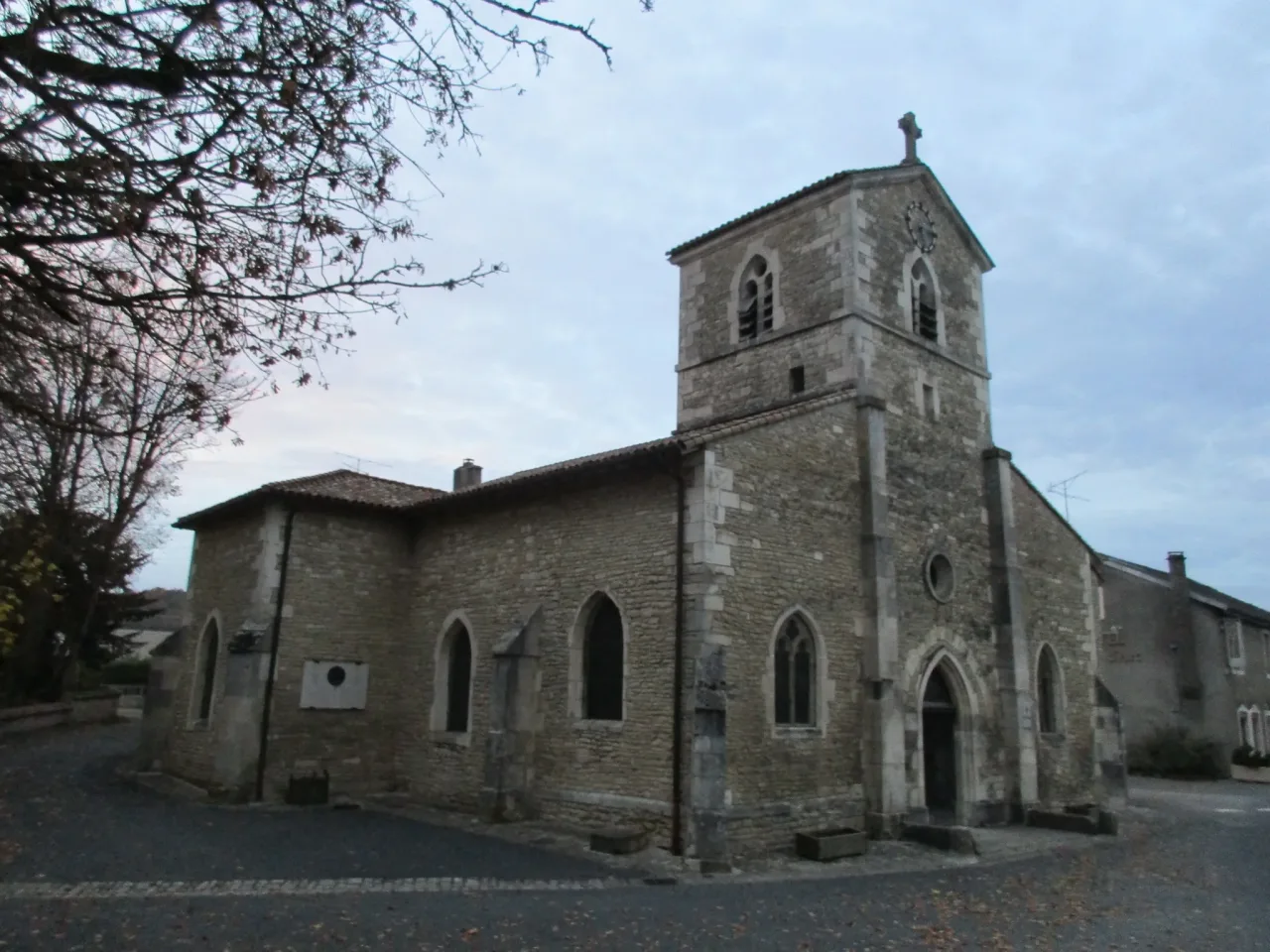
Two things must not be confused here and the record separates them throughout. The hillside called Bois-Chenu is the ground that tradition and Joan's own testimony associate with the beginning of her voices. The basilica standing on it is a devotional building of the nineteenth and twentieth centuries, begun in 1881 and solemnly consecrated in 1926. Nothing in the fabric is medieval. It is nonetheless a living Catholic sanctuary and the focus of the diocesan Johannine pilgrimage, which is why it belongs in a pilgrim's day rather than being treated as a Victorian curiosity.
September 2, 2026
Photo credits
- Hero. Photo: Zairon, CC BY-SA 4.0, via Wikimedia Commons. Source. CC BY-SA 4.0.
- A Building of 1881 to 1926. Photo: Zairon, CC BY-SA 4.0, via Wikimedia Commons. Source. CC BY-SA 4.0.