
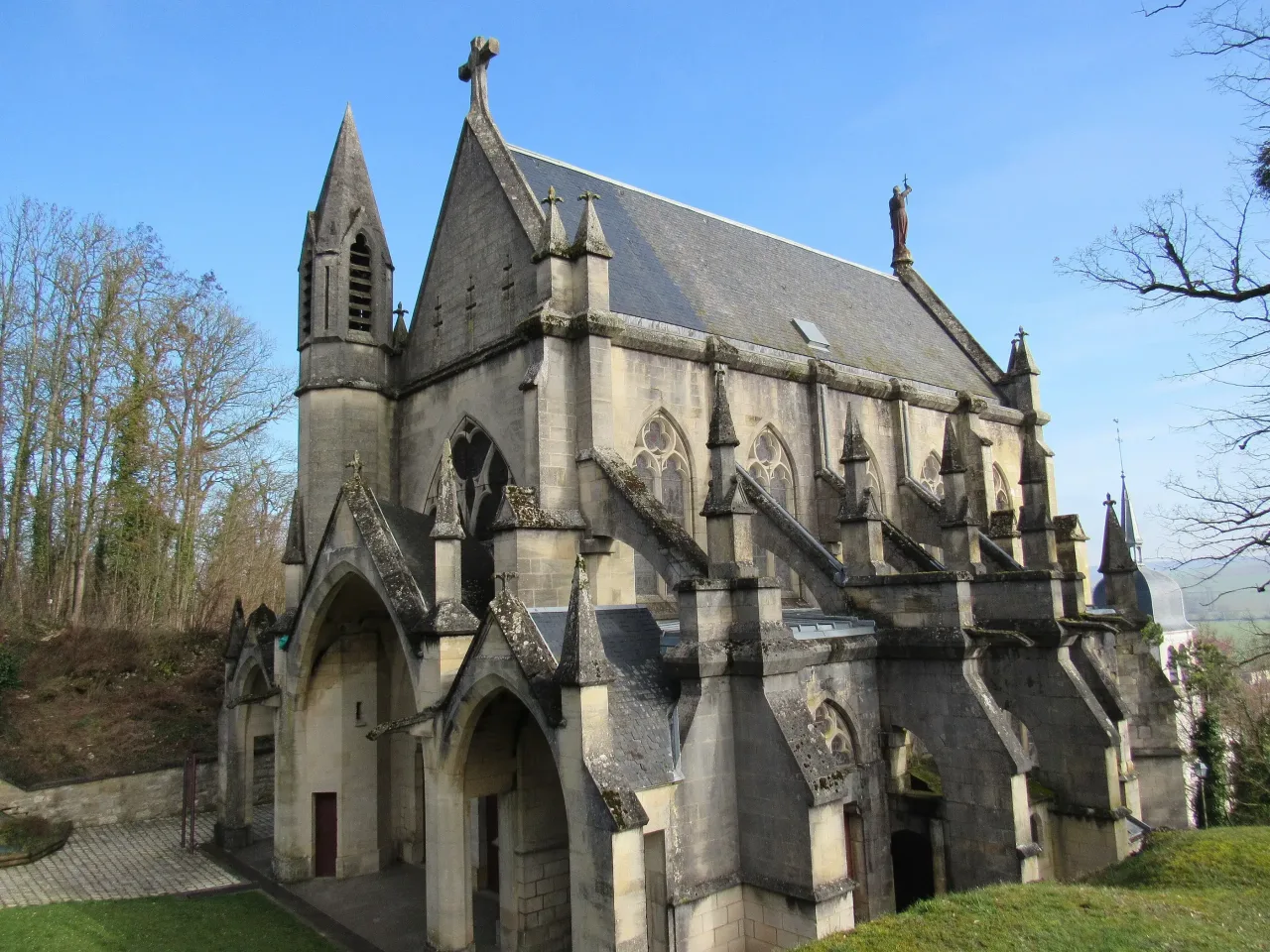
Chapelle Castrale, Vaucouleurs
Vaucouleurs is where Joan of Arc stopped being a village girl with a private conviction and became a public figure with an escort. She came repeatedly to Robert de Baudricourt, the captain here, and was repeatedly refused. She left for Chinon in February 1429. The medieval crypt beneath the chapel, with the image of Notre-Dame-des-Voûtes, is the surviving fabric of the place.
- Location
- Vaucouleurs, France 48.6022° N · 5.6645° E
- Type
- Chapel A Gothic revival chapel built between 1923 and 1929 above a surviving medieval crypt, standing within the remains of the castle enceinte
- Dedication
- Our Lady, under the title Notre-Dame-des-Voûtes
Where the Mission Became Public
Everything before Vaucouleurs is interior and unverifiable.
Everything after it is on the record. This is the hinge. A teenage girl from a village twenty-five kilometers south walked into a garrison town, asked a royal captain for an armed escort across hostile country to a court that had never heard of her, was sent away, and came back. The crypt below the chapel is small, cold and largely empty, and it is one of the few places in the whole Joan geography where you are standing in fabric she is likely to have stood in.
Baudricourt, and the Road to Chinon
Robert de Baudricourt held Vaucouleurs for the Dauphin in a countryside largely lost to Burgundian and English control. Joan came to him first, by the usual reckoning, in 1428, and was refused and sent home. She returned. Testimony gathered for the rehabilitation proceedings in 1456 remembered a girl who lodged in the town, who was talked about, and who prayed in the crypt of this chapel before the image of Our Lady. Baudricourt eventually gave way. He provided an escort of a handful of men, and Joan left for Chinon in February 1429, riding across territory held by the enemy toward a court that would examine her at Poitiers before it trusted her. The individual day-by-day reconstructions of that departure vary between historians. What is not in doubt is the month, the direction and the consequence.
The chapel above ground is a Gothic revival building of 1923 to 1929, with buttresses, pinnacles and a steep roof, standing inside the remains of the castle enceinte. Beneath it survives the medieval crypt, low and vaulted, which holds Notre-Dame-des-Voûtes. The Porte de France, a short walk away, is a gatehouse rebuilt largely in the eighteenth century on medieval foundations.
Spiritual Significance
Go down into the crypt and stay there. The chapel above is a devotional building of the 1920s and it is pleasant enough, but the crypt is the reason to come. It is Marian rather than Johannine in feeling, which is correct: what Joan is remembered as doing here is praying to Our Lady before setting out.
Do Not Miss
-
The crypt
Medieval, low and vaulted, and the surviving fabric of the site. This is the part of Vaucouleurs that Joan would recognise.
-
Notre-Dame-des-Voûtes
A medieval image of Our Lady kept in the crypt, associated by tradition and by 1456 testimony with Joan's prayer before her departure.
-
The Porte de France
The departure point. The gatehouse standing now rests on medieval fabric but was largely rebuilt in the eighteenth century.
-
The chapel above
Built between 1923 and 1929. Worth seeing, worth dating correctly, and not to be mistaken for the chapel Joan knew.
-
The distance to Domrémy
About twenty-five kilometers. She walked and rode it more than once, and was turned away more than once before Baudricourt relented.
How to Visit
Take the crypt first and the upper chapel second, which reverses the usual order and is the right one here. Then walk out to the Porte de France and look back through the arch. Vaucouleurs pairs naturally with Domrémy in a single day by road.
- Occasional Mass and pilgrimage liturgies rather than a daily round
- Johannine commemorations at the end of May
- Private prayer in the crypt when the chapel is open
A small site in a small town, best confirmed with the commune before traveling.
- Where
- Vaucouleurs, 55140, Meuse, in the castle enclosure above the town
- Diocese
- Diocese of Verdun
- What survives
- The medieval crypt and the castle ground plan. The upper chapel dates from 1923 to 1929
- Time needed
- About an hour with the Porte de France
- Before you go
- Confirm access with the commune. The crypt is not always open without arrangement
Visiting
- The Porte de France and the castle enclosure are open ground and can be seen without arrangement even when the crypt cannot.
- Domrémy lies about 25 km south, and the two sites make one unhurried day by road.
Relics, Tombs, Sacred Objects
Tomb and Burial
- No one is buried here.
Relics and Sacred Tradition
- The chapel holds no relic of Joan of Arc, and no authenticated bodily relic of hers is generally accepted as surviving anywhere. The devotion here is Marian and centers on Notre-Dame-des-Voûtes.
Sacred Objects
- Notre-Dame-des-Voûtes, a medieval image of Our Lady kept in the crypt, associated by long tradition and by testimony gathered in the 1456 proceedings with Joan's prayer at Vaucouleurs.
- The crypt itself, which is the surviving medieval fabric of the site.
- The remains of the castle enceinte around the chapel.
The rest of the Meuse geography
-
Birthplace
Maison Natale de Jeanne d'Arc
The house Joan left to come here, more than once, before Baudricourt relented.
-
Parish church
Église Saint-Remy, Domrémy-la-Pucelle
Her parish church, and the beginning of the sacramental life she kept up to the end.
-
Minor basilica
Basilique Sainte-Jeanne-d'Arc du Bois-Chenu
The sanctuary above her village, and the focus of the diocesan Johannine pilgrimage.

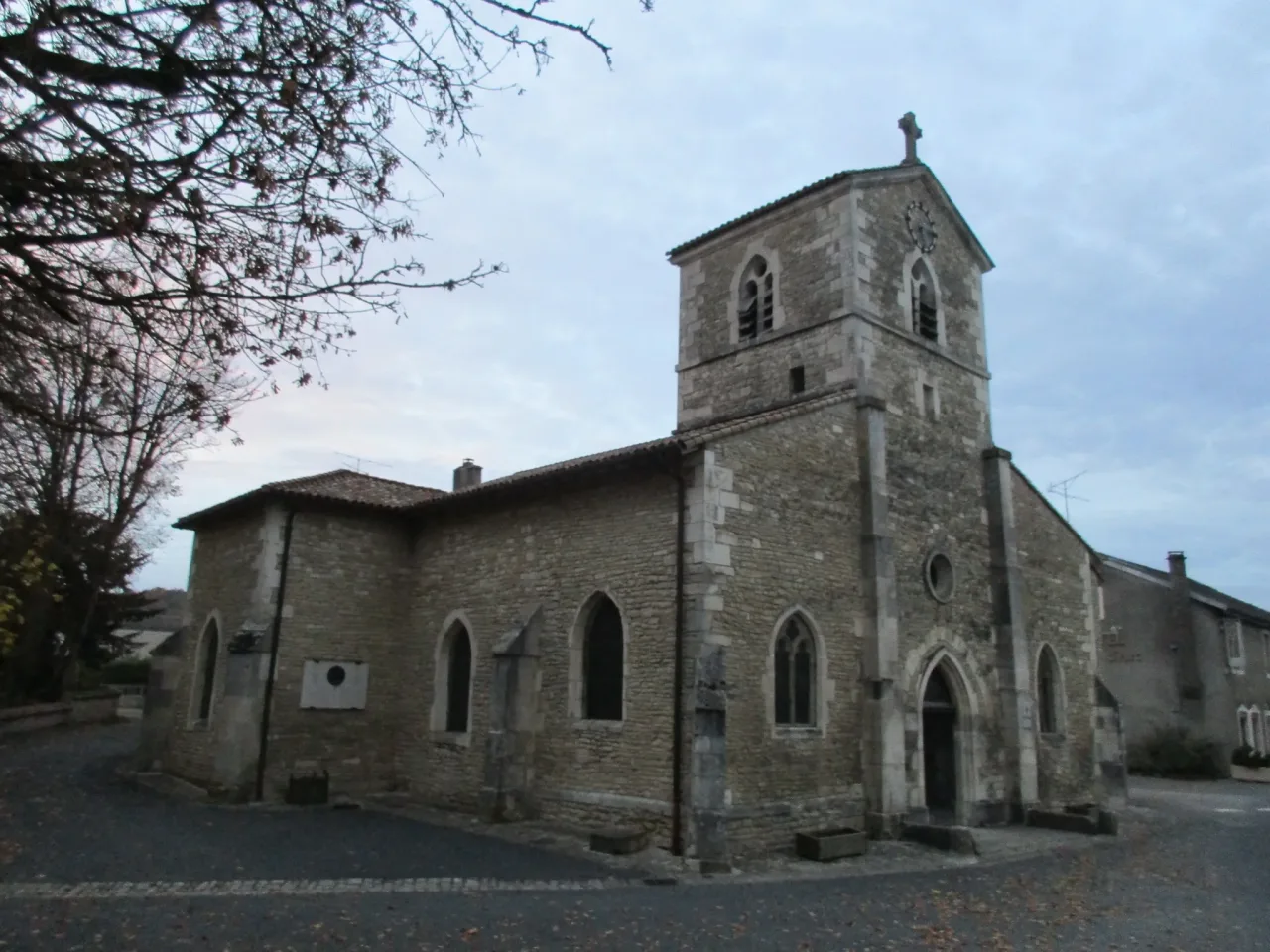

Map
Vaucouleurs is easy to get wrong in two directions. It is not a minor stop, because it is where Joan's mission became public and where she was given the escort that carried her to Chinon. It is also not an untouched medieval site: the chapel above ground was built between 1923 and 1929, and the Porte de France is a later gatehouse resting on medieval fabric. What survives from Joan's time is the crypt beneath the chapel and the ground plan of the castle. The record keeps those apart.
September 2, 2026
Photo credits
- Hero. Photo: FredSeiller, CC0, via Wikimedia Commons. Source. CC0.
- The Departure Point, Rebuilt. Photo: Adidelot, CC BY-SA 4.0, via Wikimedia Commons. Source. CC BY-SA 4.0.
- Five Centuries in One Frame. Photo: Ketounette, CC BY-SA 4.0, via Wikimedia Commons. Source. CC BY-SA 4.0.