
St. Stanislaus
of Szczepanów
A bishop died in a quarrel with a king, and a kingdom spent the next nine centuries arranging its dead around his grave.
The bishop of Kraków killed in 1079, whose shrine still stands at the center of the cathedral
Stanisław was bishop of Kraków when he was killed in 1079 during a conflict with King Bolesław II. The earliest surviving chronicle records that bishop and king fell out, that the bishop died violently, and that the king left Poland. Later chroniclers supplied the fuller martyr narrative received in Catholic tradition. His relics were translated to Wawel Cathedral around the turn of the eleventh and twelfth centuries, the shrine at the center of the nave became a focus of Polish devotion, and Pope Innocent IV canonized him at Assisi in 1253.
Almost nothing survives from Stanisław's own lifetime. He was born at Szczepanów in Lesser Poland around 1030 and became bishop of Kraków in 1072. The near-contemporary account, written a generation after his death by the chronicler known as Gallus Anonymus, is deliberately brief: it condemns both a “traitor bishop” and a violent king, and declines to explain the quarrel.
The fuller narrative familiar in Polish Catholic memory, in which the bishop rebukes the king for his conduct, excommunicates him, and is cut down at the altar, comes from Wincenty Kadłubek and from the two lives written by Wincenty of Kielcza in the thirteenth century. These hagiographies were written more than a century after the death and carry the miracle stories, including the raising of a man named Piotr to testify in a land dispute, that later shaped the saint's iconography. They preserve the received martyr tradition without becoming eyewitness testimony.
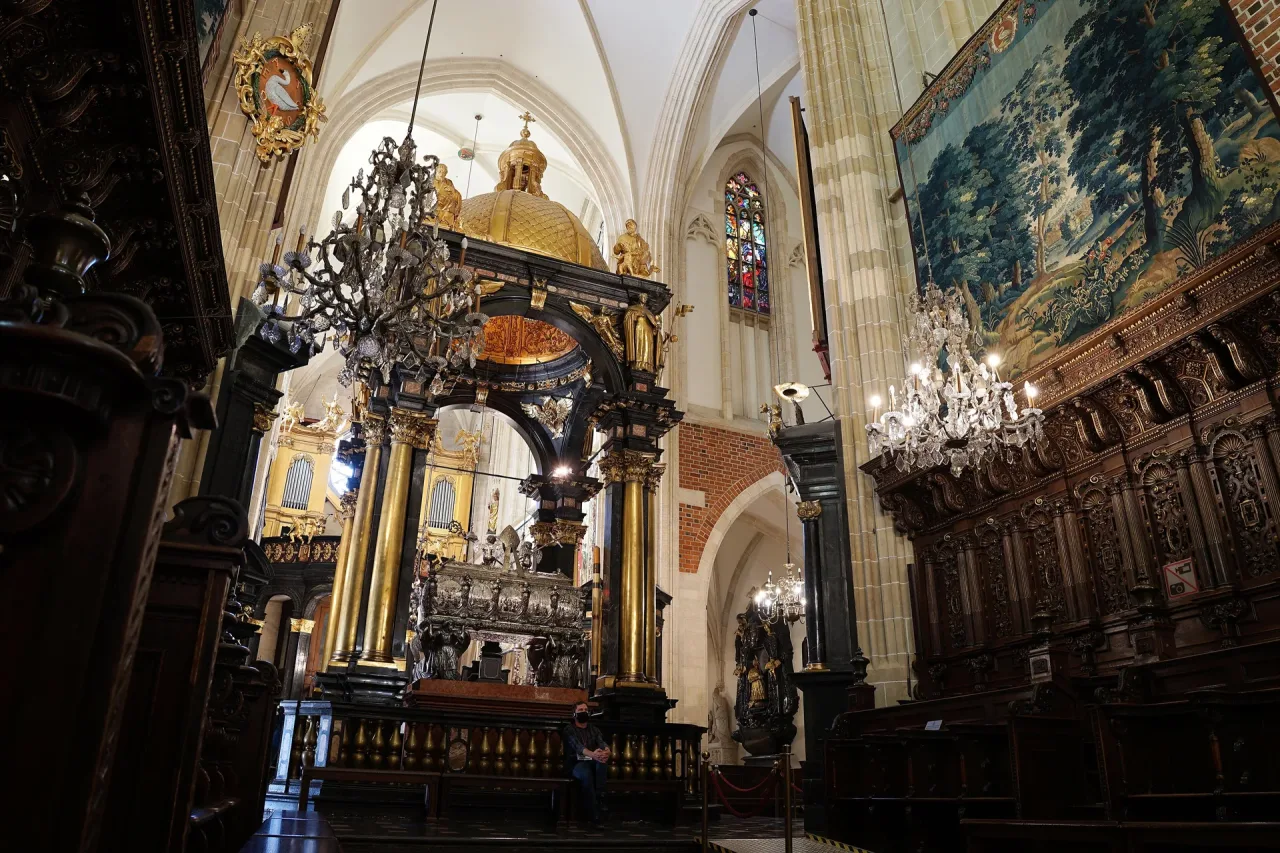
Around the turn of the eleventh and twelfth centuries, his relics were translated from the place tradition identifies as Skałka to the cathedral on Wawel, where the shrine became the center of the building and of a national devotion. Innocent IV canonized him at Assisi in 1253, and from 1254 his feast was kept in Poland on May 8. In the seventeenth century King Władysław IV commissioned a silver reliquary coffin for the relics; that coffin was destroyed by Swedish troops during the wars of the 1650s and replaced about 1670. It is the coffin under the baroque canopy in the middle of the nave today.
Stanisław became the patron of Poland and, through the coronations held at Wawel from 1320, a saint whose shrine and whose monarchy were physically bound together. Each year on the first Sunday after May 8 a procession still goes out from Wawel to Skałka, led by the archbishop of Kraków. In the twentieth century that procession took on renewed public weight under Primate Stefan Wyszyński and Archbishop Karol Wojtyła, joining devotion to the bishop-martyr with the Catholic defense of conscience under hostile political power.
Stanisław is venerated as a bishop-martyr who did not abandon the demands of his office in conflict with royal power. The earliest chronicle is spare and the later Catholic tradition is fuller; Wawel receives both in a shrine placed at the center of the cathedral, before the tombs of kings.
A life, in years and approximate ages.
-
about 1030BirthBorn at SzczepanówBorn in a village of Lesser Poland east of Kraków. The date rests on later tradition rather than on a contemporary record.
-
1072about 42Becomes bishop of KrakówHe succeeds to the see of Kraków, a bishopric then barely seventy years old.
-
1079about 49Killed in the conflict with Bolesław IIThe bishop is killed during a conflict with King Bolesław II, who leaves Poland soon afterwards. The near-contemporary chronicler condemns both men without explaining the quarrel; the accounts placing the death at the altar at Skałka were written more than a century later.
-
c. 1100After deathRelics brought to Wawel around 1100His relics are translated to the cathedral on Wawel from the place later tradition identifies as Skałka. The exact year is not securely recorded.
-
1253 (Sep 17)After deathCanonized at AssisiPope Innocent IV canonizes him at Assisi. From 1254 his feast is kept in Poland on May 8.
-
about 1670After deathThe present silver coffinA silver reliquary coffin commissioned in the previous century by King Władysław IV was destroyed by Swedish troops in the wars of the 1650s. The replacement made about 1670 stands under the canopy in the cathedral today.
Dates are approximate where the surviving record is traditional or incomplete.
2 places where this witness remains visible.
Wawel Cathedral
Begin at the confession at the crossing. Saint Jadwiga's tomb is in the north aisle a few steps away, and the two together are the cathedral's devotional center.
Skałka, the Church on the Rock
The Paulite church below Wawel at the southern edge of the old city, identified by long-standing tradition as the place of his death. The May procession from the cathedral ends here, about fifteen minutes on foot from Wawel.
The confession at the center of Wawel
The relics rest in a silver coffin beneath a baroque canopy at the crossing of Wawel Cathedral. The shrine has anchored the saint’s veneration since the Middle Ages, and the arrangement of the building around it shows the devotional weight Kraków gave to its bishop-martyr.
A principal relic site is named, with other fragments or reliquaries noted separately.
Principal shrine and relics
A silver reliquary coffin of about 1670 under a baroque canopy, standing at the center of the nave rather than at the east end.
- The relics of St. Stanislaus, bishop and martyr
Entry to the cathedral for prayer is free. The confession is in the middle of the nave and cannot be missed once you are inside; the ticketed crypt route is a separate decision.
Kindred witnesses
-
Saint John Paul II
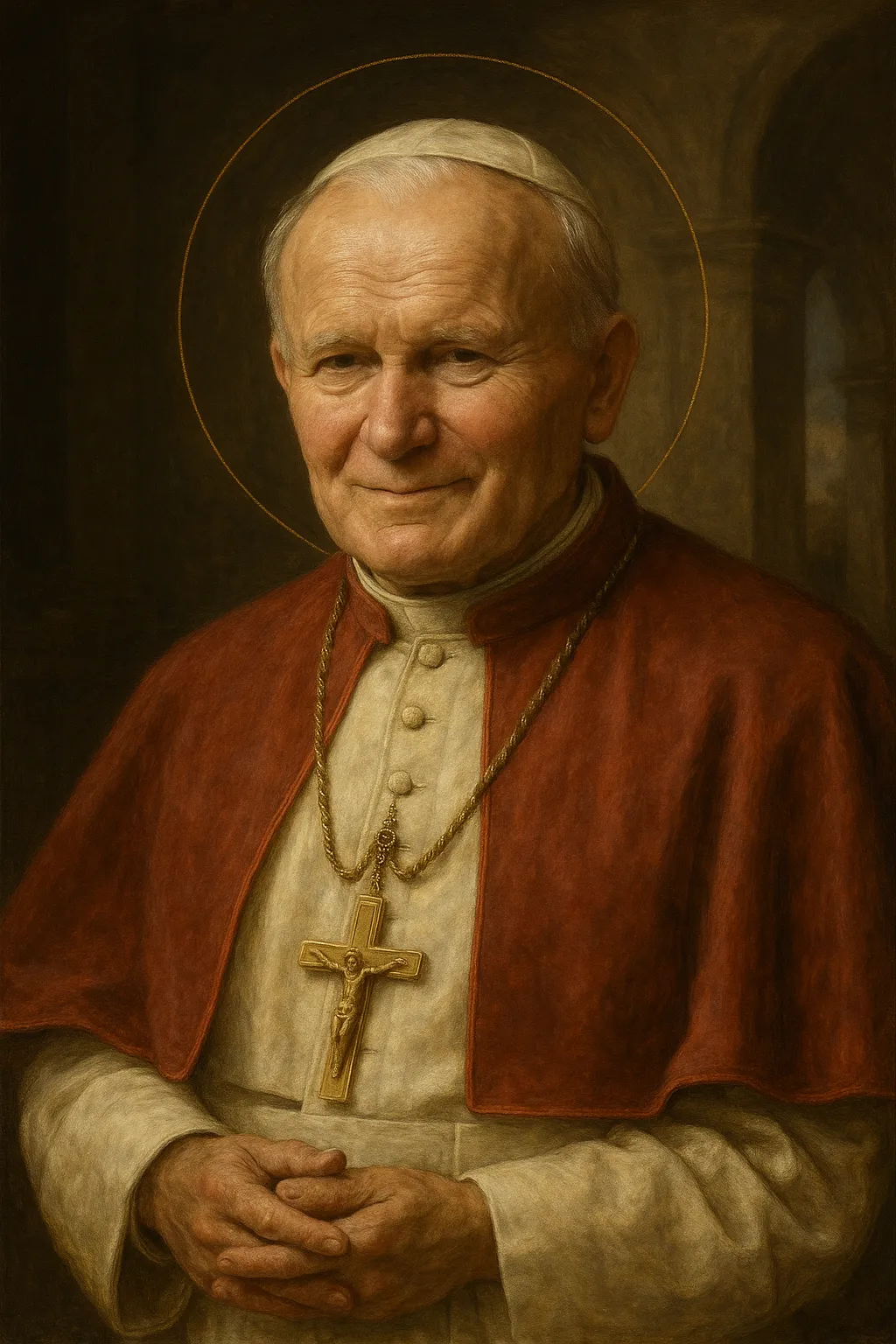
Archbishop of Kraków before his election, who preached at the Wawel shrine and gave the May procession to Skałka a public weight it had not carried for generations. -
Saint Faustina Kowalska
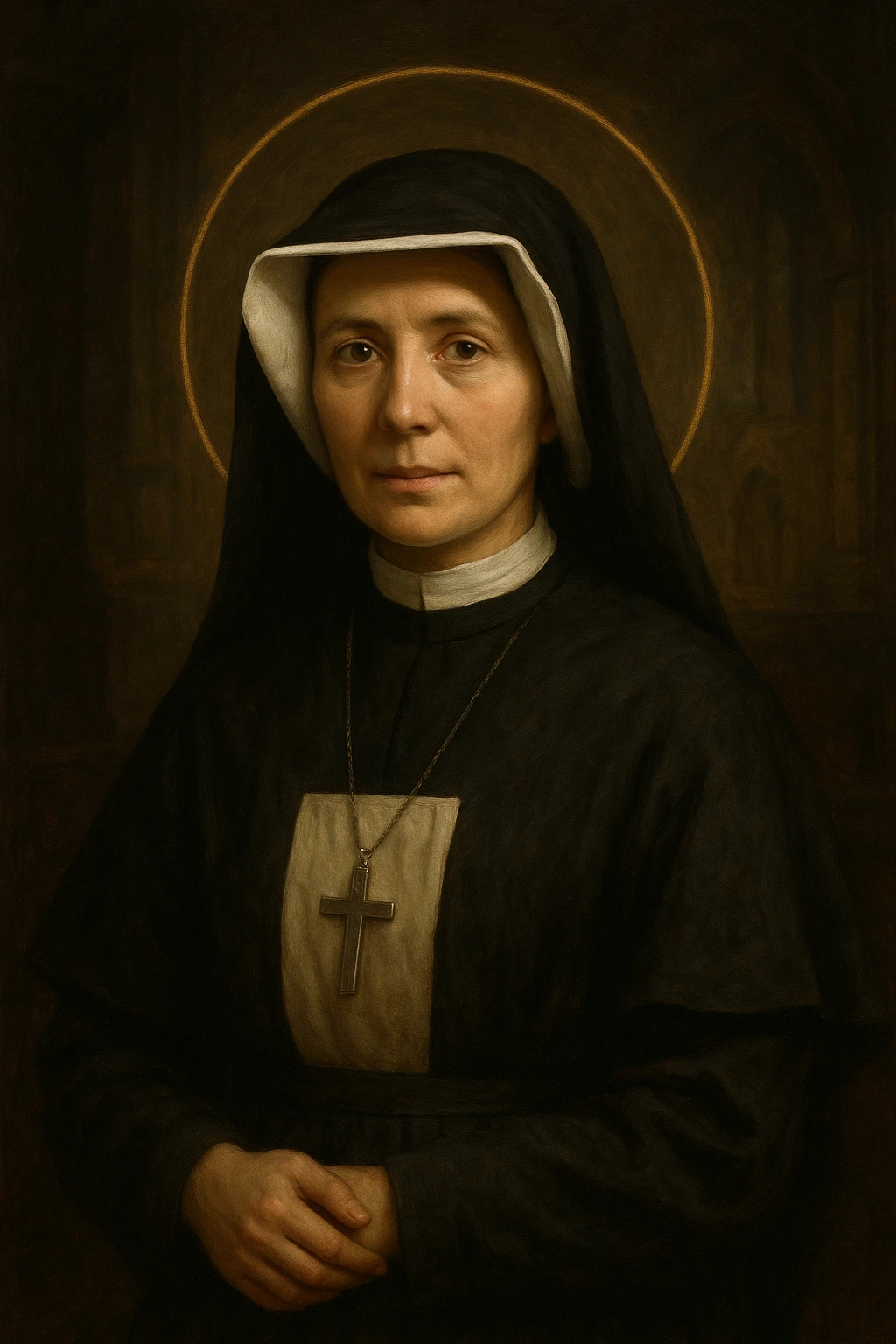
The other saint whose tomb draws pilgrims to Kraków, at the opposite end of the city and eight and a half centuries later.
Kept on April 11.
The universal Church keeps Saint Stanislaus on April 11, while Poland celebrates him on May 8, the date used there since 1254. He is honored with Saint Adalbert and Our Lady, Queen of Poland, among the principal patrons of Poland.
On the first Sunday after May 8 a procession goes from Wawel Cathedral to the church on the Rock at Skałka, led by the archbishop of Kraków.
Two churches and the road between them.
The geography of this saint is short and it is walked. A village birthplace in Lesser Poland, a church outside the medieval walls where tradition places his death, and the cathedral on the hill where his relics have rested ever since.
Szczepanów, about fifty kilometers east of Kraków, is where he was born and where a basilica now stands in his name.
Skałka, the Rock, lies below Wawel at the southern edge of the old city. Later Catholic tradition identifies it as the place of his death, and the May procession still ends there.
Wawel Cathedral holds the relics. The confession at the center of the nave is the point of the whole geography, and everything else on the hill was built around it.
Photo credits
- Wawel Cathedral. Photo: Strumyczek, CC BY-SA 4.0, via Wikimedia Commons. Source. CC BY-SA 4.0.