
St. Faustina Kowalska
She spent her life in kitchens, gardens, and convent doors—and carried from that hiddenness a call to trust the mercy of Christ.
The Polish sister whose hidden life placed trust in Christ’s mercy before a wounded century
Helena Kowalska was born in 1905 to a poor Catholic family in Głogowiec, Poland. In 1925 she entered the Congregation of the Sisters of Our Lady of Mercy and received the name Sister Maria Faustina. Her Diary records what Christ revealed to her of his mercy, the image inscribed “Jesus, I trust in You,” and prayer for the dying and for sinners. She died at Kraków-Łagiewniki in 1938 and was canonized in 2000.
Faustina’s outward life was deliberately ordinary. With little formal education, she worked as a housekeeper before entering religious life. In the convent she served as cook, gardener, porter, and sacristan. Obedience, a hard community life, tuberculosis, and quiet service are the frame in which the Diary was written.
From February 1931 Christ appeared to her and asked that an image be painted of what she saw. Under obedience to her confessors, above all Blessed Michał Sopoćko, she kept the Diary and saw the first Divine Mercy image painted at Vilnius. What she was given is trust in God’s mercy and mercy shown to others: private revelation, offered for the good of the Church rather than added to the deposit of faith, which the Church has judged worthy of belief and drawn into her own liturgical year.
After Faustina’s death, the devotion spread rapidly but not without correction. In 1959 the Holy Office prohibited the images and writings in forms then circulating, citing inaccurate translations and insufficient access to the originals. In 1978 the Congregation for the Doctrine of the Faith withdrew that prohibition after examining the original documents and changed circumstances.
Pope John Paul II beatified Faustina in 1993 and canonized her on April 30, 2000. At the canonization he established the Second Sunday of Easter as Divine Mercy Sunday for the universal Church. Her tomb and the original convent chapel at Łagiewniki now stand within a much larger international shrine, but the most faithful visit begins in the small chapel where she prayed and was buried.
Faustina’s legacy is a disciplined confidence that no misery is greater than God’s mercy. The devotion sends the sinner toward confession, the Eucharist, works of mercy, and trust in the risen Christ.
A life, in years and approximate ages.
-
1905 (Aug 25)BirthBorn Helena KowalskaHelena is born at Głogowiec, the third of ten children in a poor Catholic farming family.
-
1925 (Aug 1)19Enters religious lifeHelena enters the Congregation of the Sisters of Our Lady of Mercy in Warsaw and later receives the name Sister Maria Faustina.
-
1931 (Feb 22)25The Divine Mercy image requestedChrist appears to Faustina at Płock and asks that an image be painted after the pattern she is shown, signed “Jesus, I trust in You.”
-
1933–193628–30Vilnius, the Diary, and the first imageWith the guidance of Father Michał Sopoćko, Faustina writes under obedience and works with artist Eugeniusz Kazimirowski on the first Divine Mercy image.
-
1936–193830–33Final illness at ŁagiewnikiTuberculosis increasingly limits Faustina’s strength. She continues convent work, correspondence, and prayer while receiving medical treatment.
-
1938 (Oct 5)33Death at ŁagiewnikiFaustina dies in the convent at Kraków-Łagiewniki and is buried in the community cemetery.
-
1966 (Nov 25)After deathHer remains brought into the convent chapelAs the diocesan process for her cause opens under Archbishop Karol Wojtyła, Faustina’s remains are moved from the sisters’ cemetery into the convent chapel at Łagiewniki, where the tomb is venerated today.
-
1959–1978After deathRestriction reviewed and withdrawnThe Holy Office’s 1959 prohibition, issued amid faulty translations and incomplete documentation, is withdrawn by the Congregation for the Doctrine of the Faith in 1978 after study of the originals.
-
1993 (Apr 18)After deathBeatified in RomePope John Paul II beatifies Faustina in Saint Peter’s Square, fifteen years after the withdrawal of the earlier restriction on the devotion.
-
2000 (Apr 30)After deathCanonization and Divine Mercy SundayPope John Paul II canonizes Faustina and announces the Second Sunday of Easter as Divine Mercy Sunday throughout the Church.
Dates are approximate where the surviving record is traditional or incomplete.
One place where this witness remains visible.

Divine Mercy Sanctuary, Kraków-Łagiewniki
End in the convent chapel at her tomb, then enter the wider sanctuary and the Easter theology of mercy it serves.
Her tomb in the original convent chapel
Faustina’s relics are venerated in the Chapel of the Merciful Jesus and the tomb of Saint Faustina at Kraków-Łagiewniki, within the convent of her congregation and the wider Divine Mercy Sanctuary.
The saint is publicly venerated at a named tomb.
Tomb and principal shrine
The original convent chapel holds Faustina’s tomb and remains the spiritual heart of the larger international sanctuary.
- Tomb and bodily relics of Saint Faustina
Begin in the convent chapel before the modern basilica. The scale is smaller, the silence closer, and the connection to her actual religious life more immediate.
Kindred witnesses
-
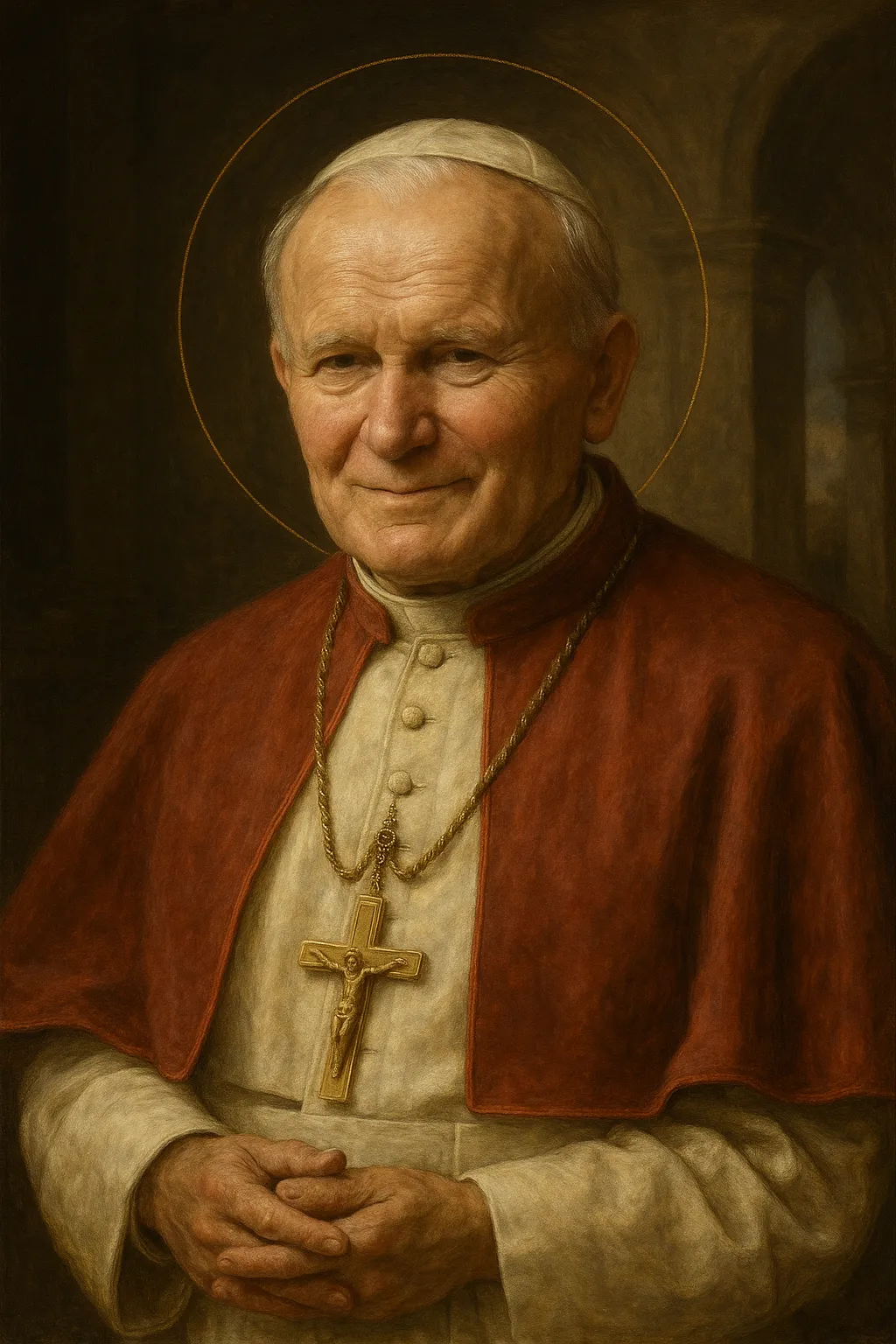
Saint John Paul II
As Archbishop of Kraków he advanced the investigation of her writings; as Pope he beatified and canonized her and established Divine Mercy Sunday. -
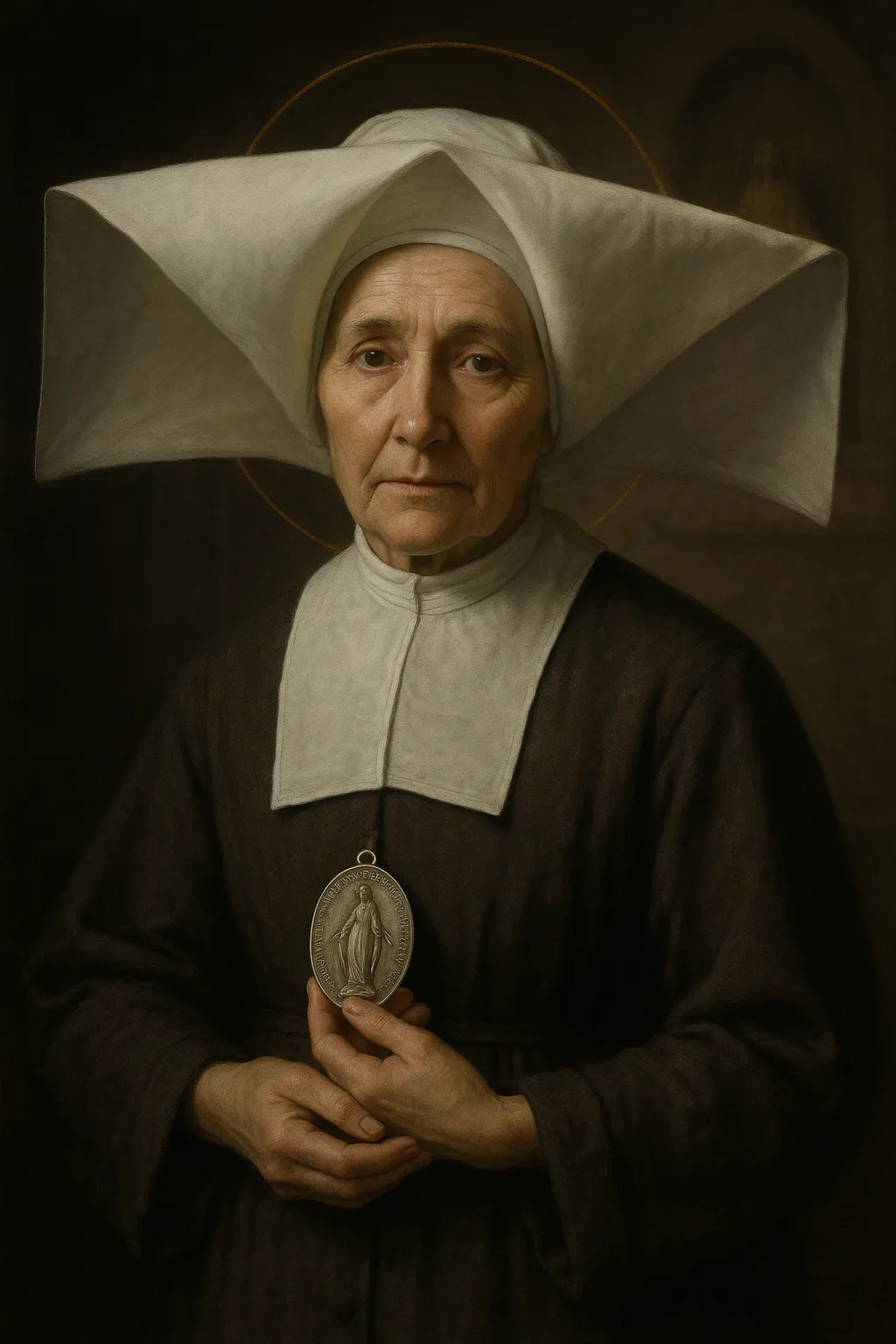
Saint Catherine Labouré
Another religious sister to whom Our Lady entrusted an image and a devotion the Church went on to approve. -
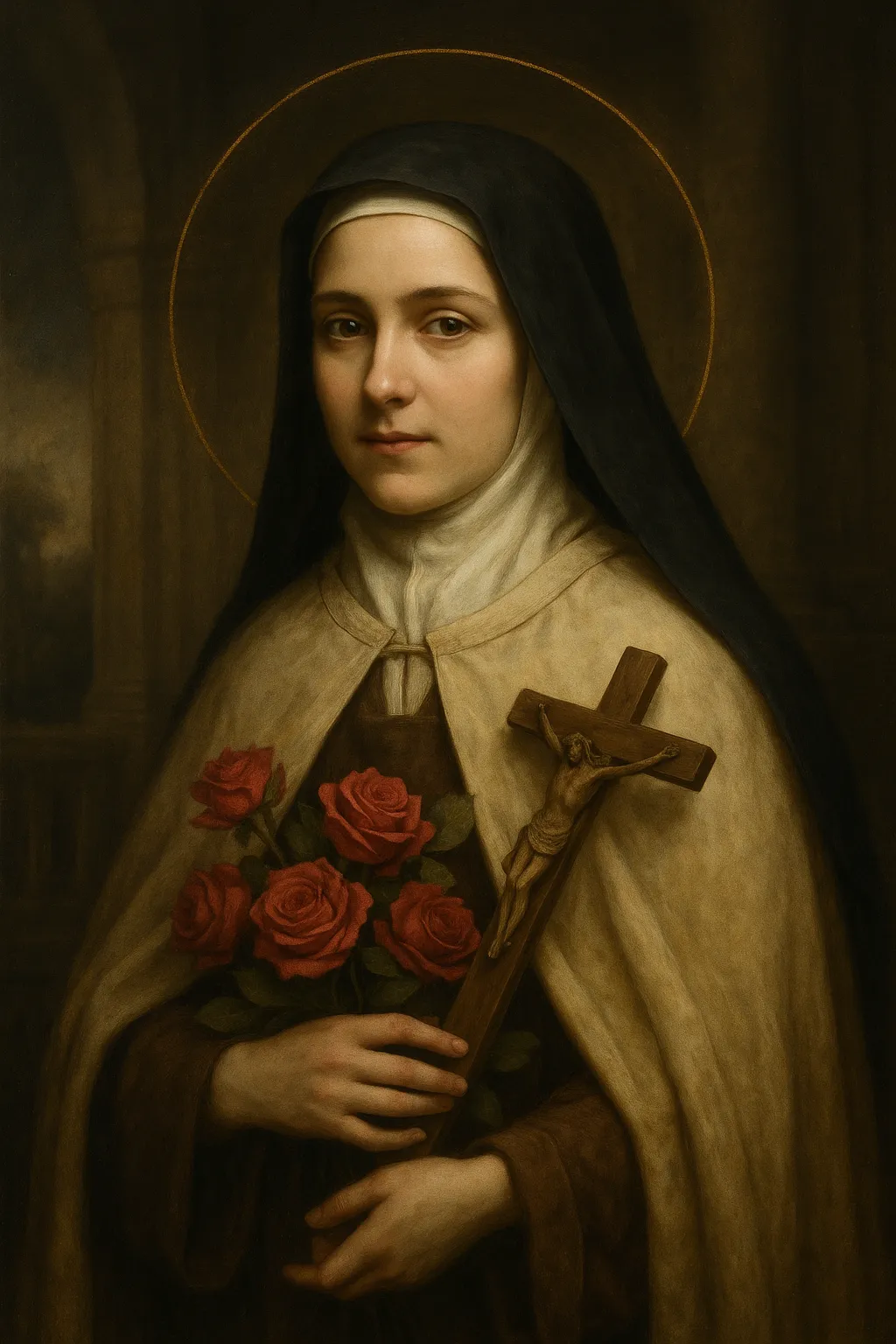
Saint Thérèse of Lisieux
A modern Carmelite witness to confident trust in merciful love, close in spiritual emphasis though different in vocation and expression.
Kept on October 5.
Saint Faustina’s feast is kept on October 5, the anniversary of her death. Divine Mercy Sunday, which Pope John Paul II proclaimed for the whole Church at her canonization, is the Second Sunday of Easter and belongs to the Easter liturgy itself: the risen Christ showing his wounds and giving peace.
Her tomb is in the convent chapel at Kraków-Łagiewniki, at the heart of the Divine Mercy Sanctuary that grew up around it. Płock, where Christ asked for the image, and Vilnius, where it was first painted, carry the rest of her geography.
From a poor farmhouse to the chapel of mercy.
Faustina’s path runs through rural central Poland, Warsaw, Płock, Vilnius, and Kraków. It is a map of obedience: each place matters because she was sent there, worked there, suffered there, or wrote there.
Głogowiec and Świnice Warckie give the family and parish world from which Helena came. Warsaw gives the threshold of religious life.
Płock holds the 1931 vision that asked for the Divine Mercy image. Vilnius holds Father Sopoćko, the first painted image, and the beginning of public devotion.
Łagiewniki is the end and the center: the convent where Faustina died, the chapel that holds her tomb, and the international sanctuary that grew around it.