
St. Philip Neri
A Florentine who gave his life to the streets, churches, and pilgrims of Rome, and made joy a path to God.
Cheerfulness strengthens the heart and makes us persevere in a good life; the servant of God ought always to be in good spirits.
The Maxims and Sayings of Saint Philip Neri, gathered from his early biographers (Gallonio, 1600; Bacci, 1622) Traditional
The Apostle of Rome, founder of the Oratory, a priest of joy
Philip Neri came to Rome as a young layman in the 1530s and never left. For sixty years he walked its streets, sat in its churches, and drew young Romans, pilgrims, cardinals, and ordinary people into a life of prayer, confession, and unguarded joy. He founded the Congregation of the Oratory, gave the city back its faith one conversation at a time, and was remembered, even in his lifetime, as the Apostle of Rome.
Born in Florence in 1515, Philip was sent as a young man to a relative in business near Naples, but he turned away from the prospect of a merchant's life and made his way to Rome. There he lived simply, tutored two boys, studied philosophy and theology, and spent his nights in prayer, often in the catacombs along the Via Appia, where the early martyrs of the city were buried.
In 1544, according to his early biographers, Philip underwent a profound experience of prayer near the catacombs of San Sebastiano, which left him with a lifelong physical sign of an enlarged heart. From this came the warmth that marked the rest of his life. He gathered people for prayer, Scripture, and informal talks, with music woven through, and these meetings gave their name to a new musical form, the oratorio. Ordained a priest in 1551, he settled at San Girolamo della Carità and made the confessional and the spiritual conversation his chief work.
In 1575 Pope Gregory XIII formally approved the Congregation of the Oratory, a community of priests living together without vows, and gave it the church of Santa Maria in Vallicella. Philip rebuilt it as the Chiesa Nuova, the New Church, which became the heart of the Oratorian movement. He counted Charles Borromeo, Ignatius of Loyola, and Camillo de Lellis among his friends, directed the consciences of much of Catholic Rome, and used humor and small humiliations to keep himself and others free of vanity.
He died in Rome on the night of Corpus Christi, May 26, 1595, after a full day of hearing confessions, and was canonized in 1622 alongside Ignatius of Loyola, Francis Xavier, Teresa of Avila, and Isidore. His body rests in the Chiesa Nuova, in the chapel built for him, and his rooms above the sacristy are still kept as he left them.
Philip Neri reshaped Catholic Rome not through office or reform decrees but through friendship, confession, and joy. The Oratory he founded spread across Europe, the oratorio took its name from his prayer gatherings, and his conviction that holiness and cheerfulness belong together has remained one of the most attractive notes in Catholic spirituality.
A life, in years and approximate ages.
-
1515BirthBirth in FlorenceFilippo Romolo Neri is born in Florence to a notary's family. He is given a devout upbringing and a Florentine love of learning and good company.
-
1533 ADAbout 18He Comes to RomeTurning away from a merchant's career, Philip settles in Rome as a poor layman. He tutors, studies, and spends his nights in prayer, often in the catacombs along the Via Appia.
-
1544 ADAbout 28The Dilation of the HeartAccording to his early biographers, a Pentecost experience of prayer near the catacombs of San Sebastiano leaves Philip with a lasting physical sign and the burning charity that marks the rest of his life.
-
1551About 35Ordained a PriestPhilip is ordained and settles at San Girolamo della Carità. The confessional and the spiritual conversation become his chief work, and his informal gatherings of prayer, talk, and music begin to take shape.
-
1575About 60The Oratory ApprovedPope Gregory XIII approves the Congregation of the Oratory and gives it Santa Maria in Vallicella. Philip rebuilds the church as the Chiesa Nuova, the center of the Oratorian movement.
-
159579Death in RomeAfter a full day of hearing confessions, Philip dies in the early hours after Corpus Christi, May 26. He is buried in the Chiesa Nuova, the church he had made the home of the Oratory.
-
1622 ADCanonized at RomePope Gregory XV canonizes Philip alongside Ignatius of Loyola, Francis Xavier, Teresa of Avila, and Isidore, a single day that gathered much of the Catholic renewal into the calendar of saints.
Dates are approximate where the surviving record is traditional or incomplete.
4 places where this witness remains visible.
Prefer a ready-made pilgrimage? See the Philip Neri's Rome.
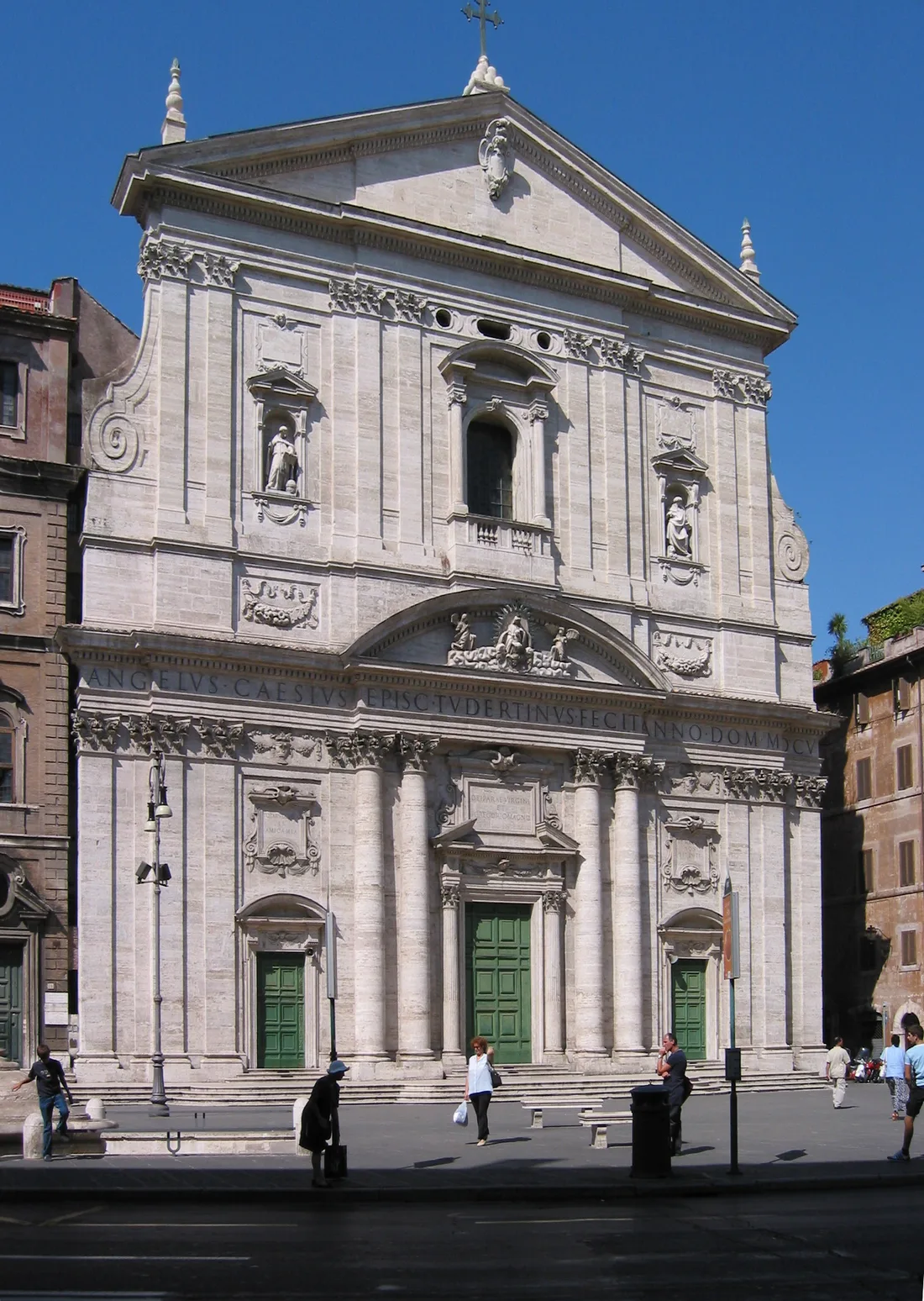
Chiesa Nuova (Santa Maria in Vallicella)
Begin at his church and tomb, the heart of the Oratory and the center of his Roman life.
The Camerette
His preserved rooms, where the saint actually lived, prayed, and received the city.
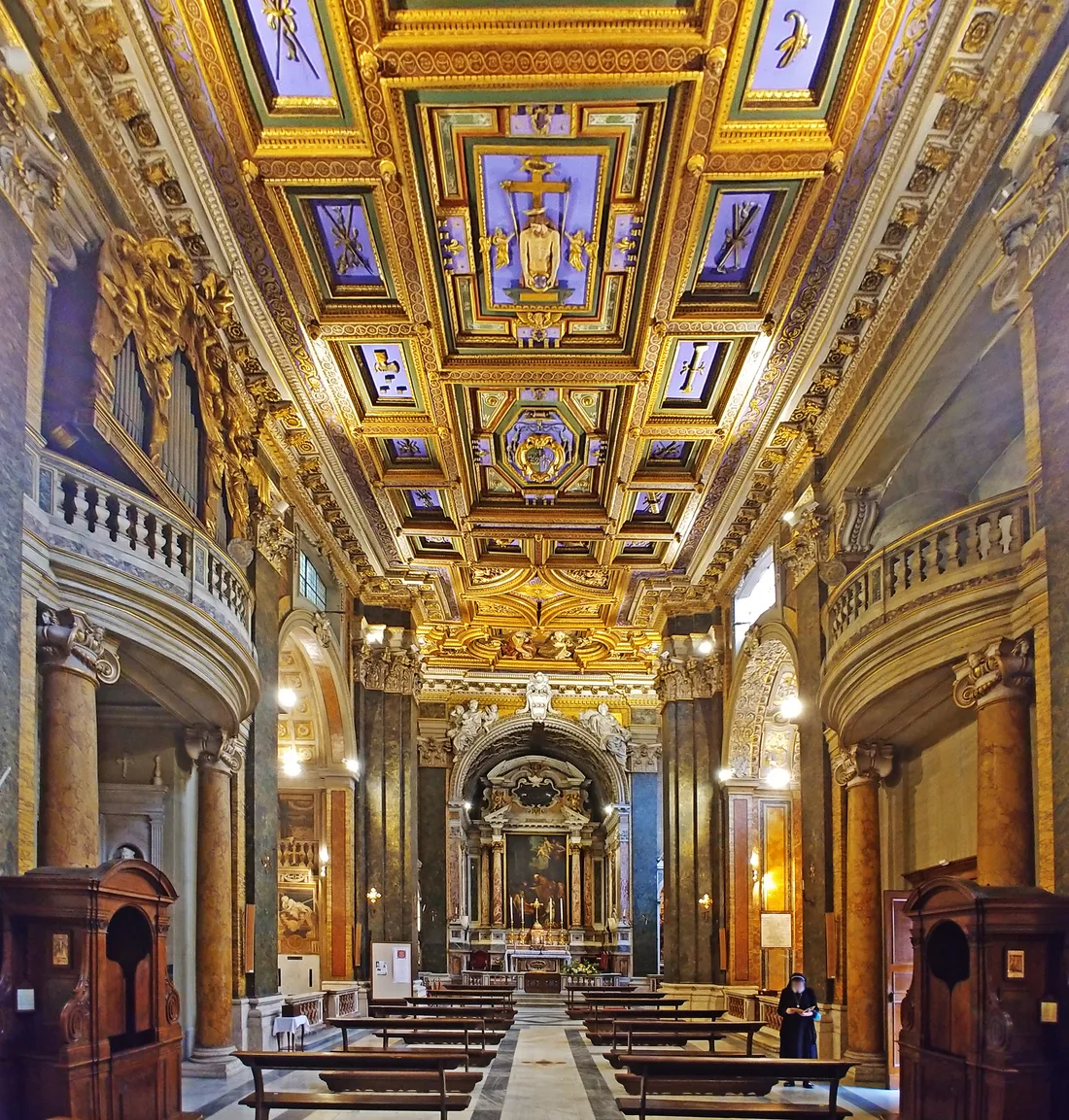
San Girolamo della Carità
Where Philip lived for many years after ordination and began the Oratory gatherings.

Catacombs of San Sebastiano
The place tradition associates with his Pentecost experience of prayer in 1544.
Where the body is venerated.
Philip is buried in the Chiesa Nuova, Santa Maria in Vallicella, in the chapel built for him to the left of the high altar. His body is venerated beneath the altar of the chapel; his preserved rooms, the Camerette, lie above the sacristy and are shown to pilgrims.
The saint is publicly venerated at a named tomb.
Tomb of Saint Philip Neri
The Oratorian motherhouse that Philip rebuilt holds his tomb in the chapel dedicated to him, to the left of the high altar. His body is venerated beneath the altar, and his rooms above the sacristy are kept as a shrine.
- Tomb and body of Saint Philip Neri, beneath the altar of his chapel
- The Camerette, his preserved rooms above the sacristy
The chapel is in the left transept of the Chiesa Nuova. Ask about access to the Camerette, which keep his memory more intimately than the great chapel below.
Kindred witnesses

Showing 1 of 3 authored connections with full saint guides.
Philip Neri's Rome · 4 stops.
Four Roman places in the order his life ran: the church he built and is buried in, the rooms above its sacristy where he actually lived, the house where the Oratory began, and the catacomb on the Appian Way where he prayed. The first three are a single walk; the catacombs need their own half day.
-
01 Tomb
Chiesa Nuova (Santa Maria in Vallicella)
RomeBegin at his church and tomb, the heart of the Oratory and the center of his Roman life.
-
02 Lived here
The Camerette
Above the sacristy of the Chiesa NuovaHis preserved rooms, where the saint actually lived, prayed, and received the city.
-
03 Lived here · Founded here
San Girolamo della Carità
Rome, near Palazzo FarneseWhere Philip lived for many years after ordination and began the Oratory gatherings.
-
04 Where the call came
Catacombs of San Sebastiano
Via Appia Antica, RomeThe place tradition associates with his Pentecost experience of prayer in 1544.
Kept on May 26.
May 26, the day of his death, is the feast of Saint Philip Neri, kept with special solemnity at the Chiesa Nuova in Rome and in Oratorian churches worldwide. He is honored as a patron of Rome and of the city's humor and good spirits, and his feast carries something of the joy he was known for.
His tomb is in the Chiesa Nuova, Santa Maria in Vallicella, between the Tiber and Piazza Navona. The rooms where he lived, the Camerette above the sacristy, are open to pilgrims, and the catacombs of San Sebastiano on the Via Appia mark the place of his great experience of prayer.
Photo credits
- Saint page. Carlo Dolci (1616–1686), The Metropolitan Museum of Art / Public domain (CC0). Source. CC0.
- Chiesa Nuova (Santa Maria in Vallicella). Roma Chiesa Nuova GS 112-1225 IMGc. Georg Schelbert, CC BY-SA 3.0, via Wikimedia Commons. Source. CC BY-SA 3.0.
- San Girolamo della Carità. Pufui PcPifpef, CC BY-SA 4.0, via Wikimedia Commons. Source. CC BY-SA 4.0.
- Catacombs of San Sebastiano. Palickap, CC BY-SA 4.0, via Wikimedia Commons. Source. CC BY-SA 4.0.