
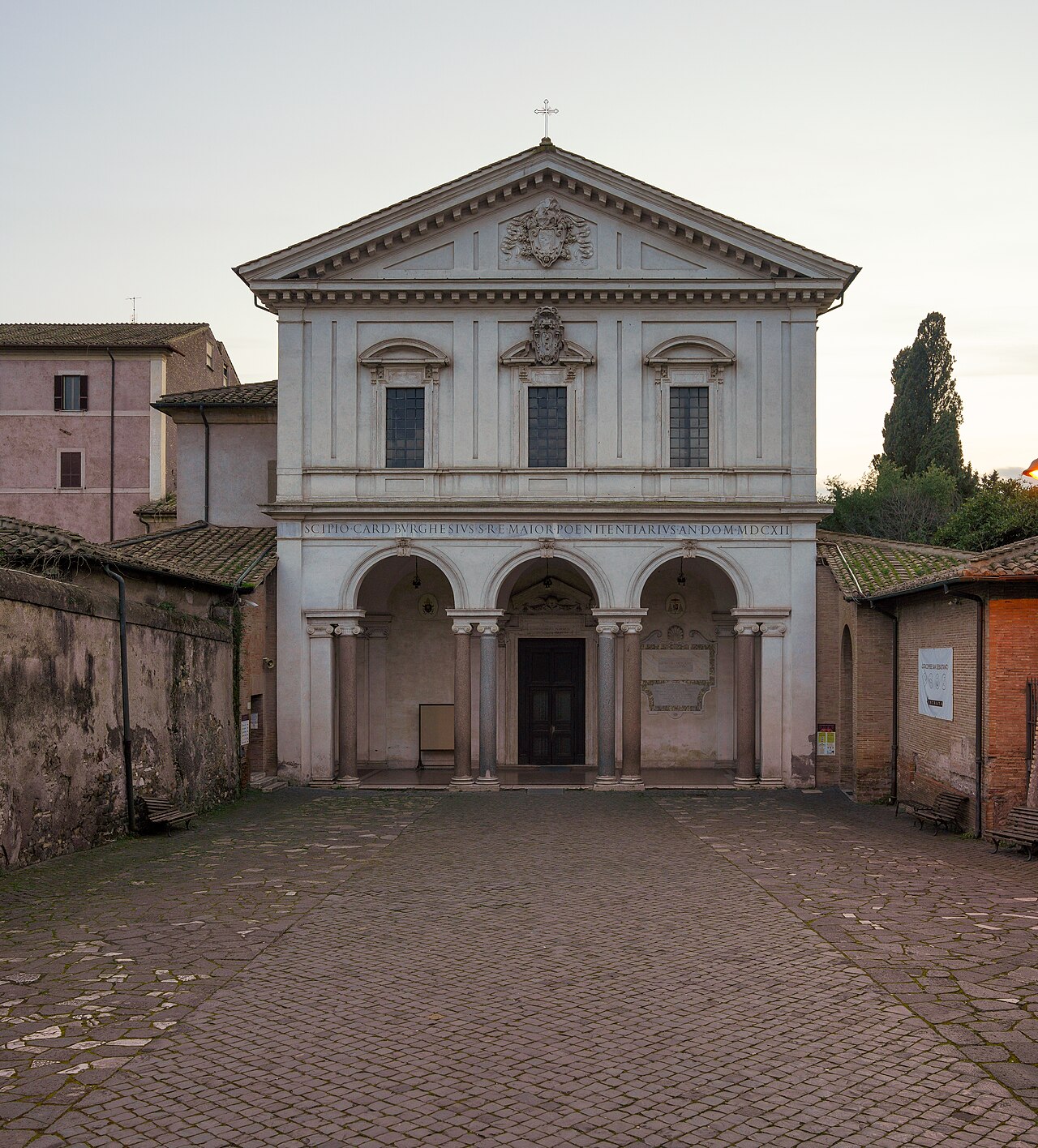
Basilica of San Sebastiano fuori le Mura, Rome
The church that gave the word catacomb to the Church, and the place Rome prayed to Peter and Paul when it could not reach their graves.
- Location
- Rome, Italy 41.8557° N · 12.5158° E
- Type
- Minor basilica and catacomb A seventeenth-century basilica by Flaminio Ponzio, completed by Giovanni Vasanzio, built inside the shell of a fourth-century ambulatory basilica raised by Constantine
- Sacred character
- Saint Sebastian, martyr The relics venerated as Saint Sebastian's, and the memoria Apostolorum below
- Time Needed
- 1 hour to half a day
Where Devotion Went When It Could Not Go Home
Most of the Seven Churches stand inside Rome. This one stands on a road going out of it, past the last houses, where the Appian Way runs between pines and broken tombs.
Underneath the basilica is a cemetery that was already old when Christians began burying here, and in the middle of it is a covered courtyard whose walls are covered in prayers. They are addressed to Peter and to Paul. Neither apostle was buried here. That is the point worth carrying down the stairs.
A Hollow in the Ground, and a Word
The ground here was quarried for pozzolana, the volcanic sand Rome built with, and the workings left a depression in the surface. Romans called the place ad catacumbas, near the hollow. The name belonged to this site alone. Only later, when the underground cemeteries of Rome were being rediscovered, did the word spread to all of them. Every catacomb in the world is named after this field.
In the middle of the second century the quarry was filled and three pagan mausoleums were built on top. Christians were burying their dead among them within a century. Then, around the year 250, a walled arbor went up over part of the site, and people came to eat funeral meals and to pray. They wrote on the plaster as they went. The Pontifical Commission for Sacred Archaeology, which holds the site, records hundreds of deciphered invocations to Peter and Paul, left by pilgrims who venerated the apostles here because the persecution had made their tombs at the Vatican and on the Ostian Way unreachable.
Sebastian, an officer martyred under Diocletian, was buried in this cemetery, and by the ninth century his name had replaced the apostles' on the church above. Constantine had raised a great covered basilica over the burial ground; in 1609 Cardinal Scipione Borghese commissioned Flaminio Ponzio to rebuild inside it, and Giovanni Vasanzio finished the work after Ponzio died in 1613. What stands today is that seventeenth-century church, sitting in the footprint of the fourth-century one.
The basilica is low, wide and plainly lit, with a flat wooden ceiling and no side aisles, so the eye goes straight down it. The two things worth stopping for are on opposite sides: Sebastian's chapel on the left, where a carved figure of the martyr lies beneath the altar, and the chapel of the relics across from it. The Albani chapel of 1716 opens off the right. The scale is domestic by Roman standards, which is the right preparation for what is below, where the passages narrow to one person wide.
The triclia, a walled arbor of about the year 250 where Christians ate funeral meals and left their prayers on the wall
Hundreds of deciphered graffiti calling on Peter and Paul, scratched by ordinary Romans
Three second-century pagan mausoleums, swallowed when the quarry was filled and then built over by Christians
The pozzolana quarry that gave the site its name, ad catacumbas, and through it gave the word to every Christian cemetery since
Pilgrims came here to call on Peter and Paul because they could not reach the apostles' own graves. The prayers are still scratched into the plaster.
This is a working parish on a road that empties out on Sundays, and it is also the third station of the Seven Churches, which means that a few times a year several hundred people arrive on foot having walked from San Paolo. The rest of the time it is quiet. The catacomb below is not run by the parish: the Pontifical Commission for Sacred Archaeology manages it, sells the tickets, and takes visitors down in groups with a guide. The two halves of the site keep different hours and different rhythms, and a pilgrim who arrives assuming one ticket covers both will lose an afternoon.
Do Not Miss
-
The triclia and its graffiti
A walled arbor of about 250 where Christians ate funeral meals. Hundreds of invocations to Peter and Paul were scratched into the plaster and have been deciphered. This is the reason to come.
-
The chapel of Saint Sebastian
On the left of the nave. The relics venerated as the martyr's are kept beneath the altar, with a recumbent figure of him carved in the seventeenth century.
-
The chapel of the relics
Holds an arrow preserved as one of those that struck Sebastian and part of the column he was traditionally bound to, along with the stone marked with two footprints that Roman devotion associates with the Quo Vadis encounter.
-
Bernini's Salvator Mundi
The last sculpture he finished, lost for centuries and identified again in 2001 in the convent next door. A tired, unglamorous Christ, carved by a very old man.
-
The pagan mausoleums
Three of them, second century, buried when the quarry was filled and then built over by Christian graves. They survive almost intact because they were entombed rather than demolished.
- The Pontifical Commission for Sacred Archaeology states that Peter and Paul were venerated here around the year 250 because their tombs at the Vatican and on the Ostian Way could not be visited. The graffiti attest the devotion. They do not attest a burial.
- The relics in Sebastian's chapel are presented by the basilica as the martyr's. The head venerated as his is kept at Santi Quattro Coronati, on the other side of the city.
- The arrow and the column are preserved as relics of the martyrdom in the form the tradition has handed down. The basilica venerates them; it does not document them.
- The Quo Vadis stone here is the one pilgrims venerate. A second stone is kept in the small church of Domine Quo Vadis further back along the Appian Way, and the relationship between the two is a matter of devotion rather than of record.
- The catacomb was never entirely lost. Unlike San Callisto or Domitilla it stayed open and known through the Middle Ages, which is partly why so much of the graffiti was recorded before modern excavation began.
Visit Plans
-
The basilica, Sebastian's chapel, and the chapel of the relics, without the descent.
-
The basilica and a guided visit to the catacomb below, including the triclia.
-
As above, then the Appian Way on foot toward the Catacombs of San Callisto, which is the walk the Seven Churches route takes anyway.
Pray in Sebastian's chapel before you go underground. The descent is guided and timed, so the quiet has to be taken beforehand. Come back up, and walk out along the road rather than straight to a bus.
How to Visit
Go to the chapel on the left first, where the relics venerated as Sebastian's are kept and the carved figure lies under the altar. It is a quiet corner and the basilica gives it to you immediately, before the day fills up.
Then take the guided descent. The passages are narrow, the air is cold, and the group moves at the guide's pace, so there is no lingering. What matters is the triclia. Ask to see the graffiti, and then read one. The prayers are short and most are illiterate in the formal sense: a name, an appeal, a date. They were written by people who could not walk to the Vatican.
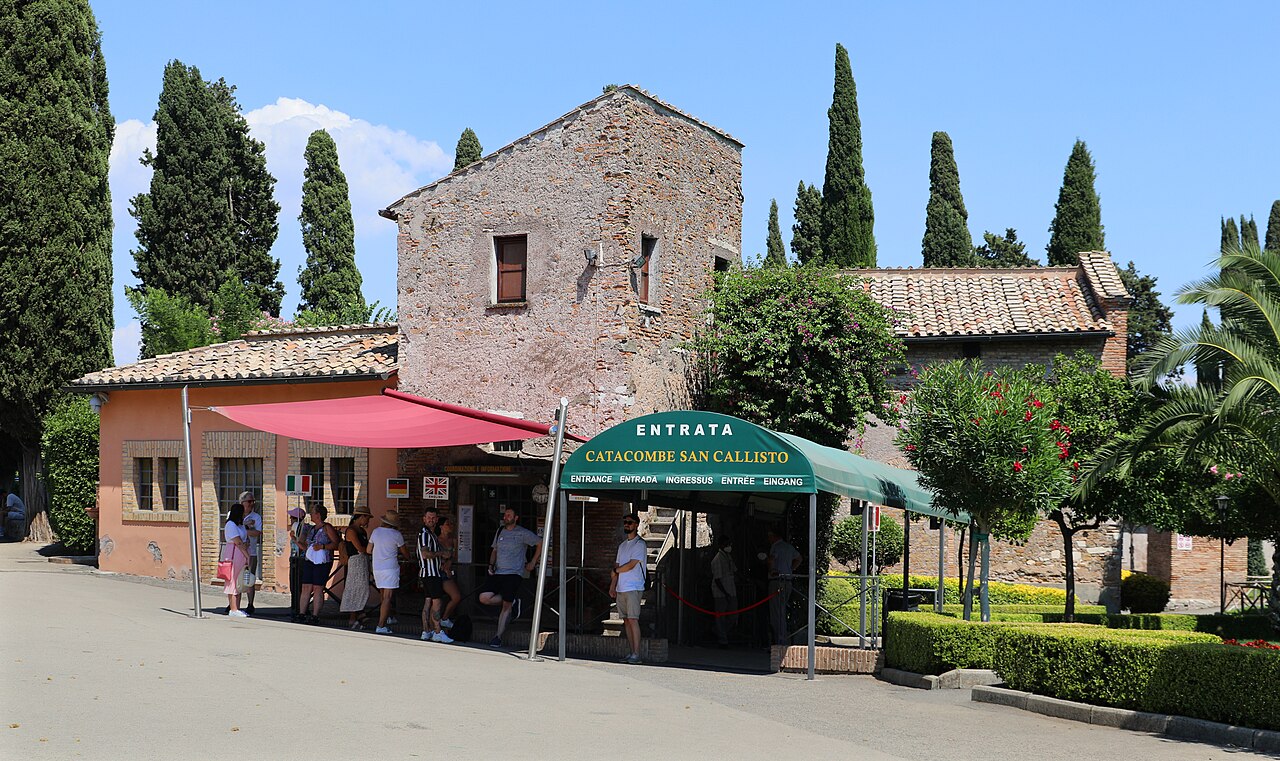
Come back up and go out to the road. The Appian Way is the reason this basilica is where it is, and the pilgrimage that links it to the other six is a walk, not a transfer. If you have an hour, turn right and follow the paving toward the Catacombs of San Callisto, which are a short way along the same road.
- A parish and pilgrimage basilica on the Via Appia Antica, still in ordinary use
- Veneration of the relics of Saint Sebastian, whose feast falls on January 20
- The third station of the Seven Churches pilgrimage, and the only one in open country
- Guided descent into the catacomb below, run by the Pontifical Commission rather than by the parish
Relics, Tombs, Sacred Objects
Tomb and Burial
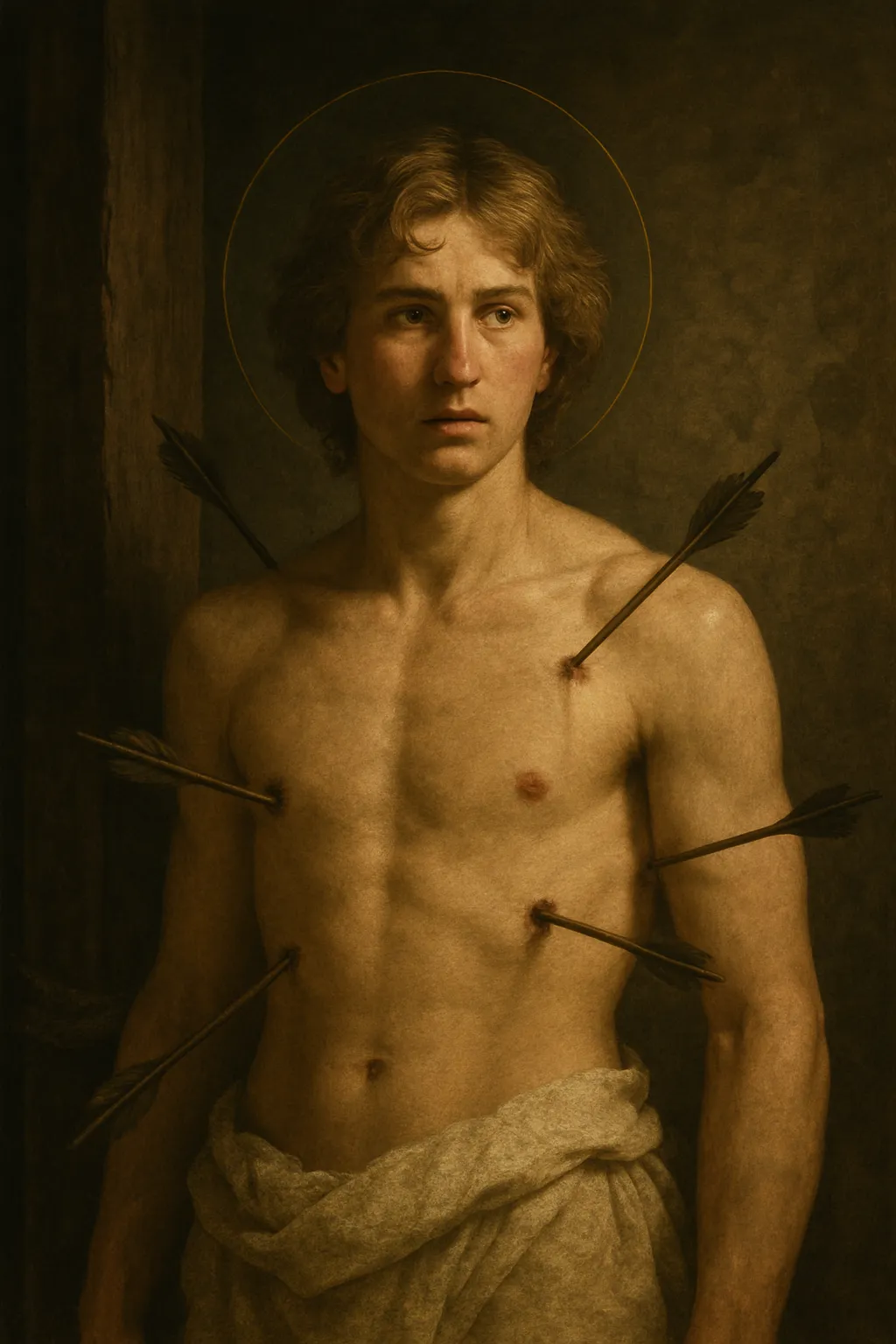
- Saint Sebastian, martyred at Rome under Diocletian. The tradition records that he was buried in this cemetery, and the basilica keeps the relics venerated as his.
Relics and Sacred Tradition
- The relics venerated as Saint Sebastian's, beneath the altar of his chapel on the left of the nave
- An arrow preserved as one of those that struck the martyr, and part of the column he was traditionally bound to, kept in the chapel of the relics
- A stone bearing the impression of two feet, associated in Roman devotion with the Quo Vadis encounter on this road
Sacred Objects
- The bust of the Salvator Mundi, the last sculpture Bernini finished, recovered in 2001 from the convent beside the basilica
- The recumbent figure of Sebastian beneath the altar of his chapel, carved in the seventeenth century
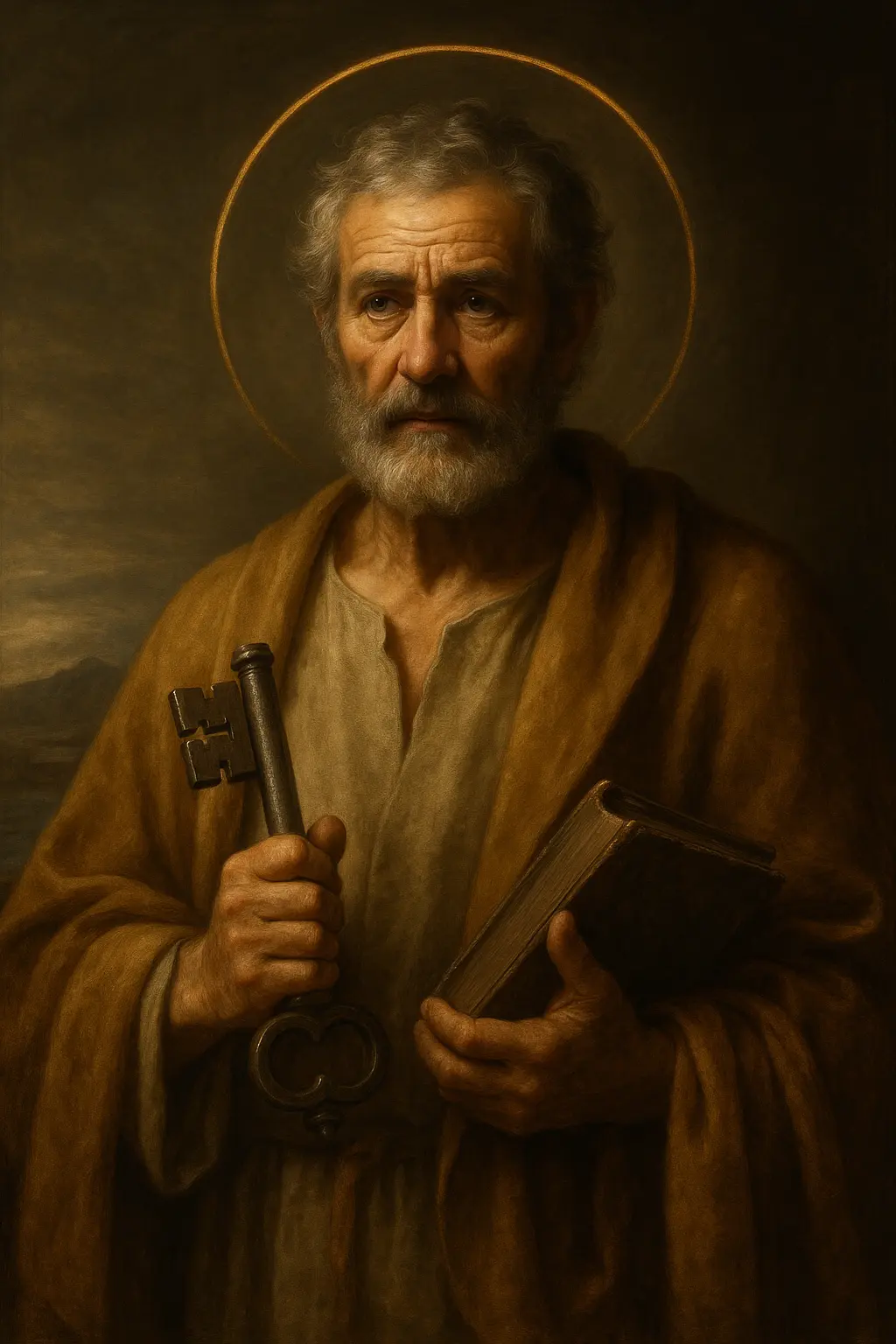
- The busts of Peter and Paul by Nicolò Cordier in the Albani chapel of 1716
Connected Saints


Continue Your Pilgrimage
-
City hub
Rome
Where this church sits within the wider Catholic geography of Rome.
-
Catacomb
Catacombs of San Callisto
The official cemetery of the early Roman Church, with the crypt of the third-century popes. The natural continuation of an afternoon on this road, and the two are usually seen together.
-
Papal basilica
Basilica of Saint Paul Outside the Walls
Paul's own tomb, on the Ostian Way. Pilgrims on the Seven Churches arrive here from Paul's basilica, which makes the graffiti below read differently.
-
Papal archbasilica
Basilica of Saint John Lateran
The cathedral of Rome, and where the route turns back into the city after the open country of the Appian Way.

Map
The Pontifical Commission for Sacred Archaeology (catacombeditalia.va) and the Holy See's Jubilee guidance for the Seven Churches.
September 13, 2026
Photo credits
- Hero. NikonZ7II / Wikimedia Commons (CC BY-SA 4.0). Source. CC BY-SA 4.0.